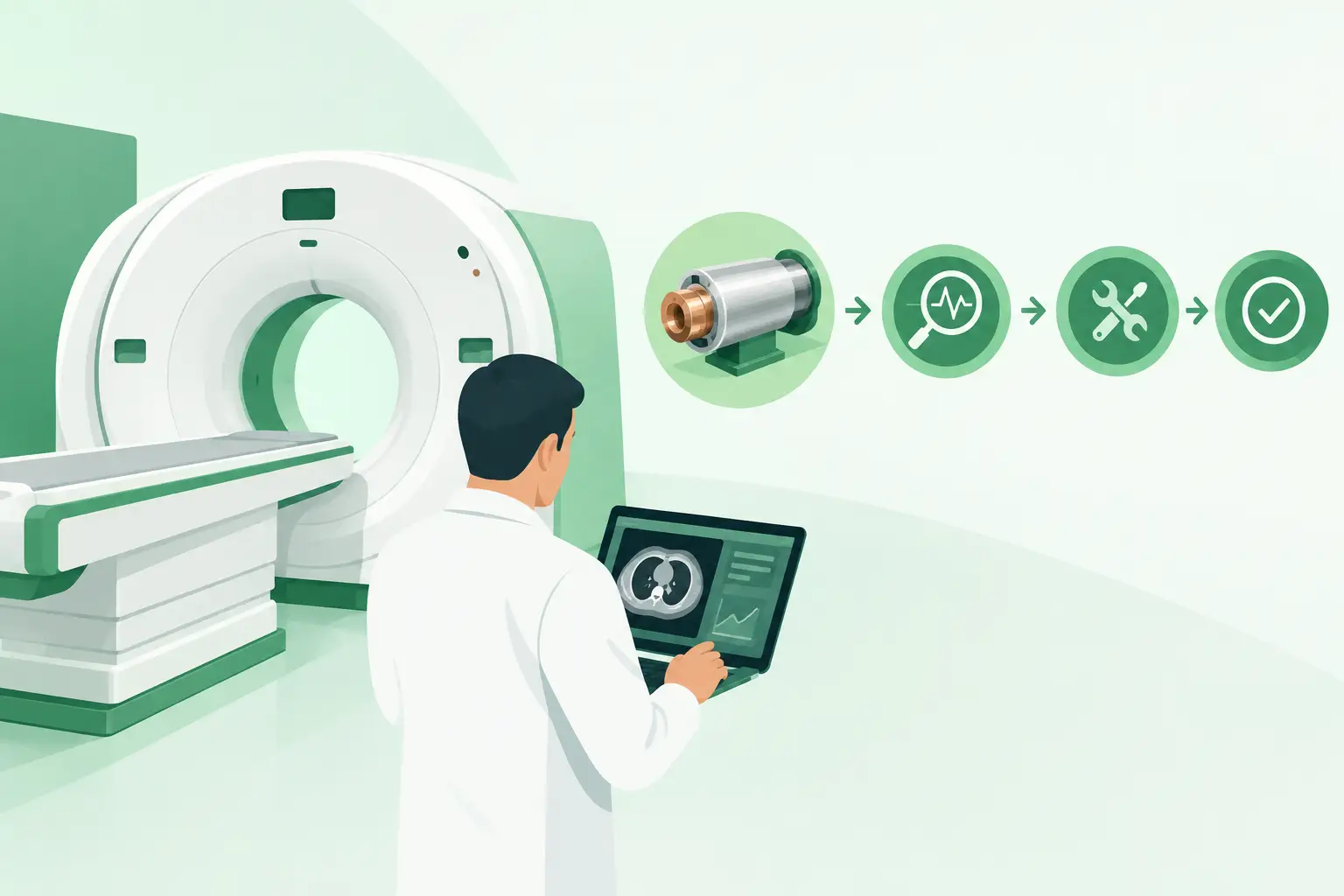
A CT room can go from fully scheduled to idle in a matter of minutes when a failed board, tube-related component, power assembly, or console part takes the system offline. In that moment, the value of a CT scanner spare parts supplier is not theoretical. It shows up in how quickly the supplier identifies the exact part, confirms compatibility, and gets procurement moving without adding guesswork.
For hospitals, imaging centers, and service organizations, the real issue is not simply buying a replacement component. It is protecting uptime on a high-value asset that directly affects patient flow, service revenue, and care delivery. That is why supplier selection deserves more scrutiny than price alone.
What a CT scanner spare parts supplier actually needs to solve
In CT service, speed matters, but speed without accuracy creates a second problem. An incorrect part number, an unclear revision match, or a component with incomplete test history can add days to an already expensive outage. A capable supplier is there to reduce risk across the full procurement cycle, from identification and sourcing to quote turnaround and fulfillment.
That requires more than access to a catalog. CT platforms often involve legacy systems, OEM-specific configurations, and parts with limited market availability. Some components are still in circulation but hard to locate. Others are discontinued and only available through refurbishment channels or specialized inventory networks. A supplier serving this market needs to understand the difference between "available," "compatible," and "ready to ship."
For technical buyers, this is where specialization matters. General medical suppliers may be able to source common accessories. They are less likely to support detailed imaging part requests where system generation, subassembly revision, and operational urgency all shape the purchase decision.
How to evaluate a CT scanner spare parts supplier
The first question is whether the supplier can work at the level of precision CT procurement requires. That means handling exact part numbers, cross-references, and model-specific details without turning every request into a long back-and-forth. Buyers should look for suppliers that are comfortable with incomplete field information as well. In real service situations, the initial request may come with a system model, symptoms, and a partial number rather than a perfect bill of materials.
Responsiveness is the second test. A fast quote is not just a convenience. It helps teams make operational decisions quickly, whether that means approving a rush order, comparing repair versus replacement, or planning interim service. Delayed quoting can be just as disruptive as delayed shipping because it stalls internal approvals.
Inventory access is equally important, but it should be assessed carefully. A supplier does not need to warehouse every CT component to be valuable. In many cases, the stronger advantage is broad sourcing reach across a vetted network of inventory holders, refurbishers, and specialty channels. What matters is whether the supplier can turn that network into reliable fulfillment under time pressure.
Quality control also deserves close attention. New, refurbished, and tested-used parts each have a place in the aftermarket. The right option depends on the component, budget, system age, and clinical urgency. Buyers should expect clarity on condition, testing status, and warranty terms. If those details are vague, the procurement risk shifts back to the customer.
New versus refurbished CT parts
There is no universal rule that new is always better or that refurbished is always the budget choice. It depends on the part category and the service goal.
For some critical CT components, buyers may prefer new inventory when available, especially if they are supporting a newer platform or trying to align with internal risk policies. For older systems, refurbished parts may be the only realistic path to keeping equipment in operation. In those cases, the supplier's process matters more than the label. A properly tested refurbished component with known provenance may be a better option than a poorly documented part advertised as available.
This is where experienced sourcing support becomes practical. A dependable supplier should be able to explain what is realistically available in the market, where lead times may create problems, and when an alternative sourcing path makes more sense than waiting for a preferred condition grade.
Why legacy CT systems create procurement pressure
Many healthcare providers still operate older CT systems because the equipment remains clinically useful and capital replacement timelines are long. The challenge is that legacy support gets thinner over time. OEM channels may narrow. Part availability becomes inconsistent. Even when a part exists, locating a working unit with the correct revision can take effort.
A CT scanner spare parts supplier serving the aftermarket needs to be equipped for that reality. Legacy sourcing is not just a matter of searching old inventory. It involves supplier relationships, part history awareness, and the ability to verify whether a replacement is viable before it ships.
For independent service organizations and in-house biomed teams, this is especially important. They often support mixed fleets across multiple sites and system generations. A supplier that can help source across OEM and legacy environments reduces the time spent chasing multiple vendors for a single repair event.
The hidden cost of fragmented sourcing
When CT parts procurement is spread across too many channels, downtime tends to last longer than necessary. Teams lose time confirming stock, comparing responses that are not technically equivalent, and following up with vendors that cannot support the request to completion. The direct cost is labor and delay. The larger cost is operational disruption.
A more effective approach is working with a supplier that can function as a procurement partner rather than a pass-through seller. That means the supplier can handle urgent searches, hard-to-find components, and repeat purchasing needs with enough consistency that buyers do not have to restart the process every time a system goes down.
This is one reason specialized aftermarket suppliers continue to matter. In a category as technical as CT, procurement efficiency is not created by offering the most products on paper. It comes from knowing how to locate exact-match parts quickly and communicate clearly enough that technical and purchasing teams can act with confidence.
What buyers should ask before placing an order
A few practical questions can reveal whether a supplier is equipped for CT support. Ask how the part is identified and verified. Ask whether the quoted item is in stock, in network, or subject to confirmation. Ask about condition grading, testing, and warranty coverage. Ask what information the supplier needs to reduce matching errors. These are not formalities. They are the controls that protect uptime.
It also helps to evaluate how the supplier handles urgency. Some vendors treat rush requests as exceptions. Others are built around them. For hospitals and service providers managing active outages, that difference becomes visible very quickly.
If your organization supports more than CT alone, broader modality coverage can also matter. Working with a supplier that understands imaging systems across CT, MRI, X-ray, ultrasound, and related categories can simplify vendor management and improve continuity when service needs extend beyond one department. That wider capability is only useful, however, if the supplier maintains the same technical discipline for each request.
The supplier relationship that supports uptime
The strongest supplier relationships in imaging service are built on repeatability. Buyers need to know that urgent requests will be answered, part searches will be handled seriously, and quotes will reflect real sourcing conditions rather than optimistic placeholders. Trust comes from consistency more than claims.
That is why specialized companies such as Meditegic focus on access, speed, and part-level support rather than broad marketing language. In the imaging aftermarket, credibility is earned by helping customers secure the right component when standard channels fall short.
A good CT parts supplier helps you buy a replacement. A strong CT scanner spare parts supplier helps you protect service continuity, control procurement friction, and keep a critical imaging asset working when the margin for delay is small. When CT uptime is on the line, the right supplier is not an extra resource. It is part of the operating plan.