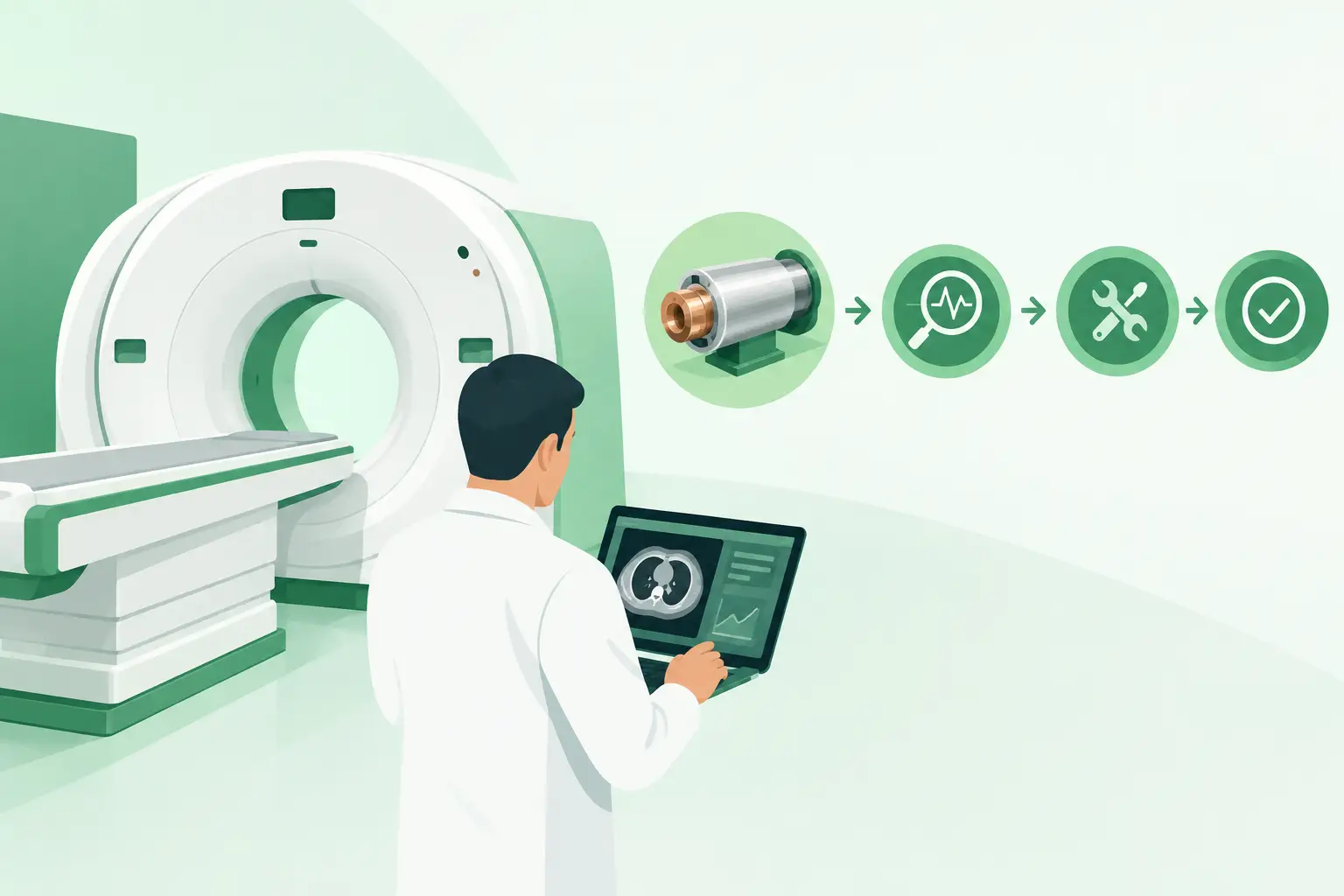
A CT scanner is down because of a failed high-voltage component. An ultrasound room is waiting on a specific probe. A legacy C-arm needs a board the OEM no longer stocks. These are the situations behind the question: when should hospitals buy refurbished imaging parts? The answer is not simply when the price is lower. It is when a refurbished part is the most controlled way to restore a clinically important system without introducing unacceptable technical, safety, or uptime risk.
For biomedical engineering teams, clinical engineering departments, and imaging service providers, refurbishment is a procurement decision tied to asset life, part traceability, repair urgency, and post-installation performance. A good refurbished component can extend the useful service life of a high-value imaging system. A poorly matched or insufficiently verified component can create repeat downtime, calibration issues, and wasted labor.
Buy Refurbished When the Exact Part Is Verified
The first requirement is simple: the replacement must be an exact, technically compatible match. Imaging platforms often have multiple revisions of components that look similar but differ in firmware, connectors, cooling requirements, mechanical fit, or system configuration.
Part-number-level verification matters for items such as X-ray tubes, detector panels, MRI RF coils, high-voltage tanks, power supplies, image intensifiers, PCBs, collimators, gantry components, and ultrasound transducers. A generic description such as “Siemens CT power supply” or “GE ultrasound probe” is rarely enough to source confidently. The original OEM part number, revision where applicable, system model, and serial-number range should be reviewed before a purchase is approved.
Refurbished is a sound option when the supplier can establish what the part is, what platform it supports, and how it was evaluated. If compatibility cannot be confirmed before shipment, the apparent savings are not meaningful. The cost of a wrong part includes freight, return handling, engineer time, and additional scanner downtime.
When Refurbished Imaging Parts Make Operational Sense
Refurbished parts are often most appropriate for mature imaging assets that remain clinically productive but have entered a phase where OEM availability is limited, lead times are unpredictable, or the original component is discontinued. This is common across legacy CT, MRI, fluoroscopy, mammography, nuclear medicine, CR/DR, and ultrasound platforms.
A hospital should consider refurbished sourcing when a repair is urgent and the alternative is leaving a modality unavailable for an extended period. A failed tube housing, workstation board, table assembly component, or cooling module can take an entire room out of service. In that situation, the decision should be based on the reliability of the specific replacement source and the expected time to restore operation, not only on catalog price.
It also makes sense when the original part is no longer available through normal channels. End-of-life systems do not necessarily stop delivering value. A well-maintained scanner may still meet the facility’s clinical workload, but a single obsolete board, coil, detector, or power component can become a sourcing problem. Refurbished inventory is frequently the practical path to keeping that asset productive.
There is another valid use case: maintaining a planned spare strategy for known failure points. Departments supporting older imaging fleets may keep selected refurbished components on hand when the cost of an unexpected outage exceeds the cost of carrying a spare. The right candidates depend on the modality and failure history, but often include control boards, power supplies, cooling components, transducers, and mechanical assemblies with long replacement lead times.
Refurbished Does Not Mean Unverified
The term “refurbished” is used broadly in the imaging aftermarket. It may describe a component that was removed from a working system, cleaned and inspected, repaired to address a known fault, rebuilt with replacement subcomponents, or functionally tested before release. Those conditions are not equivalent.
Technical buyers should ask what was done to the specific part, rather than accepting the label alone. For an ultrasound transducer, that may include cable integrity, strain relief condition, array performance, cosmetic damage assessment, and connector inspection. For an MRI RF coil, it may involve housing condition, connector evaluation, channel performance, and confirmation of the appropriate coil interface. For a power supply or high-voltage component, testing should be relevant to its intended function, not limited to a visual inspection.
The required standard should be proportional to the component’s role. A cosmetic cover and a control board do not present the same operational risk. A part that directly affects image acquisition, patient positioning, radiation generation, or safety interlocks requires more rigorous due diligence and qualified installation procedures.
Documentation is equally important. The purchasing record should retain the supplier’s stated condition, part number, compatible system information, test or inspection information available, warranty terms, and return process. This supports internal asset history and gives the service team a clear record if troubleshooting is needed after installation.
Evaluate the Total Cost of Downtime
The lowest quoted price is not always the lowest-cost repair. A component with uncertain condition or poor cross-reference accuracy can cause a second outage. That is especially expensive when a field engineer, calibration specialist, or application resource must return to the site.
A more useful comparison considers the total repair outcome: part cost, confirmed availability, shipping time, installation effort, expected reliability, warranty coverage, and the cost of keeping the room offline. For a high-utilization CT, PET/CT, or mammography unit, even a short delay can disrupt schedules and force patients into later appointments. For a smaller clinic operating a single ultrasound or X-ray room, one failed component may eliminate an entire diagnostic capability until the repair is complete.
This is why exact-match sourcing is more valuable than broad but vague inventory claims. A supplier that can locate the required revision quickly through a specialized imaging-parts network can reduce the time spent contacting multiple vendors and reconciling inconsistent descriptions.
Cases Where Refurbished May Not Be the Right Choice
Refurbished components should not be treated as the default answer to every repair. The decision changes when a component’s history cannot be established, a suitable test process is unavailable, or the part has a high likelihood of creating a repeat failure. It also changes when the system manufacturer requires a specific replacement method or configuration to preserve performance, safety, or service support.
Hospitals should be careful with parts that have uncertain provenance, visible evidence of mishandling, incomplete identification labels, or unclear revision status. A component may be physically available but still unsuitable for a particular configuration. This is a recurring issue with boards, detector electronics, MRI components, and probes that have platform-specific variants.
Installation capability matters as well. Some replacements require alignment, calibration, software configuration, imaging-quality verification, or safety checks after installation. Purchasing should coordinate with the biomedical team, ISO, or qualified imaging service provider before ordering. A correctly sourced component can still fail to deliver a successful repair if the installation plan is incomplete.
A Practical Approval Process for Refurbished Parts
A controlled process does not need to be slow. Start by capturing the failed part number directly from the label, service documentation, or system records. Add the modality, OEM, system model, relevant revision, symptoms, and the required delivery date. Photographs of labels and connectors can resolve uncertainty quickly when older components have conflicting descriptions.
Next, define the acceptance criteria before requesting a quote. Specify whether the part must be tested, whether exchange is acceptable, whether a core return is involved, and what warranty or return terms the repair requires. For image-quality or safety-sensitive components, identify the post-installation checks the service team will perform.
Then assess the supplier on technical responsiveness, not only availability. Can the supplier discuss the exact OEM number and compatible platform? Can it distinguish between similar revisions? Can it explain the stated condition and provide a clear path if the part is incorrect or fails during the warranty period? These questions reveal whether the source understands imaging components or is simply reselling an unverified item.
Meditegic supports this type of decision by sourcing diagnostic imaging spares at the OEM part-number level across major modalities and manufacturers, including difficult legacy components that are no longer easy to obtain through standard channels.
Make Refurbishment an Uptime Decision
The best time to buy refurbished is when the component is identifiable, compatible, appropriately evaluated, and available from a supplier that can support a technically informed repair. It is particularly valuable when a legacy imaging system still serves the facility well and the alternative is prolonged downtime caused by an obsolete or hard-to-find part.
Treat the purchase as part of the repair plan, not as a standalone cost-saving exercise. With the right part number, condition standard, installation support, and documentation, refurbished imaging parts can keep essential diagnostic equipment working when continuity of care depends on it.