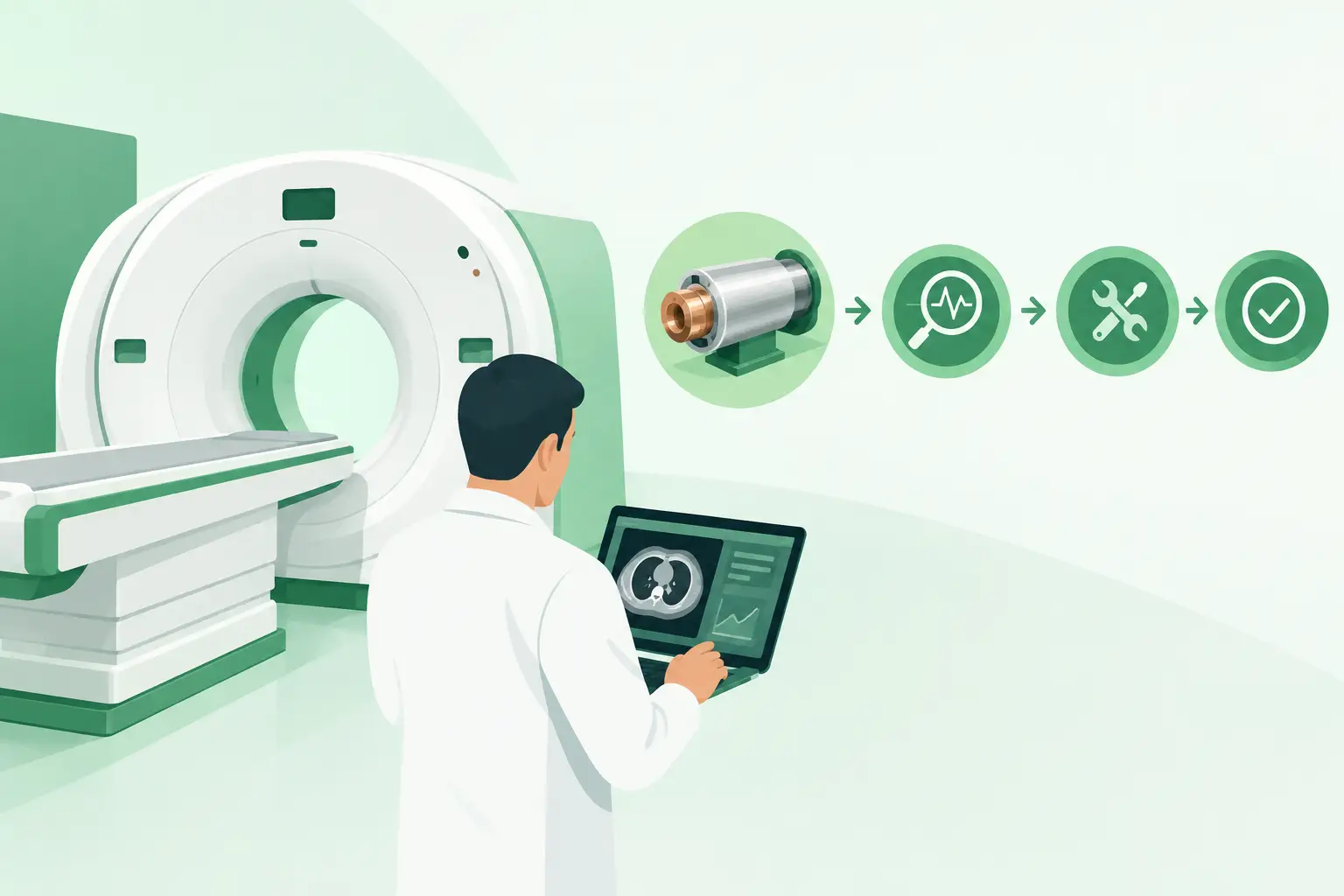
A CT room sitting idle for two days rarely has a simple root cause. In many cases, the delay is not the repair itself. It is the time lost confirming the exact part number, checking compatibility, finding a supplier that can actually deliver, and sorting out whether a used or refurbished component is the right call. That is why best practices for parts procurement matter so much in diagnostic imaging. The procurement process directly affects uptime, service response, and the ability to keep care moving.
For biomedical teams, independent service providers, and clinics managing imaging assets, parts procurement is not a back-office function. It is an operational discipline. When the equipment is specialized, aging, or built across multiple OEM generations, procurement quality shows up quickly in the field. Good sourcing decisions shorten outages. Poor ones create repeat failures, shipping waste, and unnecessary service visits.
Why best practices for parts procurement matter more in imaging
Medical imaging parts procurement is different from routine purchasing because the cost of a wrong part is much higher than the invoice line. A mismatch can mean another day of downtime, another engineer dispatch, and another rescheduled patient list. Even when the part is technically available, the real issue is whether it is the correct revision, tested appropriately, and suitable for the installed system.
This gets harder with legacy equipment and discontinued components. Many service teams support systems that are still clinically useful but no longer served well through standard OEM channels. In that environment, procurement has to balance speed, traceability, condition, and budget. The cheapest option is not always the lowest-cost outcome, and the fastest quoted source is not always the one that will hold up under installation.
Start with part identification, not vendor outreach
The strongest procurement process begins before the RFQ goes out. Too many urgent requests start with a broad equipment description instead of a verified part reference. That increases the odds of back-and-forth delays and incorrect shipments.
A better approach is to gather the full technical picture first: exact part number, system model, modality, serial number when relevant, software version if it affects compatibility, and the failure context. For some assemblies, the revision level matters as much as the base number. For others, a substitute may be acceptable, but only if that substitution is confirmed against the installed configuration.
This is where experienced buyers save time. They know that a quote is only useful when it is tied to a verified requirement. If the installed component has labels, photos, or prior service records available, include them early. In urgent situations, that discipline often cuts hours from the sourcing cycle.
Build supplier selection around risk, not just price
In parts procurement, vendor choice should reflect the impact of failure. A low-risk cosmetic item and a critical imaging system component should not be sourced with the same criteria.
For high-value or hard-to-find parts, buyers should evaluate suppliers on three things first: technical accuracy, responsiveness, and proof of supply capability. Can the supplier recognize compatibility concerns? Can they turn around a quote quickly with meaningful details? Can they confirm actual access to the part rather than simply advertising availability?
Price still matters, especially when maintaining older assets under budget pressure. But the trade-off is straightforward. A lower upfront price can become expensive if the part arrives untested, undocumented, or incompatible. In imaging environments, procurement teams usually do better when they treat supplier reliability as a cost-control measure, not a premium add-on.
Define acceptable part condition before the urgent call
One of the most practical best practices for parts procurement is setting internal rules for part condition in advance. When a system is down, teams make better decisions if they already know when used, refurbished, or new surplus inventory is acceptable.
There is no single right answer across all categories. For some assemblies, a properly evaluated used part is a sensible and efficient solution. For others, refurbishment with documented testing may be the better risk-adjusted choice. It depends on the function of the part, the history of failures, the criticality of the equipment, and how quickly a replacement is needed.
What matters is consistency. If every urgent procurement starts with a new debate over acceptable condition, the process slows down. Clear procurement criteria help technical and purchasing teams align faster, especially when supporting multiple modalities and mixed-age fleets.
Make quotation speed useful, not superficial
Fast quoting is valuable only when the information behind it is solid. A fast but vague quote often shifts delays downstream, after the PO is issued and the technical questions finally surface.
A useful quote should confirm the part reference, condition, availability status, and shipping assumptions. If there are testing standards, warranty terms, or known lead-time risks, those should be visible early. For discontinued or scarce parts, honesty matters more than optimistic timing. Most technical buyers would rather get a realistic answer immediately than lose a day to an unverified promise.
This is one area where specialized sourcing partners stand apart from general distributors. In complex imaging procurement, the ability to quote quickly and accurately is not a convenience. It is part of the service value.
Keep a live record of cross-references and failure history
The teams that improve procurement performance over time usually maintain their own internal intelligence. That includes approved alternates, supplier performance notes, recurring failure parts, and modality-specific sourcing patterns.
This record does not need to be complicated. It needs to be current and usable. If one ultrasound board revision repeatedly causes confusion, document it. If a certain MRI component is consistently available through secondary channels with acceptable quality, note that as well. If one supplier is strong in transducers and another in C-arm subassemblies, keep that knowledge close to the request workflow.
Procurement gets better when each urgent order is not treated as an isolated event. Over time, a modest internal database can reduce repeat errors and improve response speed significantly.
Plan for logistics as part of procurement, not after it
A part can be correctly sourced and still fail the operation if logistics are treated as an afterthought. For imaging systems, shipping time, packaging quality, customs handling, and return procedures can all affect actual downtime.
This is especially relevant for international service networks and remote locations, where the supply line is longer and margin for error is thinner. Buyers should confirm not only where the part is coming from, but how it will move, how it is packed, and what paperwork may be required. A supplier with broad sourcing reach but weak fulfillment coordination may still create avoidable delays.
The practical standard is simple: procurement should own the handoff through delivery readiness, not stop at supplier selection.
Treat communication between technical and purchasing teams as a control point
A common source of procurement failure is not market availability. It is internal misalignment. The buyer is focused on lead time and budget. The engineer is focused on exact fit and install risk. Both are right, but if they are not working from the same information, urgency turns into friction.
Strong teams use a shared intake standard for parts requests. The request should capture technical identifiers, equipment impact, urgency level, and any acceptable alternatives. That reduces guesswork and helps outside suppliers respond with fewer loops.
For smaller clinics and service organizations, this matters even more because one person may be handling both technical and purchasing responsibilities. In those settings, a disciplined request process acts as quality control.
Know when specialization is the real efficiency gain
Not every sourcing need requires a niche supplier. But when the request involves discontinued imaging parts, multi-brand fleets, or pressure to restore uptime fast, specialization usually reduces total effort. Buyers spend less time explaining the application, less time chasing dead-end inventory, and less time correcting preventable mismatches.
That is why many technical procurement teams rely on partners that focus specifically on imaging aftermarket components rather than broad catalog distribution. A supplier that understands modality differences, legacy systems, and hard-to-find parts can compress the sourcing cycle in ways that a generic vendor often cannot. For organizations trying to keep equipment operational across varied service environments, that difference is practical, not theoretical.
Good procurement rarely looks dramatic from the outside. It looks like fewer delays, fewer wrong parts, better budget decisions, and more systems returned to service on schedule. That is the real standard to aim for when building a parts sourcing process that can hold up under pressure.