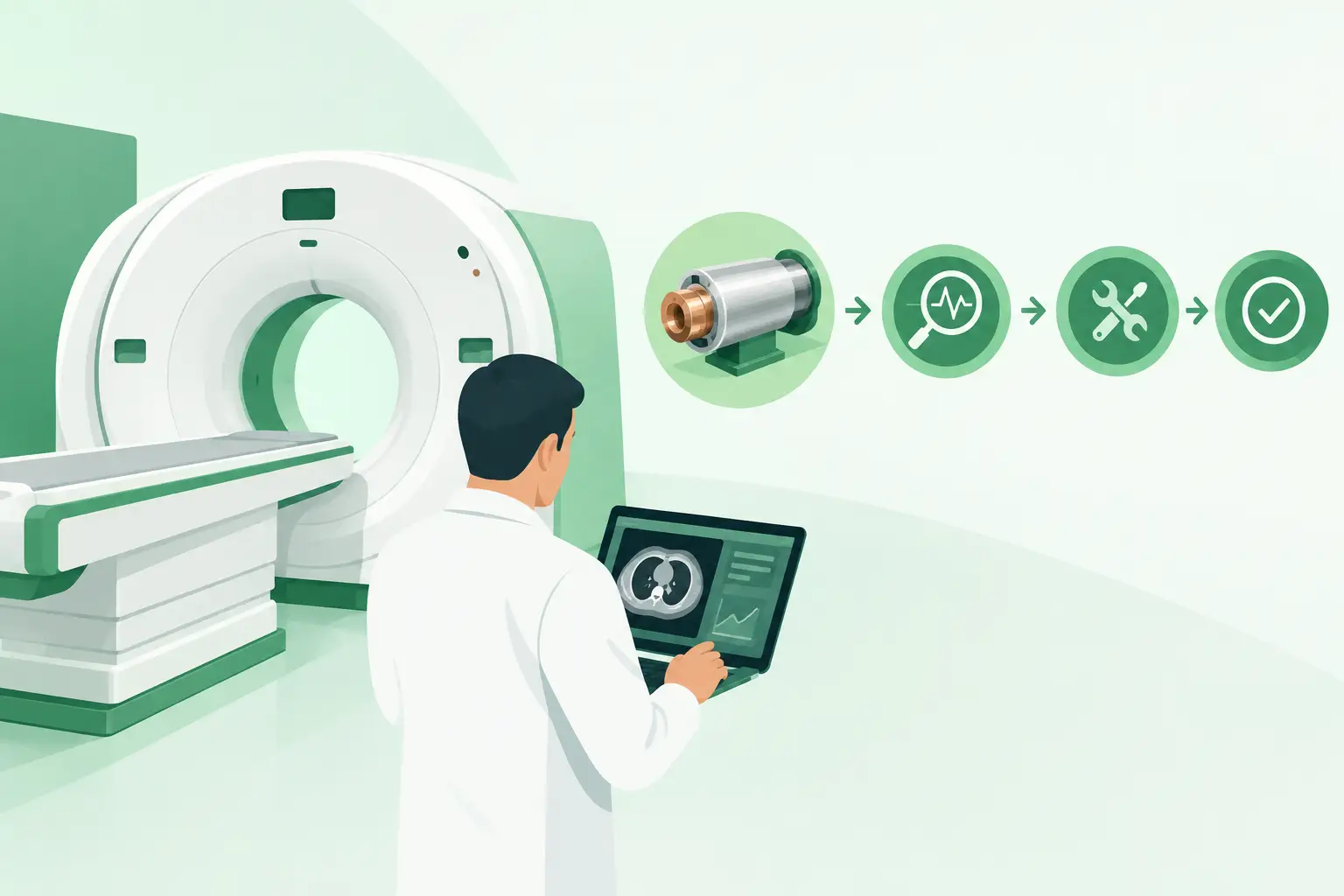
A CT room sitting idle for half a day is not just a service issue. It affects patient scheduling, staff utilization, revenue capture, and in many cases care timelines. That is why medical equipment downtime solutions have to be built around response speed, parts accuracy, and realistic service logistics - not generic procurement promises.
For hospitals, imaging centers, ISOs, and biomedical teams, downtime rarely comes from a single point of failure. It usually starts with a failed component, then expands into a sourcing problem, a documentation gap, a mismatch in part identification, or a delay in locating inventory for a legacy system. The real fix is not simply buying replacement parts faster. It is putting a process in place that reduces time lost between diagnosis, quote, fulfillment, and installation.
What effective medical equipment downtime solutions actually solve
The phrase gets used broadly, but in practice the best medical equipment downtime solutions address three operational risks at once. First, they shorten the interval between failure identification and parts confirmation. Second, they improve the chances of getting the correct component on the first shipment. Third, they create a sourcing path for systems that no longer fit a standard distributor catalog.
That matters most in diagnostic imaging, where service teams are often dealing with high-value equipment, strict uptime expectations, and parts environments that vary by OEM, software generation, and installed configuration. A failed power supply, detector component, RF assembly, transducer, or control board may have several part-number references attached to it. If procurement starts with incomplete cross-referencing, downtime extends before a quote is even approved.
The strongest approach is operational, not theoretical. Buyers need vendors and sourcing partners that understand modality-specific parts, can validate exact matches quickly, and can reach beyond standard stock when the item is rare, discontinued, or tied to a legacy platform.
Why downtime persists even when a team acts quickly
Most experienced healthcare buyers move fast once a system goes down. The problem is that urgency alone does not remove friction. It often exposes it.
One common issue is fragmented sourcing. A purchasing team may contact one supplier for new parts, another for refurbished assemblies, and a third for out-of-production inventory. That can work for planned maintenance, but it is slower under pressure. Every additional handoff creates another chance for quote delays, part-number confusion, and inconsistent lead times.
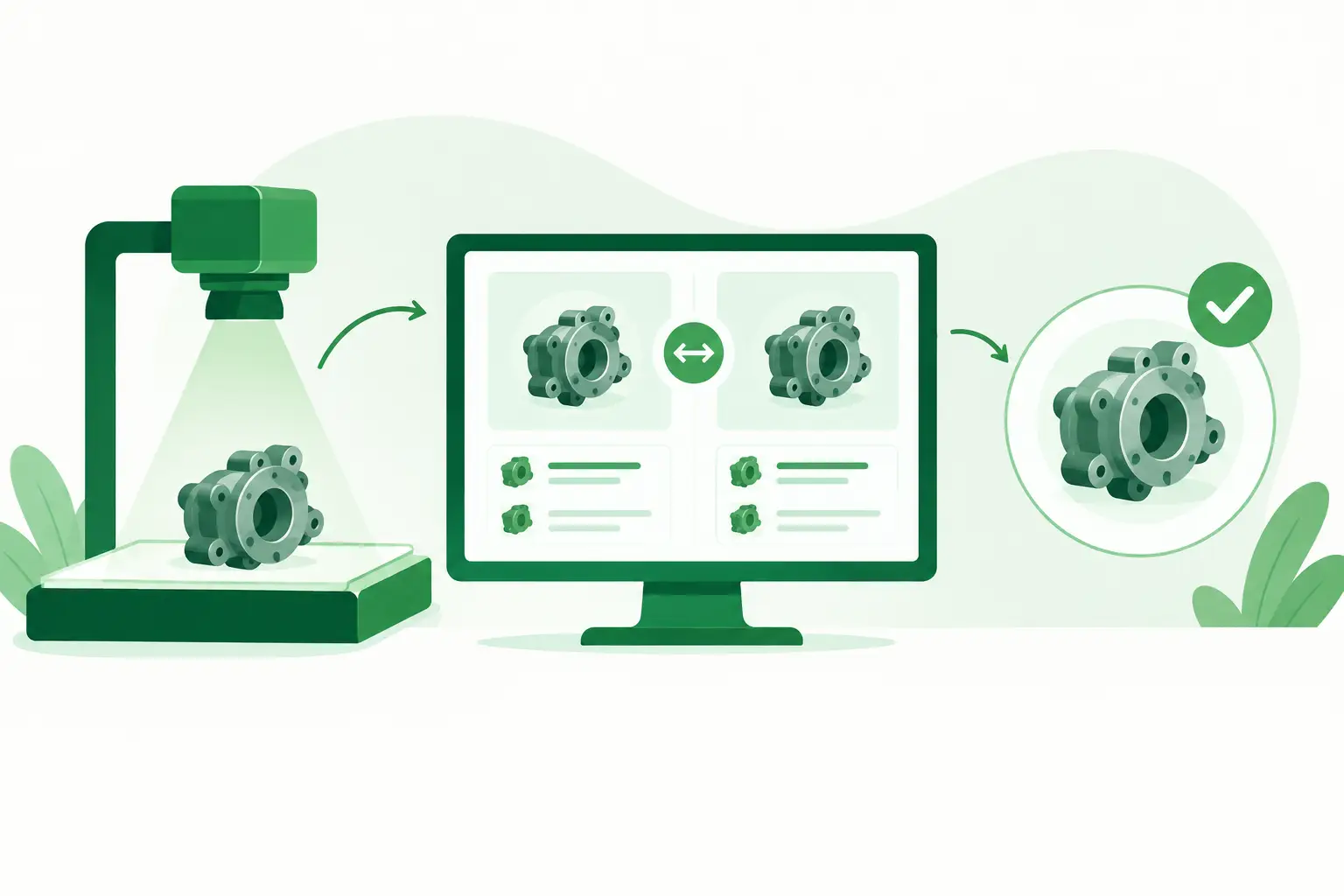
Another issue is incomplete equipment data. A model name is often not enough. Imaging platforms may require exact serial validation, revision matching, or compatibility checks tied to subsystem generation. When a supplier cannot verify those details quickly, the quote process stalls or the wrong item gets sent.
There is also a budget trade-off that needs to be managed carefully. A new OEM part may be appropriate for some failures, especially when warranty, compliance, or internal policy requires it. In other cases, a tested refurbished part or quality replacement component is the better operational choice because it restores uptime faster and at a lower cost. Good downtime planning recognizes that the right answer depends on the asset, the urgency, and the service objective.
The role of parts sourcing in medical equipment downtime solutions
Parts sourcing is often treated as a purchasing function. In reality, it is one of the core drivers of uptime.
When a sourcing partner has access to broad supplier coverage, large part-number databases, and experience across CT, MRI, PET, Nuclear, SPECT, C-arm, X-ray, ultrasound, mammography, and densitometry systems, the search window shrinks. That matters because every hour spent confirming availability is another hour the asset may remain offline.
This is where specialized sourcing outperforms general distribution. Diagnostic imaging equipment does not behave like standard MRO inventory. Many failures involve assemblies that are uncommon, tied to older systems, or not visible through mainstream procurement channels. Buyers need support that can locate exact-match parts across multiple OEM and aftermarket environments, not just quote what is already on a shelf.
Fast quotation also matters more than many organizations realize. A slow quote delays internal approvals, which delays shipping, which delays repair scheduling. For urgent events, quote speed is not an administrative detail. It is part of the repair timeline.
Building a downtime response process that holds up under pressure
The best organizations do not wait for a system failure to think about downtime. They prepare for it with a sourcing and escalation process that can be activated immediately.
That starts with documentation. Service teams and biomedical departments should maintain accurate records for installed systems, including model identifiers, serial numbers, known part history, and any recurring failure points. This reduces guesswork when a problem occurs and improves quote accuracy.
It also helps to prequalify suppliers based on the kinds of failures your fleet is likely to produce. If your operation depends heavily on mixed-generation imaging assets, it makes sense to work with partners that can support both current and legacy equipment. If a supplier only covers common catalog items, they may be less useful during the failures that cause the longest downtime.
Communication discipline is another practical factor. The initial request should include as much validated information as possible, especially part numbers, equipment details, urgency level, and whether new, refurbished, or alternate sourcing is acceptable. The clearer the request, the faster a knowledgeable supplier can move.
Medical equipment downtime solutions for legacy and discontinued systems
Legacy systems create a different downtime profile. They may still be clinically and financially viable, but the sourcing path gets narrower over time. OEM support may be limited, lead times may increase, and part availability can become unpredictable.
That does not mean those assets cannot be supported effectively. It means buyers need a different sourcing strategy.
For discontinued or hard-to-find components, success depends on supplier network depth and aftermarket specialization. A vendor with access to a wide range of inventory channels is more likely to locate the required part or a validated replacement option before the delay becomes prolonged. In these situations, technical familiarity matters as much as inventory access. A supplier that understands modality-specific assemblies can often help confirm whether a substitute part, refurbished unit, or recovered component is a viable path.
This is also where institutional buyers benefit from working with a partner rather than restarting the search each time. When the sourcing team already understands the installed base and procurement expectations, response gets faster and more precise. That is one reason organizations that manage complex imaging fleets often rely on specialists such as Meditegic for difficult-to-source parts support.
New versus refurbished parts - the right answer depends
There is no single procurement rule that works for every downtime event. New parts may offer straightforward approval and manufacturer alignment, but they are not always the fastest or most economical option. Refurbished parts can restore service quickly and reduce cost pressure, especially for older imaging platforms where OEM pathways are limited or no longer practical.
The right decision depends on several factors: the criticality of the equipment, internal purchasing policy, the age of the system, expected service life, and the confidence level in the testing and sourcing process. For a high-urgency repair on a mature asset, a properly sourced refurbished part may be the most rational option. For a newer platform in a tightly controlled environment, new inventory may still be preferred.
What matters is having both paths available. Downtime gets worse when buyers are forced into a single sourcing model that does not match the operational reality.
What buyers should expect from a serious downtime support partner
A supplier that supports uptime in imaging environments should do more than send a price. Buyers should expect responsive quoting, exact-match verification support, access to both new and refurbished inventory paths, and the ability to source beyond common stock. Just as important, the supplier should understand the cost of delay and communicate clearly when availability, condition, or lead time involves trade-offs.
Dependability shows up in the details. Can they work from incomplete or legacy part references? Can they help identify equivalents when the original item is out of production? Can they support multiple imaging modalities without forcing the buyer to manage separate vendor streams? Those capabilities reduce procurement friction before and during a downtime event.
For healthcare organizations and service providers, uptime is not protected by one emergency purchase. It is protected by a sourcing model that can perform consistently when the part is obscure, the timeline is tight, and the system cannot stay down. The most useful next step is simple: evaluate whether your current parts pipeline is built for routine ordering or for real downtime recovery.