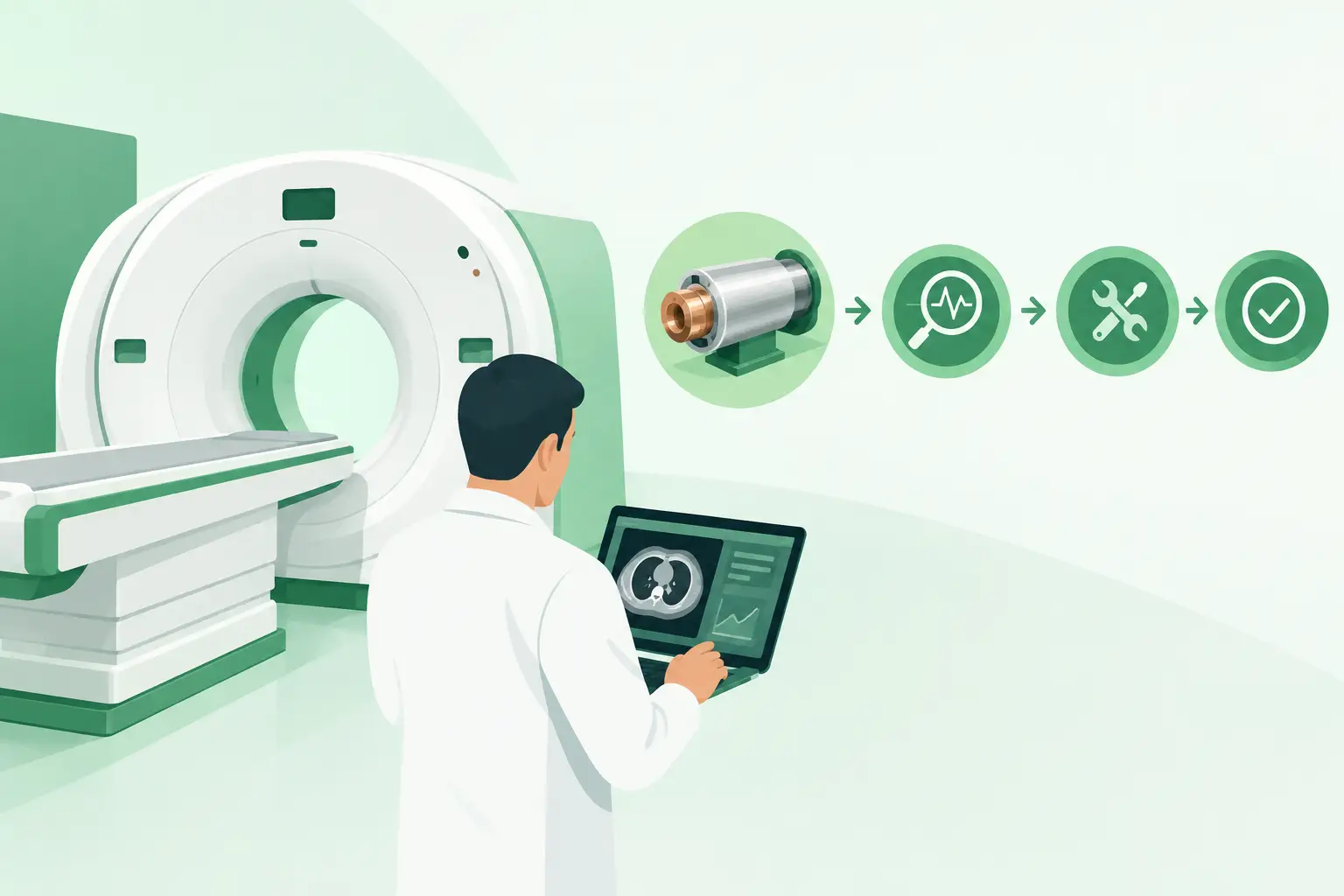
A probe fails in the middle of a full patient schedule, and the real problem starts after the error message. You need the right replacement fast, but you also need confidence that it will scan properly, fit the system, and last long enough to justify the purchase. That is where a refurbished ultrasound probe review becomes practical, not academic.
For biomedical teams, independent service providers, and clinics managing ultrasound uptime, refurbished probes can be the right answer when lead times, budget limits, or discontinued configurations make other options unrealistic. But the value depends on details. Two probes with the same model number can arrive in very different condition, and a low price does not help if the element dropout shows up after installation.
What a refurbished ultrasound probe review should actually cover
A useful review is not about whether refurbished is good or bad in general. It should answer a narrower question: is this specific probe, from this specific source, acceptable for clinical use and worth the operational risk?
That means looking at electrical performance, acoustic performance, cosmetic condition, cable integrity, connector wear, lens quality, and compatibility history. It also means understanding what refurbishment included. Some probes are truly reconditioned and tested. Others are simply cleaned, relabeled, and sold with limited verification. Those are not the same category, even if both are marketed as refurbished.
For technical buyers, the review should also consider the procurement side. How clearly is the part identified? Is the serial number available? Is there documentation of testing? Is there a defined return process if the probe passes power-up but fails under image load? A probe is not just a part number. It is a risk decision tied to patient throughput and service time.
Why refurbished probes make sense in the aftermarket
Ultrasound systems often stay in service long after OEM support becomes expensive, slow, or selective. In that environment, refurbished probes are often less about cost cutting and more about continuity. If a clinic has a functioning scanner with years of useful life left, replacing the whole platform because of one failed transducer is rarely the efficient move.
Refurbished inventory also matters when the probe model is older, region-specific, or intermittently available. A strong aftermarket source can often locate exact-match transducers that standard channels do not stock. For service organizations supporting mixed fleets, that access can be the difference between same-week recovery and extended downtime.
The trade-off is straightforward. You may reduce acquisition cost and improve availability, but you take on more variation in condition and remaining lifespan. That is why review criteria need to be stricter, not looser, when buying refurbished.
Refurbished ultrasound probe review: the technical checks that matter most
The most important question is image integrity. If the probe produces dropout, streaking, intermittent noise, weak penetration, or inconsistent Doppler response, the rest of the transaction details become secondary. A refurbishment process should include electrical and functional testing that can identify dead elements, weak channels, and connector faults before shipment.
Cable condition deserves more scrutiny than many buyers give it. Repeated flexing near the strain relief is one of the most common failure points, and cosmetic cleaning can hide early wear. If the outer jacket is stiff, cracked, or uneven, it may indicate prior damage or repair stress. Minor cosmetic wear may be acceptable. Structural fatigue is not.
The acoustic lens is another area where small defects matter. Surface cuts, swelling, delamination, and uneven texture can affect image quality and cleaning durability. On some transducer types, the lens condition gives a quick signal of how heavily the probe was used and how carefully it was handled.
Connector and pin condition should be reviewed closely, especially for systems where slight alignment issues create intermittent recognition problems. A refurbished probe may test correctly on one bench setup but behave differently in a high-use clinical environment if the connector has wear or prior repair inconsistency.
Finally, compatibility should never be assumed from a broad family name. Probe revisions, system software, and connector variants can all matter. A proper review verifies exact system compatibility, not just approximate model grouping.
The difference between tested, repaired, and merely resold
One of the biggest gaps in the market is terminology. Buyers often see phrases like refurbished, recertified, tested, used, or working pull used almost interchangeably. They should not be treated that way.
A tested probe may have passed a limited functional check, but that does not mean worn components were replaced. A repaired probe may have had one known defect corrected, while other aging points remain untouched. A properly refurbished probe should indicate a more complete process that may include inspection, repair where needed, cleaning, performance verification, and final quality control.
This is where vendor transparency matters. If the seller cannot explain what was inspected, what was repaired, and how performance was verified, the buyer is being asked to fill in the gaps with trust. For a high-value imaging part, that is a poor procurement standard.
How to evaluate vendor reliability during a refurbished ultrasound probe review
A good vendor review starts before the quote. Speed matters, but precision matters more. The supplier should ask for the exact probe model, system details, and, when relevant, photos of the connector or failed unit. That is usually a good sign that they are trying to avoid mismatch, not just close the order.
Documentation is another strong indicator. Reliable suppliers can usually provide clear condition notes, available serial or batch information, and a reasonable description of testing. They should also state whether the unit is in stock, sourced from a partner, or subject to additional verification before shipment. Buyers managing urgent service events do not need vague availability statements.
Return handling is equally important. Ultrasound probes can fail in ways that are not obvious at initial power-up. A practical warranty and a defined return process reduce exposure if a fault appears under live scanning conditions. The cheapest option often becomes the most expensive when return friction adds another week of downtime.
For organizations supporting multiple modalities and legacy systems, working with a specialized imaging parts supplier often improves the outcome. Companies such as Meditegic are built around sourcing hard-to-find imaging components, which matters when the challenge is not just finding any probe, but finding the correct probe quickly with credible aftermarket support.
Common red flags buyers should not ignore
If a listing uses generic photos only, gives no testing detail, and offers broad compatibility claims, caution is warranted. Those are common signs of inventory that was not verified to the standard technical buyers need.
Another red flag is pricing that sits far below the market without explanation. There are legitimate reasons for lower pricing, such as cosmetic wear or older inventory, but the seller should be able to explain the condition. Deep discounts with little documentation often signal higher risk, not better value.
Unclear refurbishment language is also a problem. If a vendor cannot distinguish between used, repaired, and refurbished, the buyer should assume the process is inconsistent. In ultrasound, inconsistency is expensive because even minor probe issues can disrupt schedules, trigger repeat troubleshooting, and erode clinician trust in the system.
When refurbished is the right choice and when it is not
Refurbished probes are often the right fit when the ultrasound system is clinically useful, the exact transducer is still relevant to the application, and turnaround time matters more than having a zero-cycle component. They are also a sensible option for service organizations trying to keep mature fleets operational without overcommitting budget to aging platforms.
They may be a weaker fit when the application is unusually demanding, when probe utilization is extremely high, or when the installed system has repeated transducer-side failures that suggest a deeper platform issue. In those cases, even a well-refurbished probe may not solve the root problem. The smarter move may be broader diagnostics before another transducer is purchased.
It also depends on use case. A backup probe for continuity planning does not carry the same risk profile as a primary probe for a heavily scheduled specialty workflow. Procurement decisions should reflect that difference.
A practical buying standard for technical teams
The most reliable approach is simple. Confirm the exact model and compatibility, request specific condition and testing details, review the warranty terms, and ask what refurbishment actually included. If the answers are vague, move on. If the answers are clear, the risk becomes manageable.
A refurbished ultrasound probe review is most useful when it treats the purchase as an uptime decision rather than a bargain hunt. That shift changes the evaluation criteria in the right direction. You stop asking only what the probe costs and start asking what delay, repeat failure, or image quality issues would cost instead.
For clinics and service teams under pressure to restore scanning capacity, that is usually the better question. The right refurbished probe is not the one with the lowest price tag. It is the one that arrives as described, performs consistently, and gets the system back into dependable clinical use without creating the next service call.