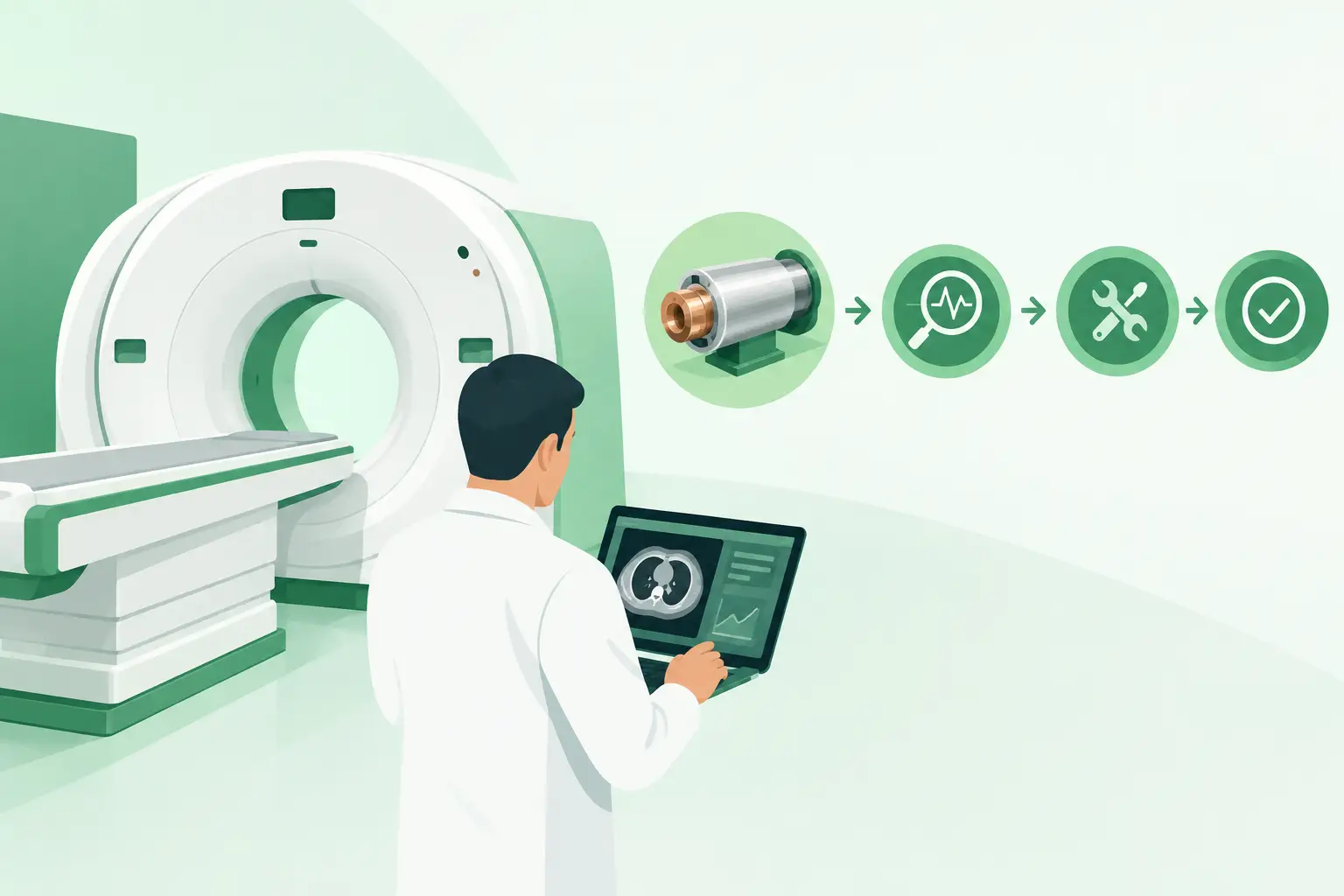
A CT room sitting idle for half a day is not a parts problem. It is a scheduling problem, a revenue problem, and often a patient care problem. When teams need to find exact match imaging part requirements under pressure, speed matters, but accuracy matters more. The wrong board, cable, detector component, or power module can add days to the outage and create avoidable return cycles, service delays, and compliance concerns.
For imaging equipment buyers and service teams, exact match sourcing is rarely as simple as ordering by model name. A system label may point you in the right direction, but many assemblies changed across revisions, software generations, regional configurations, and OEM production runs. That is why the fastest path is usually the most disciplined one: verify the part number, confirm the system configuration, and work with a supplier that understands diagnostic imaging platforms at the component level.
Why exact match matters in imaging parts
In general industrial procurement, a close substitute may be acceptable. In diagnostic imaging, that approach can create immediate problems. A component that appears compatible may fail on fit, firmware recognition, connector type, calibration requirements, or environmental specification. Even when the unit powers up, a mismatch can surface later as image artifacts, intermittent faults, or system communication errors.
This is especially true in modalities with layered assemblies and revision-specific components. MRI, CT, PET/CT, SPECT, C-arm, and ultrasound platforms often include subassemblies that look identical but are not interchangeable in practice. An exact match protects uptime, but it also protects the service event itself. Your field engineer should not discover compatibility issues after the part has already been installed.
For purchasing teams, the financial side is just as clear. Every incorrect order adds shipping costs, return handling, administrative time, and potential overnight freight on the replacement. The real cost is usually the lost day, not the line item.
The data you need to find exact match imaging part requests correctly
The most reliable sourcing starts with complete equipment identification. The part number is the first priority, but it should never be the only data point. If the sticker is damaged, the number is incomplete, or the part was previously replaced with a non-OEM label, secondary identifiers become critical.
A strong request usually includes the OEM part number, any alternate or legacy numbers, equipment modality, system manufacturer, model, serial number, and a brief fault description. If available, include photos of the part label, connector orientation, and the installed location within the system. For boards and electronic modules, revision level matters. For probes, tubes, detectors, and specialized assemblies, manufacturing date or compatible platform family may also matter.
The fault description is often underestimated. It should be concise, but it can help a specialized supplier flag common part number supersessions or known compatibility issues. If a system error points to one component but the actual failed item is upstream or downstream, that context can prevent ordering the wrong replacement.
Part number first, but not part number only
Many imaging teams assume a part number guarantees a match. Often it does, but not always. OEMs may supersede numbers, bundle a component into a larger assembly, or release region-specific variants. Refurbished inventory may also be labeled according to prior service documentation rather than the original factory format.
That is why experienced buyers cross-check the number against the system model and revision. If those details do not align, the quote should be reviewed before the order is released.
Photos save time
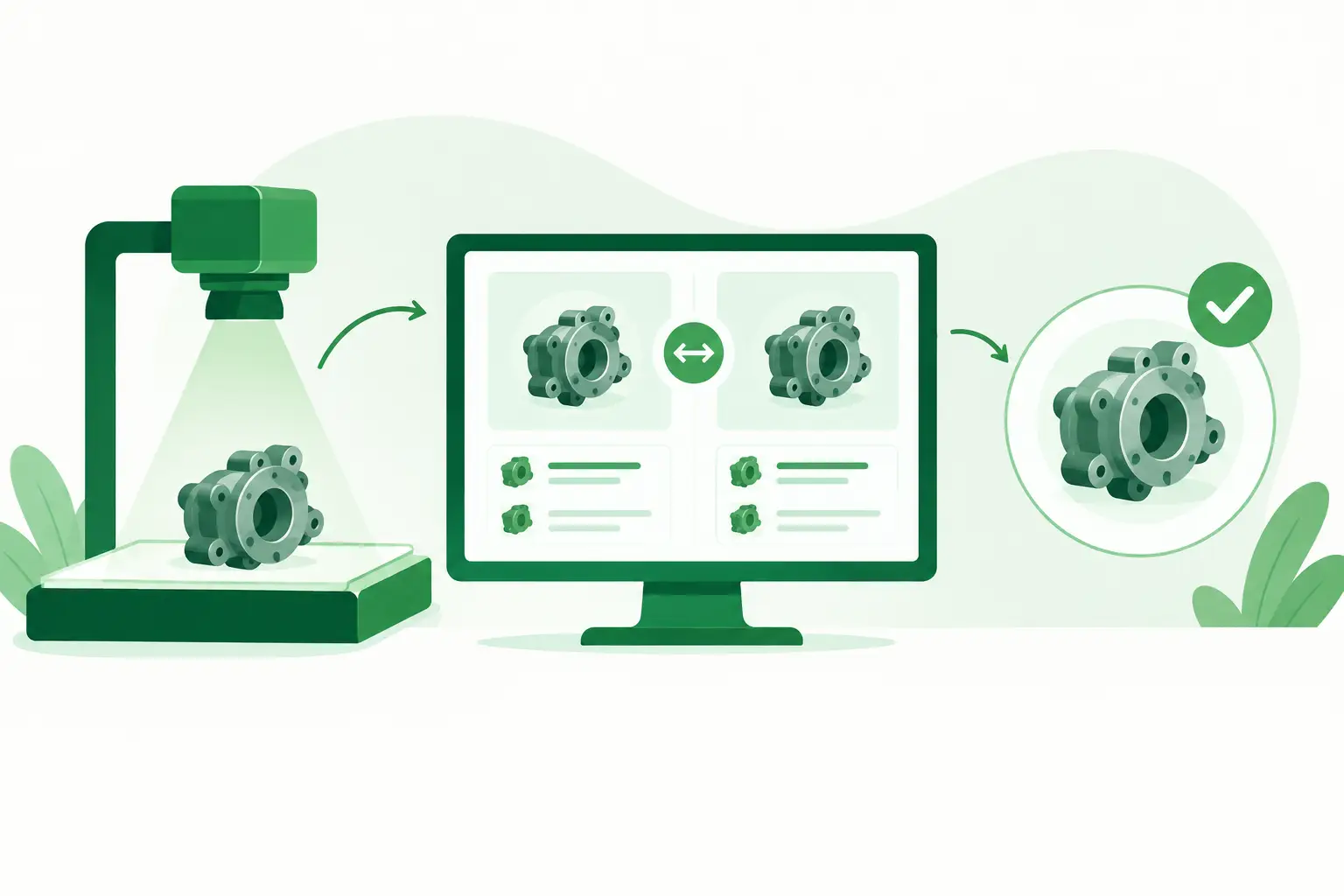
Photos are not a substitute for documentation, but they often compress the verification cycle. A clear label image can resolve a digit ambiguity. A connector photo can eliminate a similar-looking but incompatible option. In urgent situations, that can be the difference between a same-day quote and a longer back-and-forth.
Where exact-match sourcing typically breaks down
Most delays happen before the search starts. The request is sent with only a model name, an internal asset tag, or a generic item description such as power supply, monitor, or interface board. That creates too much interpretation and forces the supplier to reconstruct the identification process.
Another common issue is relying on broad-market distributors for specialized imaging assemblies. General suppliers may be effective for common consumables and standard hardware, but complex imaging platforms require deeper familiarity with OEM numbering structures, obsolete inventory channels, and cross-reference validation. A platform-specific component is not just another electronic spare.
There is also the issue of legacy equipment. Systems that remain clinically or commercially useful often outlive standard distributor support. In those cases, exact-match sourcing depends on supplier networks, teardown channels, tested refurbished stock, and access to hard-to-find inventory outside routine catalogs. This is where specialization has practical value.
How specialized suppliers reduce sourcing risk
A supplier focused on imaging equipment aftermarket support does more than check shelves. The real advantage is verification. That includes confirming whether the requested number is current or superseded, whether the component is sold independently or only as part of a larger assembly, and whether the quoted item matches the system generation in the field.
For urgent failures, fast quoting is important, but confidence in the quote is what prevents the second delay. A dependable supplier should be able to review technical details quickly, ask the right follow-up questions, and present realistic options based on availability, lead time, and condition. New inventory may be the right choice in one case. In another, a tested refurbished component may restore service faster and more economically.
For buyers managing multiple facilities or supporting mixed OEM fleets, that sourcing depth matters. A single procurement partner with broad modality coverage can simplify workflows, especially when the request shifts from CT to ultrasound to C-arm in the same week. Meditegic operates in that lane, where the value is not just access to inventory but the ability to validate what belongs in a specific system.
New, refurbished, or alternative sourcing path?
The right answer depends on the asset, the urgency, and the budget. New parts are often preferred for critical assemblies, current platforms, or situations where OEM traceability is a hard requirement. Refurbished parts make sense when lead time is the main constraint, when the system is older, or when the replacement cost of new inventory is difficult to justify.
The key is not choosing one category over the other by default. It is making sure the quoted part is the correct match and that the condition standard is clearly defined. Tested refurbished inventory from a knowledgeable supplier can be a practical choice for legacy systems that still need reliable uptime.
Alternative sourcing paths become relevant when the OEM channel no longer supports the component or lead times are too long for the clinical need. In these situations, exact-match validation becomes even more important. The scarcer the part, the less margin there is for a procurement error.
What buyers should ask before approving the order
Before releasing a purchase order, confirm that the supplier has matched the quoted part to the exact equipment details provided. Ask whether the number is original, alternate, or superseded. Confirm condition, testing status, warranty terms, and estimated ship timing. If the system is older or the part is known to vary by revision, ask whether any additional compatibility check is recommended.
This does not need to turn into a long technical review. A few direct questions can remove most avoidable risk. If the supplier answers clearly and specifically, that is usually a good sign that the request has been evaluated properly.
Building a faster process for the next urgent request
The teams that source fastest usually follow a repeatable internal process. They keep standardized intake fields for modality, model, serial number, part number, revision, and failure notes. They train service and purchasing staff to capture photos before a part is removed. They maintain records of prior replacements, especially on systems with recurring issues or mixed service history.
This kind of discipline pays off when time is short. Instead of starting from scratch during an outage, the buyer can send a complete request immediately and shorten the quote-to-ship window. It also reduces the chance of ordering based on memory, shorthand, or outdated paperwork.
Finding the right imaging part is rarely about searching harder. It is about identifying better, validating faster, and working with suppliers who understand that an exact match is not a preference - it is the job. When the next request lands in your queue, the best move is usually the simplest one: slow down just enough to confirm the details that keep the system from going down twice.