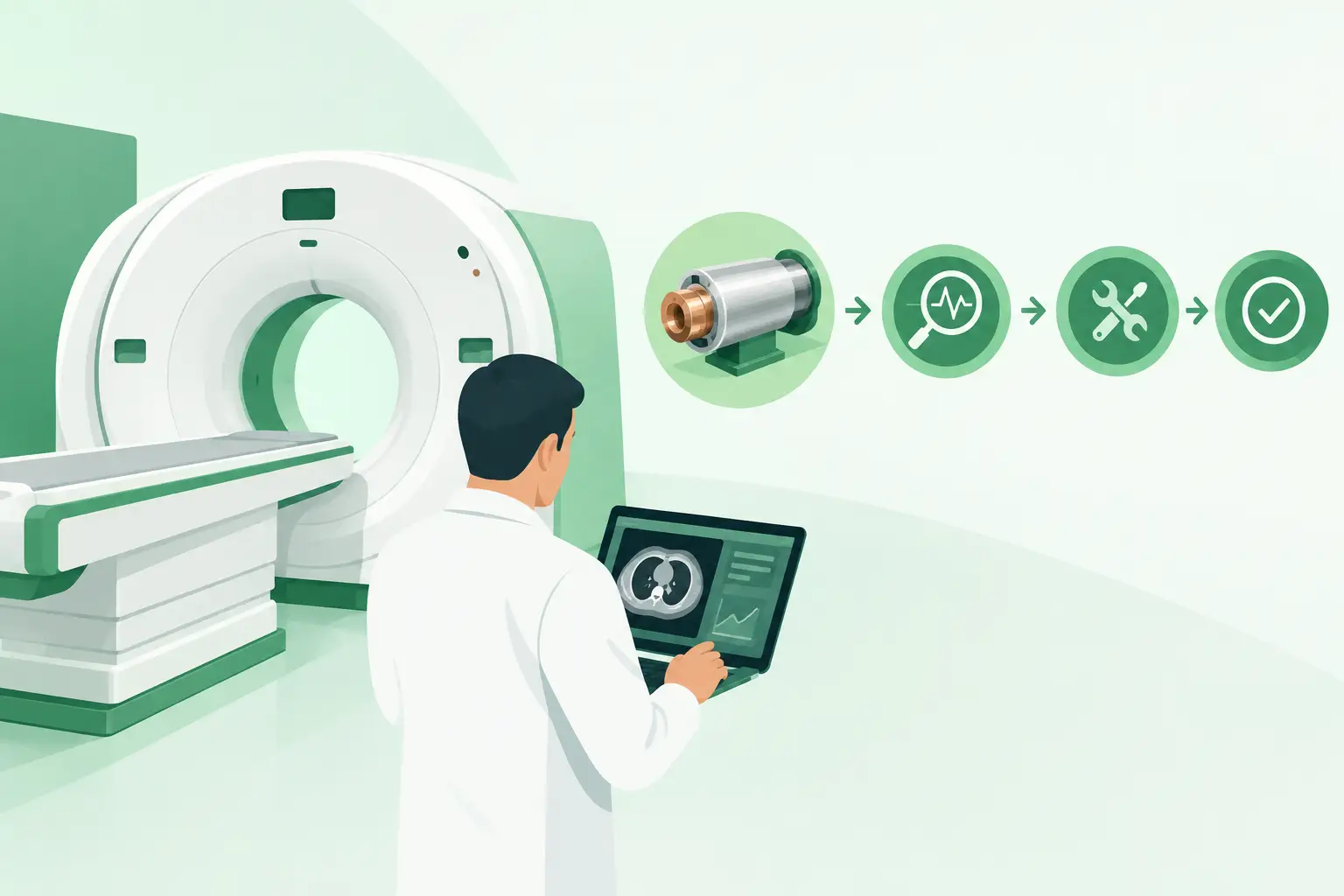
A CT room that sits idle for even part of a day creates a chain reaction - rescheduled patients, delayed reads, service pressure, and lost revenue. That is why hard to find medical imaging parts are not just a purchasing issue. They are an uptime issue, a clinical operations issue, and often a budget issue at the same time.
For hospitals, imaging centers, ISOs, and independent service teams, the challenge usually starts the same way. A component fails on a system that still has years of usable life, but the part is discontinued, backordered, tied to an older revision, or simply not stocked by standard channels. The job then shifts from routine procurement to targeted sourcing, where speed matters but accuracy matters more.
Why hard to find medical imaging parts create outsized risk
Diagnostic imaging systems are built from highly specific assemblies, subassemblies, boards, power components, probes, detectors, and mechanical parts that often vary by model, software generation, and configuration history. Two systems with the same modality and similar naming may not accept the same replacement component. That is where many sourcing delays begin.
The real cost of a missing part is rarely limited to the part itself. A delayed MRI coil interface board or an unavailable C-arm power module can keep a high-value asset down while labor is already scheduled, clinical staff are waiting, and patients need to be moved. For third-party service organizations, the pressure is even sharper because response time affects customer retention and contract performance.
Legacy equipment adds another layer. Many providers continue operating older CT, ultrasound, mammography, or Nuclear/SPECT systems because the equipment remains clinically useful and replacement capital is not always justified. The problem is that OEM support may narrow over time, stocking positions may change, and part availability becomes inconsistent. At that point, sourcing is less about catalog access and more about market reach.
What makes a part genuinely difficult to source
Not every delayed order qualifies as a hard-to-find part. In practice, the most difficult cases tend to fall into a few categories.
Some parts are discontinued outright, with no direct new replacement available. Others exist in the market but only in limited quantities through secondary channels. Some are tied to specific OEM revisions, firmware compatibility requirements, or serial-number ranges that make substitution risky. In other cases, a part may be available, but traceability, condition, or testing documentation are not strong enough for a buyer to proceed with confidence.
Imaging equipment also creates a unique sourcing problem because many components are too valuable, too specialized, or too infrequently needed to sit broadly in distribution inventory. A transducer, gradient-related component, detector board, or gantry subassembly may only surface through specialist networks, field recoveries, refurbishment pipelines, or niche stock positions. That is why general industrial sourcing methods often fall short in this market.
How experienced buyers approach hard to find medical imaging parts
The best procurement outcomes usually come from treating the request as a technical identification exercise first and a pricing event second. When the only goal is to get a quote fast, teams can end up evaluating the wrong part, the wrong revision, or a component with unclear condition status.
Strong buyers start with exact equipment data. That includes the OEM part number, alternate part numbers if known, system model, modality, serial number, and a clear description of the failure or intended replacement. Photos of labels, boards, connectors, and installed assemblies often help resolve ambiguity early. If a part has been superseded before, that history matters too.
Condition requirements should be defined upfront. In some cases, new is mandatory due to policy, warranty needs, or risk profile. In others, refurbished or tested used inventory is entirely appropriate, especially for legacy systems where new OEM stock is no longer realistic. The key is to match the sourcing path to the operational need instead of assuming one procurement standard fits every part category.
Lead time should also be discussed honestly. There are situations where same-day shipment is realistic, especially when a specialist supplier has existing stock or immediate access through a qualified network. There are also cases where the market simply requires more time because the part must be located, verified, tested, or pulled from a larger assembly channel. The difference between a useful supplier and an unhelpful one is not promising impossible speed. It is giving a realistic answer quickly.
The difference between standard distribution and specialist sourcing
Standard distributors serve an important role, but they are usually optimized for repeatable demand, active product lines, and conventional stocking logic. Hard to find medical imaging parts sit outside that model. They often require cross-referencing old numbers, validating compatibility against legacy configurations, and searching beyond visible inventory.
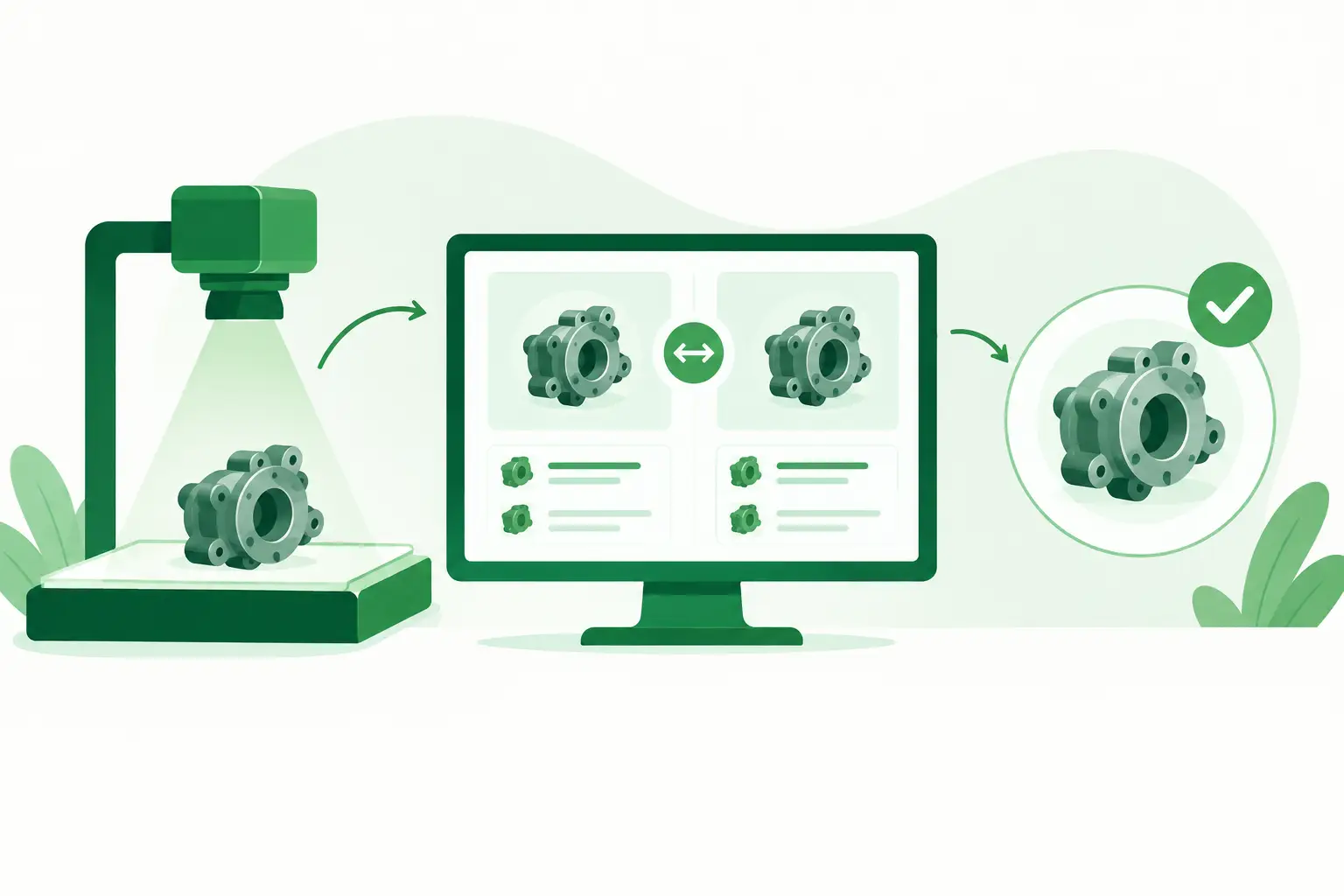
A specialist sourcing partner works differently. The value is not only what is sitting on a shelf. It is the ability to search a broad supplier network, use a deep parts database, recognize modality-specific naming variations, and identify alternate procurement paths without wasting days on dead ends.
That distinction matters when downtime is measured in canceled scans and technician hours. A buyer does not need another vendor who says a part is unavailable after checking one screen. They need a partner who can investigate whether it exists in refurbished stock, recovered inventory, third-party holdings, or less obvious channels that still meet commercial and technical requirements.
For many procurement and service teams, that is where a focused aftermarket supplier such as Meditegic fits best - not as a general catalog source, but as a resource for difficult requests where accuracy, speed, and market access have to work together.
What to verify before issuing a PO
When a rare part becomes available, urgency can push teams to move too quickly. That is understandable, but several checks are worth making before release.
First, confirm exact part identification. If there are alternate numbers, ask which one is being supplied and whether it is a direct replacement or a compatible substitute. Second, verify condition clearly: new, refurbished, tested used, or as-is. Those terms are not interchangeable.
Third, ask about testing and warranty. A board pulled from stock without documented evaluation is a different risk than a tested component backed by a defined warranty period. Fourth, confirm lead time and shipping cutoff in practical terms. A quote that says available means very little if the part cannot move until several days later.
Finally, consider the total service event. If the repair requires a paired component, calibration support, or an additional accessory that commonly fails alongside the primary part, it is better to address that before the system is opened twice. Experienced imaging buyers know that one scarce component often exposes another weak point once the repair begins.
New versus refurbished is not a simple quality question
There is still a tendency in some organizations to view new parts as automatically safe and refurbished parts as a compromise. In imaging aftermarket sourcing, that view is often too simplistic.
For active product lines, new stock may be the best fit. For discontinued platforms, however, insisting on new only can extend downtime with little practical benefit if the available refurbished option has been properly inspected and tested. In many cases, refurbished inventory is what keeps a clinically useful legacy system operating at a sensible cost.
The better question is whether the part is appropriate for the system, traceable through the supplier, and supported with reasonable quality controls. A refurbished ultrasound board from a specialized supplier may be a sound decision. An unverified component with uncertain history, even if described loosely as new surplus, may not be.
Building a better process before the next failure
Most teams only rethink parts sourcing after an urgent breakdown. A more effective approach is to tighten process before the next service call. That means documenting high-risk systems, tracking known weak components, and keeping accurate equipment and part-number records by modality and site.
It also helps to know which assets are most exposed to legacy parts risk. A hospital may be able to tolerate longer sourcing times on one secondary room but not on its highest-volume CT or mammography unit. Prioritizing those systems changes how buyers evaluate suppliers, stocking strategies, and response expectations.
Procurement and biomed teams benefit from aligning on escalation triggers as well. If a part is not found through normal channels within a short window, there should be a clear path to specialist sourcing rather than a slow sequence of repeated dead-end inquiries. That alone can save critical time.
Hard to find medical imaging parts will remain part of the aftermarket reality as long as useful systems outlast standard supply cycles. The organizations that manage this well are usually not the ones with the biggest budgets. They are the ones with the clearest part data, the fastest decision paths, and a sourcing partner that knows how to find what ordinary channels miss.