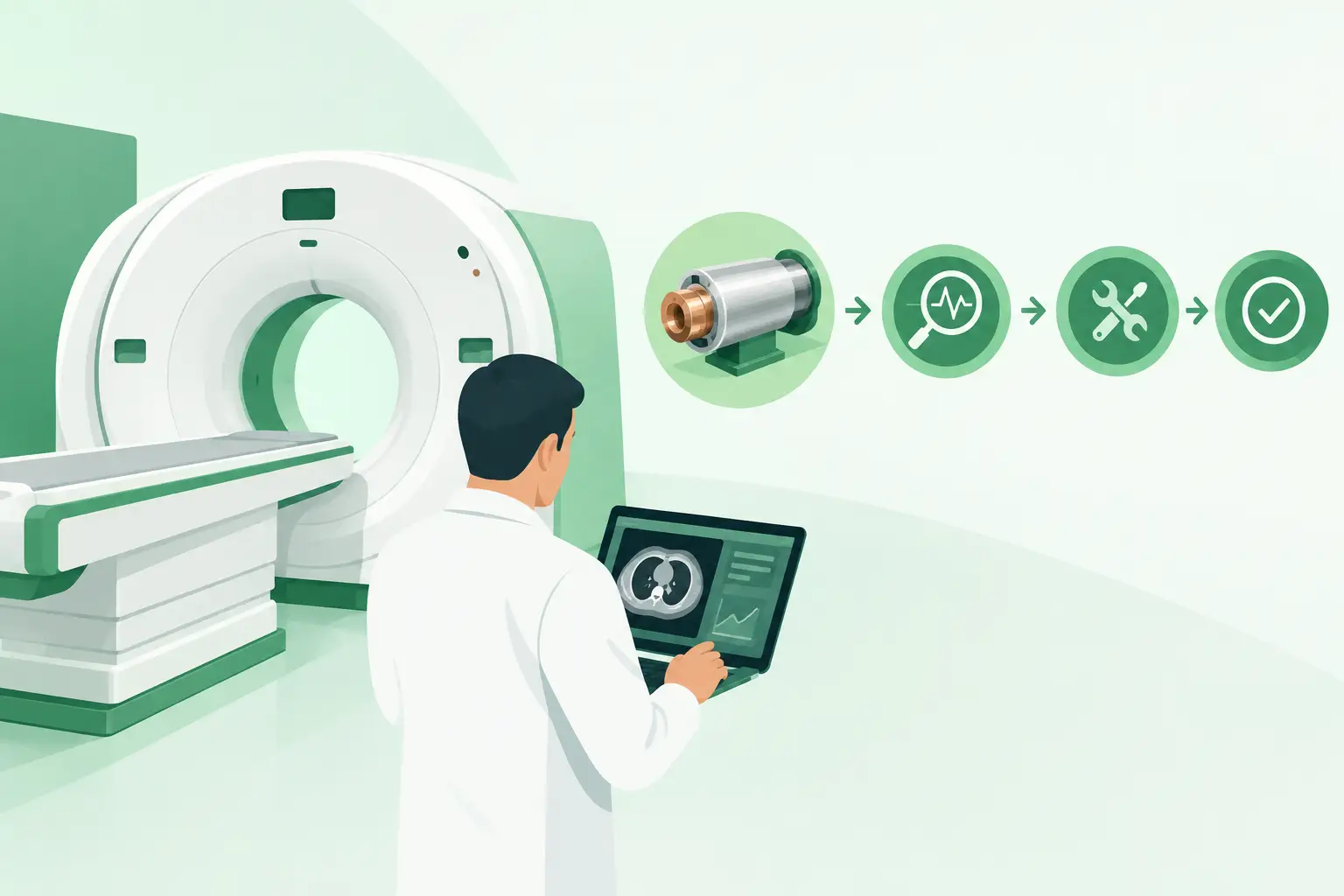
A CT room sitting idle for half a day rarely shows up as a line item on a purchase order, but every imaging leader knows the cost is real. Lost scans, rescheduled patients, strained staff, and service backlogs all trace back to one operational issue: hospital equipment procurement that is too slow, too fragmented, or too generic for the equipment being supported.
For hospital teams, procurement is not just about getting a part at an acceptable price. It is about getting the correct part, in the right condition, from a credible source, within a timeframe that protects uptime. That distinction matters even more in diagnostic imaging, where replacement components can be highly specific, intermittently available, or discontinued altogether.
Why hospital equipment procurement is harder than it looks
On paper, procurement workflows appear straightforward. A need is identified, a quote is requested, approvals are completed, and the order is placed. In practice, the process gets complicated fast when the asset is a legacy MRI, a high-use C-arm, or a CT system with model-specific assemblies that are not sitting on a standard distributor shelf.
The biggest challenge is that healthcare equipment buying often combines two very different categories under one procurement function. One category is routine and predictable, such as supplies or common service items. The other is technical, urgent, and highly constrained by compatibility. Imaging replacement parts fall into the second category.
That is where delays tend to multiply. A part number may be incomplete. The OEM may no longer support the system. Multiple suppliers may list the same component with different lead times and inconsistent condition details. Internal stakeholders may also have different priorities. Purchasing wants cost control and compliance. Biomed wants exact fit and reliability. Service teams want speed. Clinical departments want the room back online.
Good procurement support brings those priorities together instead of forcing the hospital to trade one against another every time.
What strong hospital equipment procurement actually requires
The most effective procurement programs are built around accuracy first, then speed, then price. That order is not always popular, but it prevents expensive mistakes.
An incorrect replacement part can create more downtime than a delayed shipment. A lower-cost component with unclear provenance can introduce repeat failures, warranty friction, or installation issues. In imaging environments, the cost of the wrong decision is usually much higher than the savings from the lowest quote.
That is why strong procurement depends on a few practical capabilities.
Exact-match sourcing
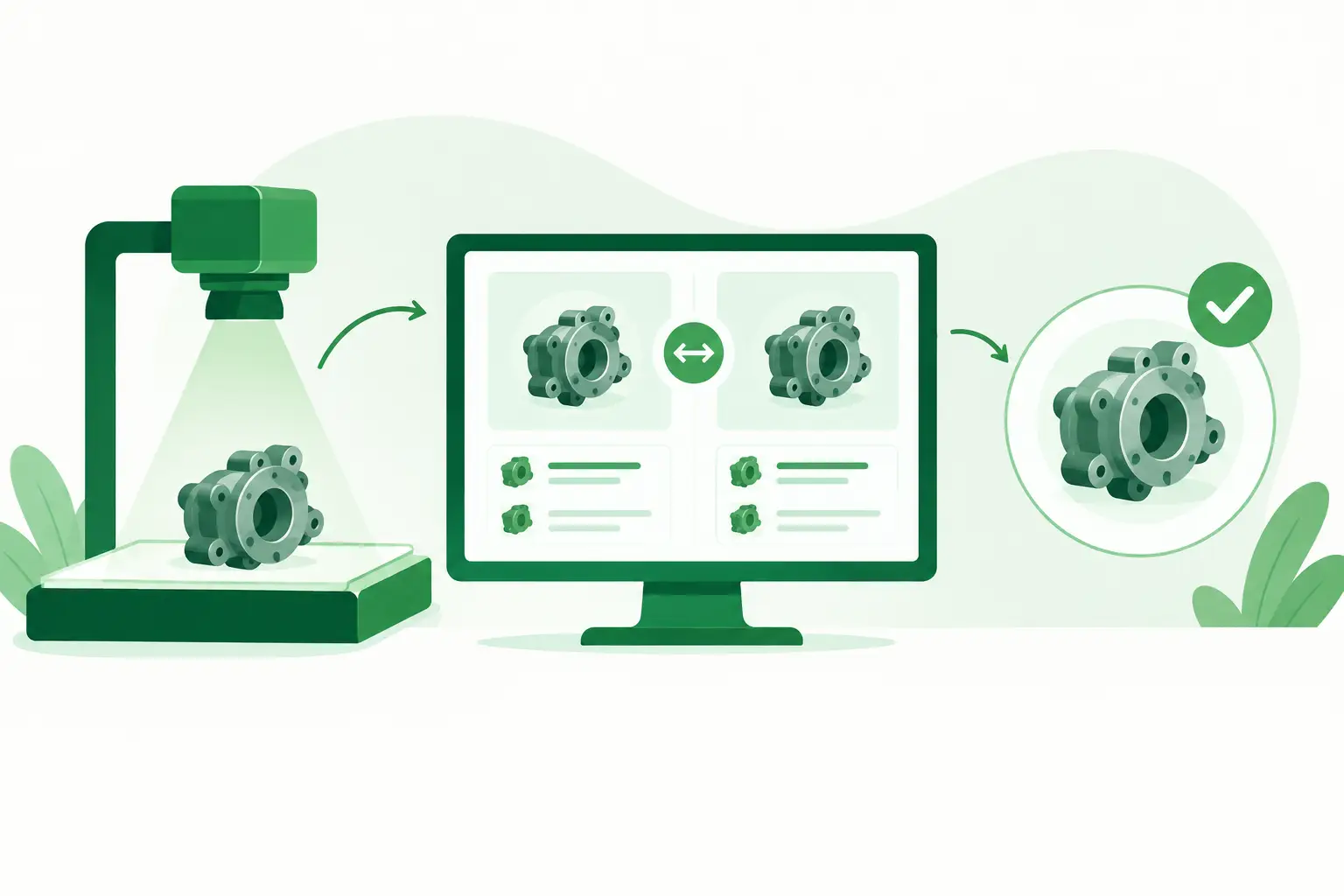
Part-number precision is the foundation. Many imaging systems include revisions, subassemblies, and OEM-specific configurations that are easy to misidentify. Buyers need suppliers that can validate compatibility, not just send over a price.
Access beyond standard distribution
The real test is what happens when the part is not readily available. Hospitals and service teams often need access to refurbished inventory, surplus channels, vetted secondary suppliers, and hard-to-find legacy stock. Without that network, urgent sourcing turns into a time-consuming search across disconnected vendors.
Clear condition and availability data
New, refurbished, and tested-used parts can all make sense depending on the application. What matters is transparency. Buyers should know what condition is being quoted, whether the part has been tested, what documentation is available, and how quickly it can ship.
Fast, informed quoting
Speed matters, but speed without accuracy creates rework. The best suppliers can turn quotes around quickly while still asking the technical questions needed to prevent ordering errors.
The trade-offs buyers deal with every day
There is no single procurement strategy that fits every equipment event. The right choice depends on criticality, budget, asset age, and service expectations.
A new OEM part may be the right call for a mission-critical system under a strict service framework. A refurbished component may be the more sensible option for an older modality where budget control matters and validated aftermarket sourcing is available. For discontinued systems, secondary market sourcing may be the only practical path.
The point is not that one option is always better. It is that hospital equipment procurement works best when buyers can evaluate trade-offs quickly with reliable information in hand.
For example, a lower upfront part cost may not be the best value if the lead time is uncertain. A higher-priced in-stock component may save far more by reducing scanner downtime. Likewise, standardizing exclusively on new parts sounds simple, but it can be unrealistic when supporting mixed fleets with legacy equipment still in active use.
Why imaging equipment creates a special procurement burden
Diagnostic imaging sits in a category of its own because the assets are expensive, technically complex, and central to clinical throughput. A failed transducer, coil component, power supply, board, or display assembly can affect not only one room but an entire scheduling chain.
Imaging procurement also tends to be fragmented. One supplier may support ultrasound well but not CT. Another may quote X-ray parts quickly but struggle with older MRI components. Hospitals then end up managing multiple vendor relationships for overlapping categories, each with different response times and data quality.
That fragmentation creates hidden labor. Staff spend time reconciling part details, comparing condition notes, chasing shipping updates, and escalating urgent requests. The procurement cost is not just the part price. It is also the internal effort required to get a dependable result.
This is why specialized sourcing support matters. A focused supplier with experience across CT/PET, MRI, Nuclear/SPECT, C-arm, X-ray, ultrasound, mammography, and densitometry can reduce friction in ways a general distributor typically cannot.
How to improve hospital equipment procurement without overhauling everything
Most hospitals do not need to rebuild procurement from scratch. They need fewer points of failure.
The first step is separating routine purchasing from high-impact technical sourcing. Imaging parts, legacy replacements, and urgent service-related purchases should follow a procurement path designed for speed and part validation. Running those requests through the same process as standard supplies often slows decisions without improving outcomes.
The second step is tightening intake data. When requests include confirmed part numbers, equipment model details, urgency level, and preferred condition if applicable, quote accuracy improves immediately. That sounds basic, but incomplete requests are a major source of delay.
The third step is reducing supplier sprawl. More vendors do not always create better coverage. In many cases, they create duplicate work. A smaller group of dependable specialty suppliers can improve response time, simplify communication, and increase confidence in what is being ordered.
The fourth step is treating aftermarket sourcing as a controlled strategy rather than a last resort. Refurbished and hard-to-find parts are often essential for maintaining older systems economically. The key is vetting the supplier, understanding testing standards, and documenting what was purchased.
Organizations that do this well usually build practical sourcing rules. They define when OEM is required, when aftermarket is acceptable, and what documentation is needed for each category. That gives purchasing and technical teams a shared framework instead of making every order a debate.
What buyers should expect from a procurement partner
A capable procurement partner should make the buying process easier under pressure, not just send quotes. That means responsive communication, accurate part identification support, realistic lead times, and access to inventory channels that standard sources do not cover.
For imaging-focused buyers, specialization matters. A supplier that understands modality-specific parts and the realities of maintaining mixed OEM and legacy environments can usually move faster with fewer mistakes. Meditegic operates in that space by supporting institutional buyers and service organizations that need replacement parts sourcing centered on uptime, accuracy, and speed.
Buyers should also expect honesty. If a part is difficult to source, that should be clear up front. If lead time is uncertain, it should not be presented as firm. Procurement teams make better decisions when they get operationally useful information rather than generic assurances.
Procurement performance should be measured by outcomes
The success of procurement is often judged too narrowly by unit cost. In equipment environments, that misses the bigger picture.
A stronger measure is whether the process helped restore service quickly, avoided repeat ordering, reduced staff time spent searching, and supported equipment life without unnecessary overspend. Those are the outcomes that matter to hospitals balancing financial pressure with clinical demand.
When procurement is aligned with technical reality, it stops being a back-office function and becomes part of uptime strategy. That shift is especially valuable for imaging departments and service teams working with aging fleets, tight budgets, and constant pressure to keep rooms operational.
The most practical way to improve results is not to chase a perfect sourcing model. It is to build a procurement approach that responds well when conditions are imperfect - because in hospital equipment support, that is usually the real job.