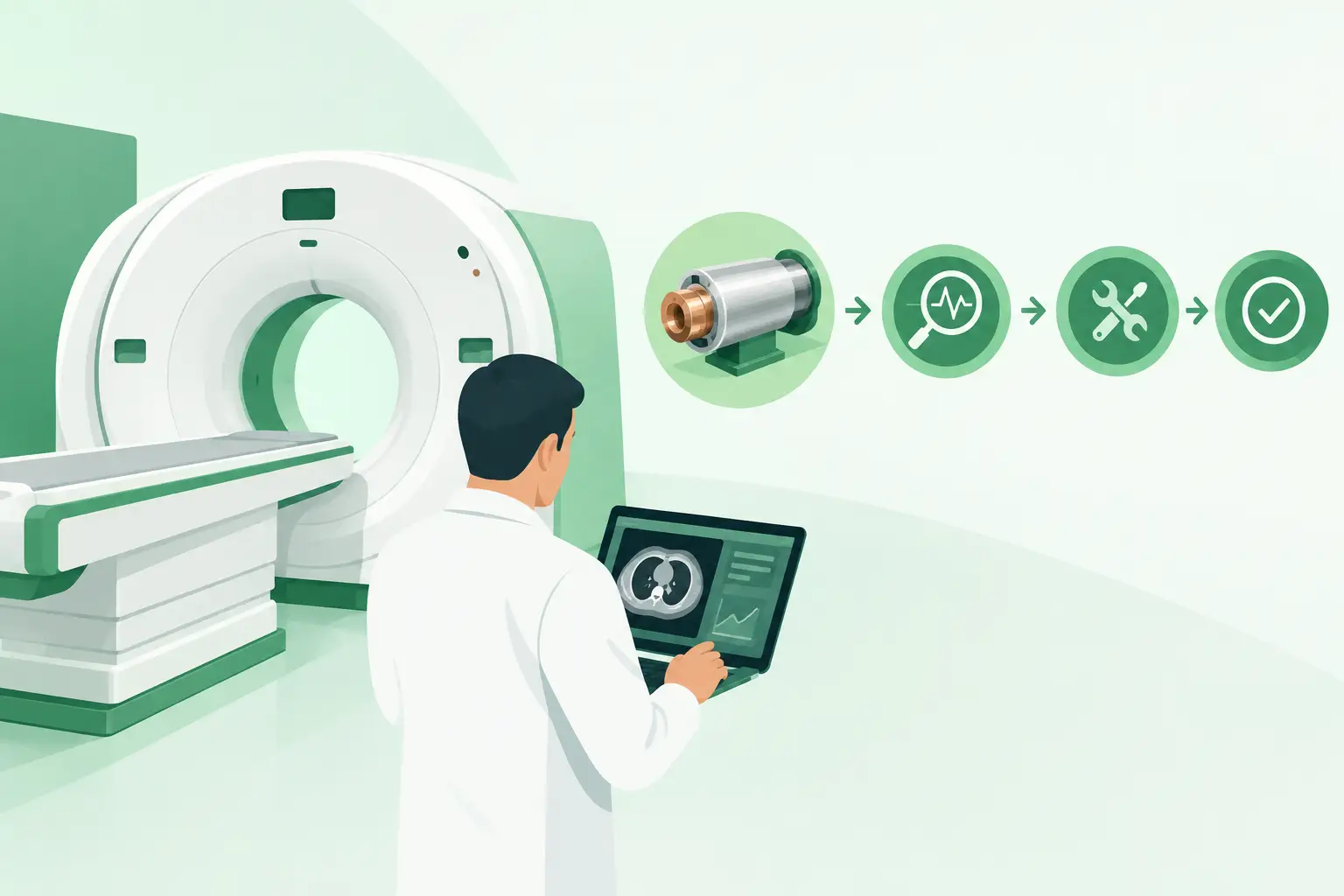
A CT room sitting idle for one missing board can cost far more than the board itself. That is why knowing how to source legacy imaging parts is less about routine purchasing and more about protecting uptime, service schedules, and patient access.
Older imaging platforms do not fail on a convenient timeline, and they rarely fail with easy-to-order parts. Once a system is out of OEM priority support or the component has been discontinued, standard distribution channels tend to thin out fast. Procurement teams, biomeds, and independent service organizations are then left sorting through incomplete part records, uncertain inventory claims, and long lead times that do not match the urgency of the situation.
How to source legacy imaging parts without losing time
The fastest sourcing process usually starts before any RFQ goes out. The first priority is identifying the exact component needed, not the component that seems close enough. In legacy imaging, small variations matter. A board revision, software compatibility note, cable assembly variant, or country-specific power configuration can turn an available part into the wrong part.
The most reliable starting point is the equipment data already inside your service workflow. Pull the full model, serial number, modality, system configuration, and any installed option packages. Then confirm the part number from the service manual, illustrated parts breakdown, field service notes, or the removed component label itself. If the label is damaged or the number is superseded, that is where many sourcing efforts stall. At that point, you need a supplier that can work from cross references, not just exact matches typed into a catalog.
A strong sourcing request should include the original part number, any alternate or substitute numbers, the equipment model and serial, a description of the failure, and whether new, refurbished, or tested used inventory is acceptable. If there is an urgency window, state it clearly. A same-day downtime event should not be quoted the same way as a planned PM replacement.
The part number is only the beginning
Legacy imaging procurement often breaks down because buyers treat the part number as the full specification. It is not. Especially across CT, MRI, PET/CT, nuclear, ultrasound, C-arm, and X-ray systems, the part number may only represent one version of a larger compatibility story.
For example, a detector component may have multiple revisions with narrow install ranges. A power supply may physically fit but require a specific firmware environment. A transducer may share a family name but differ by connector type or application compatibility. Even common subassemblies can vary by generation, software release, or regional build.
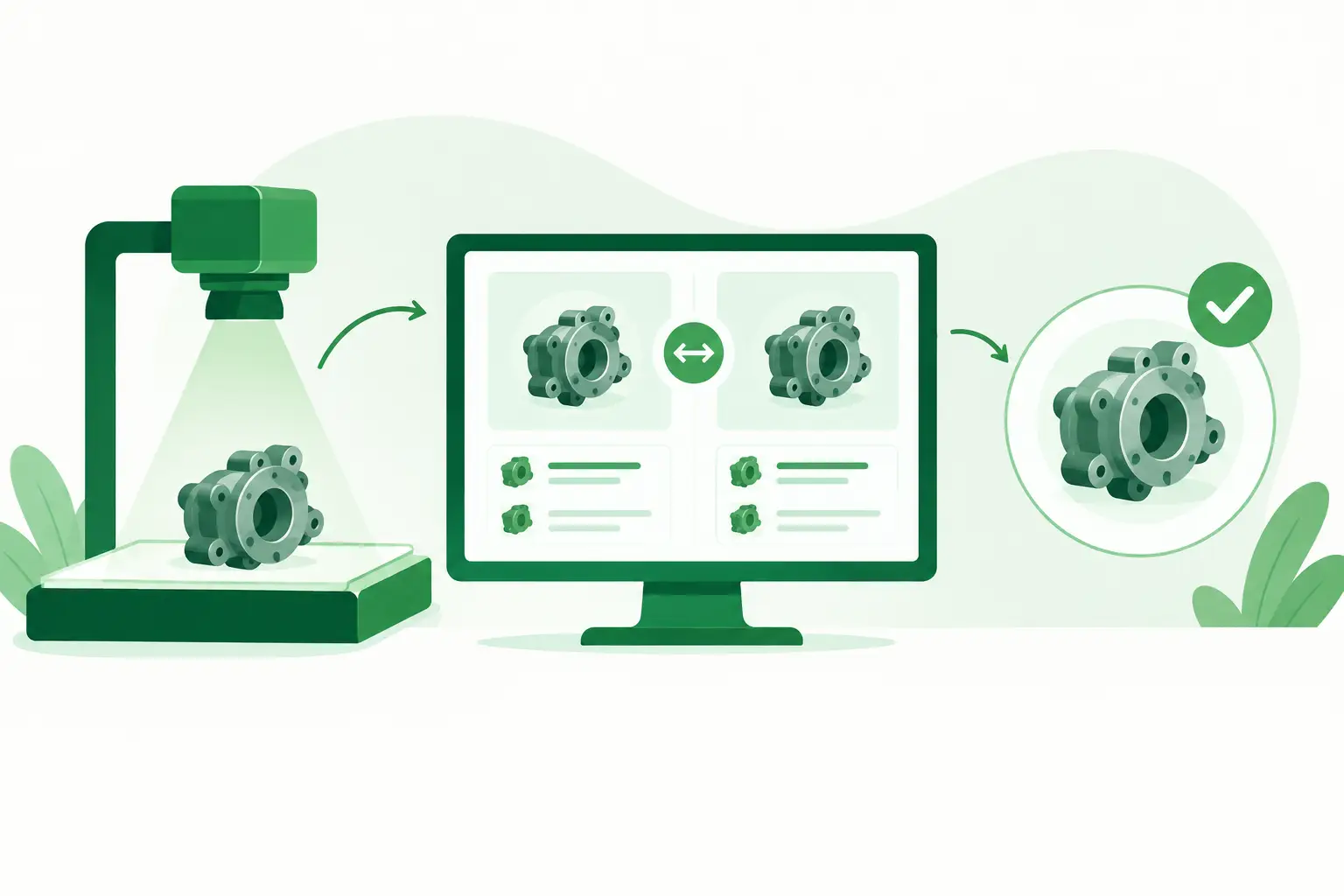
That is why experienced buyers ask a supplier to validate fitment against system details, not just quote price and availability. If a vendor cannot explain how they are confirming compatibility, that is a warning sign. Speed matters, but receiving the wrong part quickly does not reduce downtime.
Where legacy imaging parts actually come from
There is no single channel for discontinued imaging components. The supply base is usually fragmented across OEM surplus, independent aftermarket inventories, teardown sources, refurbishment partners, international stock, and specialized brokers with access to large supplier networks. Each source has a place, but each source also carries risk.
OEM channels can still be useful for some older systems, especially when a part has been replaced by a supported equivalent. But many legacy components are no longer actively stocked, or pricing may not be practical for older assets.
Independent aftermarket suppliers often provide the widest access to hard-to-find inventory. The trade-off is that quality, testing standards, documentation, and response speed vary widely. Some vendors truly specialize in diagnostic imaging. Others operate as general surplus resellers and may not understand modality-specific compatibility.
Teardown and harvested inventory can solve urgent shortages, particularly when a system family is no longer supported. That said, harvested parts should not be treated as interchangeable commodities. Condition history, storage conditions, test status, and removal traceability matter, especially for high-value boards, assemblies, and transducers.
Refurbished inventory is often the best middle ground for cost control and availability if the supplier can define what refurbishment actually includes. Cosmetic cleaning is not refurbishment. Functional testing, component-level repair when needed, calibration checks where applicable, and clear warranty terms are much more meaningful.
How to evaluate a supplier for legacy parts
When buyers ask how to source legacy imaging parts effectively, the answer is usually less about finding more vendors and more about identifying the right kind of vendor. A supplier for legacy imaging components should be able to do more than check stock. They should be able to verify, cross reference, and move quickly when documentation is incomplete.
Start with responsiveness. If your team sends a detailed request and gets back a vague reply, expect the rest of the transaction to look the same. Fast quotation turnaround matters because downtime costs accumulate quickly, but speed should come with specificity. A useful quote includes condition, quantity, lead time, warranty, and whether the part is in-house, sourced from a partner, or pending verification.
Next, ask about testing. This is especially important for boards, power modules, gradient-related assemblies, imaging electronics, and ultrasound probes. A supplier should be able to explain whether a part is new, tested used, repaired, or refurbished, and what that designation means operationally.
Then look at sourcing depth. Legacy imaging parts are often not sitting in one warehouse waiting for a web order. The strongest suppliers combine internal inventory access with a broad supplier network and a substantial parts database. That combination improves the odds of finding older and discontinued components fast, particularly across multiple modalities.
Finally, evaluate whether the supplier understands the operational context. Hospital procurement, biomed teams, and third-party service firms do not need generic sales language. They need confirmation that the vendor can support exact-match sourcing, urgent logistics, and realistic communication if a part is scarce or backtracked.
New, refurbished, or used: what makes sense
There is no universal answer here. It depends on system age, risk tolerance, budget, and the role of the part in the equipment.
New OEM inventory is usually preferred when it is available and cost justified. For many legacy systems, though, that is not realistic. Refurbished parts often offer the best balance when the component has been tested properly and backed with a credible warranty. Used parts can make sense for lower-risk applications, interim repairs, or end-of-life equipment where a facility is trying to extend serviceable life without major capital spend.
The key is to match the sourcing decision to the clinical and operational reality. A mission-critical component in a high-throughput imaging department deserves a different procurement standard than a noncritical accessory on a backup unit. Buyers should also factor in repeat failure risk, install labor, and whether another outage would trigger canceled studies or rescheduled patients.
Common mistakes that slow down sourcing
The most common delay is incomplete equipment information. Sending only a system name and a brief description forces the supplier to start from scratch. Another frequent issue is assuming that all revisions are interchangeable. In legacy imaging, that assumption can create expensive returns and more downtime.
Buyers also lose time when they source sequentially instead of in parallel. If the need is urgent, do not wait for one channel to fail before contacting another. Build a sourcing process that reaches qualified imaging parts suppliers quickly with the same complete data set.
Another mistake is focusing only on unit price. A lower quote is not automatically a lower-cost decision if the part is untested, incorrectly identified, or two days slower than the clinical schedule allows. Total downtime cost usually matters more than the line-item savings.
Building a repeatable process for future outages
The best organizations do not treat each legacy part shortage as a one-off emergency. They build internal habits that shorten the next search. That includes maintaining clean asset records, storing confirmed alternate part numbers, documenting successful supplier outcomes, and flagging systems with known high-risk components.
It also helps to standardize what your team sends in every RFQ. A complete request package reduces back-and-forth and improves quote accuracy. For organizations supporting mixed OEM fleets, this is one of the easiest ways to reduce procurement friction.
For many healthcare providers and service organizations, working with a specialist such as Meditegic can simplify that process because the value is not just inventory access. It is also the ability to source across multiple channels, verify difficult parts, and respond with the urgency that legacy imaging failures usually demand.
Legacy systems will keep running as long as parts can still be found and matched correctly. The organizations that handle that well are rarely the ones with the biggest budgets. They are the ones with the clearest data, the best sourcing discipline, and supplier support that treats uptime like the priority it is.