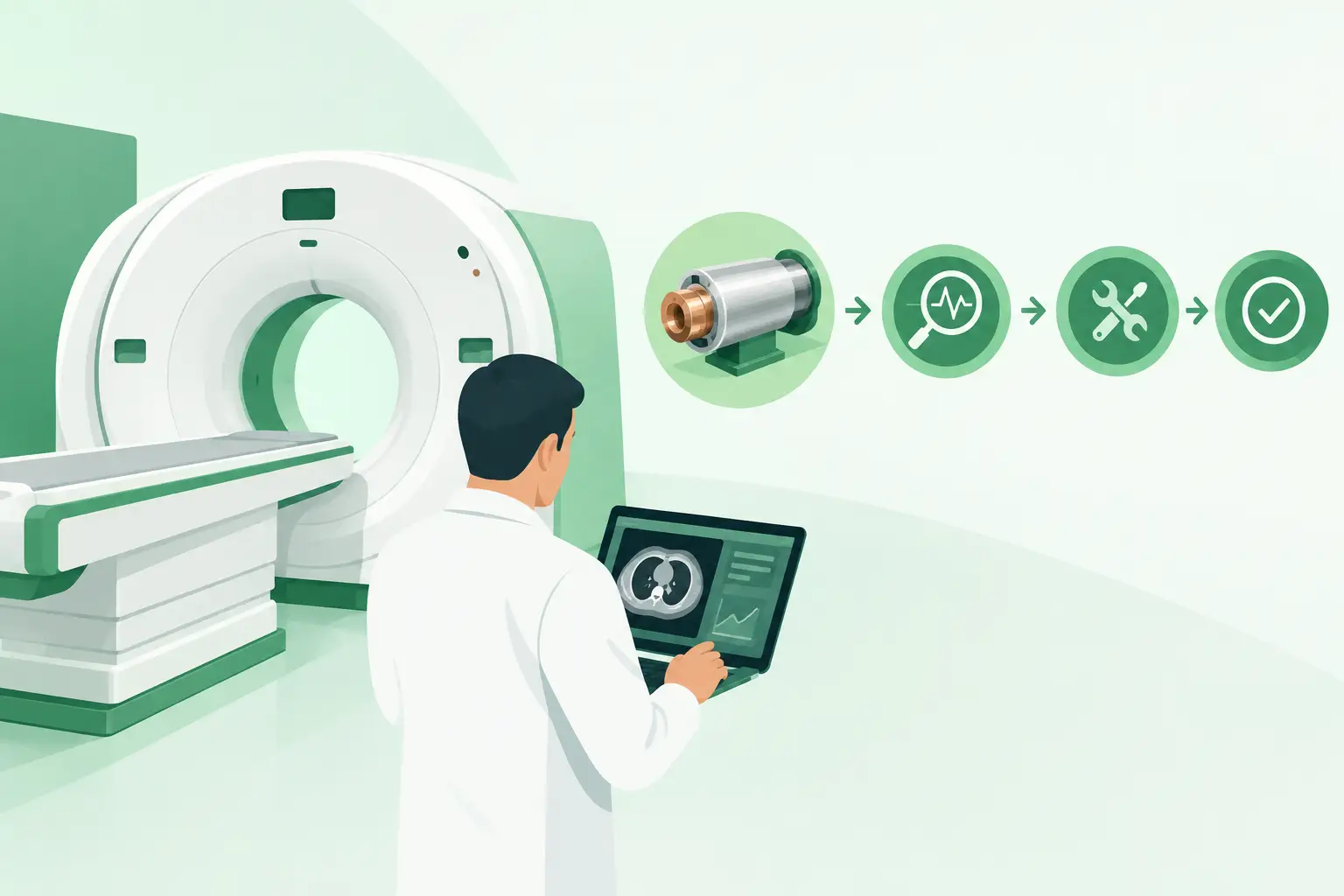
A CT room goes offline at 9:10 a.m., the schedule starts slipping by 9:20, and by 10:00 the real issue is no longer just a failed component. It is lost capacity, delayed care, pressure on biomed and service teams, and a purchasing process that now has to move fast without making an expensive mistake. That is exactly where a strong medical imaging procurement guide becomes useful. In imaging environments, procurement is not just about price control. It is about uptime, part accuracy, service continuity, and the ability to source across both current and legacy systems.
What a medical imaging procurement guide should actually solve
General procurement playbooks rarely fit diagnostic imaging. The stakes are higher, the parts are more specialized, and the sourcing path is often fragmented. A standard office or facilities buying process does not account for discontinued assemblies, multiple OEM revisions, modality-specific compatibility, or the operational cost of downtime on high-value systems.
For hospitals, imaging centers, independent service organizations, and biomedical teams, the objective is straightforward: get the right part, in the right condition, with the right documentation, on a timeline that protects service delivery. That sounds simple until a quote depends on serial number verification, an exact match is no longer in active production, or the least expensive option turns into a repeat failure two weeks later.
A useful procurement framework has to balance urgency with control. It should reduce sourcing delays, tighten part validation, and give buyers a practical way to evaluate vendors beyond unit price.
Start with equipment criticality, not the PO
Procurement decisions improve when they begin with asset criticality. A failed ultrasound probe and a failed MRI subsystem do not carry the same clinical, financial, or scheduling impact. Neither should they trigger the same sourcing response.
High-throughput modalities such as CT, MRI, and cath lab imaging often justify faster escalation paths, broader supplier outreach, and approval thresholds that reflect the true cost of downtime. Lower-acuity or lower-volume systems may allow more time for price comparison or planned sourcing. The point is not to create bureaucracy. It is to align buying speed with operational consequence.
This is also where many teams uncover a gap in their process. They have purchasing rules, but not imaging-specific sourcing priorities. When that happens, every urgent request feels like an exception. A better model defines in advance which modalities, rooms, and part categories require accelerated procurement handling.
Build your parts procurement process around exact-match accuracy
In medical imaging, near match is often the same as wrong part. Part number precision matters, but so do revision levels, system configuration, modality, manufacture date, software environment, and installed options. The risk is not just ordering the wrong item. It is extending downtime because the part looked correct on paper but was incompatible in the field.
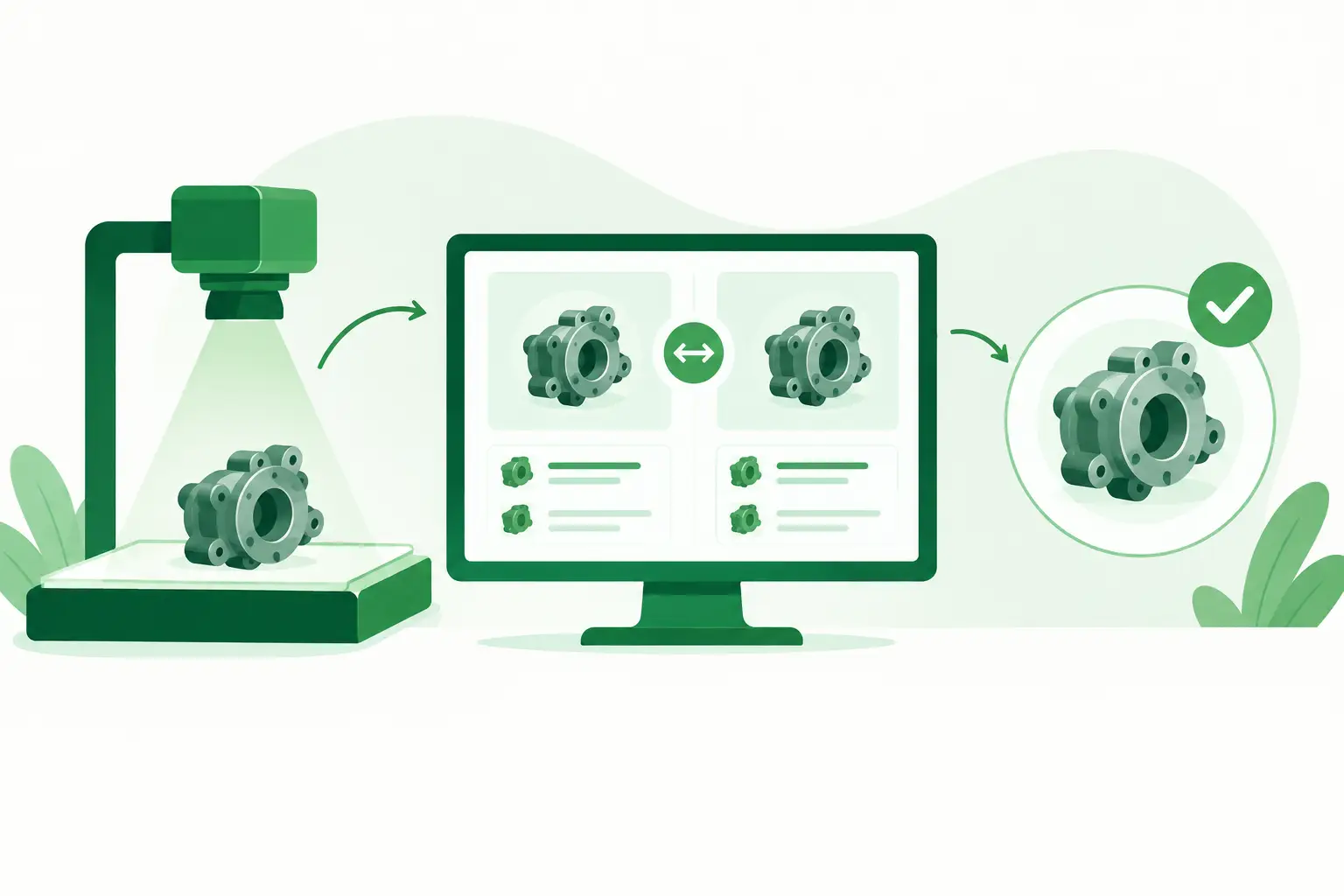
That is why technical validation needs to sit close to the procurement workflow. Buyers should require enough information upfront to support exact-match sourcing: OEM part number, alternate numbers if available, model, serial number, system version, failure description, and whether the request is for a new, refurbished, or tested replacement.
The more complex the system, the less useful a bare part number becomes on its own. Legacy imaging platforms are a good example. Assemblies may have multiple acceptable revisions, while others need precise matching because of firmware, connector changes, or known field issues. Procurement teams that treat validation as a front-end step generally move faster overall because they avoid requotes, returns, and second-round sourcing.
New, refurbished, or exchange: choose based on risk and lead time
One of the most practical decisions in any medical imaging procurement guide is when to buy new, when to buy refurbished, and when to use exchange options. There is no single right answer because the best choice depends on modality, part type, budget pressure, urgency, and the role of the component in system performance.
New parts may offer the strongest fit for high-risk applications, current-generation systems, or situations where warranty terms and traceability carry added weight. Refurbished parts can be the more sensible route when OEM availability is limited, systems are aging, or budget discipline matters without compromising function. Exchange can be highly effective for certain assemblies when speed is critical and the return process is manageable.
The trade-off is straightforward. Lower-cost options may improve budget performance, but only if testing, quality control, and compatibility are reliable. Fast-shipping options reduce immediate downtime, but not if they introduce uncertainty around condition or support. Procurement teams should make these choices with technical input, not as a pure pricing exercise.
Evaluate vendors on responsiveness and sourcing depth
In imaging parts procurement, vendor capability shows up in the first response. Can the supplier interpret the request correctly? Can they identify alternates or confirm a revision issue? Can they quote quickly on hard-to-find items without creating confusion around condition, lead time, or warranty?
A supplier that serves complex imaging environments should be able to do more than check stock. They should be able to source across multiple OEM and aftermarket channels, support a wide range of modalities, and handle urgent requests with a high degree of accuracy. This matters most when the needed part is discontinued, backordered, or tied to an aging installed base.
Breadth of sourcing access is often more important than warehouse size alone. A large supplier network, a strong historical parts database, and experience with obsolete or rare components can materially reduce downtime. For many buyers, this is the difference between calling five vendors and getting one usable quote versus working with a specialist who can compress that search.
Price matters, but total downtime cost matters more
Procurement teams are right to push for competitive pricing. The problem is that imaging failures do not wait for a perfect quote cycle. A cheaper part with uncertain availability can become the most expensive option if it keeps a revenue-generating system offline for another day or two.
That is why total acquisition cost should be paired with downtime cost. Include lost scans, rescheduling burden, overtime, field service impact, and the internal time spent chasing multiple suppliers. In some cases, paying more for a verified in-stock component with fast turnaround is the financially responsible decision. In others, planned maintenance windows allow for more price sensitivity.
This is not an argument against cost control. It is an argument for measuring cost in the same way operations experiences it.
Documentation and quality checks should not slow the order down
Imaging procurement often breaks down at the handoff between urgency and compliance. Teams need traceability, condition disclosure, warranty terms, and order accuracy, but they also need to move quickly. The answer is not to lower standards. It is to standardize the information required from the supplier so approvals happen faster.
At minimum, buyers should expect clear identification of the part, stated condition, lead time, warranty, and any return or exchange requirements. For refurbished items, testing status and quality process matter. For critical assemblies, teams may also need photos, repair reports, or confirmation of compatibility.
The strongest procurement operations build this into the request and quote process from the start. That reduces back-and-forth and gives purchasing, biomed, and service teams a common basis for approval.
A practical medical imaging procurement guide for urgent sourcing
When imaging equipment goes down, the process has to be repeatable. First, confirm the exact technical requirement with as much system detail as possible. Next, classify the request by asset criticality and acceptable sourcing options. Then send the request to vendors that can support imaging-specific validation, not just generic parts fulfillment.
From there, compare quotes on four points: match accuracy, condition, lead time, and warranty. Price should be reviewed in that context, not in isolation. If the system is clinically or financially critical, escalate decisions based on downtime impact rather than standard purchasing cadence.
This is where working with a specialized sourcing partner can remove friction. Meditegic serves buyers who need access to medical imaging spare parts across multiple modalities, including hard-to-find and discontinued components, with speed that fits real service pressure.
Where procurement teams usually lose time
Most delays come from three sources: incomplete part identification, fragmented vendor outreach, and approval loops that were designed for routine purchases rather than equipment outages. None of these are unusual, but all of them are fixable.
A stronger process starts before the next failure. Standardize intake requirements for imaging parts requests. Maintain approved vendor paths for urgent and non-urgent orders. Create escalation rules by modality and clinical impact. Keep records on which suppliers consistently quote accurately and which ones add noise without adding supply.
That kind of discipline does not eliminate emergencies. It makes them easier to manage when they happen.
The real value of procurement in imaging is not just buying parts. It is protecting continuity when systems fail, inventories tighten, and the easy source is no longer available. The teams that perform best are the ones that treat sourcing as part of uptime strategy, not an administrative step after the failure is already costing them time.