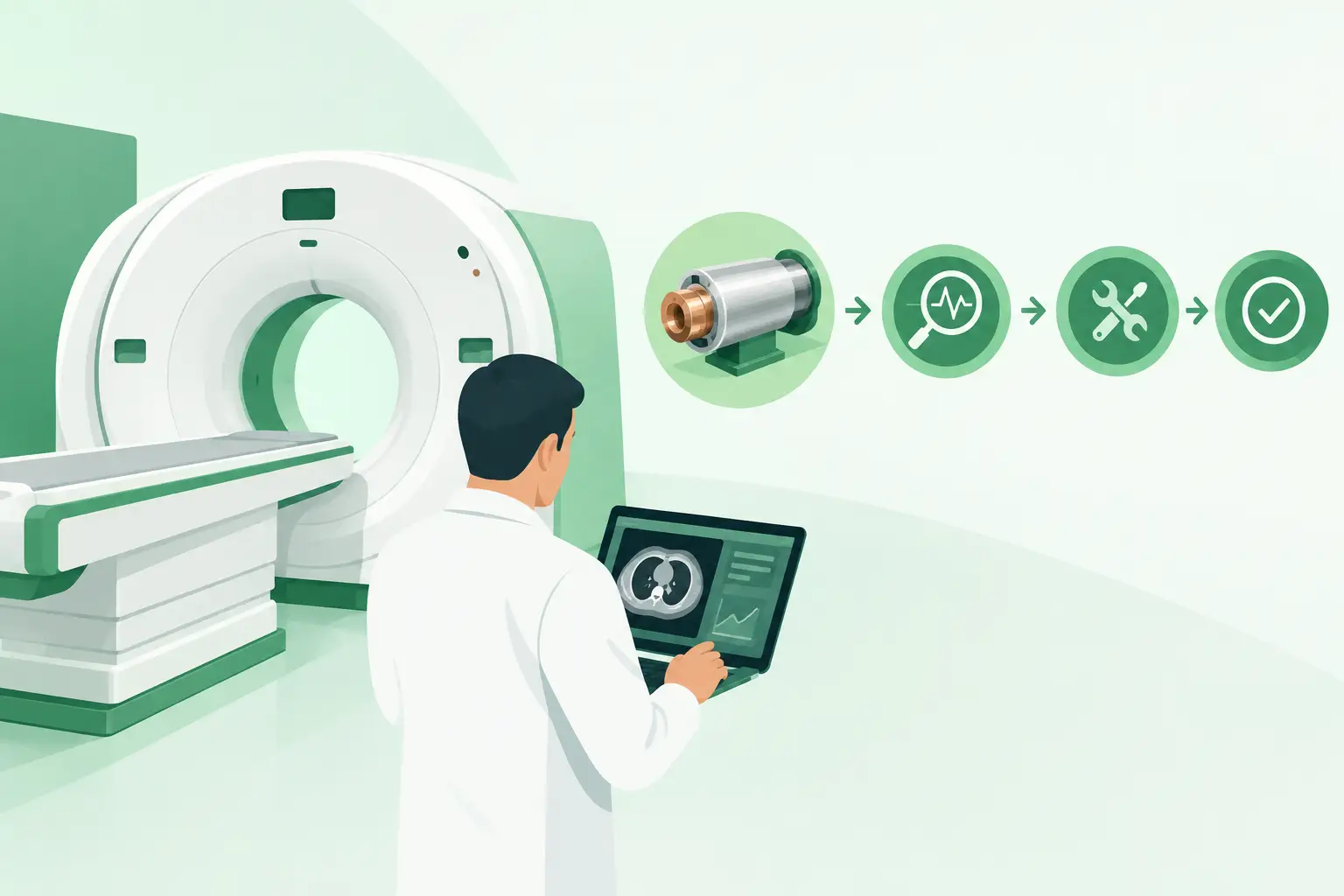
A gamma camera can be clinically useful one day and sidelined the next because of a single failed board, detector issue, or motion component. That is why nuclear medicine equipment parts are not just line items in a purchasing system. They are a direct factor in uptime, patient scheduling, service response, and the usable life of high-value imaging assets.
For hospitals, IDNs, imaging centers, and independent service organizations, the challenge is rarely just finding a part category. The real issue is finding the exact part number, in the right condition, on a timeline that matches operational pressure. Nuclear and SPECT systems often stay in service for years, sometimes well beyond the window where OEM channels are straightforward. As systems age, sourcing becomes less about routine procurement and more about technical accuracy, inventory reach, and speed.
Why nuclear medicine equipment parts are uniquely difficult to source
Nuclear imaging systems sit in a different service environment than many other modalities. They combine detector assemblies, high-voltage electronics, gantry and motion subsystems, acquisition hardware, power components, and specialized cooling or support parts. A failure in any one of these areas can affect image quality, system calibration, patient throughput, or total system availability.
The sourcing difficulty increases when equipment is older, multi-generation, or no longer fully supported through standard OEM distribution. In those cases, buyers are often dealing with discontinued inventories, revised part numbers, exchange requirements, or uncertainty about compatibility across model variants. Even experienced procurement teams can lose time when descriptions are inconsistent across vendors or when a part has multiple service-level substitutions.
This is where specialization matters. A general parts supplier may understand broad medical purchasing, but nuclear imaging service support requires familiarity with modality-specific assemblies and the consequences of getting a replacement wrong. A board that appears similar may not carry the same firmware, revision level, connector format, or system compatibility. In nuclear imaging, a near match is often not a match.
The nuclear medicine equipment parts that most directly affect uptime
Not every component has the same operational impact. Some failures are visible immediately because the system cannot initialize or acquire properly. Others show up first as degraded performance, intermittent faults, or calibration instability. The highest-priority nuclear medicine equipment parts tend to fall into a few practical categories.
Detector and crystal-related assemblies
Detector performance is central to image quality, and issues in this area can be among the most disruptive. Depending on the system, service teams may need replacement detector heads, crystal assemblies, photomultiplier tube components, positioning-related detector hardware, or associated electronics. These are not casual buys. Condition, testing history, and compatibility are critical because image artifacts or instability create downstream clinical and service problems.
Electronic boards and control modules
Acquisition boards, processor boards, interface boards, power distribution modules, and control electronics are frequent pain points, especially in older systems. A failed board may stop the system entirely, but the more difficult cases are intermittent board-level failures that mimic broader system problems. Buyers often need a supplier who can work from an exact part number, cross-reference revisions, and confirm whether refurbished stock has been functionally tested.
Gantry, motion, and positioning components
Nuclear and SPECT systems rely on precise movement and positioning. Motors, encoders, drives, brakes, bearings, cables, and related mechanical assemblies can all affect system operation. Motion faults are particularly costly because they may shut down scanning or create repeat service calls if the root cause is not isolated correctly. These parts are often harder to source quickly than standard consumables because demand is urgent and installed bases are aging.
Power and support components
Power supplies, fans, cooling assemblies, harnesses, keypads, displays, and operator interface parts may seem secondary until they stop a room from running. In practice, these items often become urgent purchases because they prevent startup or safe use. They also illustrate why a broad sourcing network matters. Support components are not always high-profile inventory items, but they can still hold a system offline.
New, refurbished, or hard-to-find: what makes sense?
There is no single right answer for every purchase. The best option depends on system age, clinical demand, budget, risk tolerance, and how quickly the room needs to return to service.
New parts are usually preferred when they are available, priced reasonably, and aligned with the expected service life of the system. They offer the most straightforward path when long-term reliability is the top priority. The trade-off is availability. For many legacy nuclear systems, new OEM inventory may be limited, subject to long lead times, or discontinued entirely.
Refurbished parts are often the practical middle ground. For experienced buyers, the question is not whether refurbished is acceptable in principle. The question is how the part was sourced, inspected, tested, and documented. A properly refurbished board or assembly can restore uptime quickly and economically, especially when the alternative is extended downtime or forced capital replacement. The trade-off is that quality varies widely by supplier, so sourcing discipline matters.
Hard-to-find and discontinued parts require a different procurement mindset. In these situations, the value is not just access to a part. It is access to a supplier network that can locate obsolete inventory, verify condition, and move quickly enough to support service windows. This is where specialized aftermarket sourcing has a measurable operational advantage.
What technical buyers should confirm before purchasing
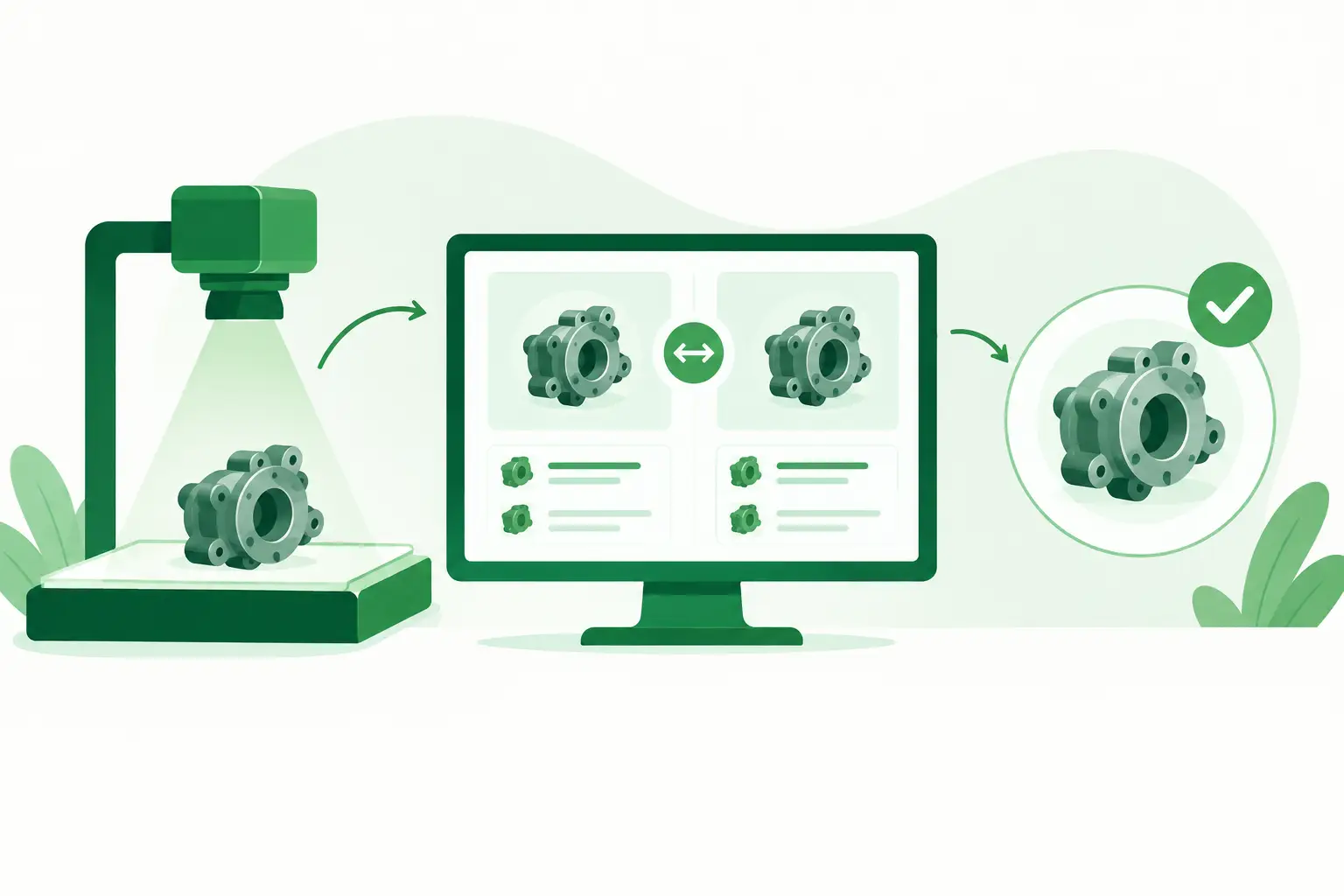
Speed matters, but speed without verification creates repeat failures, returns, and more downtime. For nuclear imaging systems, buyers should confirm part-number accuracy first, then move to revision compatibility, condition, and test status.
Part-number accuracy sounds basic, but it is where many avoidable mistakes begin. Model names alone are not enough. A system family may include multiple hardware configurations, software generations, or regional variants. If the original component has a label, serial information, or revision code, that data should be used.
Condition should also be clear up front. If the part is new, refurbished, or used, that should be stated plainly. For refurbished components, buyers should ask what functional checks were performed. For board-level parts, that may include power-on testing or known-good system validation. For detector or motion-related assemblies, condition and handling become even more important because installation labor is higher and the consequences of failure are more expensive.
Lead time and fulfillment terms deserve the same attention as price. A lower-cost quote does not help if the part is not truly available or cannot ship in the required timeframe. In urgent nuclear service situations, a fast and accurate quote is often more valuable than a nominally lower option that introduces uncertainty.
Why sourcing strategy matters more on aging systems
Many nuclear and SPECT platforms remain clinically useful long after the easiest parts channels have narrowed. That creates a familiar problem for healthcare providers and service firms: the system still has value, but parts sourcing becomes fragmented, slow, and unpredictable.
At that point, procurement is not just about buying one component. It is about protecting the service life of an asset. A proactive strategy can help. That may include identifying repeat-failure categories, documenting approved substitute part numbers, keeping a shortlist of high-risk assemblies, and working with a supplier that can support both routine and urgent requests across legacy inventories.
This approach is especially relevant for organizations managing multiple modalities and mixed OEM environments. Internal teams do not always have the time to chase rare nuclear parts across disconnected vendors. A specialized sourcing partner with a large database and broad supplier reach can reduce that burden. Meditegic operates in that exact space, helping technical buyers locate difficult imaging parts faster when standard channels fall short.
Choosing a supplier for nuclear medicine equipment parts
The strongest supplier is not necessarily the one with the longest catalog page. It is the one that can confirm availability, understand part-level specificity, and respond with speed under service pressure. For nuclear medicine equipment parts, practical capability matters more than general claims.
Buyers should look for signs of real imaging specialization: familiarity with modality-specific terminology, support for legacy systems, access to both new and refurbished inventory, and the ability to work from exact part numbers rather than vague equipment descriptions. Responsiveness also matters. When a camera is down, every hour spent waiting on a quote extends the operational impact.
There is also value in breadth. Many healthcare organizations and service companies support CT, MRI, ultrasound, X-ray, and nuclear systems at the same time. A supplier that understands the broader imaging aftermarket can simplify procurement across modalities while still handling the complexity of nuclear equipment.
The pressure around these purchases is not theoretical. Downtime affects patient access, staff productivity, service efficiency, and revenue. The right part, sourced accurately and delivered quickly, keeps an imaging asset working. The wrong one adds another service event.
For teams responsible for keeping nuclear systems in operation, the best purchasing decisions usually come down to three things: exact match, verified condition, and dependable response time. When those are in place, even difficult parts shortages become manageable, and the equipment you already own keeps doing the job it was installed to do.