A failed MRI component rarely creates a simple purchasing task. It creates a service interruption, rescheduled scans, pressure from clinical teams, and a race to find the right part before downtime starts affecting revenue and patient access. That is why refurbished MRI replacement parts have become a practical option for hospitals, imaging centers, and service organizations that need to restore system performance without waiting on limited OEM inventory or paying new-part pricing when it is not necessary.
For experienced buyers, the question is not whether refurbished parts belong in the aftermarket. They already do. The real question is when a refurbished part is the right fit, what level of verification is required, and how to source it with enough confidence to support uptime rather than add risk.
Why refurbished MRI replacement parts remain in demand
MRI systems stay in service for years, often well beyond the period when OEM support is straightforward. Even on actively supported platforms, lead times can stretch, pricing can be difficult to justify, and certain assemblies may be backordered or no longer stocked in meaningful volume. On older systems, the challenge is more direct: the exact part may be discontinued, scarce, or only available through secondary market channels.
Refurbished MRI replacement parts help close that gap. They give procurement teams and service providers access to assemblies and components that are still operationally viable, often at a lower cost and with better availability than new alternatives. That matters when the equipment involved is a high-value imaging asset and every hour offline affects scheduling, staffing, and patient throughput.
There is also a budget reality behind many purchasing decisions. Not every repair justifies a new OEM component, especially on legacy equipment nearing end of life. In those cases, a properly refurbished part can extend usable system life and help organizations defer capital replacement while maintaining acceptable performance.
What "refurbished" should mean in MRI parts procurement
In this market, "refurbished" is not a useful term by itself. It can describe anything from a basic cleaned pull to a tested and restored assembly that has been inspected, repaired where necessary, and validated before shipment. Buyers should not assume consistent standards across suppliers.
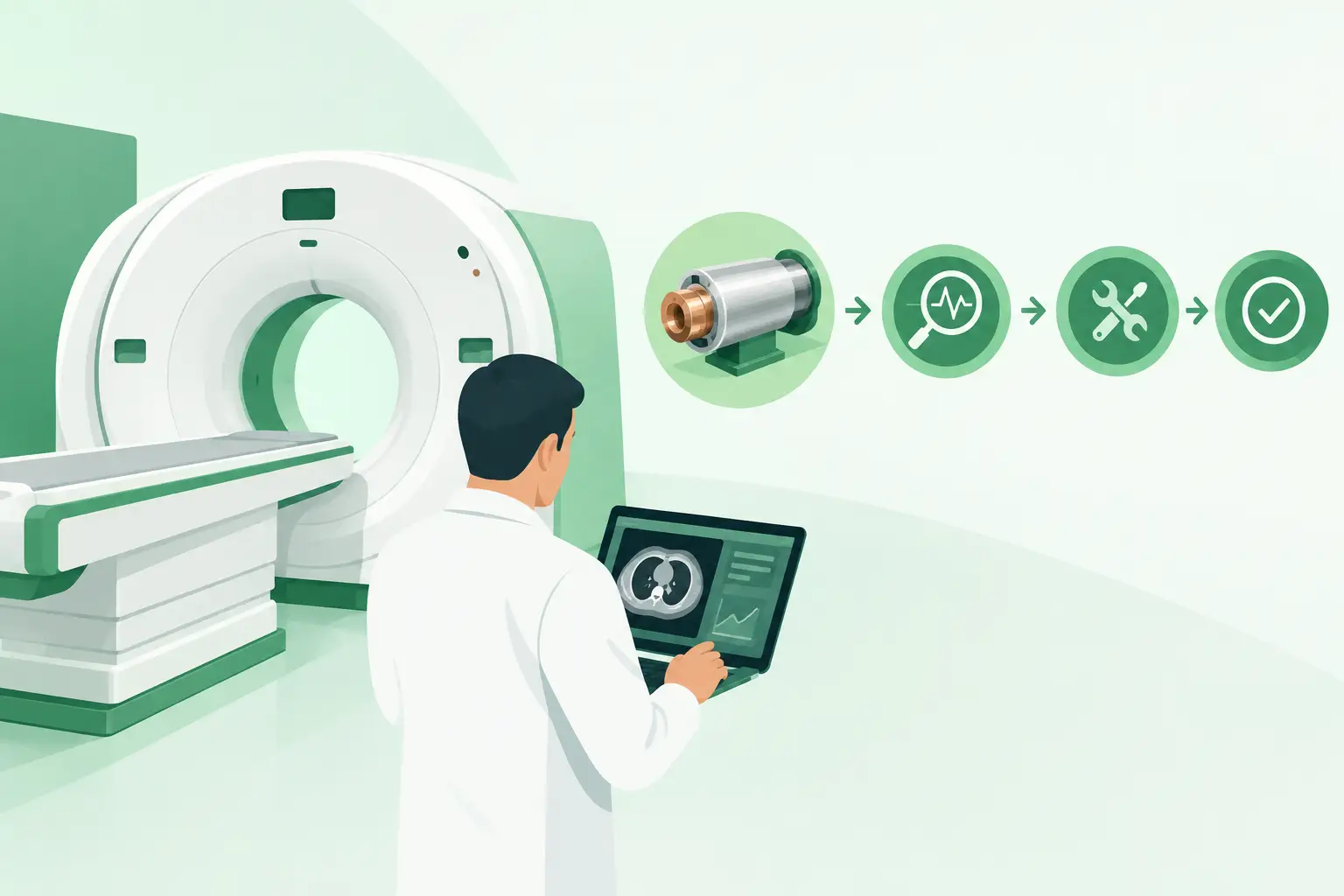
A credible refurbished MRI part should have a clear path of evaluation behind it. That usually means identification by exact part number, visual inspection, functional testing where applicable, and replacement of failed or degraded subcomponents if the refurbishment process requires it. For some categories, calibration checks, board-level repair, connector inspection, and cosmetic restoration may also be relevant. For others, especially highly specialized MRI assemblies, the most important factor is confirmed functionality under appropriate test conditions.
The useful distinction is not new versus used. It is verified versus uncertain. If a supplier cannot explain how the part was assessed, matched, and prepared for redeployment, the lower price may not represent value.
Which MRI parts are commonly sourced refurbished
The MRI aftermarket covers a wide range of part categories, and refurbishment suitability depends heavily on the component type. RF amplifiers, gradient-related electronics, power supplies, interface boards, control modules, displays, patient table components, and certain coil-related assemblies are often sourced through refurbished channels. Some of these can be tested and restored with a high degree of confidence when handled by experienced imaging parts specialists.
Other components require more caution. High-risk or highly system-sensitive assemblies may demand stricter review because failure consequences are more severe, diagnosis is more complex, or compatibility issues are less forgiving. The decision often depends on the system model, the urgency of the repair, historical failure patterns, and whether the organization has in-house technical expertise to validate installation and performance.
That is why purchasing teams and field service groups usually evaluate refurbished MRI replacement parts case by case rather than by policy alone. A blanket rule can create unnecessary cost on one side or unnecessary exposure on the other.
How to evaluate quality before you buy
The first checkpoint is exact-match identification. MRI systems are not forgiving when substitute logic replaces part-number discipline. Revisions, firmware compatibility, connector differences, and model-specific configurations all matter. Buyers should verify the full part number, applicable system model, and any relevant serial or revision details before requesting a quote.
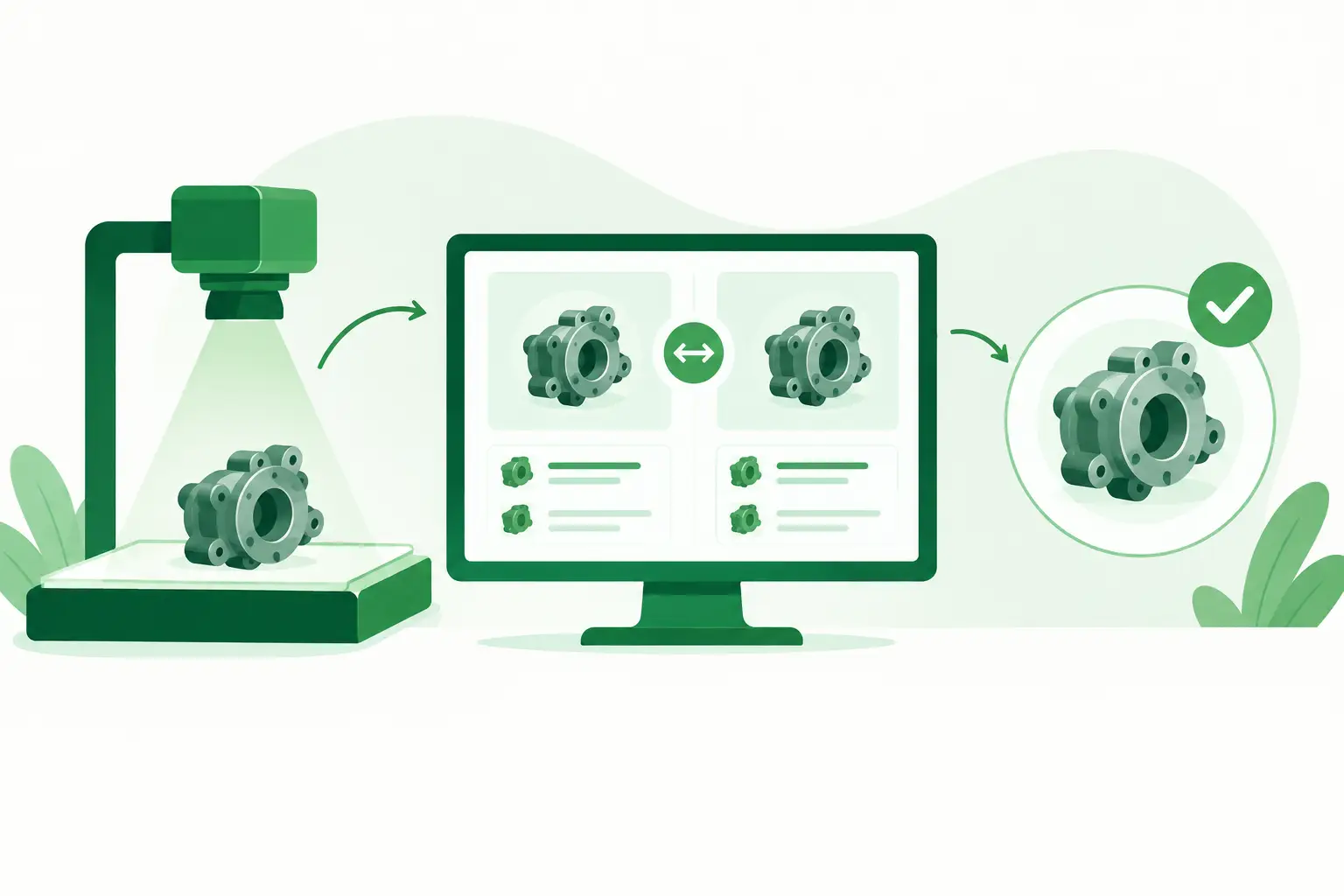
The second checkpoint is testing documentation or test process transparency. The supplier does not need to reveal proprietary repair methods, but they should be able to describe how the part was verified. For technical buyers, vague assurances are not enough. Knowing whether a board was powered, loaded, benchmarked, repaired, or simply inspected changes the risk profile materially.
The third checkpoint is condition and traceability. That includes whether the part came from a deinstalled system, was sourced from surplus inventory, or was rebuilt from a known failed unit. It also helps to know whether the supplier routinely handles MRI parts or treats imaging components as a small extension of a broader surplus business. Specialization matters because failure modes, compatibility questions, and packaging requirements are different in diagnostic imaging.
Warranty terms are also worth close review, but not in isolation. A longer warranty does not automatically offset weak testing standards or uncertain sourcing. At the same time, a reasonable warranty backed by a responsive supplier can reduce exposure, especially when downtime costs exceed the part price itself.
Cost savings are real, but so are trade-offs
Refurbished parts are often discussed mainly as a cost-control strategy. That is true, but it is only part of the picture. The more significant value is usually speed and access. A part that can ship quickly and restore operation this week may be more valuable than a lower-risk option that arrives after a prolonged outage.
Still, the trade-offs should be acknowledged directly. Refurbished inventory can be limited and inconsistent. Cosmetic condition may vary. Documentation quality is not always equal across suppliers. In some cases, the available part may be functional but carry a shorter expected service life than a new equivalent. These are manageable issues, but only when buyers factor them into the decision.
This is where the operational context matters. If the MRI system is a core scanner with heavy daily utilization, the acceptable risk threshold may be tighter. If the system is older, used for lower-volume demand, or being maintained through a life-extension strategy, refurbished components may be the most rational option available.
Supplier selection matters as much as part selection
Even experienced procurement teams can lose time when they source through fragmented channels. One vendor may have the part but not test it thoroughly. Another may quote quickly but provide limited technical confirmation. A third may rely on broad marketplace listings that do not reflect real-time availability. When MRI downtime is active, those gaps become expensive.
A dependable sourcing partner should be able to do more than send pricing. They should confirm availability, validate the part number, communicate condition clearly, and respond fast enough to support a live service event. For buyers managing multiple modalities or supporting legacy fleets, access to a broad imaging parts network can be the difference between same-day progress and another day of escalation.
This is one reason specialized aftermarket suppliers continue to play an important role. Companies such as Meditegic are built around the sourcing challenge itself: locating difficult MRI components, navigating fragmented inventory, and helping technical buyers secure the right part with less delay and less uncertainty.
When refurbished is the right decision
Refurbished MRI replacement parts are usually the right choice when the part is difficult to source new, when the system is no longer a priority for OEM stocking, when repair urgency outweighs preference for new inventory, or when budget discipline is necessary to keep aging equipment productive. They are also a strong fit when the supplier can demonstrate testing, compatibility awareness, and dependable fulfillment.
They may be less appropriate when the failure involves a highly sensitive assembly with limited verification options, when internal stakeholders require strict new-part procurement standards, or when system criticality leaves no room for variability. In those cases, the right answer may still be new OEM inventory if it is available in time.
Most organizations do not need a philosophical position on refurbished parts. They need a repeatable decision process. Exact match first. Testing and traceability next. Supplier responsiveness always. When those pieces are in place, refurbished MRI parts can support uptime, protect budgets, and extend the useful life of imaging assets without compromising procurement discipline.
The practical goal is not to buy cheaper parts. It is to restore scanner availability with the level of speed, verification, and confidence the situation demands.