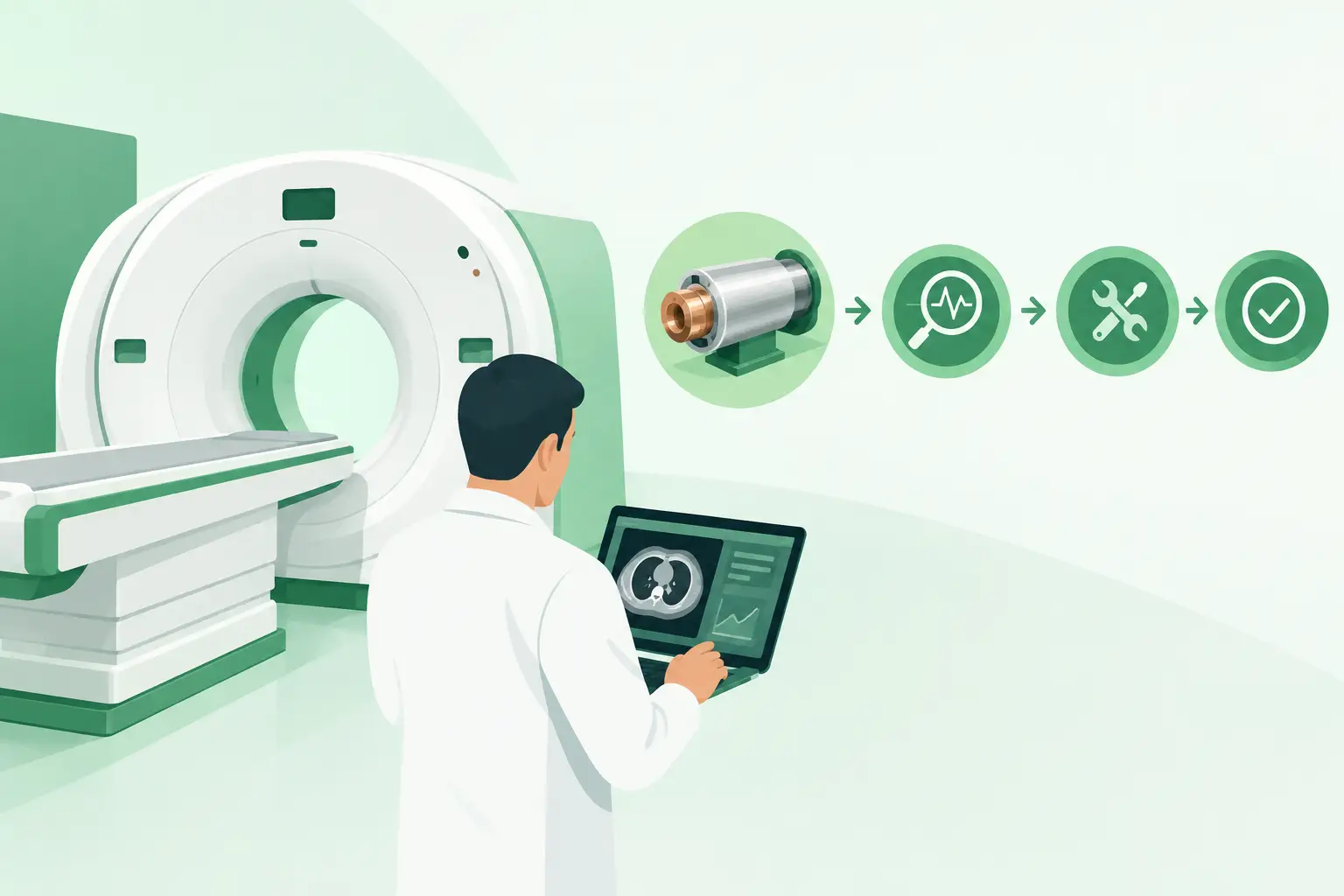
When an ultrasound system goes down, the issue is rarely abstract. A failed trackball, damaged probe connector, power supply fault, or control panel problem can delay exams, disrupt schedules, and force teams into rushed sourcing. That is why ultrasound machine replacement parts are not just line items in a procurement system - they are a direct part of uptime planning.
For hospital buyers, biomeds, and imaging service teams, the real challenge is not simply finding a part. It is finding the right part, in the right condition, with enough speed and documentation to support a confident repair. Ultrasound systems often stay in service for years, sometimes well beyond the point when OEM channels are the only realistic source. That changes how replacement parts should be evaluated.
What makes ultrasound machine replacement parts different
Ultrasound is often treated as a lower-cost modality compared with CT or MRI, but the service environment can be just as demanding. Systems are used across radiology, cardiology, OB/GYN, emergency care, anesthesia, and point-of-care settings. That means high utilization, varied configurations, and constant wear on user-facing components.
The parts that fail are not always the ones that attract the most attention. A monitor assembly or CPU board may be obvious high-value items, but smaller components can create the same operational impact. Keyboard membranes, trackballs, connector housings, probe ports, internal fans, and power modules can all interrupt clinical use. In many cases, a relatively modest replacement part is what stands between a functioning room and a canceled schedule.
There is also more model variation than many buyers expect. Even within the same product family, revisions in software, board versions, connectors, and system options can affect compatibility. A part that looks correct may not be the right match. That is why part-number accuracy matters more than visual similarity.
The most commonly sourced ultrasound machine replacement parts
Demand tends to cluster around a few categories. Probes and transducers are often the most visible because they are exposed to daily handling, cable strain, drops, fluid exposure, and repeated disinfection cycles. But they are only one part of the picture.
Control panels and user interface components are common replacement needs because they absorb constant contact. Keyboards, touch panels, knobs, and trackballs wear over time, especially on shared systems with heavy daily volumes. Monitors and display assemblies also fail with age, and their condition has a direct effect on clinical usability.
Internal electronic assemblies are another major category. Power supplies, motherboards, beamformer-related boards, I/O boards, and other system-specific modules can cause partial or total system failure. These are the parts that often require tighter verification, because compatibility may depend on model generation, serial range, or installed options.
Mechanical components matter as well. Casters, brakes, articulating arms, carts, handles, and mounting assemblies may not affect image formation, but they do affect safe use and room workflow. A mobile ultrasound unit with damaged cart hardware can still become an operational problem even if the imaging chain is intact.
New, refurbished, or used - the right choice depends on the application
Buyers rarely have one universal sourcing rule, and they should not. The right condition category depends on the part type, the clinical setting, budget pressure, and the age of the system.
New parts are usually preferred when available, especially for critical assemblies where traceability and service life matter most. The trade-off is cost and availability. For older platforms, new inventory may be limited or no longer offered through standard channels.
Refurbished parts often make the most practical sense for legacy ultrasound systems. A properly refurbished board, monitor, or control panel can restore function at a lower cost while extending the useful life of the asset. The key issue is not the label itself. It is the quality of the refurbishment process, the testing performed, and the supplier's ability to confirm fit.
Used parts may also be appropriate in some cases, particularly for discontinued systems where alternatives are limited. But used should not mean unknown. Buyers still need clear condition disclosure, identification accuracy, and reasonable assurance that the part was handled and stored correctly.
How to evaluate a supplier for ultrasound machine replacement parts
Speed matters, but speed without verification creates repeat failures, returns, and more downtime. The best suppliers reduce both delays and uncertainty.
Start with part identification discipline. A capable supplier should ask for the exact part number, system model, and when necessary, serial number or photos of the label. That is not friction. It is a sign that they understand how many ultrasound parts have near-match variations.
Next, look at sourcing reach. Ultrasound service often involves discontinued or uncommon components that are not sitting in a standard distributor catalog. A supplier with access to a broad inventory network is far more likely to locate hard-to-find parts, especially for older OEM platforms.
Testing and condition transparency also matter. For electronic assemblies, buyers should expect a clear statement of whether the part is new, refurbished, or used, and whether it has been tested. For transducers, the conversation should go further. Cosmetic condition alone is not enough. Functional testing, acoustic performance, and connector integrity all matter.
Quotation turnaround is another practical differentiator. Service teams and hospital buyers are often balancing urgency against internal approval cycles. A supplier that can quickly quote exact-match or equivalent options helps compress the downtime window without forcing guesswork.
Why exact-match verification is where many orders go wrong
The most expensive mistake is not always overpaying. It is ordering a part that cannot be installed, does not communicate correctly with the system, or introduces another fault condition.
Ultrasound platforms often evolve through incremental revisions. A board may share a similar description across multiple models but require a different firmware level or connector layout. A monitor may match physically but not electrically. A probe may fit the port but not be supported in the installed software package.
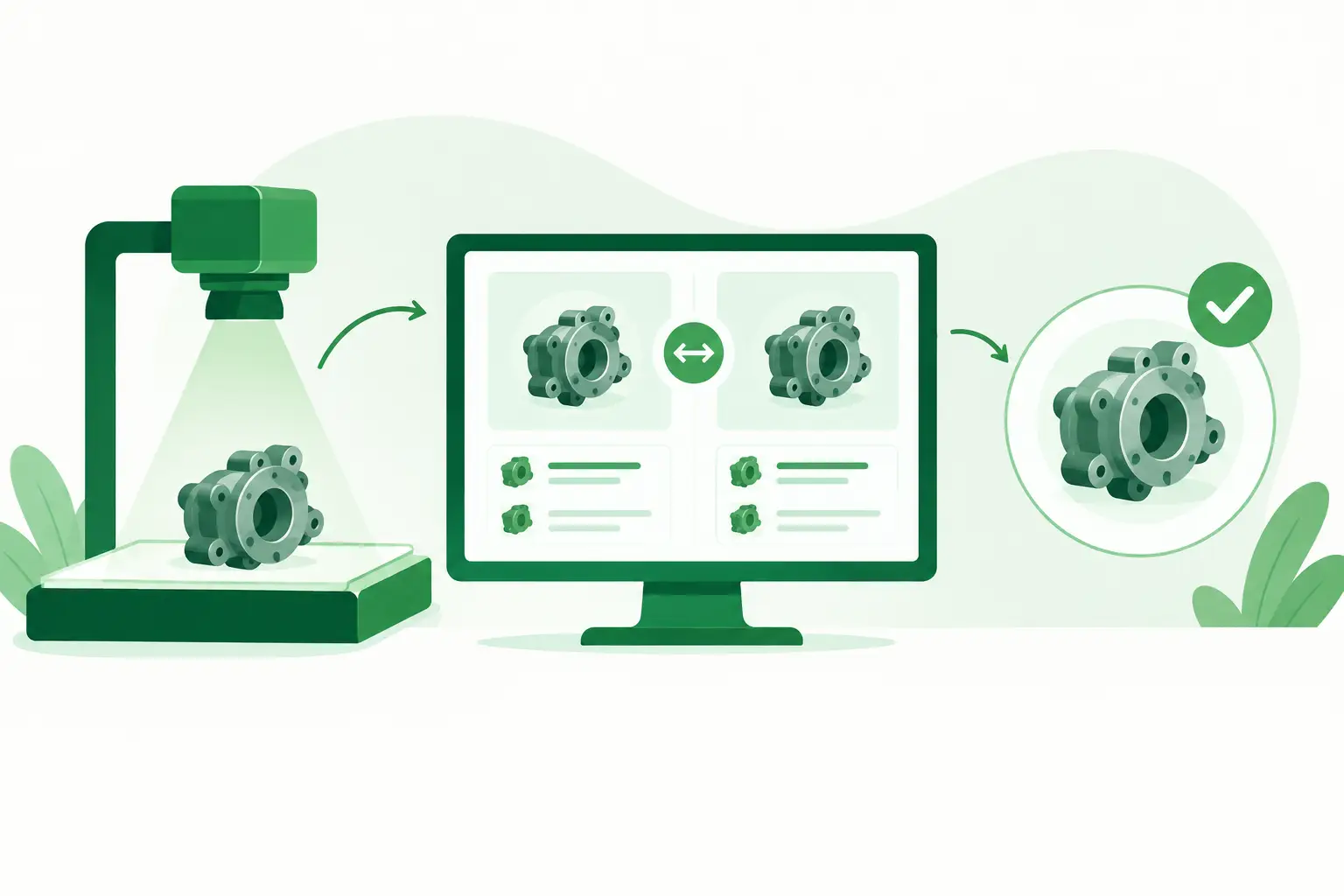
That is why exact-match verification should include more than a verbal description. Part numbers, revision numbers, model details, and if needed, images of labels or connectors should be reviewed before the order is finalized. Experienced sourcing teams know that a few extra minutes of verification can save days of avoidable delay.
Legacy systems create a different procurement problem
Many healthcare providers continue using ultrasound equipment well past the point where OEM support is simple or economical. That is not unusual. Ultrasound systems can deliver strong clinical value for years when maintained properly. But once platforms age, parts procurement becomes less straightforward.
Inventory may be fragmented across independent suppliers, service organizations, surplus channels, and refurbishment pipelines. Documentation may be incomplete. Lead times can vary widely. In that environment, procurement success depends on supplier specialization.
A general medical supply vendor may not have the sourcing depth to locate a discontinued power board or a specific replacement monitor for an aging cart-based unit. A specialist in imaging aftermarket parts is more likely to understand alternate sourcing paths, cross-reference challenges, and the urgency tied to diagnostic equipment downtime. This is where companies such as Meditegic are relevant - not because the problem is unusual, but because it is operationally common and requires focused procurement support.
Cost control matters, but total downtime costs more
Most technical buyers are measured on budget discipline as well as uptime. That creates a familiar tension: hold the line on part cost while restoring equipment quickly. The answer is usually not to buy the cheapest available item.
A lower-priced part with weak verification, uncertain condition, or poor packing can produce repeat failures, technician rework, and additional scheduling disruption. The better comparison is total cost of recovery. That includes the part price, labor, shipping urgency, time to quote, installation risk, and the cost of the system staying unavailable.
In practice, the best purchasing decisions often come from balancing condition, availability, and confidence in fit. For some repairs, a premium for a tested part with faster turnaround is justified. For others, a well-vetted refurbished part may be the smartest budget move.
What buyers should have ready before requesting a quote
The quoting process moves faster when the technical details are complete. At minimum, buyers should have the system make and model, the exact part number if visible, and a brief description of the failure. Serial number details and photos are often helpful for boards, monitors, connectors, and transducers.
It also helps to state whether the request is for new, refurbished, or either. If downtime is critical, say so upfront. Suppliers can only prioritize around urgency when the urgency is clear.
The goal is simple: reduce ambiguity early so the part sourced is the part that gets the system back into service.
Ultrasound support is rarely about a single purchase. It is about building a procurement path that works when a routine wear item fails and when a legacy component suddenly becomes difficult to find. The buyers who manage this well are not just purchasing parts - they are protecting schedule stability, service efficiency, and continuity of care.