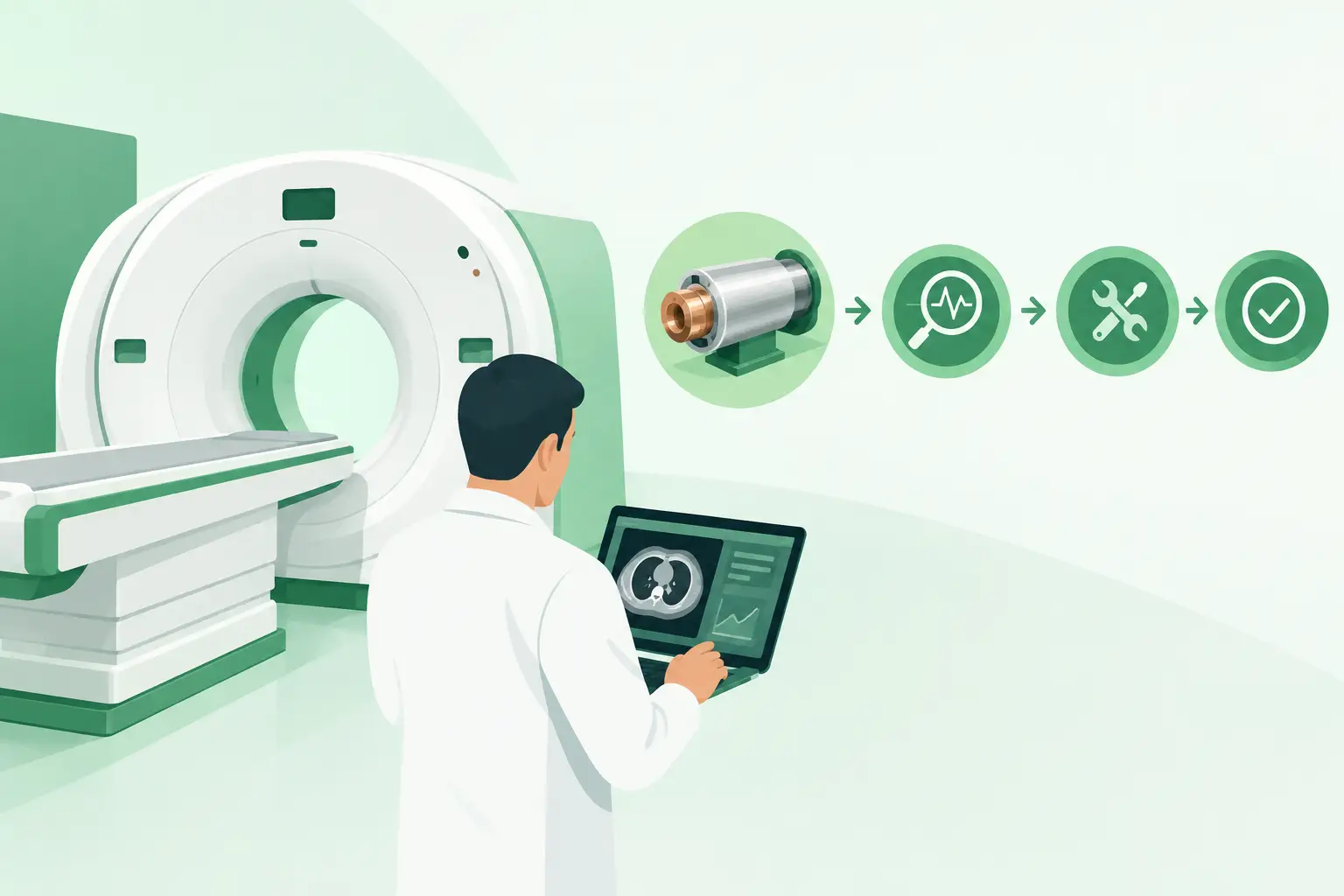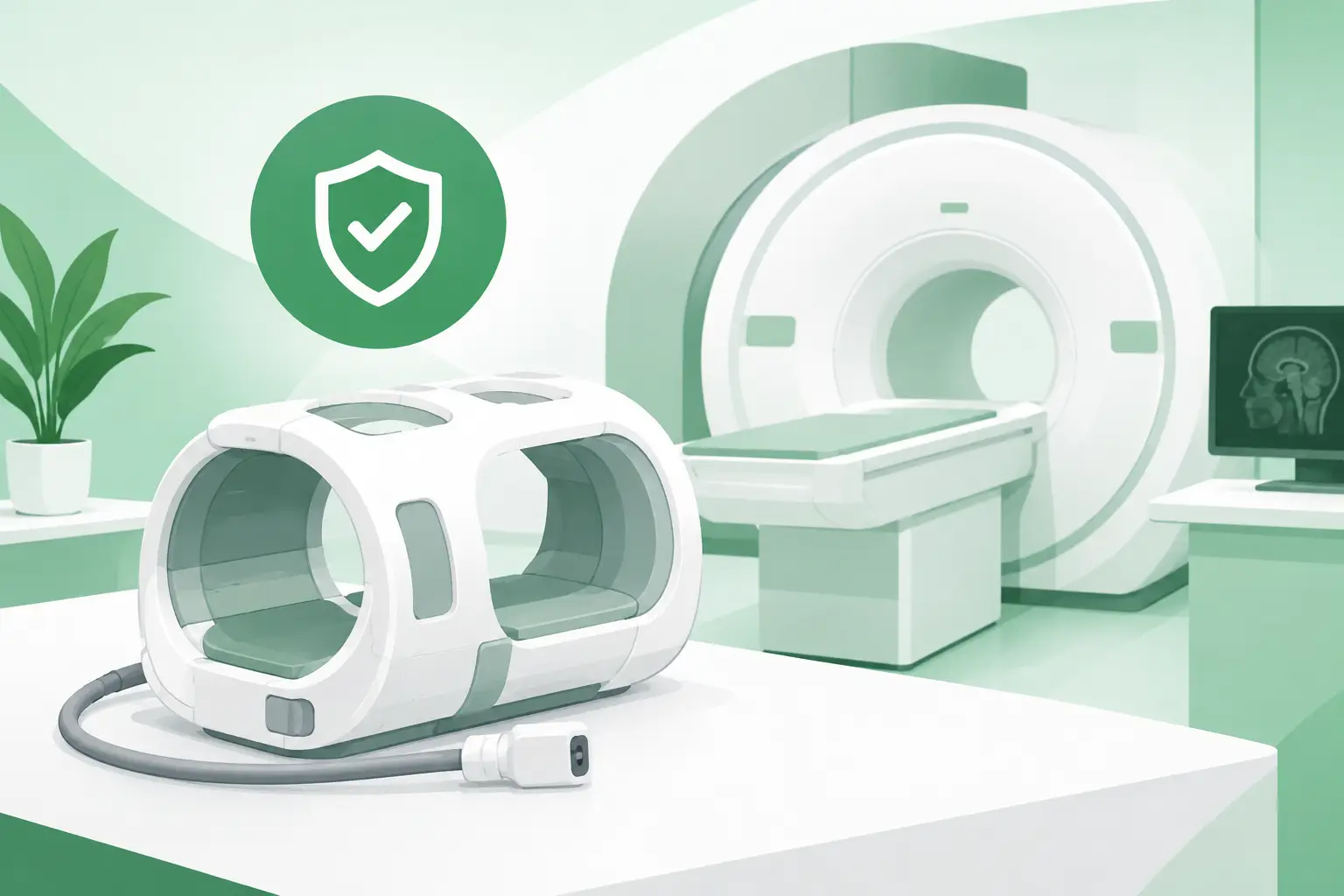
An MRI room can be fully operational while a single failed RF coil takes an exam schedule offline. For imaging service teams and clinical engineering departments, the question is not simply, “are refurbished MRI coils reliable?” It is whether a specific coil, for a specific scanner and clinical application, has been verified well enough to return to service without introducing image-quality problems, patient-positioning issues, or repeat downtime.
A properly refurbished MRI coil can be a reliable replacement. A poorly assessed used coil can be an expensive interruption. The difference lies in the coil’s condition, the quality of the refurbishment process, compatibility verification, and the supplier’s ability to document what was actually tested.
Reliability Depends on the Refurbishment Process
MRI RF coils are precision receive components. They contain conductor elements, tuning and matching circuitry, preamplifiers, cabling, connectors, housings, patient-contact surfaces, and, in many designs, electronic identification components. A defect in any one of these areas may affect signal reception, channel performance, patient comfort, or the scanner’s ability to recognize the coil.
“Refurbished” is not a technical condition by itself. One supplier may use the term for a coil that has been cleaned and visually inspected. Another may use it for a unit that has been disassembled, repaired, electrically evaluated, scanned, and functionally confirmed on the intended platform. Technical buyers should treat the term as the start of the conversation, not the answer.
The most reliable refurbished coils are evaluated against the failure modes that matter for their design. For example, a multichannel head, spine, knee, breast, cardiac, or body coil may require channel-by-channel assessment rather than a basic power-on check. Cable strain, connector wear, intermittent faults, damaged latch mechanisms, cracked housings, and degraded foam can all be relevant even when the coil initially appears functional.
A qualified refurbishment process generally includes inspection of the exterior and patient-contact surfaces, electrical and cable checks, connector evaluation, repair or replacement of damaged components where appropriate, cleaning, and functional testing. For coils with multiple receive channels, testing should confirm that channels are present and behaving consistently. The depth of testing should fit the coil type and the risk of deploying it in clinical workflow.
Are Refurbished MRI Coils Reliable on Every Scanner?
No. Reliability also depends on exact compatibility. MRI coils are not interchangeable simply because they fit a patient anatomy or carry the same OEM name. A coil may be specific to a scanner family, software generation, field strength, connector configuration, table interface, or coil-recognition architecture.
This is particularly important across GE Healthcare, Siemens Healthineers, Philips, Canon/Toshiba, Hitachi, and other MRI platforms. Similar-looking coils can have different part numbers, revision levels, or system requirements. A mismatch can result in a coil that is physically connectable but not recognized by the scanner, one that operates with limited functionality, or one that cannot be used at all.
The procurement requirement should therefore start with the OEM part number from the failed coil whenever possible. Also provide the MRI system model, field strength, serial information when relevant, and a description of the failure. Photos of the connector, label, and coil interface can help resolve uncertainty on legacy systems where labels are worn or documentation is incomplete.
Exact-match sourcing is especially valuable for end-of-life equipment. OEM support paths may be limited, and a replacement coil may no longer be readily available through standard channels. In these cases, a specialist imaging-parts supplier can use part-number-level cross-referencing to locate an appropriate used or refurbished replacement without forcing an unsupported substitution.
What Testing Should a Buyer Ask About?
The right questions are direct and operational. A vendor should be able to explain whether the coil was tested, how it was tested, and what condition it is being sold in. A vague statement that a coil is “working” provides less confidence than a clear account of the evaluation performed.
Ask whether the coil was functionally tested on a compatible MRI system or with suitable test equipment. Ask whether all receive channels were evaluated, whether the connector and cable were inspected for intermittent behavior, and whether coil recognition was confirmed when applicable. If the coil has visible cosmetic repair, ask whether the repair was limited to the housing or whether it involved internal components.
Documentation does not need to be complicated to be useful. At minimum, buyers benefit from a clear part number, condition designation, test status, photos when available, and warranty terms. A short record of the known issue, repair work, or test result can be valuable to the technician installing the part and to the service organization managing future troubleshooting.
For a time-sensitive replacement, request confirmation before shipment that the offered coil matches the required part number and system application. This step can prevent the most common avoidable error in secondary-market MRI parts procurement: receiving a plausible-looking coil that is not the correct revision or platform match.
The Main Trade-Offs of Refurbished Coils
Refurbished coils can reduce replacement lead time and provide a practical path for systems with limited OEM availability. They are often the most realistic option when a clinic needs to restore a specific exam capability quickly, such as knee imaging, breast imaging, or head and neck studies. But they do involve trade-offs that need to be managed rather than ignored.
The first trade-off is remaining service life. Even a successfully repaired coil is not a newly manufactured component. Its age, prior use, cable condition, and design complexity influence its likely lifespan. This does not make it unsuitable, but it makes warranty coverage, test quality, and supplier accountability more significant.
The second is cosmetic condition. A refurbished coil may show signs of prior use, particularly on handles, housings, pads, or covers. Cosmetic wear is acceptable when it does not compromise cleanability, patient safety, structural integrity, positioning, or function. Cracks near stress points, exposed material, loose fasteners, or damaged patient-contact surfaces deserve closer review.
The third is availability. A tested exact-match coil may be scarce, particularly for discontinued MRI platforms. Buyers sometimes need to choose between waiting for a preferred condition grade, accepting a cosmetically worn but tested replacement, or repairing their existing coil if repair is feasible. The best choice depends on downtime exposure, clinical demand, and the status of the backup coil inventory.
A Practical Acceptance Process After Delivery
Receiving inspection should be part of the reliability decision, not an afterthought. Before placing the coil into routine service, the technical team should verify the part number and inspect the coil, cable, connector, latches, pads, and housing against the purchase documentation. Any shipping damage or visible discrepancy should be recorded immediately.
Next, install the coil on the intended MRI system and confirm recognition, positioning, and normal workflow. Run the site’s established quality-control procedure or appropriate phantom scan and compare results with known-good performance where possible. For multichannel coils, look for channel dropouts, unexpected noise patterns, localized signal loss, artifacts, or intermittent behavior when the cable is moved through its normal range of motion.
A short acceptance record is worthwhile. Capture the scanner model, coil part number, date installed, test result, observed image quality, and any repair history supplied with the unit. This creates a useful baseline if a future artifact or intermittent issue must be investigated.
Sourcing Refurbished MRI Coils With Less Risk
The lowest-risk purchase is not necessarily the lowest-priced coil. It is the coil with verified compatibility, a condition description that reflects real evaluation, documented testing, and a clear path to resolution if the part does not perform as represented. For a high-value imaging asset, the cost of another canceled schedule can quickly exceed the difference between a carefully sourced replacement and an uncertain one.
Meditegic supports MRI parts sourcing at the OEM part-number level, including hard-to-find RF coils and related components for current and legacy imaging platforms. Providing complete system and coil identification up front allows the sourcing process to focus on the correct replacement instead of broad, error-prone alternatives.
A refurbished MRI coil should be treated like any critical imaging component: verify the exact match, understand the test status, inspect it on arrival, and validate performance before full clinical use. With those controls in place, refurbished coils can be a dependable tool for protecting MRI uptime when a failed coil cannot wait.