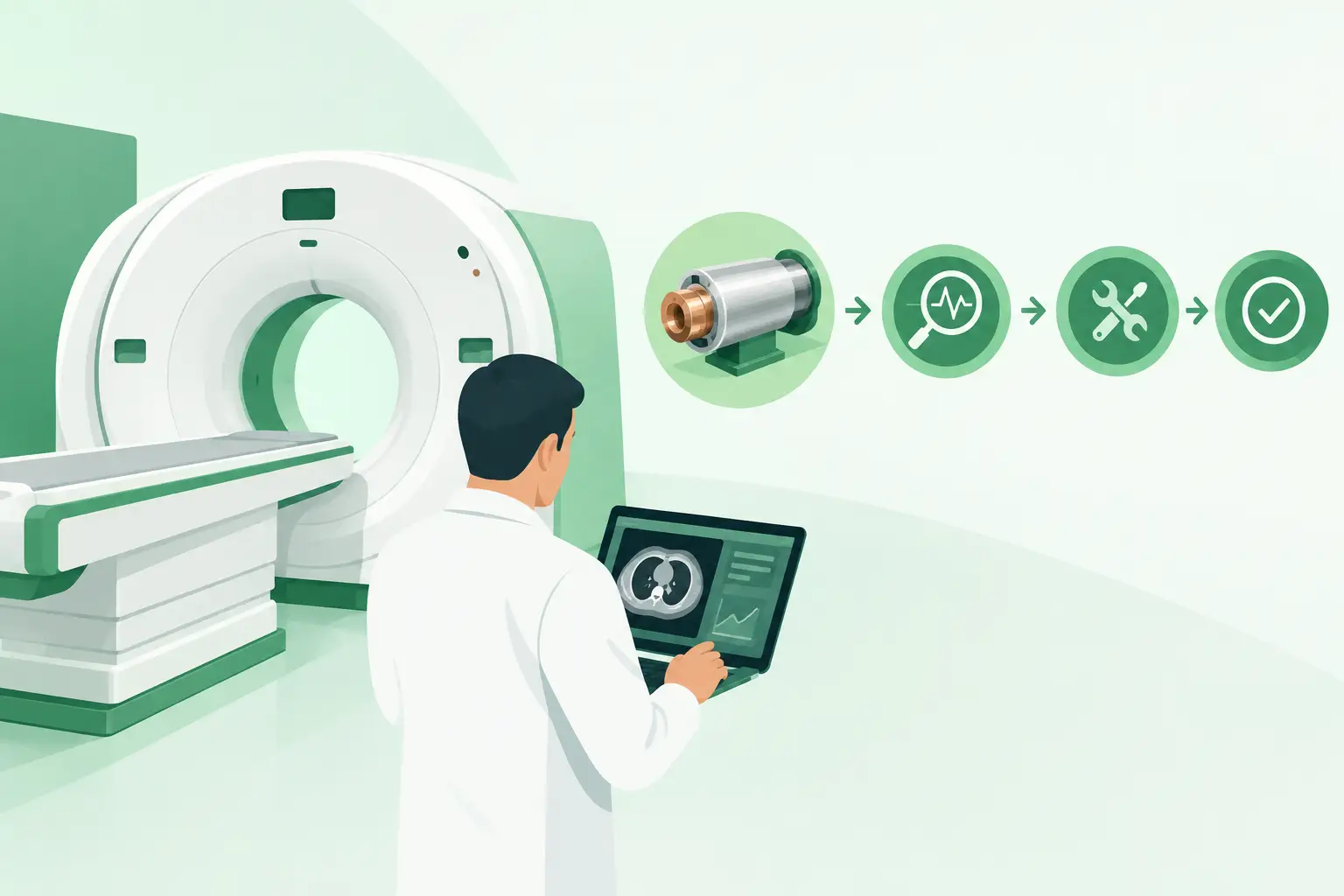
A CT room sitting idle for half a day does more than disrupt a schedule. It backs up patient flow, strains staff, delays reporting, and turns a parts issue into an operational problem. That is why the best ways to prevent downtime are rarely limited to repair skill alone. In imaging environments, uptime depends on preparation, part access, decision speed, and a sourcing process that works under pressure.
For biomedical teams, independent service providers, and clinic operators, downtime prevention is really about reducing avoidable delays. Some failures cannot be predicted. Many delays can. The difference usually comes down to whether the right information, the right part number, and the right supplier path are already in place before the system goes down.
The best ways to prevent downtime start before failure
Preventing downtime is not the same as preventing every equipment fault. Diagnostic imaging systems are complex, aging in mixed fleets, and often supported across multiple OEM generations. Components fail. Boards become intermittent. Tubes, power supplies, detectors, coils, transducers, and control assemblies all have finite service lives. The practical goal is to shorten the time between issue identification and system restoration.
That means treating uptime as a supply, service, and planning discipline, not just a maintenance event. Teams that recover fastest usually have three things: accurate asset records, a clear escalation path, and reliable access to hard-to-find replacement parts.
Build an asset-level failure history
If your service records stop at work orders, you are missing patterns that matter. An asset-level failure history helps identify recurring faults, weak subsystems, and components with long lead times. Over time, this gives technicians and purchasing teams a far better sense of which parts are worth stocking, which systems need closer monitoring, and which aging units create the highest downtime risk.
This does not need to be complicated. What matters is consistency. Track model, modality, serial details where relevant, failure type, replaced part number, vendor source, and actual lead time. The lead time data is especially useful because it reveals where downtime expands unnecessarily. A part that fails once a year but takes five days to source may deserve more attention than a part that fails more often but is easy to obtain.
Standardize part identification
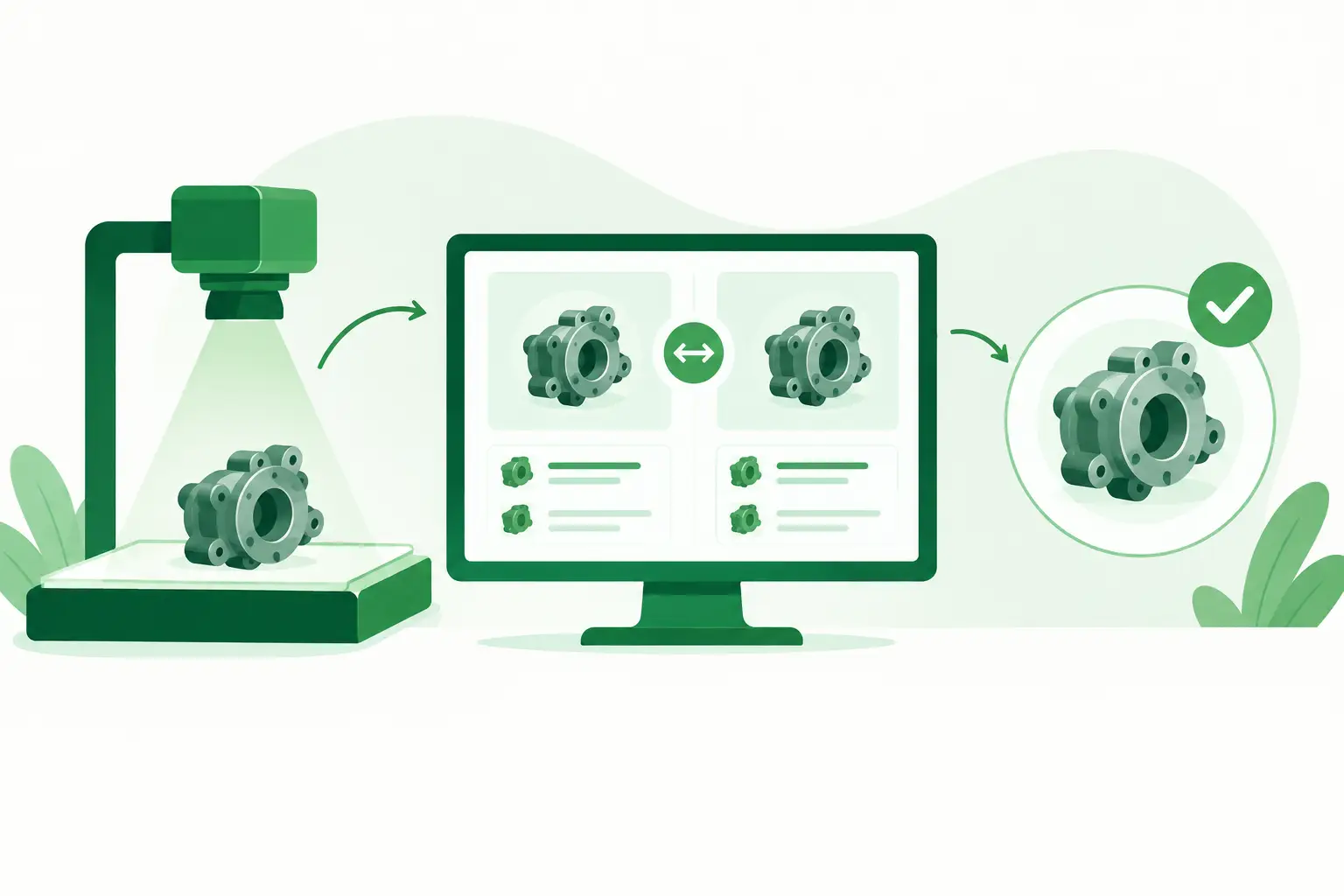
A surprising amount of downtime comes from preventable sourcing friction. A board is identified by description but not by exact part number. A subsystem has multiple revisions. A component is available, but the quoted item does not match the installed configuration. Every clarification adds hours, and sometimes days.
One of the best ways to prevent downtime is to make exact-match part identification a standard operating step. Technical teams should document approved part numbers, alternates where validated, compatible revisions, and core return requirements. This matters even more in legacy imaging systems, where the wrong revision can turn an urgent repair into a second failure event.
When records are clean, quotations move faster and procurement errors drop. That alone improves recovery times.
Prevent downtime with smarter parts planning
There is no universal rule for what to stock. Carrying every possible spare ties up capital and shelf space. Carrying nothing leaves every failure exposed to market lead times. The right answer depends on asset criticality, installed base, modality type, and the reliability of your sourcing partners.
For many organizations, the best balance is selective stocking. Keep fast-moving, known-risk, or mission-critical components on hand for systems that cannot tolerate extended outages. For lower-risk items or less critical units, build a rapid sourcing strategy instead of overstocking.
Separate critical spares from nice-to-have inventory
Not every spare deserves immediate shelf space. Critical spares are the parts that can stop operations and are difficult to source quickly. Nice-to-have items may be useful, but they do not justify the same inventory priority.
For imaging service teams, criticality often depends on three questions. Does this failure take the system fully offline? Is the part hard to find or commonly backordered? Does a delay create material scheduling or revenue impact? If the answer is yes on two or more, the part belongs in a higher-priority planning category.
This approach supports budget control without creating false economy. Cutting spare inventory can look efficient until a discontinued component takes a profitable scanner offline for days.
Create a sourcing path before you need it
The market for imaging spare parts is fragmented, especially for used, refurbished, and discontinued components. Waiting until failure occurs to identify suppliers is one of the most expensive habits in uptime management.
A stronger approach is to prequalify sourcing channels in advance. Know who can quote quickly, who understands complex imaging assemblies, and who can help verify exact-match replacements across older systems. This is where a specialist supplier can reduce downtime significantly. Meditegic, for example, focuses on difficult-to-source imaging parts and supports technical buyers who need fast, accurate sourcing rather than general catalog distribution.
The trade-off is straightforward. Broad distributors may cover more categories, but specialized imaging support is often what matters when the needed component is rare, legacy, or time-sensitive.
Service workflow matters as much as technical skill
Even with good parts access, downtime expands when internal decision-making stalls. A technician identifies the failed component, but approval waits. Procurement requests more verification. Shipping options are discussed too late. Meanwhile, the room remains unusable.
The best ways to prevent downtime include reducing administrative delay around the repair itself.
Define escalation thresholds
Not every service event needs the same approval chain. Minor issues can follow standard process. High-value imaging downtime should trigger a faster path with predefined authority. If a CT, MRI, or C-arm system is offline, the cost of waiting usually exceeds the cost of moving quickly.
Set thresholds in advance. When a system is fully down, when patient schedules are affected, or when a part has a known long lead time, the case should escalate immediately to technical review and sourcing action. Teams that define these thresholds recover faster because they do not waste time debating urgency after the fact.
Align technical and purchasing teams
Downtime prevention often breaks down at the handoff between diagnosis and procurement. The technician knows what failed. Purchasing needs exact details, pricing, condition options, and delivery timelines. If those teams work from different records or different priorities, delays are unavoidable.
A simple fix is to standardize the information that moves with every urgent part request: exact part number, equipment model, fault context, acceptable condition range, and shipping requirement. This reduces back-and-forth and allows buyers to compare options quickly.
In high-pressure service environments, clarity is speed.
Maintenance strategy should reflect real-world fleet conditions
Preventive maintenance still matters, but it should be realistic. A strict schedule does not guarantee low downtime if it ignores fleet age, usage intensity, and known weak points. Older imaging systems often require a more targeted approach than a generic checklist can provide.
Use service history to adjust inspection depth and replacement timing. A modality with recurring power issues may need closer monitoring of specific assemblies. A heavily used ultrasound fleet may justify planned replacement of vulnerable transducers or connectors before failure disrupts daily volume.
There is always a trade-off here. Replacing parts too early increases cost. Waiting too long risks unplanned outage. The right balance comes from actual failure data, not assumption.
Watch for hidden downtime drivers
Some downtime is not caused by the failed part itself. It comes from shipping delays, incomplete diagnostics, unavailable cores, or uncertainty about whether used or refurbished replacements are acceptable. These issues are operational, but they have the same effect as a technical fault.
That is why prevention requires more than maintenance. It requires clear buying criteria, realistic acceptance standards, and suppliers who can respond with usable options fast. In many cases, a quality refurbished or tested used component is the fastest path back to operation, particularly when OEM availability is limited or the system is no longer current.
The strongest uptime strategy is layered
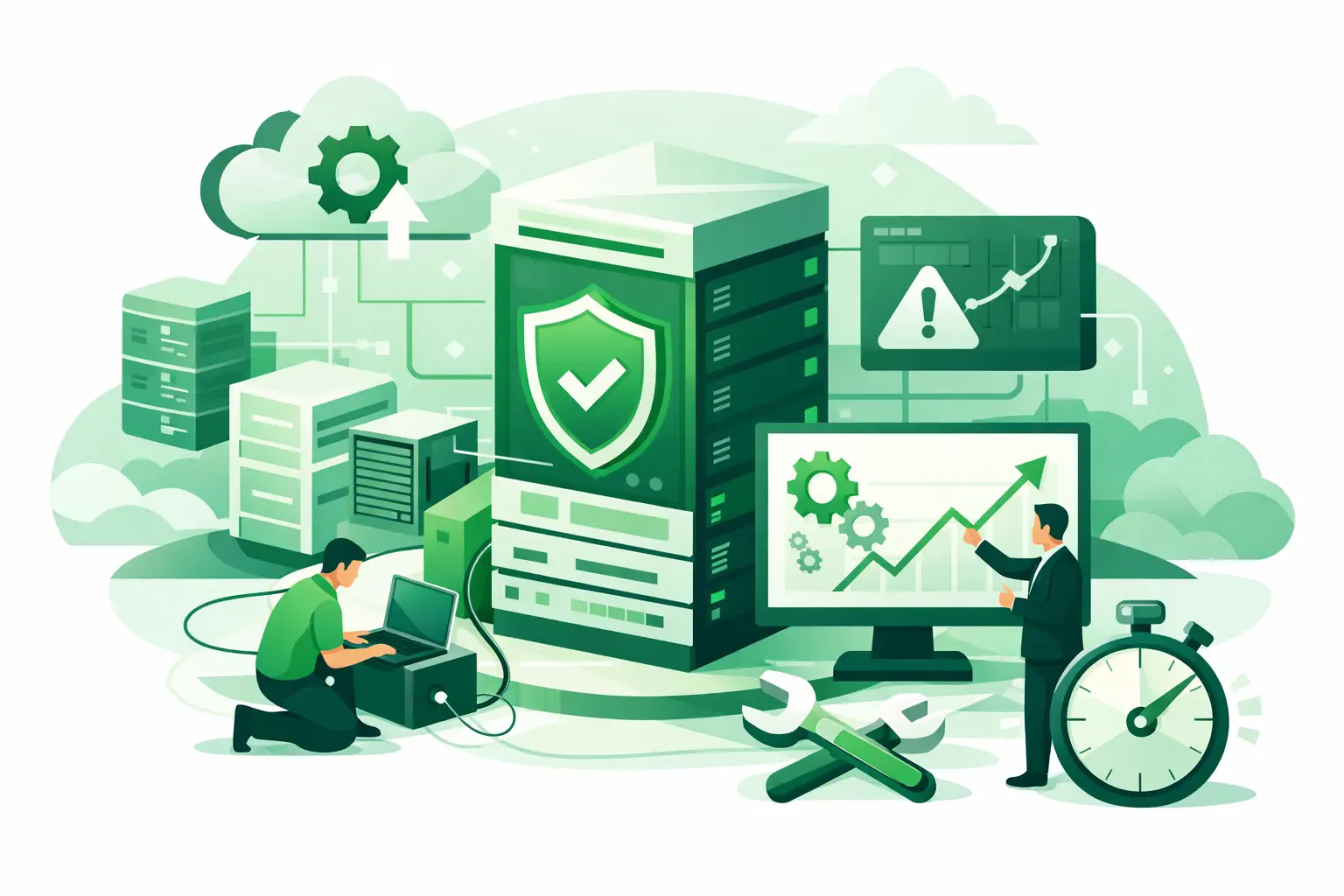
There is no single fix that eliminates downtime risk. The organizations that perform best usually combine several disciplines: cleaner part records, smarter spare planning, faster escalation, and access to specialized sourcing for hard-to-find components. Each improvement trims a different type of delay.
If you are deciding where to start, begin where lost time is most visible. For some teams, that is poor recordkeeping. For others, it is slow approvals or weak supplier coverage on legacy parts. Solve the repeatable delay first. Then tighten the rest of the chain.
The best ways to prevent downtime are rarely dramatic. They are practical habits built before the next failure shows up. When those habits are in place, uptime stops depending on luck and starts depending on process.