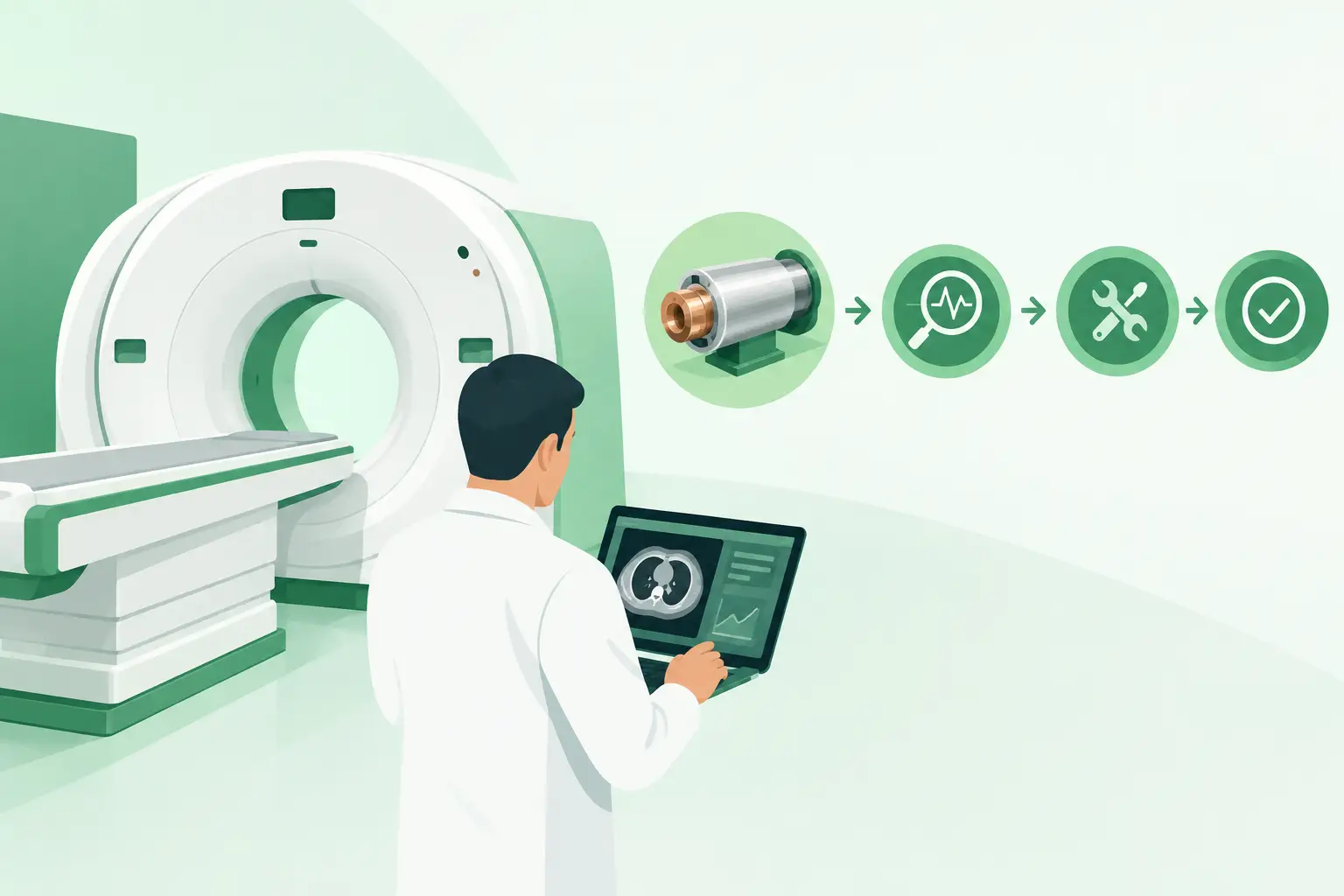
A CT detector fault can take a scanner out of clinical service even when the gantry, tube, generator, and console appear operational. CT detector replacement is therefore not simply a parts transaction. It is a system-level repair that requires accurate fault isolation, exact configuration matching, careful handling, and a plan for installation, calibration, and image-quality verification.
For imaging service teams, the immediate objective is clear: restore dependable scanning capacity without introducing a compatibility problem that extends downtime. The right replacement detector may be used, refurbished, or, where available, new surplus. What matters first is whether it is the correct component for the specific scanner configuration and whether the failure diagnosis supports replacement.
When CT Detector Replacement Is the Right Repair
Detector-related symptoms can be obvious, but they are not always caused by the detector assembly itself. Ring artifacts, persistent channel dropouts, calibration failures, unstable air scans, excessive noise, or error messages tied to data acquisition may point toward detector trouble. They may also originate in associated electronics, interconnects, power distribution, cooling conditions, software configuration, or the data acquisition system.
Replacing a detector before isolating the source of the fault can create avoidable expense and leave the scanner unavailable. A disciplined service assessment should review error logs, service documentation, image artifacts, calibration results, and physical conditions inside the gantry. If possible, compare behavior across scan protocols and confirm whether a fault follows a particular detector module, board, cable path, or acquisition channel.
Detector replacement is generally appropriate when testing identifies a failed detector module or array, when the assembly has suffered physical damage, or when repeatable calibration and image-quality failures cannot be resolved through approved service procedures. For older CT platforms, it may also be the practical path when OEM support is limited and an exact replacement assembly can be sourced from the imaging aftermarket.
Exact Matching Matters More Than the Scanner Family Name
A CT system name alone is not enough to identify a compatible detector. Manufacturers often use different detector assemblies, module revisions, connectors, firmware requirements, and acquisition architectures within the same product family. A detector from a similar-looking scanner may not be electrically, mechanically, or electronically compatible.
The OEM part number is the starting point for a reliable match. A strong sourcing request should also include the CT manufacturer and model, system serial number when available, detector serial number, assembly label photos, the failed part number and revision, and a concise description of the fault. If the detector has already been removed, photographs of connector locations and labels can prevent errors when multiple configurations share a broad product description.
This matters particularly for legacy platforms from GE Healthcare, Siemens Healthineers, Philips, Canon/Toshiba, and other major OEMs. Parts may have been superseded, discontinued, or carried under alternate internal identifiers. A supplier that works at the part-number level can cross-reference these identifiers and distinguish a true replacement from a component that only appears similar.
Assembly, Module, or Supporting Electronics?
The required scope of replacement depends on the system design and confirmed fault. Some CT systems allow service teams to replace individual detector modules or associated boards. Others require a larger detector assembly because modules are matched, inaccessible, unavailable separately, or not economically practical to repair.
A lower-cost module-level repair can make sense when the diagnosis is certain and qualified personnel can complete the work and calibration. A complete assembly may reduce troubleshooting uncertainty when multiple channels are affected or when the service record suggests broader detector degradation. Neither approach is automatically better. The right decision balances technical evidence, part availability, labor time, calibration requirements, and the cost of another interruption.
Used and Refurbished Detectors: What Buyers Should Verify
For hard-to-find CT components, used and refurbished inventory can be essential to keeping an installed system operational. The terms should not be treated as interchangeable, however. A used detector may be removed from a compatible system and sold based on condition and available testing. A refurbished detector may have undergone inspection, repair, testing, or other defined processing. The useful question is not which label sounds better, but what documentation and condition information are available for the specific part.
Before committing to a replacement, technical buyers should clarify four areas:
- Exact OEM part number, revision, and known cross-references
- Source system compatibility and any configuration limitations
- Testing performed, including functional or calibration-related checks where applicable
- Return, warranty, and advance-replacement terms appropriate to the repair risk
Condition requirements depend on the scanner's clinical role. A high-volume site with limited backup capacity may prioritize the most thoroughly verified available part and a contingency plan. A lower-volume operation may accept a different balance of lead time, cost, and available testing. In either case, buying solely from a short description such as “CT detector” is a procurement risk.
Installation Is Only One Stage of the Recovery
Once the part arrives, controlled handling is critical. Detector assemblies can be sensitive to electrostatic discharge, connector damage, contamination, impact, and improper storage conditions. The service team should follow OEM service procedures, use appropriate ESD precautions, inspect mating connectors, and verify that related cabling and cooling conditions are not contributing to the original failure.
After physical installation, the scanner may require configuration recognition, detector setup, air calibration, gain or offset calibration, artifact evaluation, and image-quality testing. Procedures vary substantially by OEM and system generation. A detector that is physically installed but not correctly calibrated can still produce unacceptable images or prevent the system from returning to service.
The installation record should capture the removed part number and serial number, replacement part identification, software or configuration status, calibration outcomes, post-repair images, and any residual errors. This documentation is useful for future troubleshooting, asset history, warranty discussions, and repeat sourcing if the platform remains in service for years.
Reducing Downtime Before the Failure Occurs
Detector failures cannot always be predicted, but downtime exposure can be managed. Service organizations supporting critical CT assets should maintain an accurate installed-base record that includes scanner model, serial number, detector part number, revision, and major system upgrades. This makes an urgent sourcing request far faster than reconstructing configuration details after the gantry is already down.
It is also useful to identify components with limited aftermarket availability before a failure occurs. Detector assemblies, data acquisition components, gantry electronics, high-voltage components, and certain cooling parts can become difficult to locate as a platform ages. For systems that remain clinically and financially valuable, a planned spare strategy or prequalified source can be more practical than waiting for an emergency.
For service teams operating across multiple facilities or regions, global sourcing capability matters because the needed part may not be available locally. Meditegic supports part-number-level sourcing for difficult diagnostic imaging components across major CT brands and legacy configurations, helping technical buyers locate exact-match options when standard channels cannot supply them.
A Better Request Produces a Faster Quote
The fastest way to slow down an urgent CT repair is to send an incomplete request. Start with the OEM part number and revision from the failed detector or assembly label. Add scanner make and model, system serial number, photographs, fault description, and the urgency of the requirement. State whether the part is needed as an advance replacement before return of the failed component, if that arrangement is necessary for the repair.
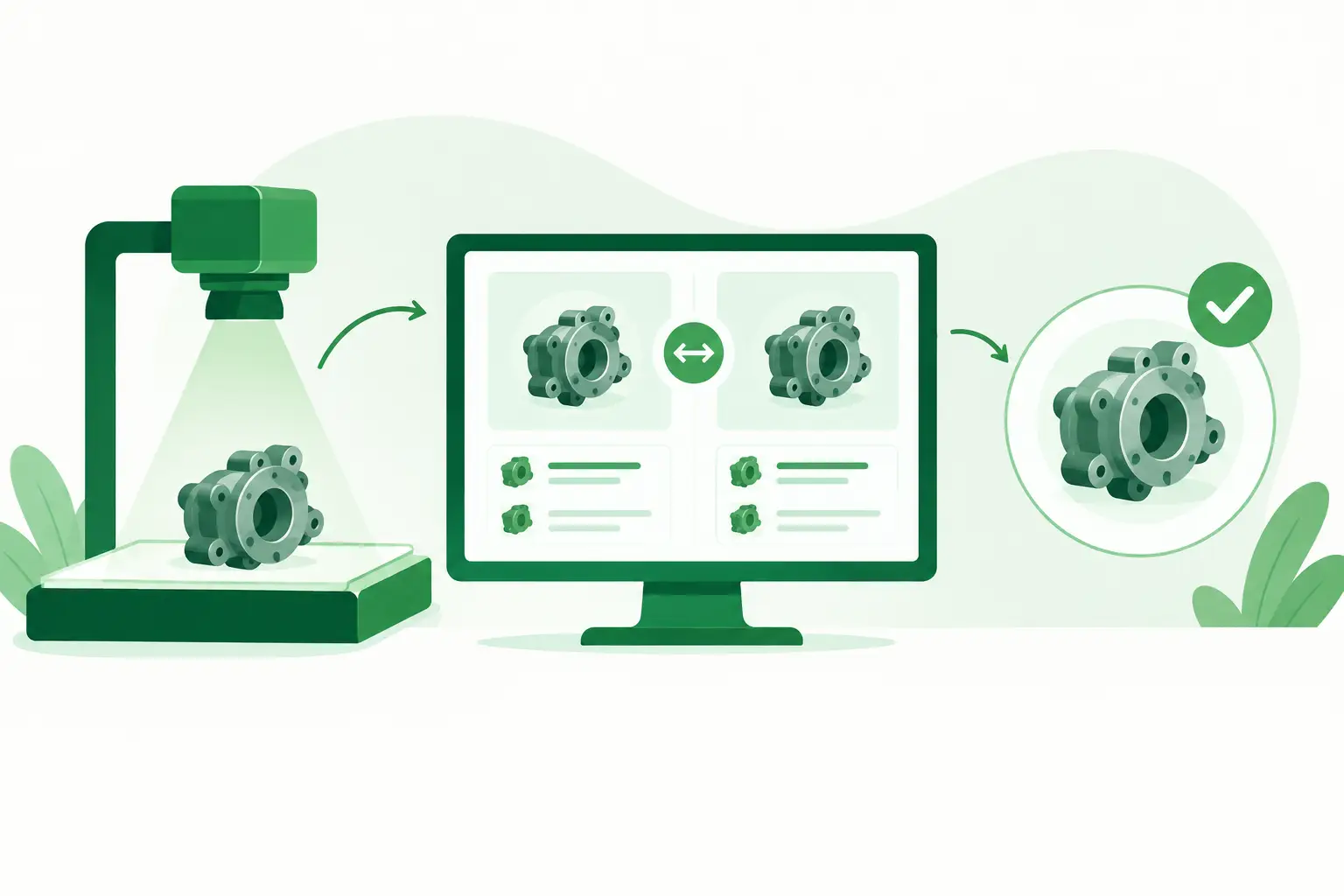
This information lets a sourcing specialist check compatibility rather than merely search a generic product category. It also helps identify whether an available part is a direct match, a documented substitute, or a component that requires additional verification. That distinction protects both uptime and the repair budget.
A CT detector is one of the most consequential replacement components in the scanner. Treat the purchase as part of a controlled recovery process: confirm the diagnosis, match the part number precisely, verify condition and terms, and plan the calibration work before the part reaches the site. That preparation gives the service team the best chance of turning a major scanner fault into a short, documented repair event.