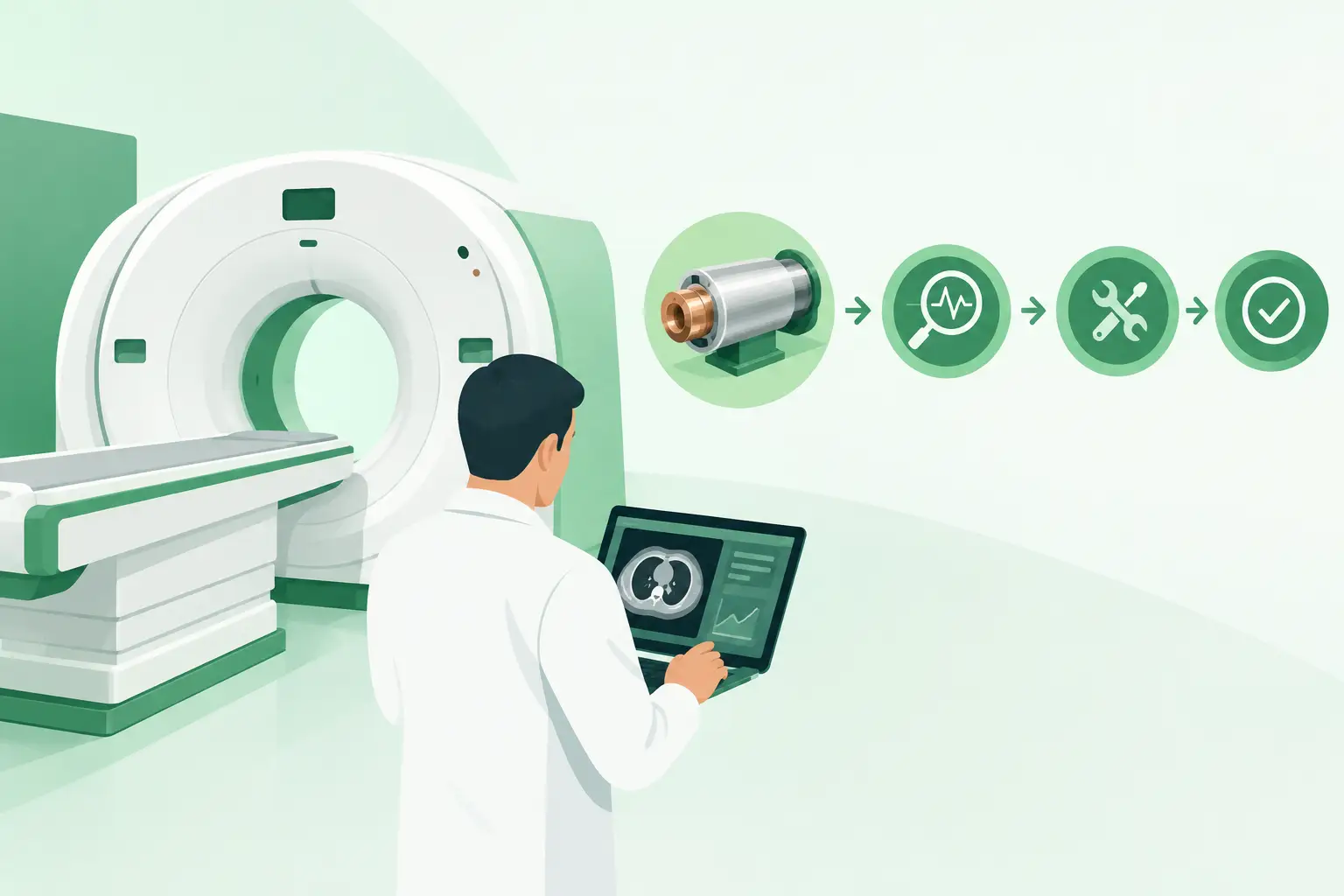
A CT scanner can be mechanically ready, correctly calibrated, and still remain unavailable because the high-voltage chain is unstable. CT tank servicing addresses one of the most consequential areas in that chain: the high-voltage tank and its related cables, connectors, cooling interfaces, and power-distribution components. When these assemblies develop insulation, connection, or thermal-management problems, the result may be intermittent scan aborts, tube faults, arcing events, or a scanner that will not complete exposure.
For imaging service teams, the priority is not simply identifying a failed tank. It is determining whether the tank is the root cause, whether an associated component caused the failure, and which exact replacement configuration will restore reliable operation without creating a new compatibility issue.
What CT Tank Servicing Covers
A CT high-voltage tank is part of the system that conditions and delivers the electrical energy required by the X-ray tube. Depending on the scanner platform and OEM design, the tank assembly may work closely with a high-voltage generator, tube housing, high-voltage cables, cooling circuits, and gantry-mounted control hardware. It is not a generic power component that can be selected by voltage rating alone.
CT tank servicing can include inspection, fault isolation, replacement planning, installation support, and verification after repair. The exact scope depends on the failure mode and service capability. In many field situations, a technician is not repairing the internal tank assembly at the site. Instead, the practical service decision is to confirm the fault, inspect connected components, and source a tested replacement or an appropriate repair path for the affected assembly.
The distinction matters because high-voltage faults can be symptoms rather than isolated events. A damaged cable termination, contaminated connector, cooling issue, tube fault, or control-board problem may produce errors that appear to point directly to the tank. Replacing the tank without investigating those conditions can lead to repeated failures and more downtime.
Common Signs a CT High-Voltage Tank Needs Attention
A high-voltage issue does not always present as a permanent system shutdown. Many failures begin intermittently, often under high workload, after warm-up, or during demanding scan protocols. Service records, error logs, and the timing of faults are therefore valuable diagnostic evidence.
Common warning signs include recurring high-voltage or generator-related error codes, exposure termination during a scan, inconsistent tube start behavior, audible arcing, visible damage at cable or connector interfaces, and faults that worsen after thermal load increases. A scanner may also fail tube conditioning procedures or repeatedly require resets before it can return to operation.
These symptoms require platform-specific interpretation. A fault code that indicates a high-voltage problem on one GE Healthcare, Siemens Healthineers, Philips, or Canon/Toshiba CT platform may have a different diagnostic pathway on another model. The system model, generator configuration, tube type, and OEM part number should be confirmed before a replacement decision is made.
Thermal and cooling conditions matter
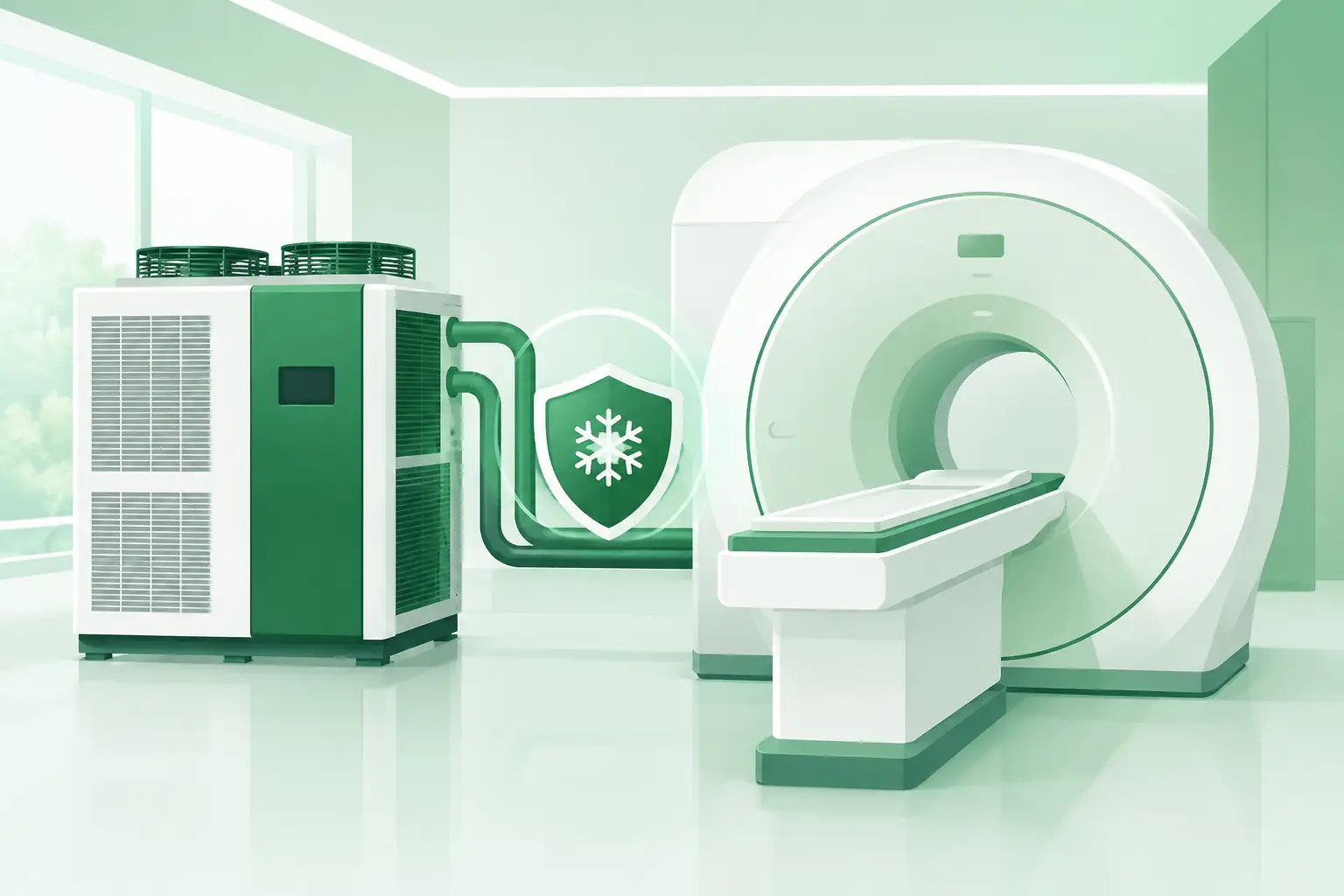
High-voltage assemblies operate in an environment where heat, insulation integrity, and cooling performance are closely related. Restricted coolant flow, poor heat exchange, degraded hoses, leaks, or incorrect cooling-system service can contribute to conditions that shorten the life of electrical components.
A tank replacement may be justified, but a complete evaluation should also consider the cooling circuit. If the underlying thermal condition remains, the new or refurbished component may face the same stress that affected the previous unit. This is especially relevant for older CT systems operating with high patient volume or extended scan schedules.
Cable and connector inspection is not optional
High-voltage cables and connector interfaces deserve the same attention as the tank itself. Insulation breakdown, tracking, moisture ingress, contamination, damaged seals, or incorrect seating can compromise a high-voltage path. These conditions can produce intermittent faults that are difficult to reproduce after the scanner has cooled down.
Technicians should follow the applicable OEM service documentation and safety procedures when inspecting or handling these components. High-voltage assemblies are not suitable for trial-and-error replacement. Proper discharge procedures, clean handling practices, connector inspection, and post-installation verification protect both personnel and equipment.
How to Approach CT Tank Servicing Without Extending Downtime
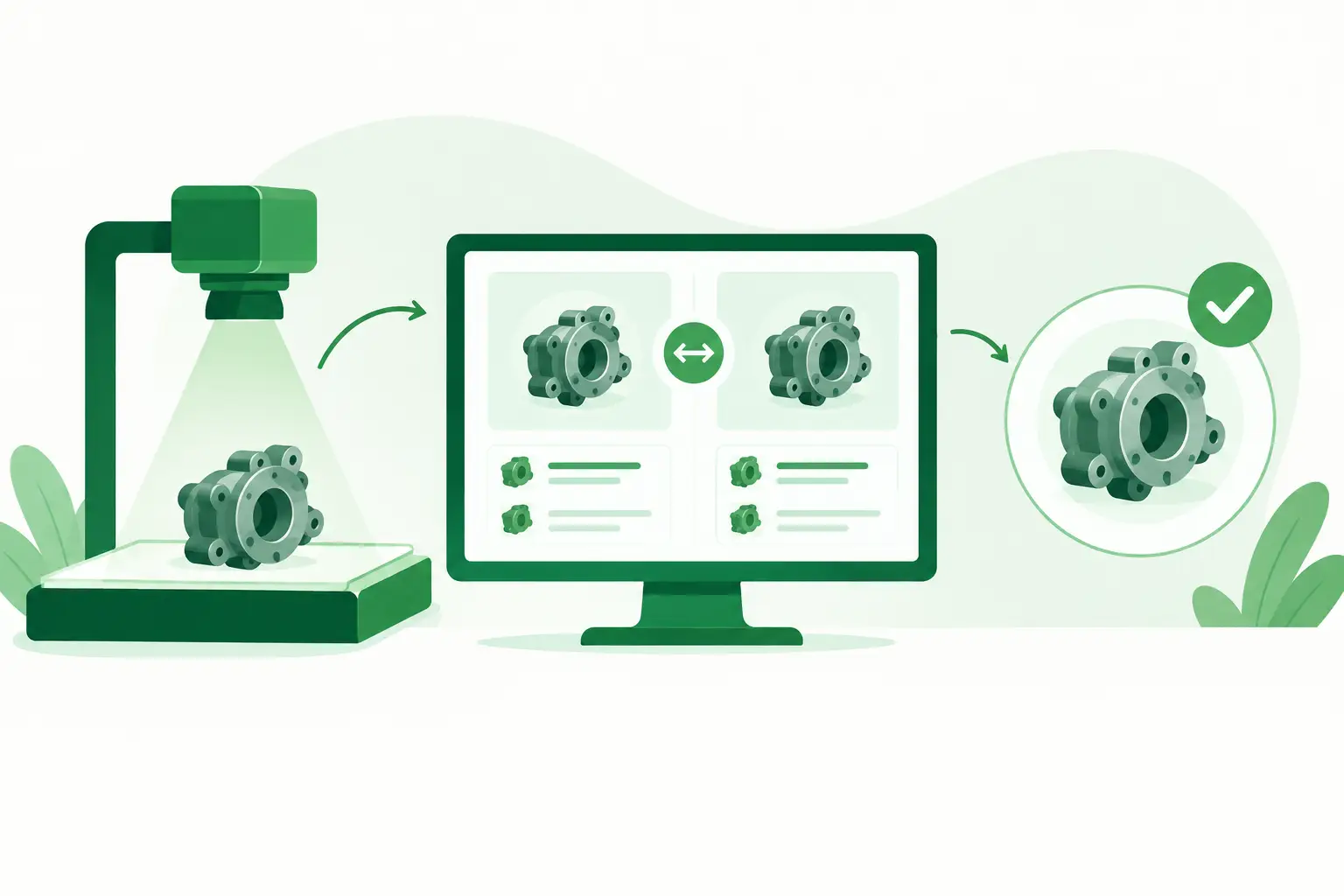
The most efficient service workflow begins with evidence, not availability. Before requesting a replacement, capture the scanner manufacturer, system model, serial information when relevant, exact error codes, failure history, and the OEM part number from the tank or associated assembly. Clear photographs of labels, connectors, and physical damage can also prevent a sourcing mismatch.
Part-number-level identification is particularly important for legacy systems. Two tanks from the same OEM and CT family may look similar while differing in connector layout, generator compatibility, firmware generation, tube interface, mounting arrangement, or electrical specifications. A visually similar component is not proof of interchangeability.
Once the likely failed item has been identified, the service team should determine whether a used, refurbished, repaired, or select new replacement is appropriate. The best option depends on scanner age, urgency, warranty expectations, availability, and the condition of related high-voltage components. For a high-value system with a hard-to-find legacy assembly, a professionally evaluated refurbished unit can be a practical continuity solution. For another case, repair of the existing unit may be preferable if its configuration is difficult to replace and the repair route is technically viable.
Installation planning should happen before the part arrives. Confirming lifting needs, access constraints, coolant requirements, cable condition, required setup procedures, and the availability of qualified personnel avoids turning a one-day repair into a multi-day outage. After installation, the work should include the applicable system checks, warm-up or conditioning procedures, error-log review, and scan verification required by the OEM process.
Why Exact-Match Sourcing Is Critical
CT tank servicing is often delayed by one procurement mistake: searching for a broad description such as “CT high-voltage tank” instead of the exact assembly needed for a specific scanner. Generic descriptions can generate inaccurate offers, incompatible parts, and wasted time during an urgent repair.
The most useful sourcing request identifies the OEM, scanner model, part number, fault description, and required delivery timeline. If the part number is unreadable or absent, additional details such as generator model, tube configuration, photographs, and previous service documentation can help narrow the match.
This level of precision is especially valuable when OEM support for an older platform is limited or when standard distribution channels do not carry the assembly. Meditegic supports technical buyers with part-number-level sourcing across CT, PET/CT, MRI, X-ray, ultrasound, mammography, and other diagnostic imaging modalities. For CT high-voltage components, the goal is to locate the correct replacement assembly quickly, not to substitute a component based on appearance or a partial description.
Repair, Replacement, or Further Diagnosis?
There is no single answer for every CT tank failure. Replacement is often the fastest route when the tank has confirmed electrical damage, visible leakage, failed insulation, or a known recurring fault pattern. It may also be the practical choice when the scanner cannot remain down while an existing unit is evaluated or repaired.
Repair can make sense when the assembly is scarce, the failure is isolated and serviceable by a qualified specialist, and turnaround is acceptable. However, repair feasibility depends on the tank design, damage type, test requirements, and availability of appropriate technical capability. It should not be assumed that every high-voltage tank can be safely or economically repaired.
Further diagnosis is the right choice when evidence is incomplete. If error logs point broadly to the high-voltage subsystem but cable damage, cooling issues, tube behavior, or generator controls have not been assessed, replacing the tank first may be premature. A disciplined diagnosis costs less than repeated component swaps and protects valuable imaging assets from avoidable stress.
Information to Have Ready for a Fast Quote
When time is critical, provide the CT manufacturer and model, the exact OEM part number, a description of the fault, relevant error codes, and whether the item is needed as an exchange, outright replacement, or repair candidate. Include photos of the label and connectors when possible. If a prior replacement has failed, state that as well, since it may point to an unresolved upstream or downstream condition.
This information gives a specialized imaging-parts supplier a realistic basis for verifying compatibility, checking global inventory channels, and responding with an option that fits the actual repair requirement. It also reduces the risk of receiving a part that delays return to service.
A CT high-voltage tank is too central to scanner operation to treat as a generic electrical spare. Careful diagnosis, clean installation practices, and exact-match sourcing give service teams the strongest chance of returning the scanner to reliable clinical use on the first repair cycle.