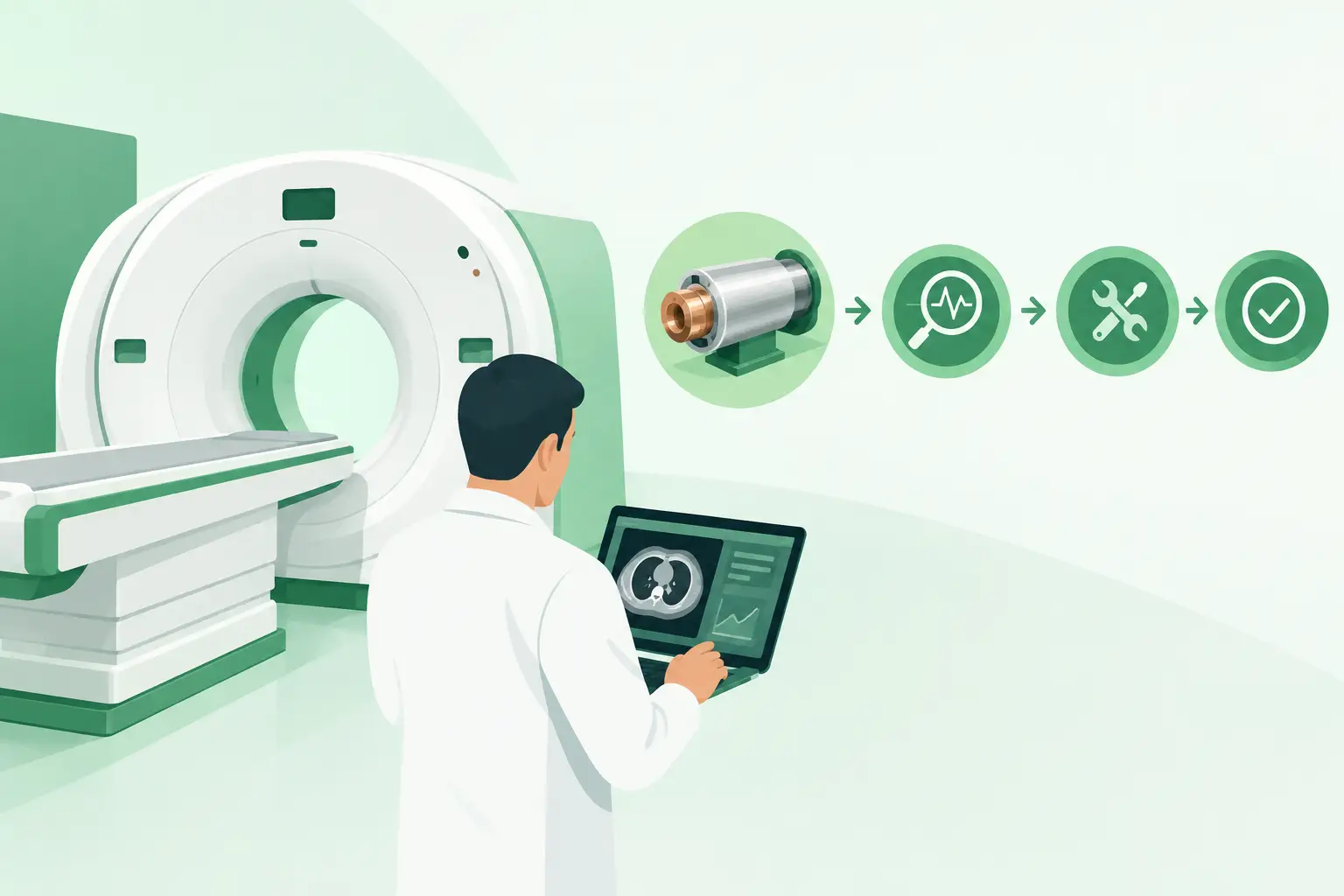
A CT room can be clinically ready, fully staffed, and scheduled solid when one tube-related fault stops scanning. CT tube downtime recovery is not simply a matter of finding a replacement and installing it. It is a controlled process that starts with confirming the failure mode, identifying the exact compatible component, planning installation resources, and validating image quality before the scanner returns to patient use.
For biomedical teams and independent service organizations, the elapsed time is driven as much by diagnostic discipline and sourcing accuracy as by the physical repair. A wrong part number, an unverified assembly configuration, or an overlooked cooling-system issue can turn a one-day outage into a repeat failure.
What CT Tube Downtime Really Involves
The X-ray tube is a high-stress component at the center of CT operation. Repeated thermal loading, high-voltage exposure, bearing wear, rotor faults, arcing, vacuum degradation, and cooling problems can all lead to warnings, degraded performance, or a hard system stop. The scanner may report a tube, generator, high-voltage, rotation, or exposure-related error, but the displayed fault does not always identify the failed component with certainty.
That distinction matters. A tube-related error can originate in the tube assembly, tube housing, high-voltage tank, cable set, generator interface, cooling circuit, gantry electronics, or system configuration. Replacing an expensive tube assembly before confirming the root cause can consume both budget and recovery time without restoring the system.
The operational impact also varies by site. A high-volume outpatient center may need a same-day triage decision and a temporary rerouting plan. A clinic with a legacy CT platform may face a different risk: the correct replacement may be available only through specialized aftermarket channels, and the system may require experienced service support to return it to stable operation. In either case, the goal is not merely to clear an error. It is to restore predictable, safe scanning performance.
Start CT Tube Downtime Recovery With Fault Isolation
The first hours of an outage should produce a concise technical record. Service personnel should capture the exact error codes, event logs, scanner model, serial number where relevant, current tube exposure or scan history if available, and the circumstances around the failure. Was there an abnormal noise during rotation? Did the fault occur at startup, during warm-up, under high mA load, or only on certain protocols? Was there evidence of coolant leakage, a temperature issue, or unstable image output?
These details help separate a likely tube failure from an upstream or adjacent fault. They also help a parts supplier confirm what is actually needed. A request that says only “CT tube for a Siemens scanner” or “GE CT tube needed urgently” is rarely enough to source accurately. CT platforms can use different tube configurations across system generations, revisions, and installed options.
Confirm the exact replacement requirement
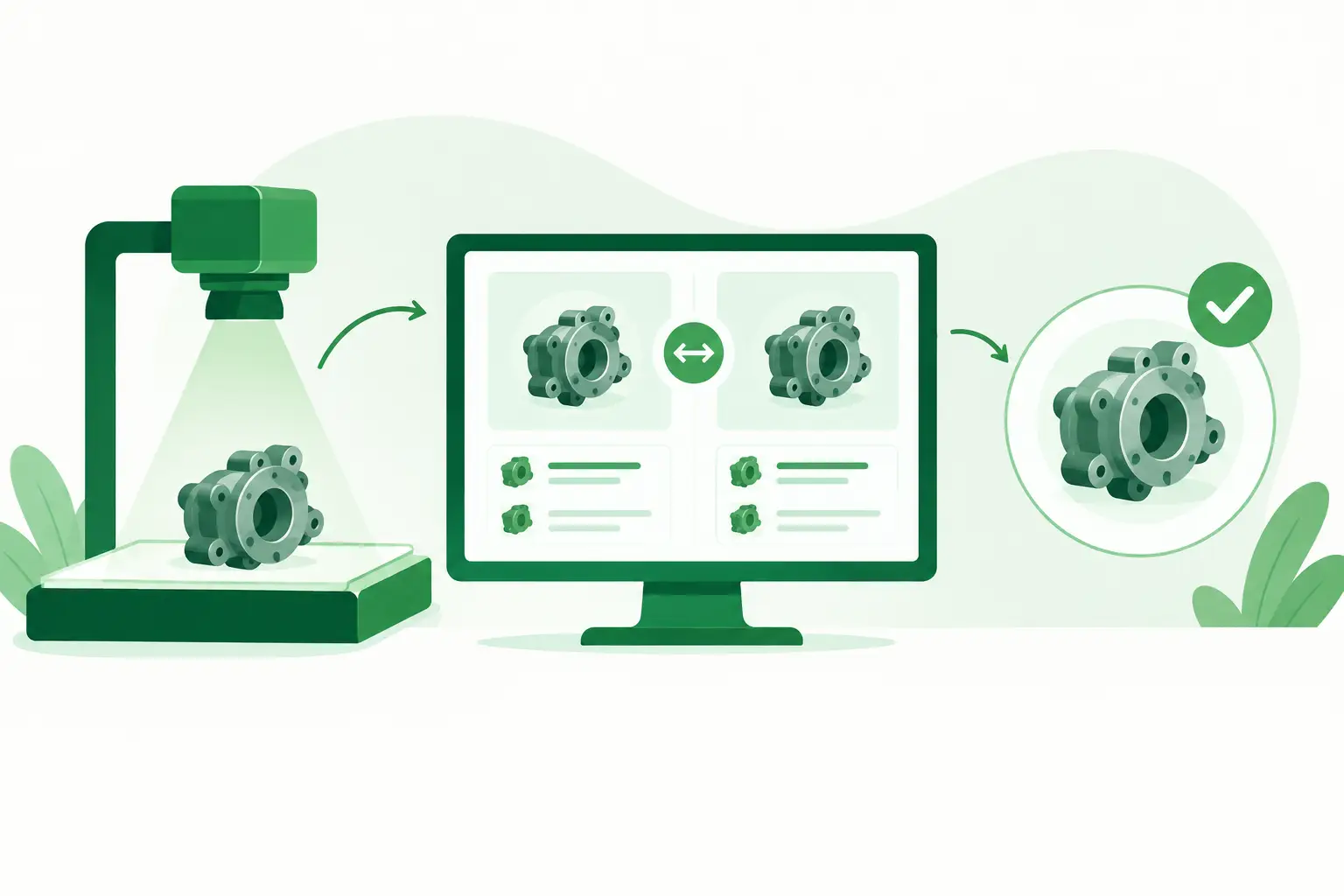
The most useful sourcing package includes the OEM part number from the failed item or service documentation, the scanner make and model, and clear photographs of labels and connectors when practical. Tube housing identifiers, generator-related part numbers, and previous replacement records can resolve ambiguity where the primary label is damaged or inaccessible.
Part-number-level verification is especially important for systems from GE Healthcare, Siemens Healthineers, Philips, and Canon/Toshiba, where similarly named scanner families may have different compatible tube assemblies or associated hardware. Compatibility cannot be assumed from a system name alone.
A qualified service team should also inspect related conditions before installation. If cooling flow is restricted, the heat exchanger is compromised, the chiller is not maintaining specification, or a high-voltage issue remains unresolved, a replacement tube can be exposed to the same damaging conditions that caused the original shutdown.
Build a Recovery Plan Before the Part Arrives
The fastest repair is often the best-prepared repair. Once the likely failed component has been identified, coordinate the part, the qualified installer, required lifting or handling equipment, service software access, and the expected calibration or configuration steps. A tube replacement is not a routine swap-in for an unprepared team. Gantry access, cable routing, coolant handling, alignment, and post-install procedures must be planned around the specific platform.
The recovery plan should answer practical questions: Is the replacement assembly complete or does it require transfer of approved components? Are required seals, fittings, coolant-related items, or mounting hardware already on hand? Does the system need a tube initialization, calibration sequence, or engineering-level configuration after installation? Who will perform the final scan validation, and which phantom or quality-control protocol will be used?
This preparation reduces the costly situation in which a correct part is on site but the CT room remains down because a minor interface item, service tool, or authorized technical resource is missing.
Choose the Right Sourcing Path for the System
For current platforms with active OEM support, the available route may depend on local availability, service coverage, and the site’s operational deadline. For aging or discontinued CT systems, specialized aftermarket sourcing can be essential. The practical issue is not whether a part is described broadly as compatible. It is whether the supplier can verify the precise part number, condition, configuration, and availability against the installed system.
Used and refurbished CT tube assemblies can be appropriate options when they are evaluated against the system requirement and the facility’s service strategy. The trade-off is straightforward: lower acquisition cost or better availability may be valuable, but buyers need clear information about condition, documentation, compatibility, and any available testing process. A part that is inexpensive but poorly identified creates a greater downtime risk than a correctly matched component that can be installed without delay.
For difficult-to-source imaging components, Meditegic supports technical buyers by locating exact-match parts through a global supplier network and cross-referencing requirements at the OEM part-number level. That capability is particularly relevant when a CT tube, tube housing, high-voltage component, gantry part, or control board is no longer readily available through standard distribution.
Installation Is Only the Middle of the Repair
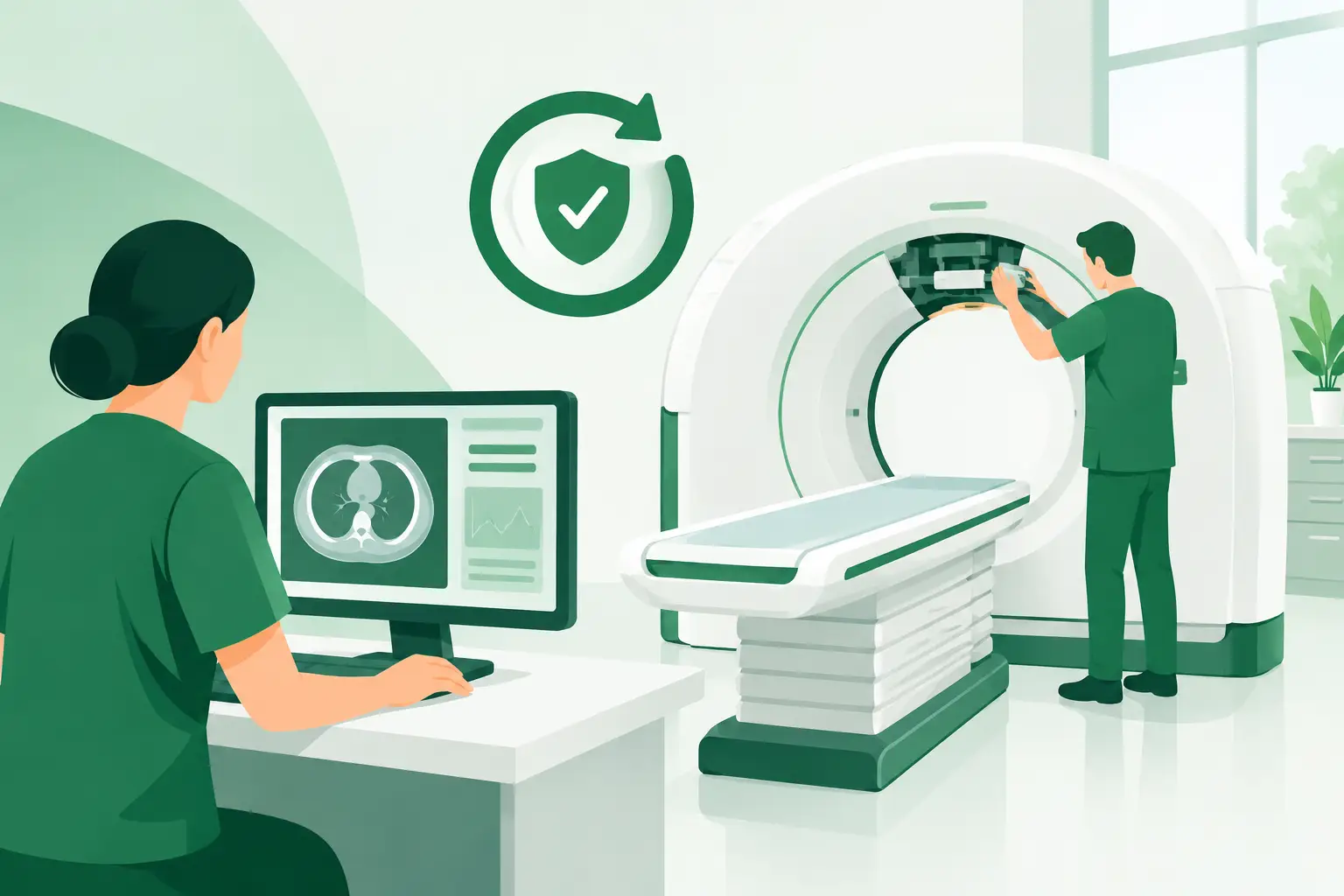
A successful physical installation is not the end of CT tube downtime recovery. The system must be returned to service according to the applicable manufacturer procedures and the facility’s quality-control requirements. This work should be performed by appropriately qualified imaging service personnel because CT systems involve high voltage, mechanical rotation, radiation-producing equipment, and tightly controlled image-performance parameters.
Post-install verification commonly includes checking for leaks or cooling abnormalities, reviewing fault logs, completing required warm-up or conditioning procedures, confirming tube and generator communication, and running the designated calibration sequence. The system should then be evaluated with the site’s established phantom and clinical quality-control process. Image uniformity, noise, artifacts, CT number accuracy, slice performance, and behavior under representative scan loads should be assessed as applicable to the scanner and service procedure.
A clean startup alone does not prove recovery. Intermittent arcing, thermal instability, rotor-related noise, or image artifacts may appear only after the system reaches operating temperature or runs a demanding protocol. Monitoring the first operational scans and documenting the results provides a more reliable release decision.
Reduce the Next CT Outage Before It Starts
CT tube failures cannot be eliminated, but their operational impact can be reduced. The most effective approach is to treat tube health as part of an uptime plan rather than an emergency-only issue. Review recurring faults, tube usage data where available, cooling performance, room environmental conditions, and the history of generator or high-voltage repairs. A pattern of temperature alarms or intermittent exposure faults deserves attention before it becomes a complete shutdown.
For systems with limited OEM support, maintain a verified record of critical part numbers and installed revisions. This should include the tube assembly, tube housing, high-voltage components, major cooling parts, gantry boards, and any system-specific interface components that have long sourcing lead times. Keep the record with the scanner service file, not only in an individual technician’s notes.
It is also useful to establish the information needed for an urgent sourcing request before the failure occurs. Label photographs, part numbers, system configuration details, and a current service contact can save hours when the scanner is offline. For a multi-site service company, this documentation can also identify whether a compatible approved component is already available elsewhere within its managed inventory.
When a Rapid Recovery Is Not the Right Decision
Pressure to restore scanning quickly is understandable, but a rushed return is not always the right call. If fault isolation remains incomplete, if the cooling or high-voltage condition is unresolved, or if required image-quality checks cannot be completed, the responsible decision is to keep the system out of clinical operation until the issue is verified.
The same principle applies when a proposed replacement cannot be confirmed at the part-number level. An uncertain match may appear to save time, yet it can create installation delays, configuration conflicts, or a second outage. Fast recovery should mean fewer avoidable steps, not fewer technical controls.
A well-run CT recovery process gives service teams a clear advantage: the failure is documented accurately, the replacement is matched precisely, and the scanner returns only after it demonstrates stable performance. That discipline protects the asset, preserves technician time, and helps the imaging schedule recover with confidence.