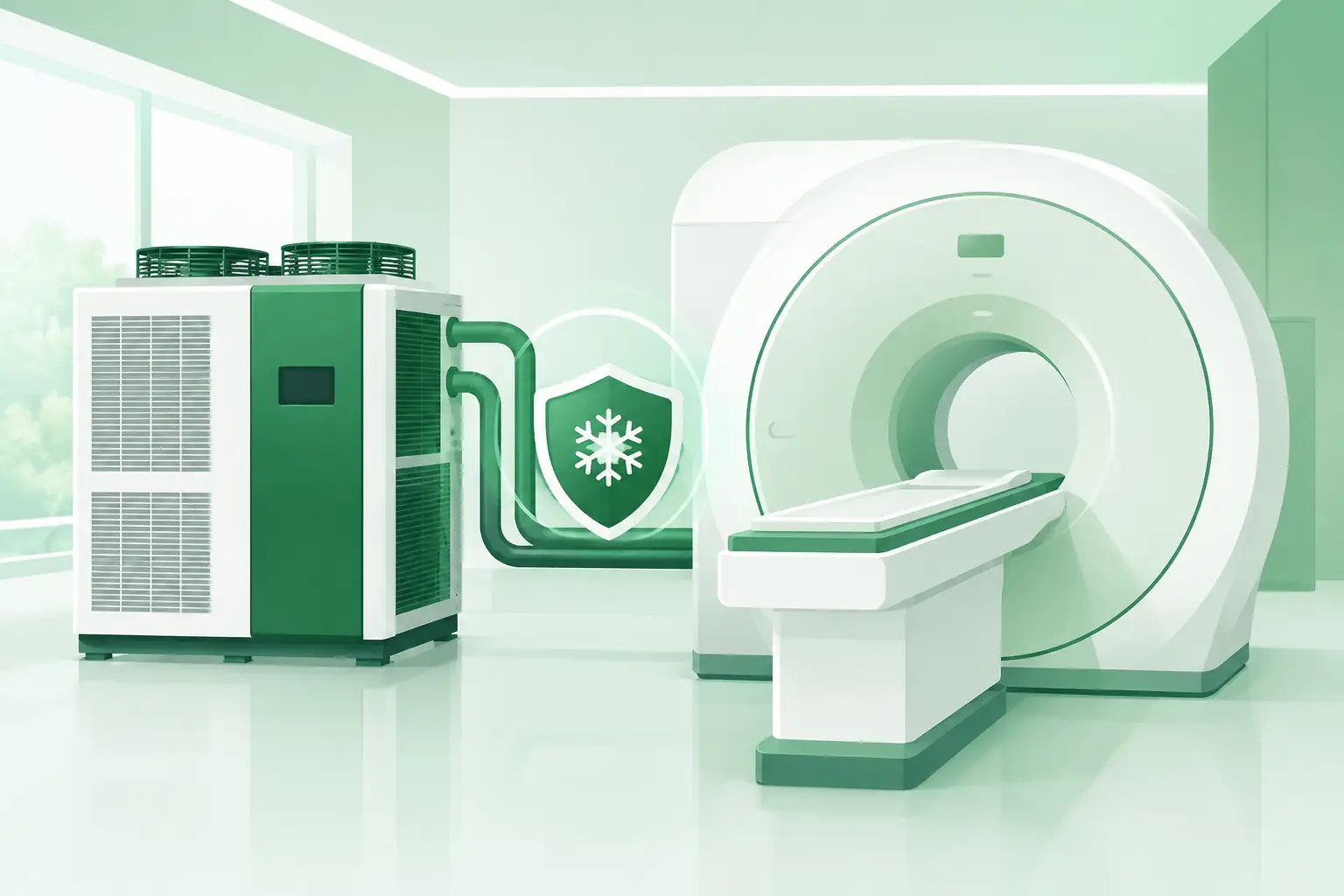
A CT room cannot remain out of service because a power supply, detector board, table assembly, or tube housing is no longer available through the original channel. The future of refurbished medical components is being shaped by that operational reality: imaging providers and service teams need exact-match parts that can return critical equipment to service without creating uncertainty about fit, function, or history.
For diagnostic imaging, refurbishment is not simply an alternative to buying new. It is a disciplined process for extending the usable life of high-value components in CT, MRI, PET/CT, nuclear medicine, C-arm, X-ray, ultrasound, mammography, CR/DR, and DEXA systems. Its value is greatest when an installed system remains clinically useful but its OEM support window has narrowed, a component has been discontinued, or the required part is unavailable locally.
Why Imaging Aftermarket Demand Is Growing
Imaging equipment has long service lives, and many facilities operate mixed fleets from GE Healthcare, Siemens Healthineers, Philips, Canon/Toshiba, Hologic, Fujifilm, Hitachi, Carestream, and other current and legacy manufacturers. A system does not become operationally irrelevant just because one board, coil, collimator, cooling module, or workstation assembly becomes difficult to source.
That gap between the service life of the system and the availability of individual spares is the central driver of the imaging aftermarket. Clinical engineering departments, independent service organizations, and repair specialists are being asked to maintain more equipment with tighter downtime tolerances. For a private imaging center or a clinic with a single ultrasound or mammography unit, a delayed repair can disrupt scheduling immediately. For an ISO, an unresolved part request can tie up a field engineer and affect multiple service commitments.
Refurbished components help close the gap, but only where the source understands the difference between a broadly similar part and an exact replacement. A control board may share a family name with several revisions yet have different connectors, firmware requirements, or system compatibility. An ultrasound transducer may look identical externally while carrying a different part number, array specification, or connector configuration. The future belongs to suppliers that can work at the OEM part-number level rather than relying on equipment model descriptions alone.
The Future of Refurbished Medical Components Is Traceable
The market is moving away from vague descriptions such as “tested used part” and toward evidence-based condition reporting. Buyers increasingly need to know what component they are receiving, how it was identified, what work was performed, and what testing was completed before shipment.
Traceability starts at intake. The component should be recorded by manufacturer, OEM part number, revision when applicable, source system, and visible condition. That record becomes especially important for high-value and technically sensitive parts such as MRI RF coils, gradient-related components, flat-panel detectors, image intensifiers, high-voltage tanks, X-ray tube housings, and ultrasound probes.
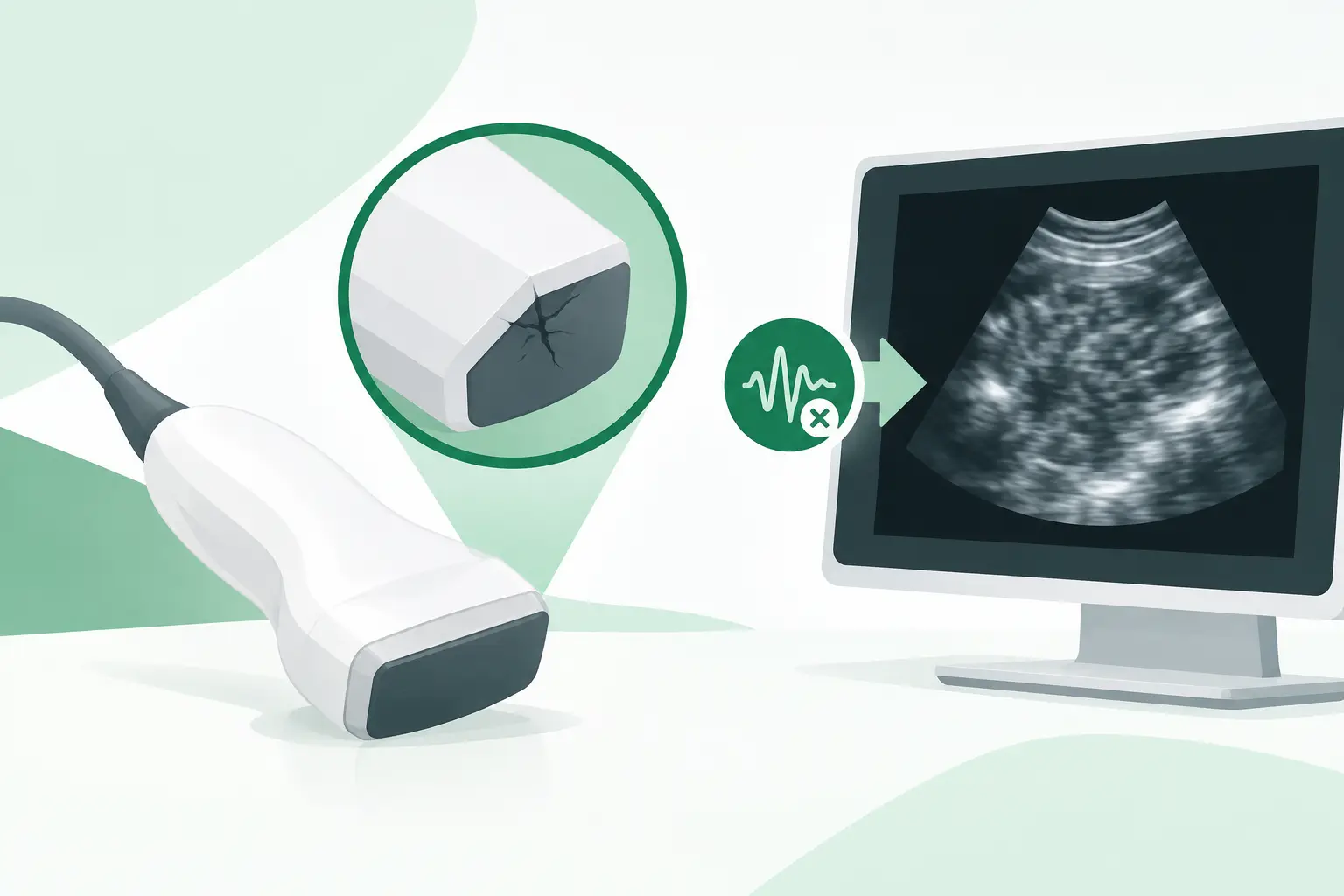
The next requirement is component-appropriate testing. There is no single test protocol that can establish readiness across every modality. A power supply requires electrical and load-related evaluation. A transducer requires inspection for cable, lens, connector, and imaging performance issues. A PCB may require bench testing or validation in a compatible environment. A mechanical gantry or table component may require checks for fit, movement, wear, and associated hardware. The useful question is not whether a part is “refurbished” in the abstract. It is whether its inspection and test process matches the failure modes of that part type.
Documentation will become a stronger differentiator as procurement teams seek fewer surprises after installation. Clear identification, accurate photos where useful, condition notes, test information, and warranty terms reduce ambiguity. They also help field technicians prepare for installation with the correct tools, compatible revisions, and any needed calibration or system checks.
Refurbishment Will Become More Specialized, Not More Generic
As imaging platforms become more technically complex, broad claims of repair capability carry less weight. The practical future of refurbishment is specialization by modality and component category.
For MRI, that may mean expertise in RF coils, coil cables, patient-table assemblies, cooling-related parts, and electronics associated with specific system generations. For CT, it may center on detector electronics, gantry components, power distribution, cooling assemblies, and tube-related hardware. In ultrasound, probe sourcing and repair evaluation will remain critical because a single damaged transducer can remove a service line from use. In fluoroscopy and general X-ray, availability of image receptors, collimators, generators, high-voltage components, and mechanical assemblies will continue to determine repair timelines.
This specialization has a trade-off. A part can be more readily available than a fully documented alternative, especially when the system is older or the failure is urgent. Service teams must balance speed against verification. For noncritical cosmetic components, a used part with basic inspection may be reasonable. For electronics, imaging-chain components, and assemblies where an incorrect revision can create repeat downtime, sourcing discipline matters more than a lower purchase price.
Digital Part Identification Will Reduce Sourcing Delays
The strongest improvement in the refurbished-parts market may be less visible than the repair itself: better data. Large part databases, cross-referencing, serial and revision capture, and structured supplier records can reduce the time spent searching fragmented channels.
A request that includes an OEM part number, manufacturer, system model, revision, and clear fault description is far more actionable than a request for “a Siemens CT board” or “a GE probe.” Where a label is damaged or unavailable, photographs of connectors, board layouts, transducer plugs, or surrounding assemblies can help narrow the match. This information allows a specialist to distinguish between compatible options and parts that merely appear similar.
Data quality also supports more effective global sourcing. A supplier may locate an obsolete component in another region, but the part still needs to be confirmed for the buyer’s exact configuration before it is shipped. Meditegic’s role in this process is not generic parts distribution. It is locating and validating difficult imaging spares through part-number-level sourcing across multiple OEM environments.
Sustainability Matters, but Uptime Comes First
Refurbishment also keeps technically recoverable materials and components in productive use longer. That matters in imaging, where assemblies can contain specialized electronics, metals, mechanical structures, and complex manufacturing inputs. Extending a viable component’s service life can reduce unnecessary replacement activity.
Still, sustainability should not be the primary claim made to a service manager facing an idle scanner. The immediate value is operational continuity: restoring a system with a component that is correctly identified, appropriately evaluated, and available within the required timeframe. Environmental benefit follows from avoiding premature disposal, but it does not replace the need for dependable performance.
This distinction is useful for procurement decisions. Refurbished is not automatically the right choice in every case. A component with safety concerns, uncertain provenance, severe physical damage, unavailable test capability, or a known reliability issue may not be suitable for reuse. The correct decision depends on the part’s function, condition, system age, availability of alternatives, and the provider’s maintenance standards.
What Technical Buyers Should Expect Going Forward
The future of refurbished medical components will reward suppliers that make technical uncertainty easier to manage. Buyers should expect precise part identification, realistic availability updates, transparent condition information, and questions that establish compatibility before an order is processed.
They should also expect a sourcing partner to recognize urgency without promising what cannot be verified. When a PET/CT system is down, a fast quote is useful only if the offered part is the correct part. When a legacy mammography unit needs a discontinued board, supplier reach matters only if the board revision and configuration are confirmed. Speed and accuracy must operate together.
For service organizations, the most practical preparation is to record critical spare-part numbers before a failure occurs. Maintain a history of recurring failures, installed revisions, probe models, board assemblies, and high-value components across the fleet. That information shortens the search when a repair becomes urgent and helps identify which parts deserve advance sourcing attention.
The component market will continue to evolve through stronger traceability, better technical data, and deeper modality specialization. When the next hard-to-find imaging part fails, the advantage will go to the team that can identify it precisely, assess the available options quickly, and source a replacement that supports a reliable return to service.