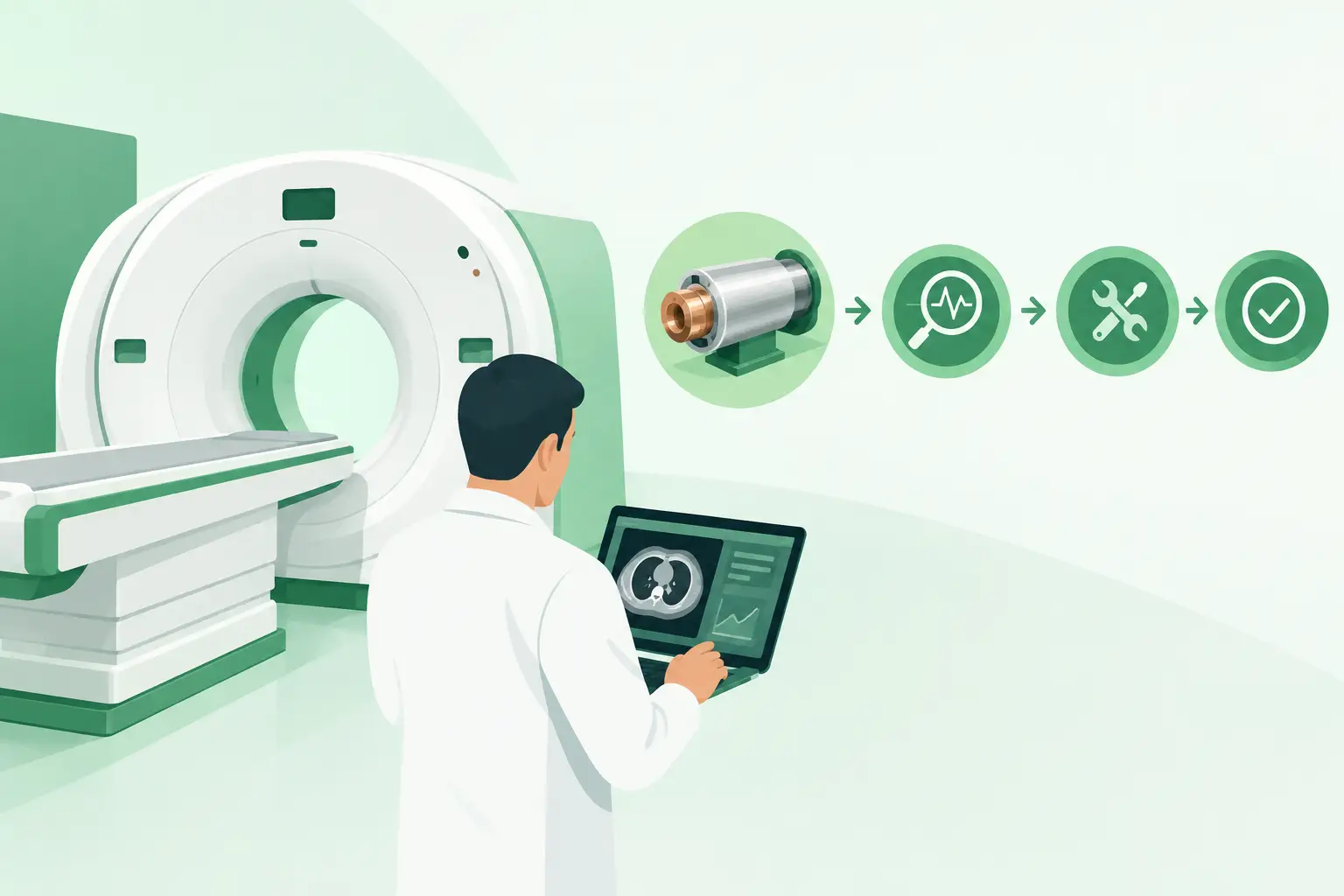
A tube failure rarely arrives at a convenient time. It usually shows up in the middle of a full imaging schedule, during a service call with little margin for delay, or when a legacy room already has limited parts support. That is why one of the most common operational questions in diagnostic imaging is simple: how long do xray tubes last?
The short answer is that xray tube life varies widely. In many systems, a tube may last anywhere from 3 to 10 years, but calendar age alone does not tell you much. Tube life is driven more by workload, heat management, exam mix, startup and shutdown habits, generator performance, and overall system condition than by time in service. Two rooms installed in the same year can have very different replacement timelines.
How long do xray tubes last in real-world use?
For general radiography, tube life is often discussed in terms of exposure count, heat units, or practical service years. A lower-volume room in an outpatient setting may run for years without major tube issues. A high-throughput hospital department, urgent care chain, or trauma environment may consume tube life much faster.
This is where broad averages can become misleading. A tube that appears to have reached a normal age range may still perform reliably if the room has been lightly used and properly maintained. On the other hand, a newer tube in a high-demand site can fail early if heat load has been consistently high or if supporting components are stressing the assembly.
In practical terms, service teams and purchasing departments usually evaluate tube life through a combination of factors: total usage, image quality trends, fault history, OEM recommendations, and whether lead times for replacement parts create too much operational risk.
Why tube lifespan depends on more than age
An xray tube is a high-stress component. Each exposure generates heat, and heat is the central issue in tube wear. The tube has to convert electrical energy into x-rays while managing a significant thermal load at the anode. Over time, repeated heating and cooling cycles degrade internal components.
Anode pitting, bearing wear, filament evaporation, rotor imbalance, and vacuum deterioration are all common failure mechanisms. Some progress gradually and create warning signs. Others become visible only when a room starts throwing intermittent faults or image performance becomes inconsistent.
System-level conditions matter too. If a generator is unstable, calibration is off, cooling is inadequate, or operators are pushing heavy protocols back-to-back without recovery time, the tube may absorb wear that is not obvious from age records alone. That is why tube replacement planning works best when it is tied to service data, not assumptions.
Volume and exam mix
A room doing routine chest studies all day does not stress a tube the same way a system handling repeated high-output exams does. Heavy patients, repeat exposures, mobile throughput pressure, and extended daily operating windows all accelerate wear. Mammography, fluoroscopy, and specialized x-ray environments also introduce different usage patterns that affect tube longevity.
Heat load and cooling discipline
Frequent high-load exposures with limited cooling time are one of the fastest ways to shorten tube life. Most tube manufacturers provide heat management parameters for a reason. Ignoring them may not cause immediate failure, but it often reduces usable life and increases the likelihood of sudden downtime later.
Installation quality and system condition
A replacement tube installed into a room with unresolved electrical, mechanical, or cooling issues may fail well before expected life. When a tube is replaced, the surrounding system should be evaluated carefully. Otherwise, the new component may inherit the same operating stress that damaged the previous one.
Common signs an xray tube is nearing end of life
Not every tube gives clear early warning, but many do. The challenge is that the signs can resemble other system faults, which is why technical evaluation matters.
Aging tubes often show image artifacts, unstable output, exposure inconsistency, or startup noise related to rotor or bearing wear. Some systems generate recurring error codes tied to prep failures, anode rotation problems, or thermal faults. In other cases, teams notice a gradual increase in repeat studies or image quality complaints before a hard failure occurs.
Service records are useful here. If a room has repeated tube-related alarms, unexplained image variation, or recurring downtime tied to exposure events, it may be more cost-effective to plan a controlled replacement instead of waiting for complete failure.
When replacement is proactive and when it is reactive
There is no single rule that fits every site. Some facilities replace tubes only after failure because utilization is low, backup capacity exists, or budgets favor run-to-failure strategies. Others replace proactively when signs of degradation appear because even a short outage has high clinical and financial consequences.
A proactive replacement approach makes more sense when the imaging room is heavily booked, the site has no practical redundancy, or the tube is tied to a system with long lead times and limited market availability. For older platforms, waiting until failure can turn a planned maintenance event into an urgent sourcing problem.
Reactive replacement may still be reasonable in lower-volume environments, but only if procurement and service teams already understand the part landscape. Knowing whether a new, refurbished, or hard-to-find replacement is realistically available changes the risk calculation.
New versus refurbished tubes
For buyers managing uptime and budget, this is often the real decision point. New tubes may offer the longest expected life and full OEM-spec confidence, but they also come with higher acquisition cost and, depending on the model, variable lead time. Refurbished tubes can be a practical option when they are sourced correctly, tested appropriately, and matched to the application.
The trade-off is not simply price versus quality. It is more about application fit, warranty structure, platform age, and how quickly the room needs to return to service. In legacy imaging environments, refurbished options may be the most realistic path to restoring uptime without overinvesting in equipment near end of service life.
This is where experienced sourcing support matters. Procurement teams do not just need a part number. They need confirmation of compatibility, condition, availability, and realistic fulfillment timing.
How to get more life out of an xray tube
Tube life cannot be extended indefinitely, but it can often be improved with disciplined operation and service practices. Warm-up procedures matter, especially after idle periods. Cooling limits should be respected, particularly in high-volume settings. Repeat exposures should be monitored because unnecessary retakes create avoidable wear.
Preventive maintenance also has a direct impact. Calibration checks, generator health, cooling system performance, and review of fault history can help identify conditions that shorten tube life. Operator training is often overlooked, but consistent technique and adherence to room operating limits reduce stress on the assembly.
For fleet managers and service organizations, usage tracking is one of the most effective tools. If you know which rooms are carrying the highest output, which tube models are trending toward failure, and which systems are harder to source parts for, replacement planning becomes more controlled.
Planning for downtime before the tube fails
The best answer to how long do xray tubes last is usually not a number. It is a planning framework. For critical rooms, the right question is whether the current tube condition, usage profile, and sourcing outlook create acceptable risk.
If the answer is no, waiting for a hard stop is usually the expensive option. Lost scan capacity, delayed patient throughput, emergency service labor, expedited freight, and part scarcity can quickly outweigh the savings of stretching a tube beyond a reasonable replacement window.
For hospitals, ISOs, and biomedical teams supporting mixed OEM and legacy environments, it helps to keep replacement pathways defined before an outage occurs. That includes confirmed part identification, condition preferences, budget scenarios, and supplier options. Companies such as Meditegic support that process by helping technical buyers source exact-match imaging parts across both current and difficult-to-find platforms.
An xray tube can last years, or it can become tomorrow morning’s service emergency. The difference usually comes down to how closely the room is monitored, how well the system is maintained, and how early replacement planning starts.