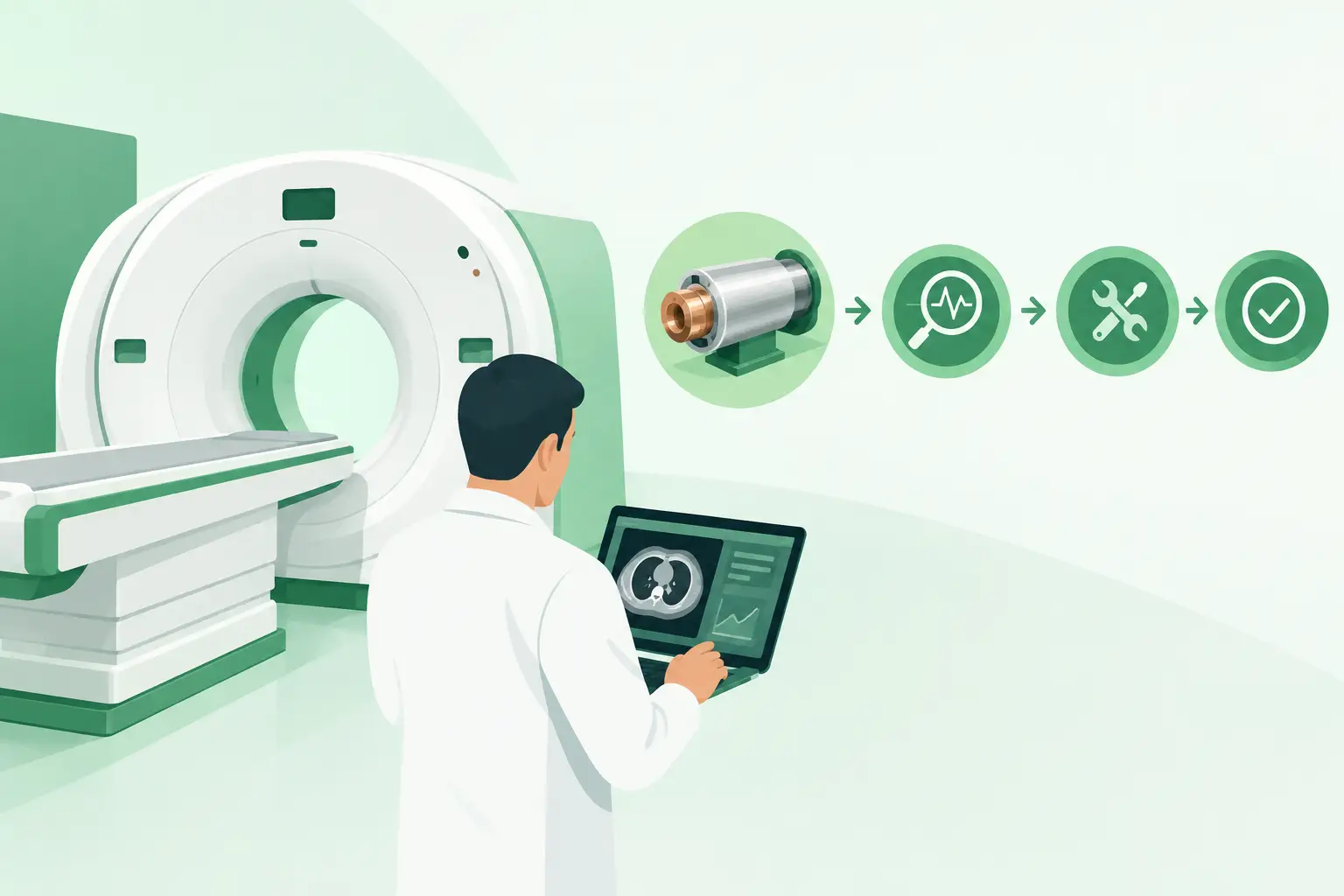
A CT console is down, an ultrasound probe has failed, or a C-arm is throwing an intermittent fault. In that moment, the OEM vs aftermarket medical components decision is not a theoretical purchasing exercise. It determines how quickly the system returns to service, how much diagnostic revenue is at risk, and whether the replacement part is appropriate for the exact configuration in front of the technician.
For imaging equipment, the best option is rarely decided by price alone. Part provenance, compatibility, condition, test history, support requirements, and availability all matter. The right choice depends on the component and the operational consequences of waiting.
What OEM and aftermarket components mean in practice
OEM components are supplied by the original equipment manufacturer or through its authorized channels. They are typically new and specified for a particular system family, software version, and configuration. For certain current-generation systems, OEM supply may also be the clearest route to manufacturer-backed support or prescribed service procedures.
Aftermarket medical components are sourced outside the OEM's direct sales channel. In diagnostic imaging, this category is broader than many buyers assume. It may include used original OEM parts removed from compatible systems, professionally refurbished boards and assemblies, tested replacement modules, repaired components, and selected new third-party equivalents where appropriate.
That distinction matters. “Aftermarket” does not automatically mean generic, untested, or lower quality. A refurbished original OEM detector board and an unverified substitute board should not be evaluated the same way. The practical question is whether the specific part can be identified, verified, and supported for the intended repair.
The decision starts with the part, not the label
An imaging system contains components with very different risk profiles. A keyboard, monitor, power supply, RF component, gradient-related assembly, gantry board, ultrasound transducer, and detector module cannot all be purchased under one blanket OEM-only or aftermarket-only policy.
For high-consequence assemblies, the service team may require OEM supply, manufacturer documentation, or a narrowly defined repair path. This can be the case when calibration, safety performance, software pairing, warranty obligations, or a current service agreement drives the decision. If a component requires proprietary programming or an OEM-only commissioning process, obtaining the right physical part is only one part of the job.
For discontinued systems and legacy modalities, however, OEM availability may be limited or no longer practical. A tested used OEM spare or a properly refurbished assembly can be the most realistic way to restore operation. Waiting weeks for an unavailable OEM channel does not protect uptime. It extends downtime.
The decision should therefore begin with four questions: What is the exact part number and revision? Is the component safety-critical or calibration-dependent? Does it require software configuration after installation? What is the cost of leaving the modality unavailable?
OEM advantages and their limits
OEM sourcing offers clear benefits when equipment is current, manufacturer support is essential, and the component must align with a controlled service process. Buyers often value known documentation, traceable distribution, defined compatibility, and access to technical escalation through the original manufacturer.
This route can reduce uncertainty for parts that have multiple revisions or hidden configuration differences. It may also be appropriate when the equipment is covered by an agreement that specifies OEM parts or service procedures.
The limitations are equally real. OEM channels may have longer lead times for older systems, discontinued assemblies, and low-demand parts. They may offer replacement pathways rather than the exact component needed for a targeted repair. Cost can also be difficult to justify when the system is nearing the end of its useful service life but remains clinically valuable.
An OEM part is not automatically the fastest solution. When an urgent repair depends on a legacy board, a specific transducer, or a hard-to-find module, availability often becomes the deciding factor.
Where aftermarket sourcing creates operational value
The strongest aftermarket option is often a tested original component with a confirmed part number, sourced from an established inventory network. This is particularly valuable for CT, MRI, nuclear medicine, C-arm, X-ray, ultrasound, mammography, CR, DICOM, and densitometry environments where systems remain in productive use long after OEM inventory changes.
Aftermarket sourcing can shorten procurement time because specialist suppliers search across multiple inventory holders rather than a single manufacturer channel. It can also provide access to discontinued or surplus parts that are no longer routinely stocked by the OEM.
Cost control is meaningful, but it should be viewed correctly. The main value is not simply buying a lower-priced part. It is preserving a repairable asset, avoiding prolonged downtime, and giving technical teams a viable option when an exact-match replacement is difficult to locate.
Meditegic supports this type of procurement by locating hard-to-find imaging spares through a broad supplier network and parts database. For technicians and biomedical engineering teams, a fast, accurate quotation can be more useful than a catalog listing that does not reflect actual availability.
Evaluating aftermarket medical components before purchase
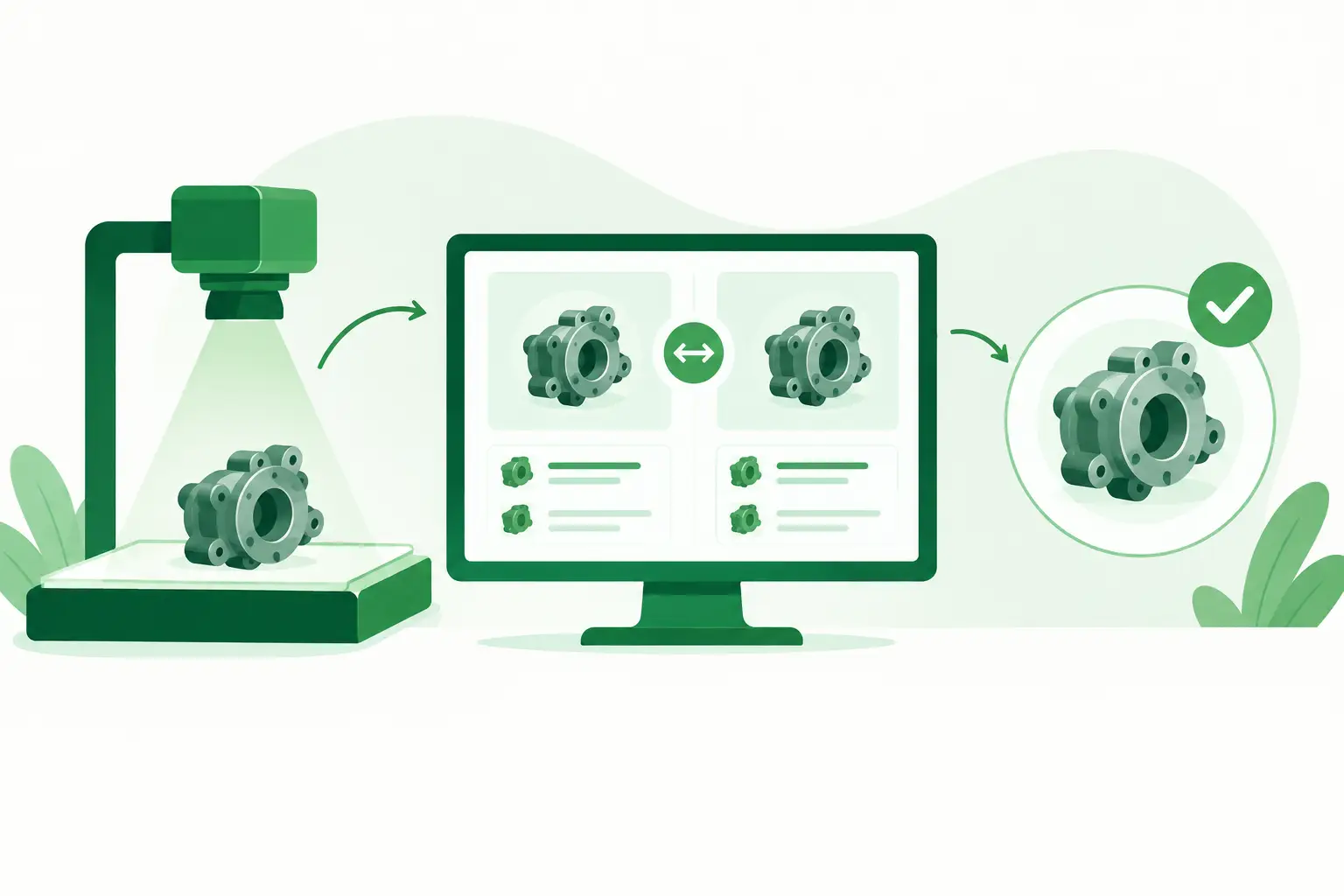
A reliable aftermarket transaction depends on disciplined verification. Buyers should provide the complete part number, including suffixes and revision levels, along with the modality model, serial information when relevant, fault description, and any known software or hardware configuration details.
A supplier should be able to state what is being offered: used, refurbished, repaired, or new replacement stock. Those terms are not interchangeable. Ask how the item was evaluated, whether it was functionally tested, whether it was removed from a working system, and whether an exchange core is required.
For refurbished parts, clarify the scope of refurbishment. A cosmetic cleaning is different from component-level repair, inspection, testing, and validation against known functional requirements. The appropriate level of detail depends on the part, but vague condition descriptions are a warning sign.
Traceability also deserves attention. Technical buyers should confirm the offered part number, revision, condition, test status, warranty terms, shipping readiness, and return process before releasing a purchase order. For components that require configuration or calibration, confirm who will perform that work and what tools or service access are needed.
Compatibility is more than matching a model name
A part may be listed for a scanner family yet still be unsuitable for a specific unit. Hardware revisions, firmware versions, connectors, regional configurations, and software options can all affect interchangeability. This is especially common with control boards, power assemblies, imaging chains, transducers, coils, and components that evolved during a long production run.
The safest approach is to verify against the original installed part whenever possible. Clear photographs of labels, connector layouts, and board revisions can resolve uncertainty before shipment. A supplier that asks for this information is helping prevent a costly mismatch, not adding friction.
Condition should match the urgency and repair strategy
A used original OEM component may be a sensible emergency replacement when a modality is down and a tested exact match is available. A refurbished unit may be preferable when the repair plan calls for a longer-term replacement with documented work performed. In other cases, an OEM part may remain the right choice because of contractual requirements or manufacturer-controlled setup.
There is no universal hierarchy. The correct condition is the one that meets the system's technical needs, the facility's risk tolerance, and the required return-to-service timeline.
Build a sourcing policy around uptime
Biomedical departments and independent service organizations benefit from a simple escalation path rather than an OEM-versus-aftermarket rule. For every urgent requirement, classify the part by clinical and technical consequence, determine whether OEM support is mandatory, verify the exact configuration, and then compare actual lead times from qualified sources.
This approach prevents two common failures. The first is paying for OEM supply when a verified aftermarket option would restore service faster with acceptable risk. The second is choosing a low-cost aftermarket listing without confirming revisions, test status, or installation requirements.
For frequently failing or long-lead components, it may be worthwhile to keep a small, controlled inventory of verified spares. That is particularly useful for high-utilization imaging systems in remote locations, where freight time can be as disruptive as sourcing time. Inventory decisions should be based on failure history, replacement lead time, and the revenue or patient-care impact of downtime.
Choose the source that supports the repair
The OEM vs aftermarket medical components question is best answered at the repair level. If OEM supply provides the required compatibility, support, and timing, it may be the right call. If a tested, traceable aftermarket component can restore a legacy system quickly and appropriately, it may offer greater operational value.
When equipment is down, the most useful supplier is the one that helps verify the exact part, states its condition clearly, and gives your technical team a realistic path back to service.