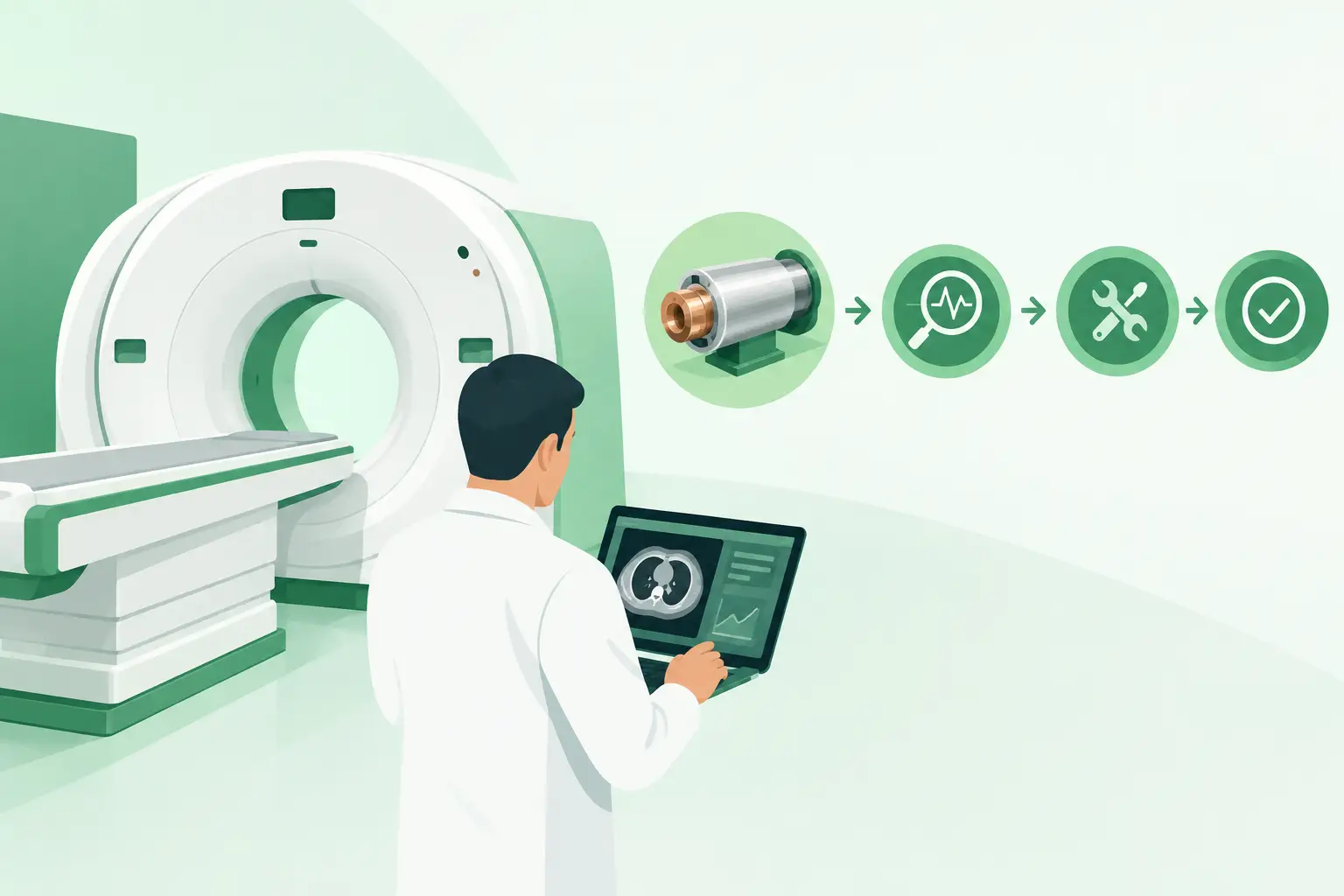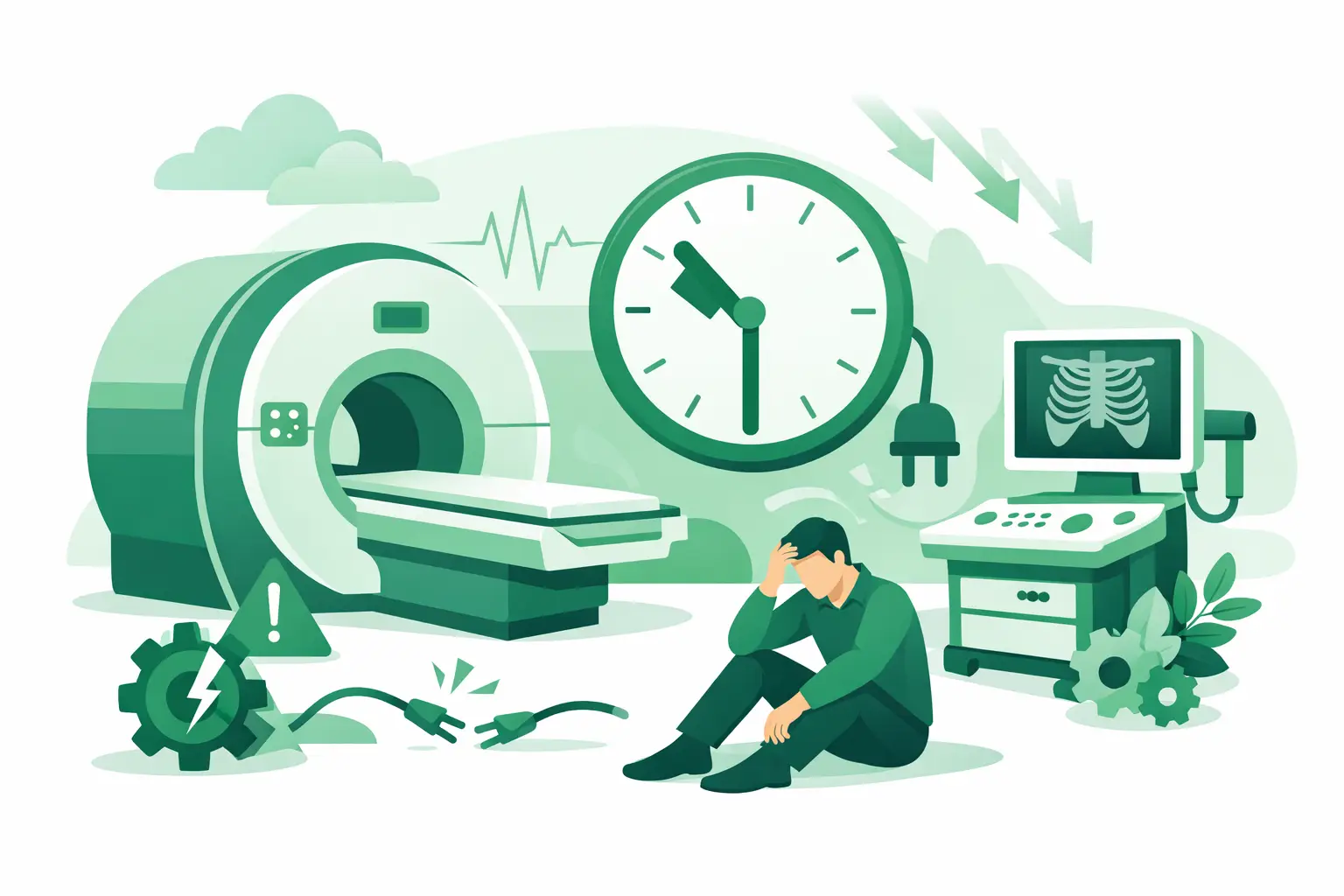
A CT room sitting idle at 10:15 a.m. is not just a technical problem. It is a backlog of patients, a compressed schedule for staff, delayed reads, and immediate pressure on the service team to identify the fault and secure the right part fast. That is why the question of what causes imaging equipment downtime matters so much in daily operations. In most cases, downtime is not triggered by one dramatic failure. It builds from a mix of aging components, service timing, software dependencies, and sourcing delays.
What causes imaging equipment downtime in practice
Imaging systems fail in patterns, not in theory. A power supply weakens over time. A fan stops cooling as designed. A detector board becomes intermittent before it goes fully offline. A cable that passed inspection six months ago starts causing sporadic errors under load. The practical issue is that many failures begin as unstable performance, which makes diagnosis slower and downtime longer.
For technical teams, the first challenge is separating the symptom from the root cause. A system crash may point to software, but the underlying problem may be storage failure, a communication board, or a thermal issue inside a subsystem. An image artifact may suggest detector trouble, yet the real source could be a damaged connector, calibration drift, or a failing power module. The longer fault isolation takes, the longer the asset remains unavailable.
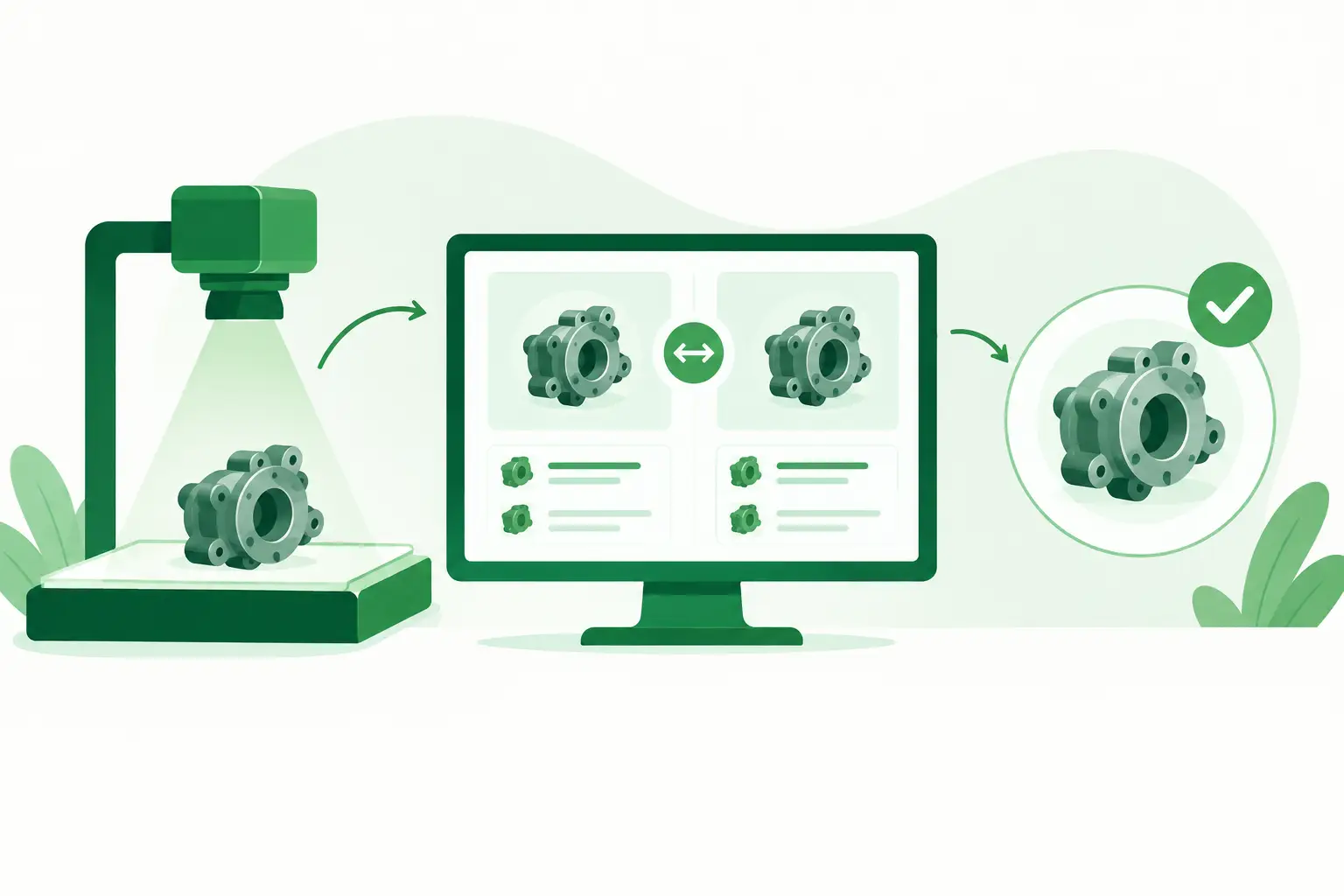
That is why downtime is rarely just about repair skill. It is also about part traceability, documentation quality, and whether the team can quickly identify an exact-match replacement across OEM and legacy environments.
Aging parts are still the biggest driver
For many providers, the installed base includes equipment well beyond early lifecycle years. That does not automatically mean unreliable performance, but it does increase exposure to wear-related failures and discontinued components. Imaging systems are complex assemblies of boards, displays, power components, sensors, motors, coils, transducers, cooling elements, and communication modules. Any one of them can stop a scan room.
The highest-risk parts are often not the most expensive. A relatively modest control board, interface card, or chiller component can immobilize a high-value system if no replacement is available. This is especially true in CT, MRI, ultrasound, C-arm, mammography, and nuclear imaging platforms where one subsystem failure can trigger lockout conditions or unsafe operating states.
Age also changes how failures appear. Older assemblies may not fail cleanly. They can become intermittent, temperature-sensitive, or load-sensitive, which leads to repeat visits and unnecessary part swaps if troubleshooting is rushed. In these cases, downtime stretches because the team is solving two problems at once: the technical defect and the uncertainty around it.
Legacy systems create sourcing risk
Aging equipment becomes much harder to support when original distribution channels no longer carry the needed item. That is often where downtime becomes expensive. The problem is not just part failure. The problem is the delay between identifying the failed component and locating a verified replacement.
For legacy imaging platforms, lead time is often driven by procurement friction. Part numbers may have changed. OEM references may be obsolete. The exact revision needed may be unclear. A buyer may find a similar component quickly, but similar is not always usable. For technical teams under pressure, a wrong match can cost more time than no part at all.
Maintenance gaps create avoidable failures
Preventive maintenance is not a guarantee against downtime, but inconsistent maintenance makes downtime more likely and more severe. Imaging systems depend on calibration, cooling performance, electrical stability, firmware consistency, and mechanical tolerance. When maintenance intervals slip, small issues mature into stoppages.
Cooling is a common example. Dust buildup, airflow restriction, aging fans, and degraded thermal paste can contribute to overheating and instability in boards and processors. Power quality is another. Loose connections, worn cables, and unaddressed voltage irregularities can create recurring faults that appear random until a major failure occurs.
The trade-off is practical. Busy facilities often push utilization hard, and taking a room down for preventive service can feel costly in the short term. But deferring maintenance usually shifts cost into unplanned outages, emergency shipping, and schedule disruption. For service managers, the real question is not whether maintenance costs time. It is whether planned service costs less time than unexpected failure. In imaging, it usually does.
Software and integration issues are easy to underestimate
When people think about what causes imaging equipment downtime, they often picture a dead board or failed module. Software is just as relevant. Modern imaging systems depend on operating environments, firmware versions, licensing, network communication, and interface stability. A hardware repair does not restore uptime if the system cannot boot correctly, communicate with storage, or complete its startup checks.
Integration problems can appear after updates, configuration changes, storage replacement, or network modifications. A modality may be technically functional but still unavailable for clinical use if DICOM communication is unstable, archives are unreachable, or workstation behavior becomes inconsistent. In these situations, the scanner may not be broken in the conventional sense, but it is still down.
This is where disciplined change management matters. Uncontrolled updates, undocumented configuration changes, and mixed software baselines create avoidable troubleshooting time. The more fragmented the service history, the harder it becomes to distinguish a new fault from a problem introduced during the last intervention.
Delayed parts sourcing turns short outages into long ones
A one-hour diagnosis can become a five-day outage if the required part is not readily available. For many imaging owners and independent service teams, this is the costliest part of downtime. The technical issue may be understood quickly, but procurement stalls the recovery.
This happens for several reasons. First, the needed part may be rare, discontinued, or tied to a specific system revision. Second, many standard distributors do not cover the full range of imaging assemblies required in the aftermarket. Third, buyers often lose time contacting multiple vendors that cannot verify stock, condition, or compatibility.
Speed matters, but accuracy matters more. A fast quote for the wrong revision is not operational support. Reliable sourcing means identifying the exact component, confirming fit, and moving quickly enough to protect the service window. This is where specialist aftermarket suppliers add value. Meditegic, for example, focuses on the hard part of uptime support: locating exact imaging spares across modalities and legacy platforms when ordinary channels come up short.
The hidden cost of procurement uncertainty
Not all sourcing delays look dramatic. Some are administrative. Missing serial data, incomplete part references, uncertainty around condition, or unclear return terms can add a full day to a transaction. In a busy clinic or imaging service environment, those hours matter.
There is also a budget trade-off. Teams do not always need the cheapest option. They need the option that restores operation with the least risk of repeat downtime. That may mean choosing a verified used or refurbished part over waiting for a less certain channel. The right decision depends on urgency, modality, expected remaining life of the system, and the cost of room inactivity.
Operator load and workflow strain also contribute
Not all downtime starts inside the hardware. High utilization, rushed room turnover, cable stress, handling damage, and delayed reporting of early warning signs all raise the chance of failure. Ultrasound transducers are a clear example. Daily use patterns, connector handling, cleaning process variation, and storage habits can shorten useful life well before a catastrophic failure is visible.
The same is true for mobile and high-throughput systems. Repeated movement, vibration, and fast reset cycles can accelerate wear on connectors, brakes, power components, and mechanical assemblies. The issue is not operator error in a simplistic sense. It is that heavy clinical use creates mechanical and electrical stress, and those stresses need to be accounted for in maintenance and stocking decisions.
How to reduce what causes imaging equipment downtime
The most effective uptime strategy is not reactive heroics. It is controlled preparedness. That starts with accurate asset records, known failure history, and clear part identification practices. If your team cannot rapidly confirm a board revision, compatible subsystem, or prior replacement history, every outage starts slower than it should.
It also helps to classify parts by downtime impact, not just purchase price. Components with long lead times or high failure consequences deserve advance planning, even if they are not the most expensive line items. Some organizations keep selected high-risk spares on hand. Others rely on specialist sourcing partners who can respond quickly across multiple OEM and legacy systems. The right model depends on modality mix, installed base age, internal technical depth, and how costly a single day of downtime is in your setting.
There is no zero-downtime environment. But there is a major difference between a failure that is anticipated, identified, and resolved with the right part in motion, and a failure that sends the team into a blind search.
The practical goal is simple: shorten the gap between fault identification and confirmed replacement. When that gap gets smaller, uptime gets stronger, and so does everything that depends on it.