A failed detector board, damaged ultrasound probe, or intermittent high-voltage power supply does not leave much room for guesswork. An imaging parts cross-reference gives technical buyers a disciplined way to identify the exact replacement needed before an incorrect order extends downtime. For high-value diagnostic imaging equipment, a familiar-looking part or a similar description is not sufficient evidence of compatibility.
A usable cross-reference connects the original OEM part number with verified alternate numbers, supersessions, equipment configurations, and revision details. It is a sourcing tool, but more importantly, it is a risk-control process for clinical engineering teams, ISOs, refurbishers, and imaging service professionals responsible for restoring equipment quickly.
What an Imaging Parts Cross-Reference Actually Confirms
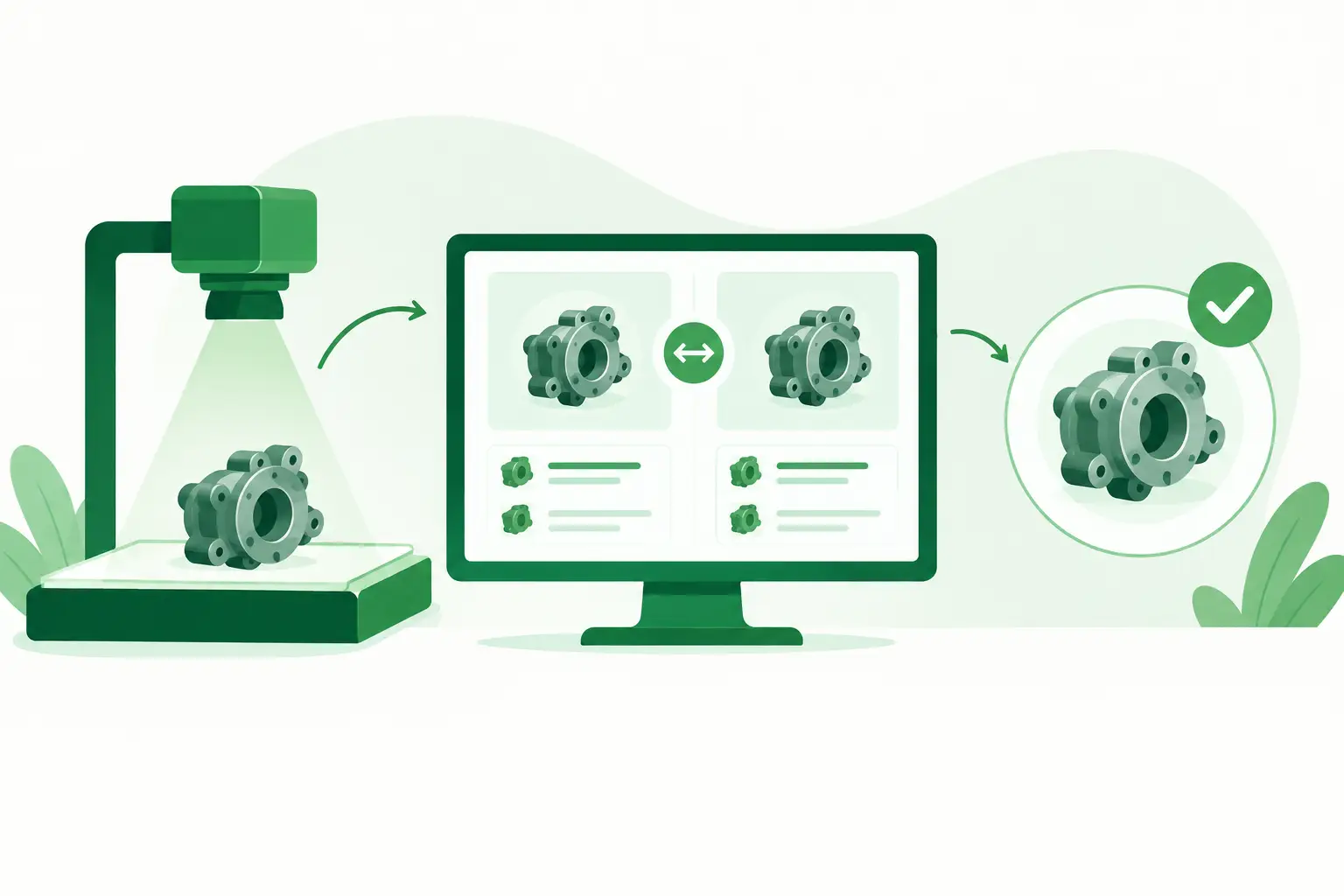
At its most basic, a cross-reference maps one part number to another. In diagnostic imaging, the work is more involved. A manufacturer may revise a board, change a connector, issue a replacement assembly, or use a different number for the same component across production runs. A correct result must distinguish between a true equivalent, an OEM supersession, a related assembly, and a part that merely resembles the requested item.
For example, an X-ray tube housing part number may identify a specific mechanical and electrical configuration, while the tube inside has its own identifying number and compatibility requirements. An MRI RF coil may carry an assembly number, a serial-number range limitation, and a system-specific interface. A flat-panel detector can have nearly identical dimensions to another model while using different firmware, cabling, or acquisition electronics.
The goal is not to find something close. The goal is to confirm a part that can be installed, recognized by the system, and returned to service within the intended configuration.
Why Descriptions Alone Lead to Wrong Orders
Part descriptions are useful for starting a search, but they are weak purchasing identifiers. Terms such as “gantry board,” “Siemens detector,” “Philips power supply,” or “GE ultrasound probe” can apply to many distinct items. Even a modality, manufacturer, and model name may not identify the correct spare without further information.
Imaging systems evolve during their production life. OEMs change component revisions because of reliability improvements, supply changes, software updates, or mechanical redesigns. Some replacements require a matched cable, bracket, software level, or calibration procedure. Others are backward compatible only with specific system revisions.
This is particularly relevant for legacy equipment. An end-of-life CT system may still be clinically and economically viable, but its original part number may be discontinued. A cross-reference can reveal an approved successor, a compatible used or refurbished assembly, or an equivalent part pulled from a matching donor system. It can also reveal when no substitute should be assumed.
The Information Needed for a Reliable Match
The OEM part number is the primary identifier. Whenever possible, provide it exactly as printed, including prefixes, suffixes, hyphens, and revision codes. A photo of the component label is often valuable because it captures serial numbers, manufacturing details, and markings that may not appear in service documentation.
The system make, model, and modality provide essential context. “Philips” alone is not enough; neither is “MRI” or “portable X-ray.” The relevant detail may include the exact platform, software generation, gantry configuration, detector type, coil interface, or console version.
For many requests, the service history matters as much as the label. If the original part was replaced previously, the currently installed component may already be a superseded revision. If an error code is present, it can help separate a likely failed board from a related assembly. If the replacement must mate with a specific cable set or subsystem, that should be stated before sourcing begins.
A complete request usually includes the original part number, equipment manufacturer and model, a clear label photo, quantity needed, and any known revision or serial-range information. That level of detail reduces quotation cycles and prevents a technically plausible but incorrect cross-reference.
How to Interpret Cross-Reference Results
Not every cross-reference result has the same meaning. Technical buyers should ask what relationship exists between the requested number and the proposed number.
An OEM supersession is generally the strongest result. It indicates that the manufacturer replaced one part number with another, although installation conditions should still be checked. A direct equivalent means the proposed component matches the required function and configuration based on documented or verified application data. A compatible pull or refurbished part may be appropriate when the original number is no longer available, provided the system fit and condition are confirmed.
A related part is different. It may be used in the same modality or subsystem without being interchangeable. For example, an image intensifier used across a family of C-arms may have different input-window dimensions, output interfaces, or mounting requirements. Similarly, a control board listed under a workstation family may support only one software generation.
When a supplier offers an alternate number, ask whether it is an OEM replacement, the same assembly under another label, a tested pull from a matching system, or a component requiring adaptation. This is not unnecessary caution. It is the difference between receiving a replacement part and receiving another sourcing problem.
Critical Checks by Imaging Modality
Cross-referencing priorities vary by modality. In CT and PET/CT, verify gantry generation, detector configuration, tube and generator interfaces, and table compatibility. A part tied to a particular rotation speed or detector architecture should never be matched on description alone.
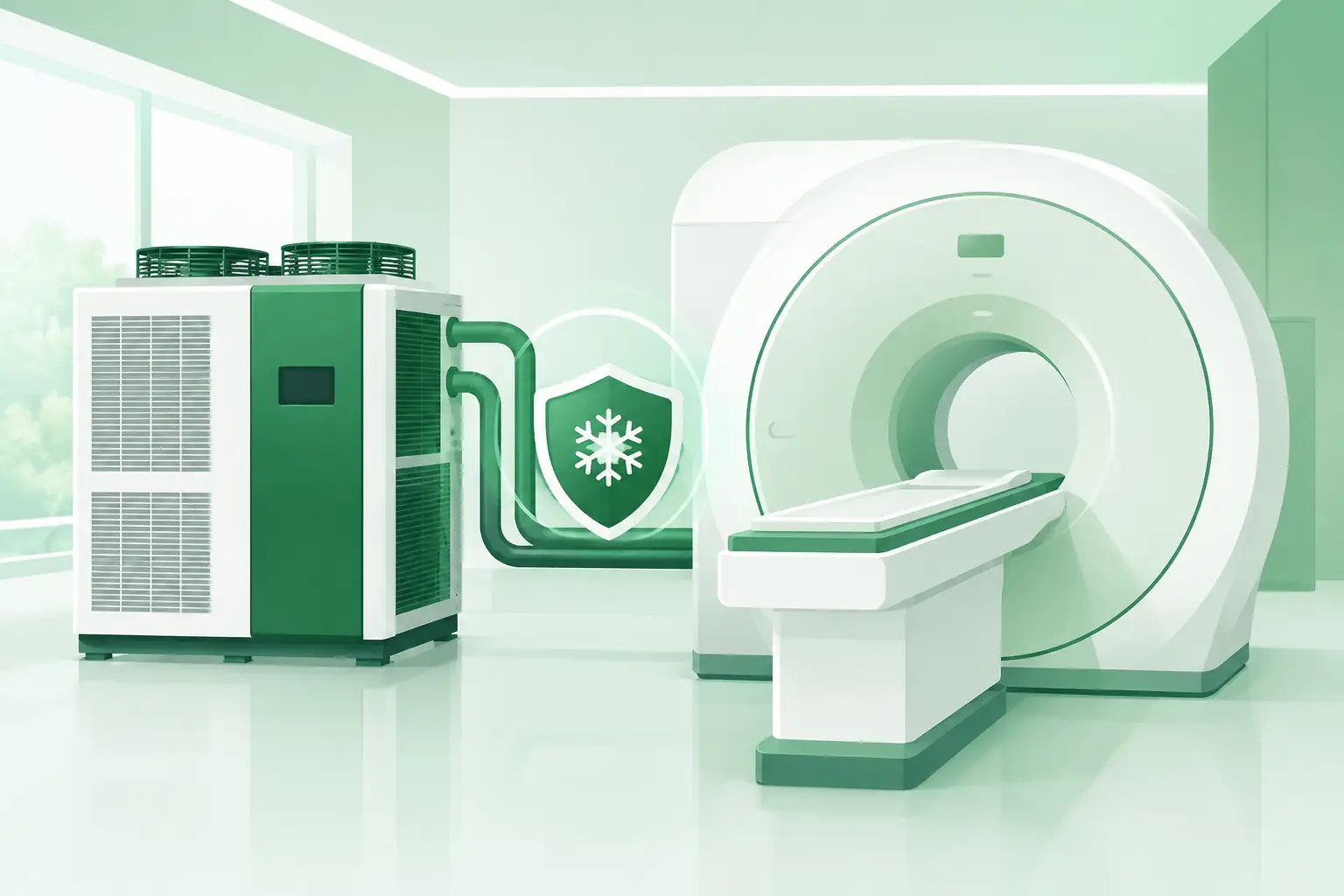
For MRI, confirm magnet platform, coil channel configuration, RF interface, gradient subsystem version, and applicable serial range. MRI parts can be highly system-specific, and compatibility may depend on hardware and software combinations rather than a single visible number.
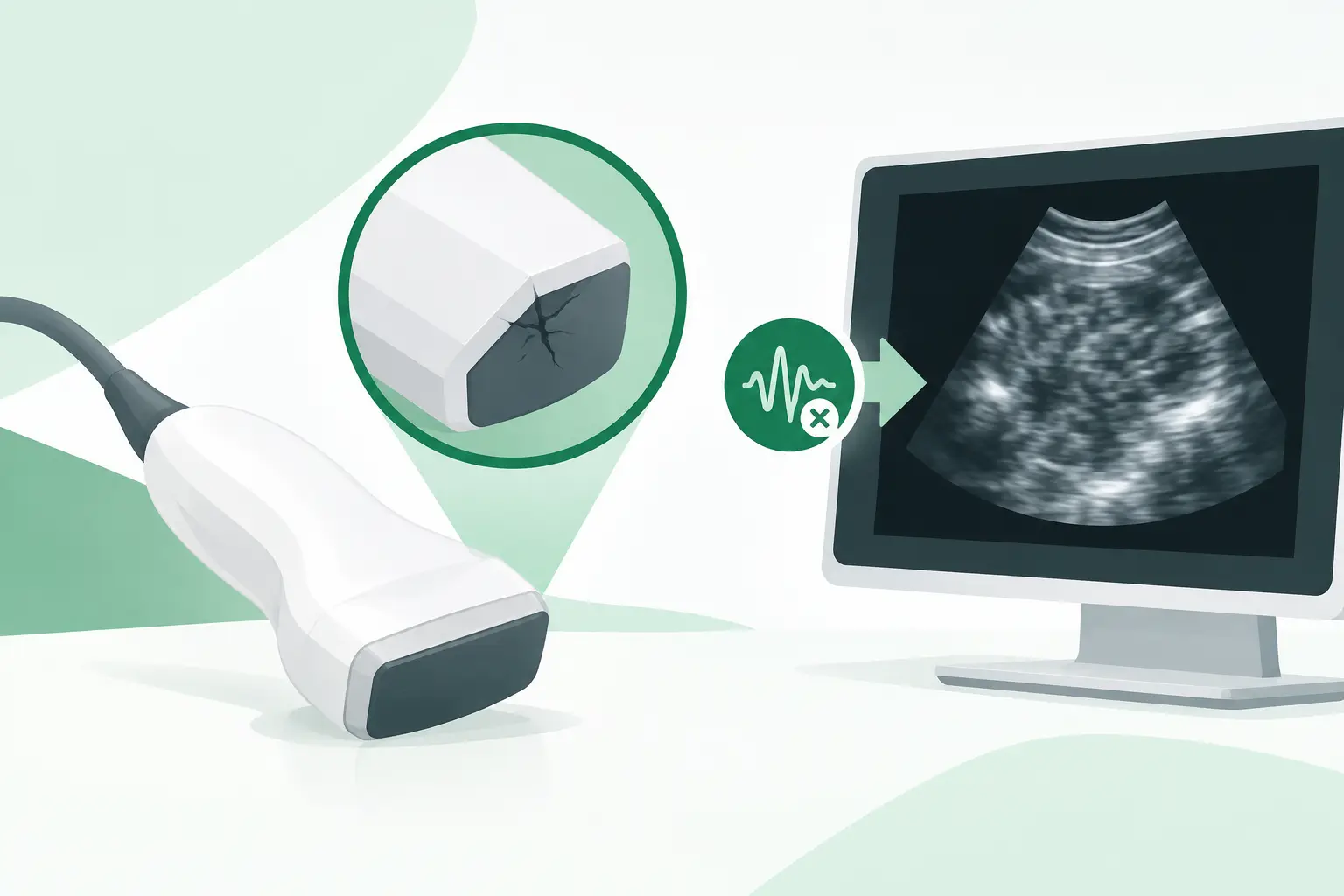
In ultrasound, probe connector type, transducer model, system software support, and probe condition are central. A probe may share a connector with another model but use different elements, frequency ranges, or system recognition requirements. For X-ray, fluoroscopy, and mammography, verify generator compatibility, detector or image receptor configuration, mechanical mounting, and control integration.
Nuclear medicine and SPECT components require similar discipline. Detector heads, collimators, power supplies, motion assemblies, and acquisition electronics must be tied to the applicable system configuration. The same approach applies to CR/DR, bone densitometry, and console or workstation components.
When a Cross-Reference Is Not Enough
A cross-reference is a powerful first control, but it does not replace functional evaluation. Some parts need testing before shipment, especially boards, power supplies, detectors, image intensifiers, transducers, RF coils, and assemblies removed from operational systems. The appropriate condition - used, tested, refurbished, or select new spare - depends on the component, urgency, available stock, and the buyer’s service requirements.
There are also cases where installation support, calibration, or configuration is required after the part arrives. A detector replacement may require calibration files or system procedures. A replacement board may need firmware alignment. A mechanical component may need adjustment to restore positioning accuracy. These requirements should be identified before the order is placed, not after the equipment is opened.
A Better Process for Urgent Part Requests
When equipment is down, speed matters, but speed without verification often creates a second outage. Start with the exact label information and system details. Confirm whether the number requested is the failed component number, an assembly number, or a number copied from an older service record. Then validate the proposed replacement against the installed configuration and identify any associated components or post-install requirements.
For difficult, obsolete, or multi-OEM requests, a specialized imaging-parts supplier can add value by checking part-number history across inventory records and global sourcing channels. Meditegic supports this process at the OEM part-number level across CT, MRI, PET/CT, nuclear medicine, C-arm, X-ray, ultrasound, mammography, CR/DR, and DEXA equipment, including hard-to-find replacement parts for legacy platforms.
The most useful cross-reference is not the one that produces the most alternate numbers. It is the one that gives the service team enough confidence to order the right component, schedule the repair, and return the imaging system to operation without avoidable delay.