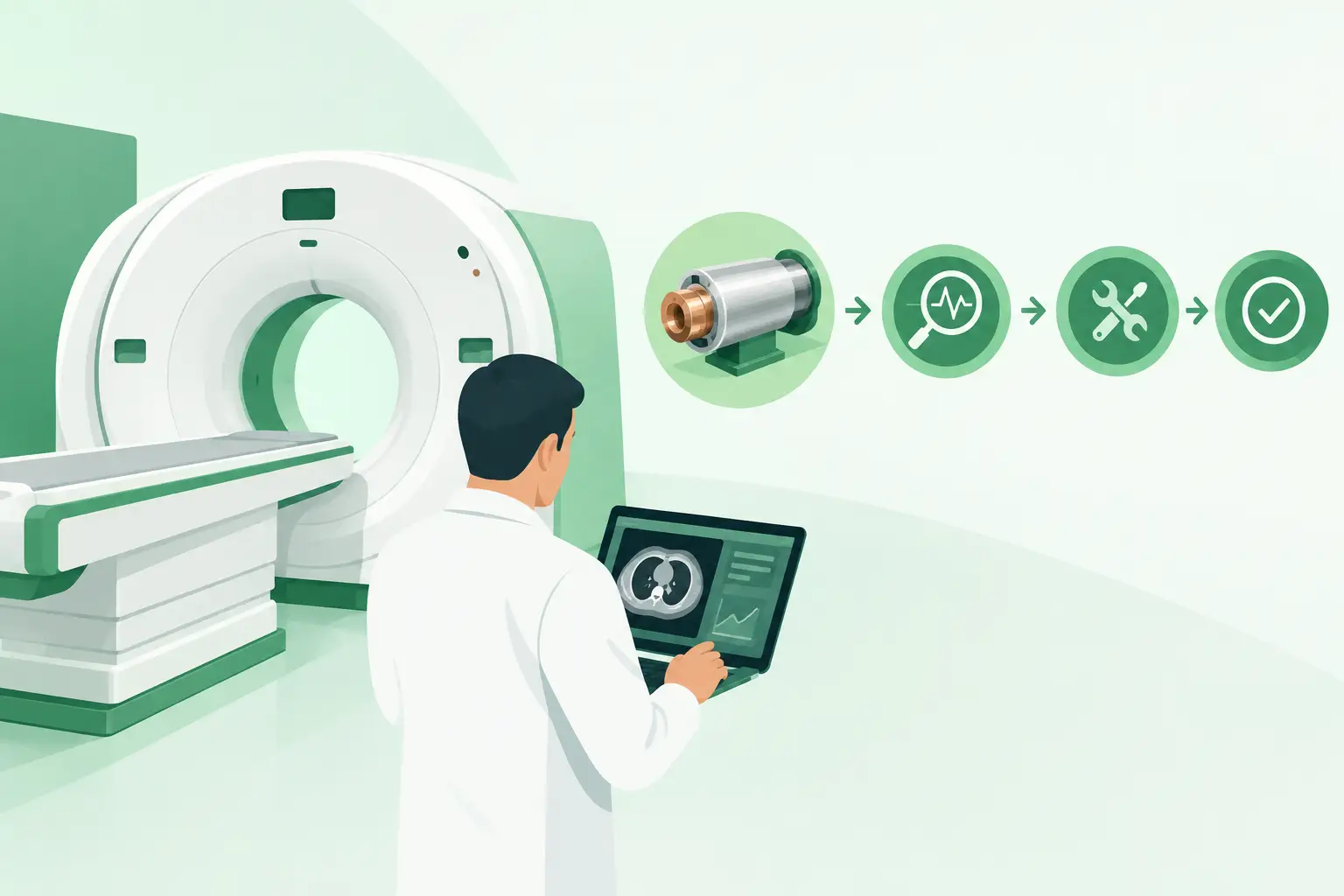
A mammography room can be out of service because of a component that occupies only a few inches inside the system. A failed control board, detector assembly, collimator component, power supply, positioning part, or workstation module can stop patient scheduling just as effectively as a major mechanical failure. For biomedical teams and imaging service providers, mammography spares are not a generic purchasing category. They are exact-match replacement components that must fit the installed system, software level, and revision history without creating another service event.
The practical challenge is that many mammography platforms remain clinically and economically valuable long after specific OEM components become difficult to obtain. A service team may know the failed part number, yet still face discontinued inventory, incomplete descriptions, uncertain condition, or a supplier unable to distinguish between similar revisions. The fastest route back to operation is usually disciplined identification before sourcing begins.
Why Mammography Spare Parts Require Exact Matching
Mammography equipment combines precision positioning, X-ray generation, compression control, image acquisition, and workstation functions in a tightly integrated platform. A component that appears interchangeable at a high level may differ by connector layout, firmware compatibility, mechanical mounting, detector configuration, or system generation.
That is why an OEM part number should be the starting point for every request. The system model, serial number, assembly revision, and fault description provide the context needed to validate the match. For electronics, photographs of labels and connectors can help identify differences that are not visible in a general catalog description. For mechanical parts, a photo of the installed component and its mounting points can prevent errors involving left- and right-side versions or revision changes.
This level of verification matters particularly on platforms from Hologic, GE Healthcare, Siemens Healthineers, Fujifilm, Philips, Canon/Toshiba, and other current or legacy manufacturers. Product families often share names across several generations, but their boards, detectors, workstations, and motion components may not cross-match.
A lower purchase price has little value if the part delays repair because it is the wrong revision. For uptime-driven buyers, the relevant measure is total restoration time: time to identify, quote, ship, install, test, and return the room to clinical use.
Common Mammography Spares That Cause Downtime
Failures vary by system age, utilization, environmental conditions, and prior repair history. Still, certain component categories repeatedly require specialist sourcing because they are costly, proprietary, discontinued, or difficult to identify from a broad equipment description.
Detector and Image Acquisition Components
Digital detector assemblies, flat-panel components, acquisition electronics, and related interface boards are among the most sensitive mammography spare parts to source. The part must match not only the platform but also the detector version and supported configuration. A service provider should confirm whether the request is for the full assembly, a board within the assembly, a cable, or an associated power component before placing an order.
Image quality concerns also require careful fault isolation. Artifacts, intermittent acquisition failures, or communication errors do not automatically mean the detector itself has failed. Cables, power supplies, grounding conditions, control boards, and software-related factors can produce similar symptoms. Replacing a high-value part before confirming the failure can extend downtime and increase repair cost.
X-Ray Generator and High-Voltage Components
Mammography systems rely on coordinated generator, high-voltage, tube housing, and control functions. Depending on the platform, a failure may involve a high-voltage tank, generator board, power supply, cable assembly, exposure control module, or tube-related component. These parts need part-number-level review because electrical specifications and connector arrangements are platform-specific.
When sourcing generator or high-voltage parts, provide the exact fault code where available, the system model, and the label information from the failed unit. Also identify whether the issue occurs at startup, during exposure preparation, or only under a specific operating condition. That information helps distinguish an urgent exact replacement request from a fault that needs further diagnostic work.
Motion, Compression, and Positioning Parts
A mammography unit cannot operate effectively if the C-arm, detector carriage, compression assembly, or tube head cannot move and position correctly. Motors, encoders, brakes, bearings, drive boards, switches, sensors, cables, handles, and mechanical assemblies all play a role in safe operation.
These requests benefit from detailed descriptions. “Compression problem” may point to a footswitch, control board, motor, encoder, mechanical linkage, sensor, or a specific compression assembly. Include the affected movement, whether the issue is constant or intermittent, the error message, and whether manual movement is possible. This reduces the risk of ordering the visible part rather than the failed component behind it.
Consoles, Workstations, and Control Electronics
Older mammography systems frequently depend on proprietary console PCs, acquisition workstations, display components, interface boards, and control modules that are no longer routinely stocked. A workstation issue may involve the computer hardware, a proprietary PCI board, storage media, power supply, monitor, keyboard interface, or application-specific component.
For these parts, configuration matters. Record the part number from the failed item, the system software version when known, and the specific role of the workstation. A review station, acquisition workstation, and control console can have different requirements even within the same equipment family.
A Better Process for Sourcing Mammography Spares
The most efficient procurement process starts before the quote request. First, document the OEM part number exactly as printed, including suffixes and revisions. Second, identify the mammography system manufacturer, model, and serial number. Third, provide the fault code or a concise description of the observed failure. Finally, state whether the requirement is immediate downtime recovery, planned maintenance, or a repair stock need.
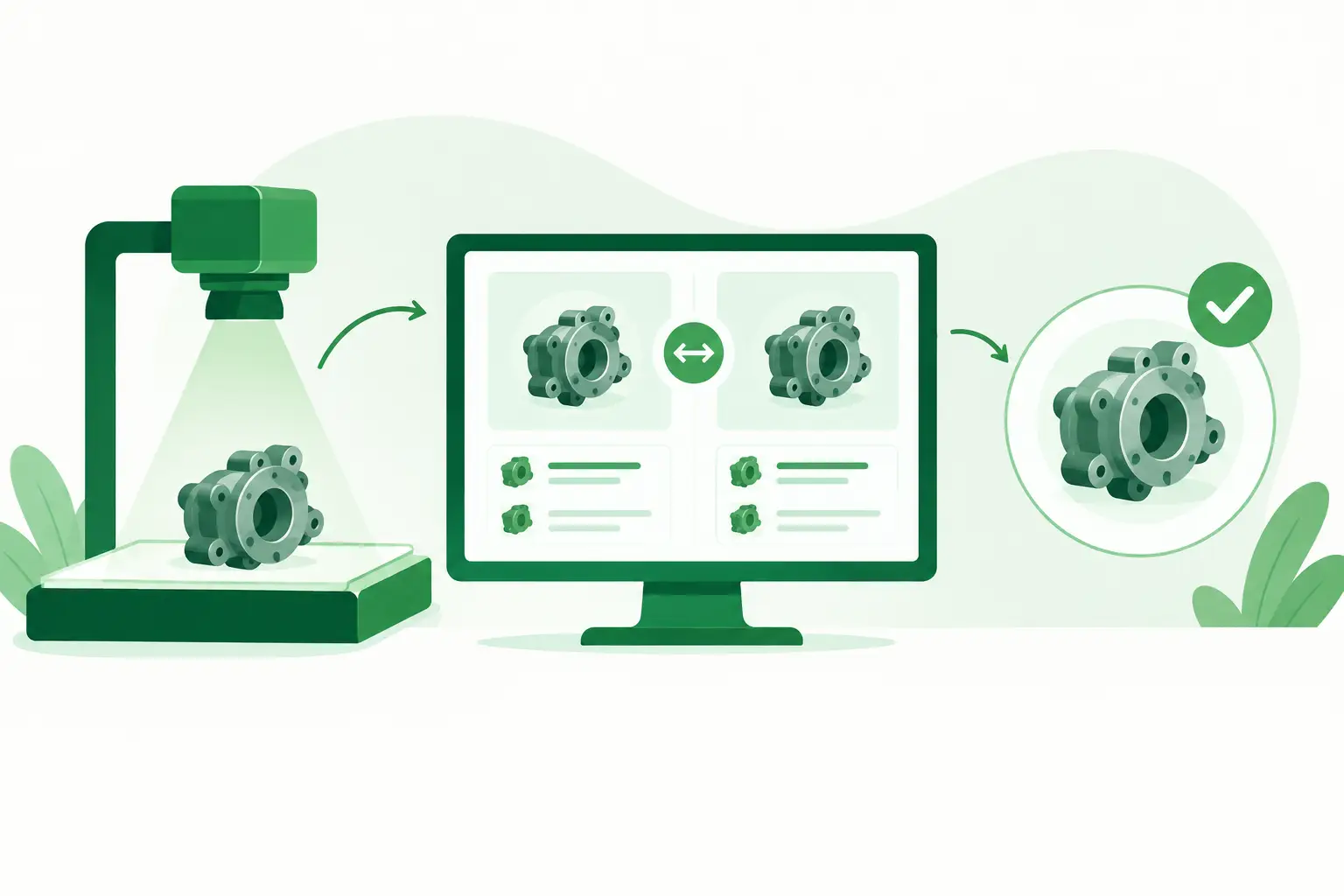
Photos are often worth the extra minute they take to collect. Clear images of the label, connectors, board layout, and installed location give a technical sourcing team more evidence to cross-reference the request accurately. If the component has been removed, retain any brackets, cables, or accessory pieces until compatibility is confirmed.
Condition should also be discussed directly. Used and refurbished parts can be practical options for legacy imaging equipment, but buyers should understand what is included and what verification has been performed. Ask whether the part is supplied as the pictured assembly, whether ancillary boards or cables are included, and whether any core return is expected. The appropriate condition depends on the component type, urgency, installed base, and service provider’s testing capability.
For a hard-to-find component, speed does not mean skipping validation. A supplier with access to a broad global network can locate inventory that is not visible through standard channels, but the request still needs technical context. Meditegic supports this process by sourcing imaging parts at the OEM part-number level across mammography and other diagnostic modalities, helping service organizations locate exact replacements for both current and legacy platforms.
Avoiding Delays After the Part Arrives
Receiving the correct component is only one step in restoring service. Before installation, compare the received label, revision, connectors, and physical configuration with the removed part. Preserve original packaging until the visual comparison is complete. If there is a discrepancy, stop before installation and resolve it with the supplier.
Installation and post-repair verification should follow the manufacturer’s service documentation and the facility’s applicable quality-control procedures. Mammography is a high-precision imaging modality, so mechanical alignment, exposure performance, image quality, compression operation, and calibration-related checks may be relevant depending on the component replaced. The required tests are determined by the system, the repair scope, and local clinical engineering procedures.
It is also useful to update the service record with the installed part number, revision, date, fault symptoms, and corrective action. Over time, this creates a more reliable maintenance history and helps identify recurring failures, vulnerable assemblies, and parts worth holding as strategic service stock.
When It Makes Sense to Hold Critical Spares
Not every mammography part should be stocked locally. High-value electronics and detector-related components may be better sourced when required, particularly if failure rates are low and compatibility is complex. However, a clinic or ISO supporting multiple similar systems may benefit from keeping selected lower-cost, high-failure, or long-lead-time items available.
The decision depends on patient volume, distance from service support, equipment age, known failure patterns, and the financial impact of a down room. A small inventory of validated, correctly identified components can be more useful than a large collection of unverified parts with unclear platform compatibility.
When a mammography system stops working, the best first action is not a broad search for a similar-looking component. Capture the exact part number, system details, fault evidence, and required timeline. That information turns a difficult spare-parts request into a solvable uptime problem.