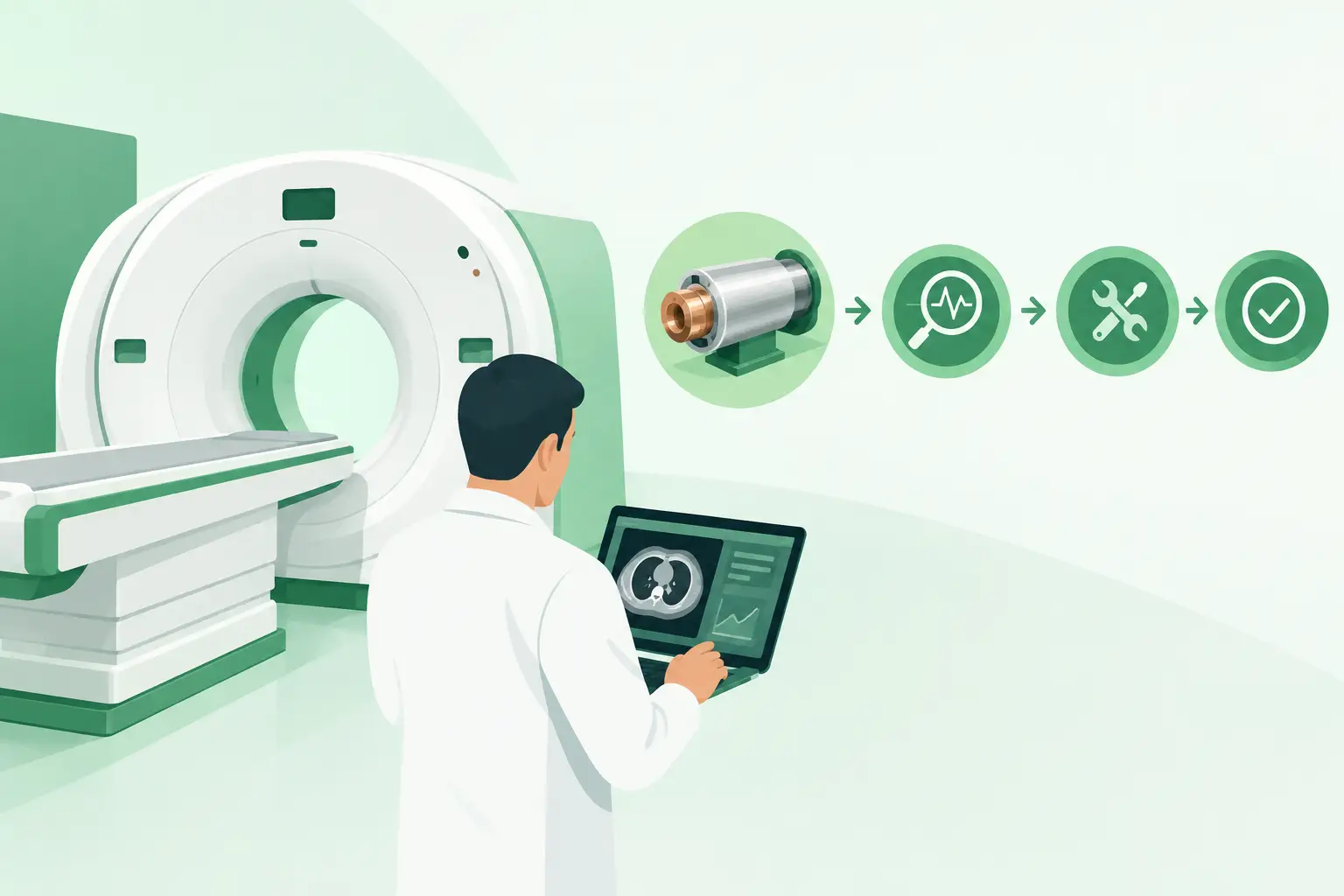
A CT room sitting idle for even half a day can disrupt patient schedules, delay revenue, and force service teams into expensive workarounds. That is why medical imaging aftermarket trends matter well beyond procurement. They affect uptime, budget planning, service response, and how healthcare organizations support aging and mixed-fleet equipment.
For hospitals, independent service organizations, and biomedical teams, the aftermarket is no longer just a backup channel when OEM options are slow or unavailable. It has become a core part of maintenance strategy. The reason is straightforward: imaging fleets are getting older in many facilities, capital replacement cycles remain uneven, and exact-match parts are often harder to secure on short notice.
The medical imaging aftermarket trends changing buyer behavior
One of the clearest shifts is the move from reactive purchasing to planned aftermarket sourcing. Technical buyers are building broader vendor strategies before a failure occurs. Instead of waiting for a system-down event, they are identifying high-risk components, validating alternate supply channels, and keeping records on replacement lead times by modality.
That change is driven by experience. When a gantry board, gradient component, power supply, detector assembly, or ultrasound transducer fails, the buying window becomes very small. Procurement teams do not want to spend that window figuring out which suppliers can actually identify the right part number, confirm condition, and quote quickly.
This is especially relevant in environments managing multiple OEMs and older systems. A buyer may be supporting a mix of MRI, CT, C-arm, X-ray, and ultrasound units with different service models and different stages of lifecycle support. The aftermarket fills the gaps, but only when the sourcing partner can work across those differences with speed and accuracy.
Used, refurbished, and new parts are all in play
Another important development is a more pragmatic view of part condition. Buyers are not treating new, refurbished, and used parts as interchangeable, but they are increasingly willing to evaluate all three based on application, urgency, and budget.
For a mission-critical failure in a high-volume imaging department, a new replacement may still be the preferred option if available. But that is not always realistic. OEM stock may be limited, lead times may be extended, or the part may be discontinued entirely. In those cases, tested refurbished inventory often becomes the practical choice because it balances speed, cost control, and remaining service life.
There is also a growing acceptance that the right answer depends on the asset. A newer system under strict performance expectations may justify a different sourcing approach than a legacy unit still producing reliable studies in a lower-volume setting. Smart buyers are not applying one rule across the fleet. They are matching sourcing strategy to clinical demand, equipment age, and replacement planning.
Why legacy support is becoming more important
A large share of imaging equipment in the field is still clinically useful even after OEM support narrows. Facilities do not retire systems simply because they are older. They retire them when performance, economics, or compliance no longer make sense. Until then, parts access becomes the deciding factor.
This is where medical imaging aftermarket trends are most visible. Demand for discontinued and hard-to-find components continues to rise because hospitals and service providers are extending the life of systems that still have operational value. That creates more pressure on suppliers to maintain sourcing reach, parts cross-reference capability, and a clear understanding of modality-specific failure patterns.
Speed now matters as much as price
Price remains important, but speed has moved much closer to the center of the buying decision. A lower quote is less attractive if it arrives too late, lacks verification, or comes with unclear availability. Imaging buyers increasingly value suppliers that can respond quickly with precise information, especially when a system is already down.
That does not mean the cheapest option is losing relevance. It means total operational cost is getting more attention. If a delayed quote adds another day of downtime, labor coordination, patient rescheduling, and service escalation, the lowest line-item price may end up costing more overall.
This is one reason procurement teams and ISOs are favoring vendors with broad inventory access rather than narrow catalog-based distribution. In a fragmented aftermarket, the ability to locate rare parts quickly can have more value than small price differences between standard items.
Better data is improving parts sourcing decisions
Another notable trend is the use of cleaner equipment and part data during sourcing. Buyers are asking for tighter confirmation on model compatibility, revisions, serial range fit, and replacement history. That sounds basic, but in imaging service it can prevent costly delays.
A part description alone is often not enough. Similar assemblies may vary by revision, software environment, connector type, or system generation. If a supplier cannot validate those details, the risk of ordering the wrong component goes up. For technical buyers, that creates avoidable downtime and return friction.
The stronger suppliers in this market are responding with better part-number matching, more detailed database support, and faster quote workflows tied to technical verification. This is not just an administrative improvement. It directly affects first-time order accuracy.
Multi-modality sourcing is gaining value
Healthcare organizations are also looking for fewer sourcing gaps across equipment categories. Instead of managing one vendor for CT, another for MRI, and another for ultrasound consumables or accessories, many buyers prefer procurement partners that can support a wider range of modalities.
That preference is practical. Consolidation reduces quote delays, simplifies vendor management, and makes it easier for purchasing and biomed teams to move quickly during urgent repairs. It also helps standardize expectations around responsiveness and documentation.
For organizations with lean internal teams, this matters. Coordinating separate channels for transducers, detector components, power modules, boards, coils, and modality-specific assemblies can consume time that service staff do not have. A supplier with broad imaging specialization can remove some of that friction.
Supply chain pressure has changed inventory strategy
The last several years have changed how many buyers think about stock. Few organizations want to overinvest in shelf inventory, especially for expensive parts with uncertain failure timing. But many have learned that carrying no contingency at all creates its own risk.
The result is a more selective stocking model. Facilities and service providers are identifying a limited group of high-failure or high-impact parts worth keeping closer at hand while relying on aftermarket partners for less common needs. This approach works best when the supplier has consistent access to hard-to-source inventory and can turn quotes around quickly.
There is a trade-off here. Holding more stock can protect uptime but ties up capital. Relying entirely on external sourcing preserves budget flexibility but increases exposure when a rare part disappears from the market. Most teams are trying to find the middle ground based on service history and system criticality.
OEM support gaps are widening the aftermarket role
As manufacturers continue to focus resources on current platforms, older systems can become harder to support through official channels alone. That does not mean OEMs are irrelevant. They remain essential in many service environments. But the practical role of the aftermarket is expanding as fleets age and coverage varies by model.
For buyers, this creates a more blended service economy. Some parts will still come directly from the manufacturer. Others will come from specialized aftermarket suppliers that can source refurbished inventory, locate discontinued components, or identify alternatives for systems no longer receiving full attention.
This blended approach requires confidence in the supplier, not just availability. Buyers need dependable condition reporting, responsive communication, and a clear understanding of what is actually in stock versus what is merely searchable. In urgent imaging repairs, that distinction matters.
What buyers should watch next
The next phase of medical imaging aftermarket trends will likely center on deeper specialization, not just broader catalogs. Buyers will continue to favor suppliers that understand modality-specific parts, legacy system support, and the urgency of technical procurement. Generic fulfillment models do not work well when a failed imaging component can stop a revenue-generating system and disrupt patient care.
There will also be more pressure on suppliers to prove sourcing reliability. Large networks and extensive databases are useful, but buyers want evidence in the form of accurate quotes, realistic lead times, and the ability to locate hard-to-find parts when standard channels come up short. That is where specialists such as Meditegic fit best - in the moments when uptime depends on speed, precision, and actual aftermarket reach.
For procurement leaders and service teams, the practical takeaway is simple: treat the aftermarket as part of your operating strategy, not a last-minute alternative. The organizations that map their risk, validate their sourcing channels, and build relationships before the next failure are usually the ones that keep imaging systems running when timing gets tight.