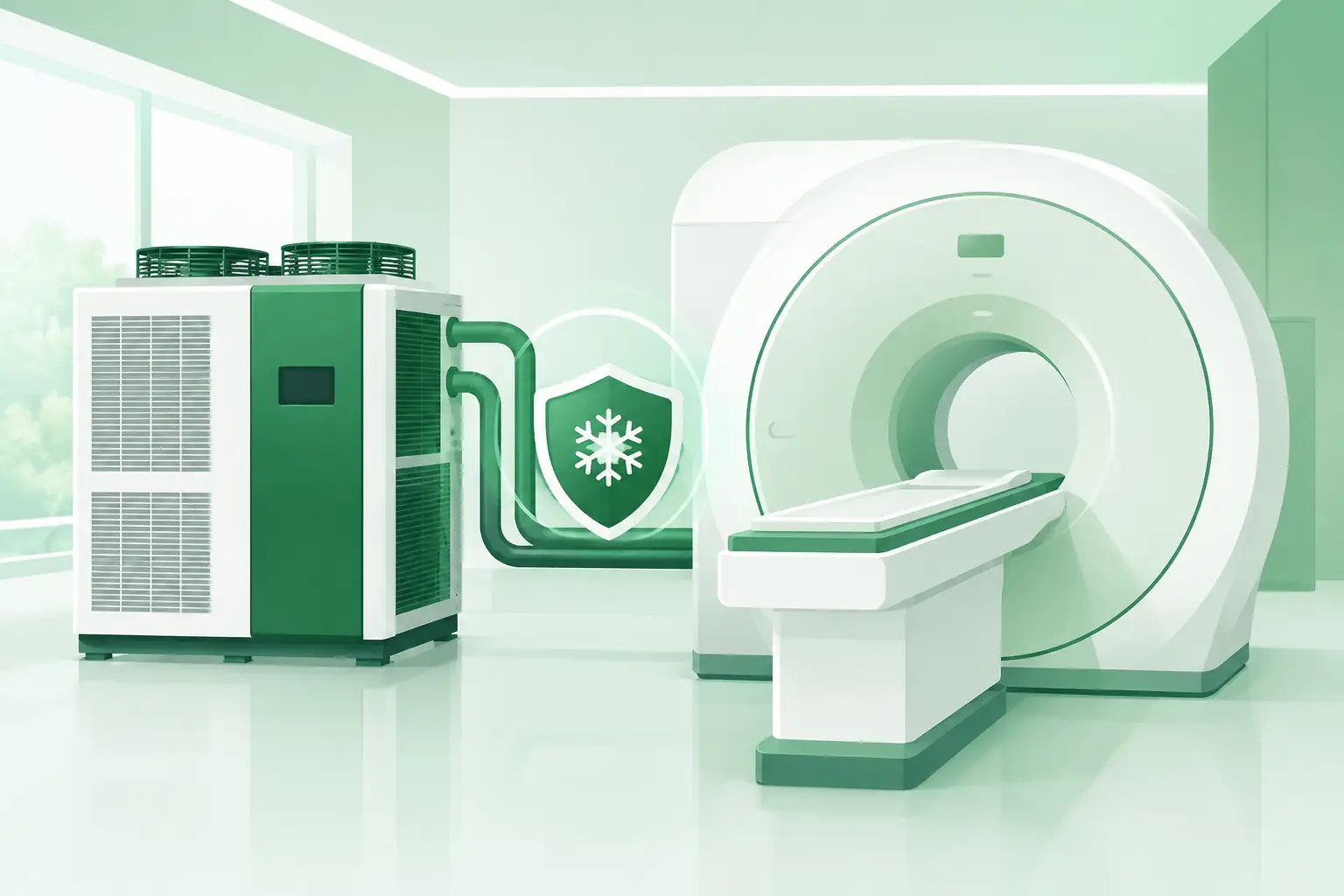
A magnet room can appear fully operational until a cooling alarm turns into a scan cancellation. MRI chillers are not peripheral equipment in the practical sense: their performance directly affects magnet refrigeration, gradient cooling, RF electronics, and the system’s ability to remain available for patients. When cooling capacity, water quality, flow, or communications fall outside specification, the result can range from intermittent errors to a controlled shutdown and extended downtime.
For biomedical engineering teams, ISOs, and imaging service providers, the immediate challenge is rarely just finding a chiller. It is identifying which part of the cooling chain has failed, determining the exact configuration required by the installed MRI platform, and obtaining a compatible replacement before a manageable fault becomes a site-level operational problem.
Why MRI Chillers Matter to System Availability
Most MRI installations depend on a controlled cooling loop to remove heat from equipment that cannot tolerate wide temperature variation. The arrangement varies by OEM, field strength, site design, and system generation. A facility may have a dedicated external chiller, an indoor process chiller, a heat-exchanger assembly, facility-water interface components, or a combination of these elements.
The chiller may support one or more loads, including gradient amplifiers, RF cabinets, cold-head compressor equipment, and other electronic subsystems. On some systems, chilled water performance is closely tied to helium management and magnet operating conditions. That does not mean every cooling alarm is a magnet emergency. It does mean that repeated alarms should be treated as an uptime risk rather than a comfort or facilities issue.
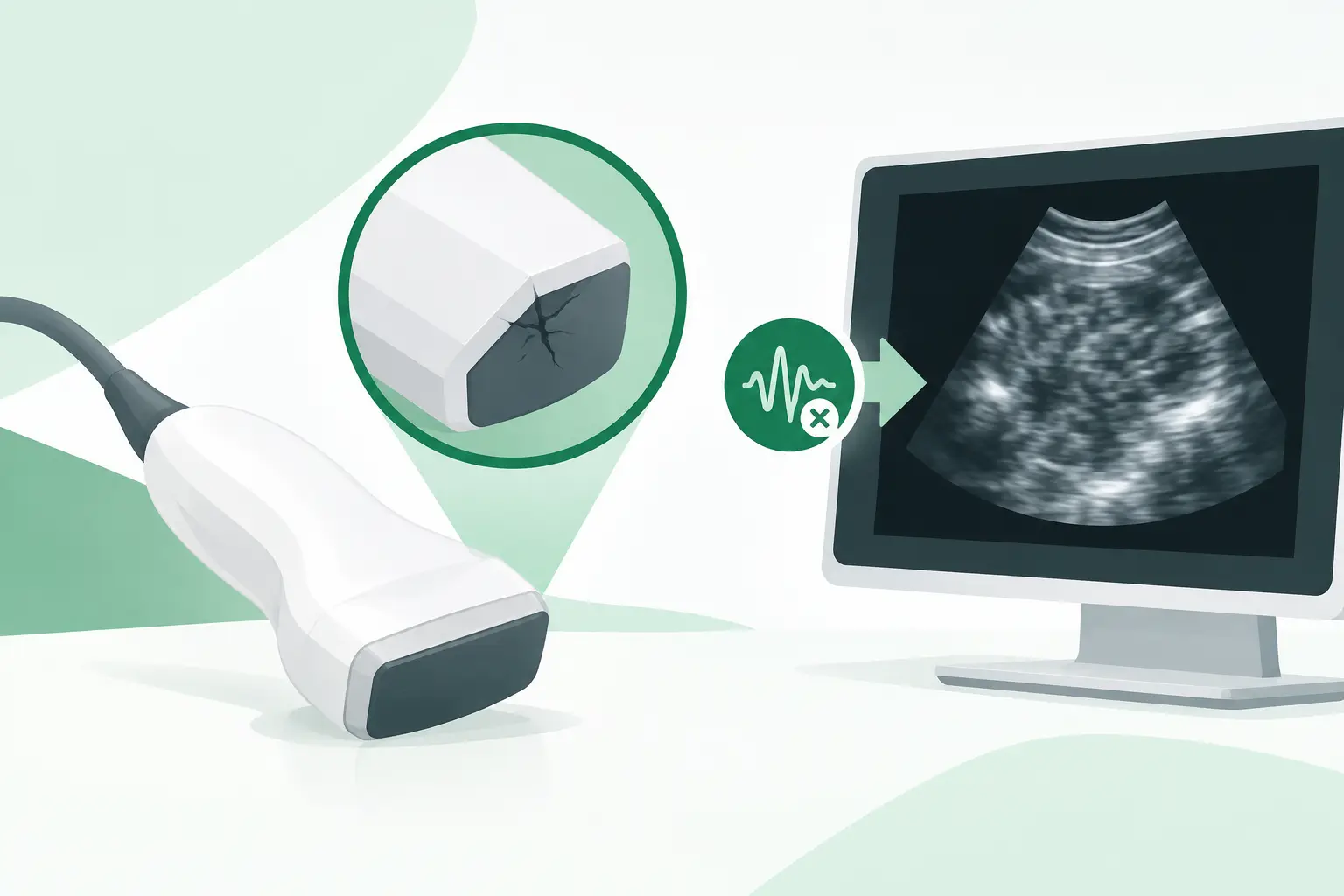
Cooling faults often develop gradually. A unit may still run while delivering inadequate flow, unstable supply temperature, poor heat rejection, or reduced pressure. The MRI can then present intermittent warnings that disappear after a reset, only to recur during high-duty scanning sequences or warm ambient conditions. Those patterns are valuable diagnostic evidence.
The Cooling Chain Is More Than the Chiller Cabinet
Replacing a chiller without isolating the actual fault can waste valuable time. The cooling chain includes the process chiller, pumps, fans, compressors, condensers, heat exchangers, hoses, filters, pressure switches, flow sensors, valves, fittings, control boards, and communication interfaces. Depending on the installation, facility water and electrical supply conditions can also be part of the problem.
A low-flow alarm, for example, may be caused by a failing circulation pump, an obstructed filter, an air pocket, a partially closed valve, a deteriorated hose, a defective flow sensor, or a control-board issue. A high-temperature condition may point to low refrigerant charge, condenser fouling, fan failure, poor mechanical-room ventilation, pump degradation, excessive heat load, or an issue at the facility-water interface.
This distinction matters when sourcing parts. A technician who has confirmed a failed pump motor or controller needs a precise replacement component, not a generic recommendation for an entire cooling package. Conversely, a chiller with repeated compressor or refrigeration-circuit failures may require a broader corrective decision. The right response depends on the failure history, system age, site conditions, and availability of qualified repair support.
Start With the MRI System and Chiller Identification Data
The MRI OEM, model family, and system serial number establish the equipment context, but they are not sufficient by themselves. Chiller assemblies may differ across installations of the same MRI platform because of regional electrical configurations, cooling-load requirements, revision levels, facility interfaces, and retrofit history.
For accurate procurement, collect the chiller manufacturer and model, serial number, OEM part number where available, voltage and phase, frequency, refrigerant type, pump specifications, cooling capacity, and control-interface details. Photographs of identification labels, connectors, plumbing connections, and fault displays can prevent costly assumptions.
The part number on the failed component remains the strongest reference when requesting a replacement. This is especially true for control boards, pumps, sensors, fans, compressor-related components, and proprietary interface modules. Cross-reference work should confirm not only physical fit but also electrical rating, firmware or board revision when applicable, connector layout, and intended MRI application.
Common Failure Modes That Affect MRI Cooling
Chiller problems are often identifiable by their operating pattern. A unit that trips immediately may have an electrical, control, safety-switch, or compressor-start issue. A unit that runs normally for an hour and then alarms may be struggling with heat rejection, flow stability, or elevated ambient temperature. A fault that follows a specific scan workload can indicate that the system is only failing when the thermal demand increases.
Several failure modes occur frequently in MRI cooling applications:
- Circulation pump wear or failure can reduce process-water flow, create unstable pressure, or trigger flow-related alarms. Seal leaks, bearing noise, and intermittent starts are warning signs.
- Condenser and fan problems reduce the chiller’s ability to reject heat. Dirt accumulation, failed fan motors, damaged blades, and inadequate room ventilation can all raise operating temperature.
- Sensor, switch, and control faults can generate misleading alarms or prevent a healthy subsystem from starting. Thermistors, pressure transducers, flow switches, relays, contactors, and printed circuit boards require exact-match evaluation.
- Water-quality issues can restrict flow and damage internal components. Scale, corrosion products, biological growth, and incorrect coolant chemistry can shorten the life of pumps, valves, heat exchangers, and sensors.
- Refrigeration-circuit issues may involve compressors, expansion devices, leaks, refrigerant charge, or safety controls. These require qualified refrigeration diagnosis rather than parts substitution alone.
The fault code should be recorded before power cycling equipment. Also capture supply and return temperatures, pressure readings, observed flow, ambient conditions, and the timing of the event. This information helps distinguish a component failure from an installation or environmental condition.
Choosing Between Component Repair and Chiller Replacement
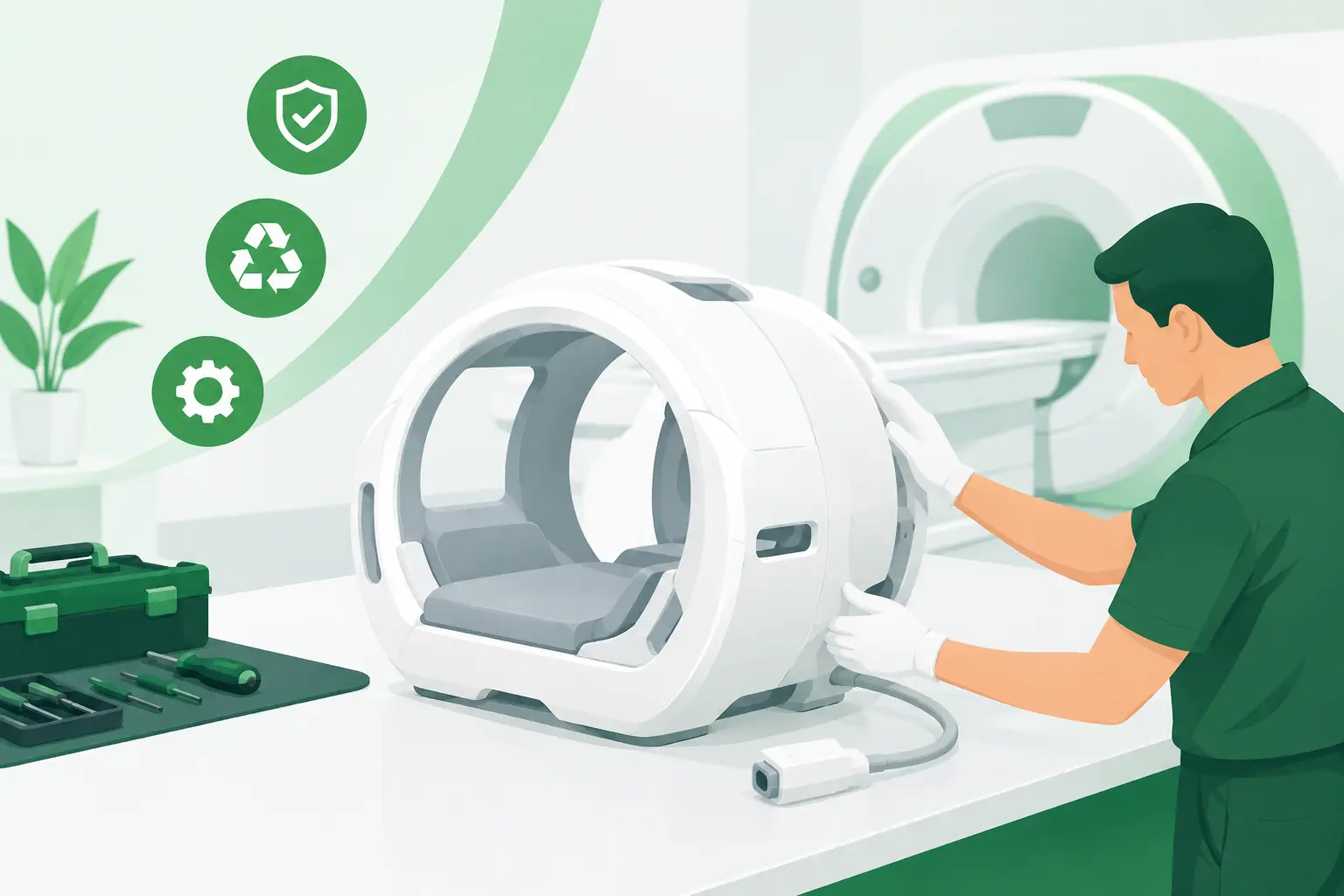
A component-level repair can be the fastest and most economical path when the failed part is clearly identified and the remainder of the chiller is in sound condition. Common examples include a failed pump, fan motor, sensor, contactor, relay, power supply, display module, or control board. For older MRI platforms, however, the challenge may be locating an obsolete component that is no longer available through standard channels.
A larger assembly decision is justified when failure history suggests broader deterioration. Repeated compressor alarms, multiple water leaks, extensive corrosion, unsupported controls, or a chiller that no longer meets required cooling capacity may make continued repair less predictable. The decision should account for the cost of downtime, the availability of backup cooling, the site’s maintenance capability, and the expected remaining life of the MRI system.
Used and refurbished parts can be appropriate for imaging aftermarket service, provided the sourcing process is disciplined. Buyers should confirm the exact part number, condition, testing status where applicable, included accessories, and return or warranty terms. A visually similar part is not necessarily an interchangeable one. This is particularly relevant for boards and electronics, where revisions can alter functionality even when the enclosure and connectors appear identical.
Sourcing MRI Chillers and Cooling Parts Without Delays
The fastest sourcing request is specific. A request for an “MRI chiller pump” may produce many possibilities and little certainty. A request that includes the MRI model, chiller model, failed component part number, electrical rating, symptoms, and required delivery timing gives a specialist supplier the information needed to check compatible inventory and global supplier channels efficiently.
When the required item is discontinued, part-number-level sourcing becomes more important, not less. Legacy GE Healthcare, Siemens Healthineers, Philips, Canon/Toshiba, and other MRI installations may use cooling assemblies and subcomponents that are no longer routinely stocked by conventional distributors. The objective is to locate the exact component or a verified compatible replacement, not to force a generic industrial part into a medical imaging cooling loop.
Meditegic supports this type of request by sourcing hard-to-find diagnostic imaging replacement parts across OEM environments, including MRI cooling components, electronics, gradient-related parts, RF components, and related assemblies. For urgent cases, clear technical documentation at the start reduces quotation time and avoids delays caused by avoidable compatibility questions.
Preventing Repeat Cooling Downtime
The most effective prevention work is based on trends, not only on alarm response. Track supply and return temperatures, pressure, flow indicators, alarm history, fan and pump runtime, filter condition, and room temperature. If a cooling issue appears only during summer conditions or high-throughput periods, include building ventilation and heat rejection in the investigation.
Water treatment should follow the MRI and chiller manufacturer’s requirements. Improper chemistry can create corrosion, deposits, and biological contamination, while overly aggressive treatment can damage materials within the loop. Scheduled inspection of hoses, fittings, filters, drain paths, electrical connections, and condenser surfaces can catch simple problems before they trigger an MRI interlock.
Any work around MRI support equipment must be performed by qualified personnel using site-specific safety procedures. Cooling systems combine electrical power, pressurized fluid, moving equipment, and, in some cases, refrigeration circuits. The service decision should protect both personnel and the magnet system.
A cooling alarm does not always require a complete chiller replacement, but it always warrants precise investigation. When the failed component is identified, an exact-match sourcing process can turn a potentially extended MRI outage into a controlled repair and a faster return to scanning.