An MRI cold head replacement is rarely a simple swap. A failed cold head can stop a scanner, but selecting the wrong replacement can create a second outage through incompatible interfaces, incorrect operating characteristics, or unresolved compressor and cryogenic faults. For service teams working against a growing downtime clock, part-number-level verification is the fastest path to a defensible repair decision.
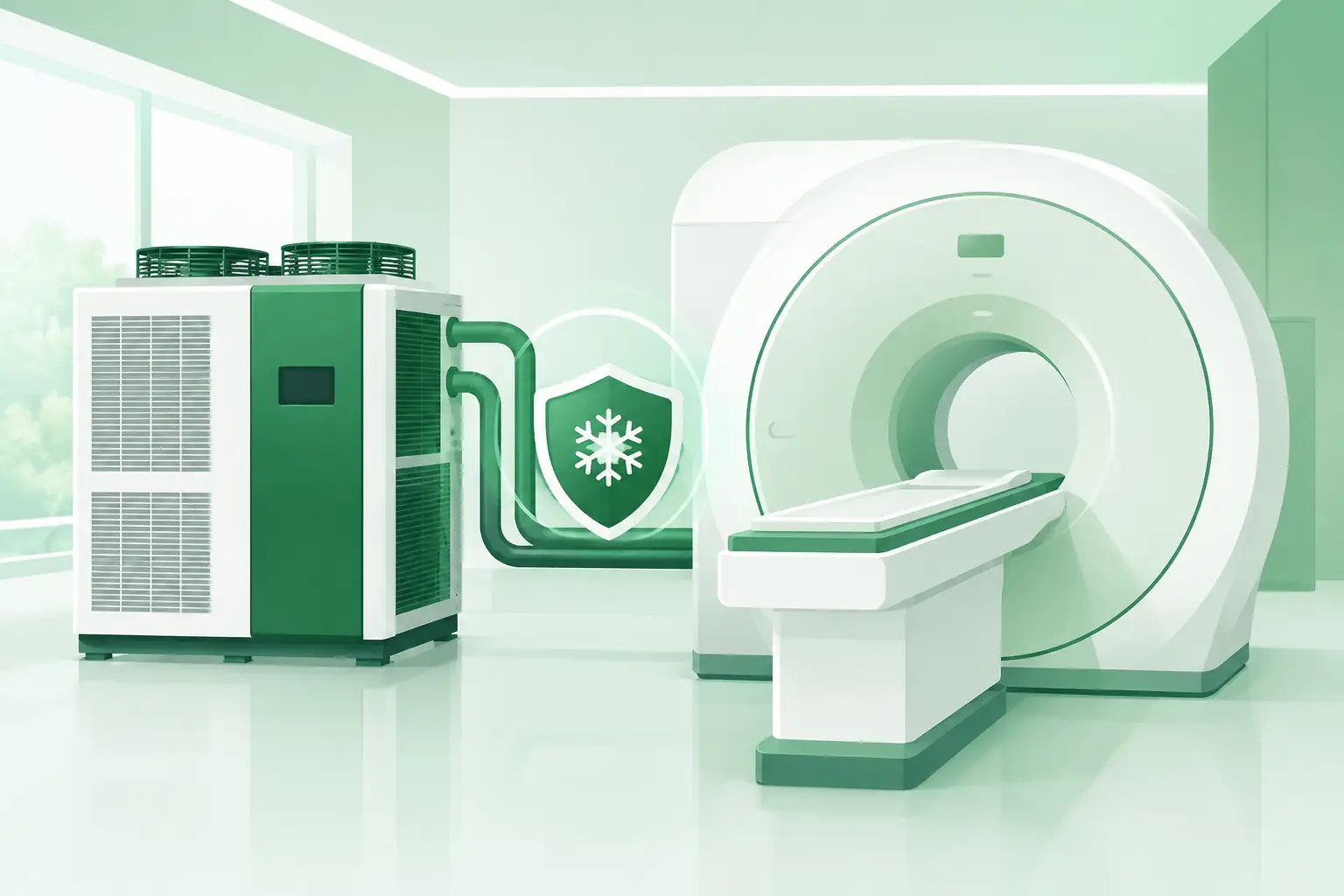
The cold head is a core component of the MRI cryogenic cooling system. It removes heat from the magnet cryostat and supports the operating conditions required to maintain superconducting performance. Its condition affects helium boil-off, magnet stability, system availability, and, in some cases, the feasibility of keeping an older MRI platform in service.
Why an MRI Cold Head Fails
A cold head is a mechanical cryocooler operating under continuous duty. Internal wear over time is expected, particularly in high-hour systems. Common failure indicators include elevated helium loss, alarms related to cryogenic cooling performance, excessive cold-head noise or vibration, reduced cooling efficiency, and inability to maintain expected operating parameters.
Those symptoms do not automatically prove the cold head is the failed component. The compressor, helium lines, water cooling circuit, electrical supply, control electronics, or contaminated gas circuit can produce similar behavior. A compressor with poor output pressure or inadequate cooling water flow, for example, may make a functional cold head appear weak.
Before ordering a replacement, the service team should review system logs, compressor pressures, maintenance history, helium consumption trends, and the results of the OEM or approved diagnostic procedure. This is especially relevant on legacy systems, where more than one related component may be approaching end of life.
MRI Cold Head Replacement Starts With Exact Identification
Cold heads are not interchangeable simply because they appear similar or are associated with the same MRI manufacturer. Compatibility depends on the specific magnet, cryostat configuration, refrigeration architecture, compressor pairing, connector arrangement, mounting geometry, and OEM revision level.
The strongest starting point is the OEM part number from the failed component. A clear photo of the identification label, including serial number and revision markings, can help resolve uncertainty when labels, service records, or equipment documentation conflict. The MRI system make, model, magnet type, and installed compressor details should accompany the request.
For a reliable sourcing inquiry, provide the failed cold head part number, the magnet or scanner model, compressor model, any associated alarm codes, and photos of the component and connections. If the unit has been removed, document hose routing, electrical interfaces, and mounting points before installation work begins. This information helps distinguish an exact replacement from a superficially similar unit that will not fit the application.
Questions That Change the Correct Part
Several technical details can materially affect selection. Is the cold head installed on a GE, Siemens, Philips, Canon/Toshiba, or another MRI platform? Does the magnet use a specific cryocooler generation or a revised compressor interface? Is the component supplied as a complete assembly, or does the repair require separate seals, lines, cables, or mounting hardware?
The answer may also depend on whether the system has received prior field modifications. A magnet that has undergone a refrigeration upgrade may no longer correspond exactly to its original build configuration. In those cases, the currently installed component label is often more useful than the scanner model alone.
Used, Refurbished, or New: The Real Trade-Off
For an MRI cold head replacement, the practical choice is not always a new part. Availability, condition, lead time, warranty terms, and the expected service life of the MRI platform all matter.
A tested used cold head may be appropriate when the immediate objective is restoring a legacy scanner that has limited OEM support. A professionally refurbished unit can be a strong option when documented refurbishment scope, testing criteria, and compatibility are available. A select new unit may be preferred for a system with a longer remaining service horizon or when the service organization requires a particular condition standard.
The right option depends on the repair strategy, not only purchase price. A lower-priced component with uncertain history can become expensive if it adds repeat downtime, helium loss, or another service call. Conversely, insisting on a new component may extend an outage when an exact, tested replacement is available from the imaging aftermarket.
A technical buyer should ask what condition is being offered, how the part was identified, whether it was tested, what documentation is available, and whether the seller can confirm the specific application. Terms such as "compatible" or "replacement" should be supported by actual part-number cross-reference work rather than a broad equipment-family claim.
Protect the Cryogenic System During Installation
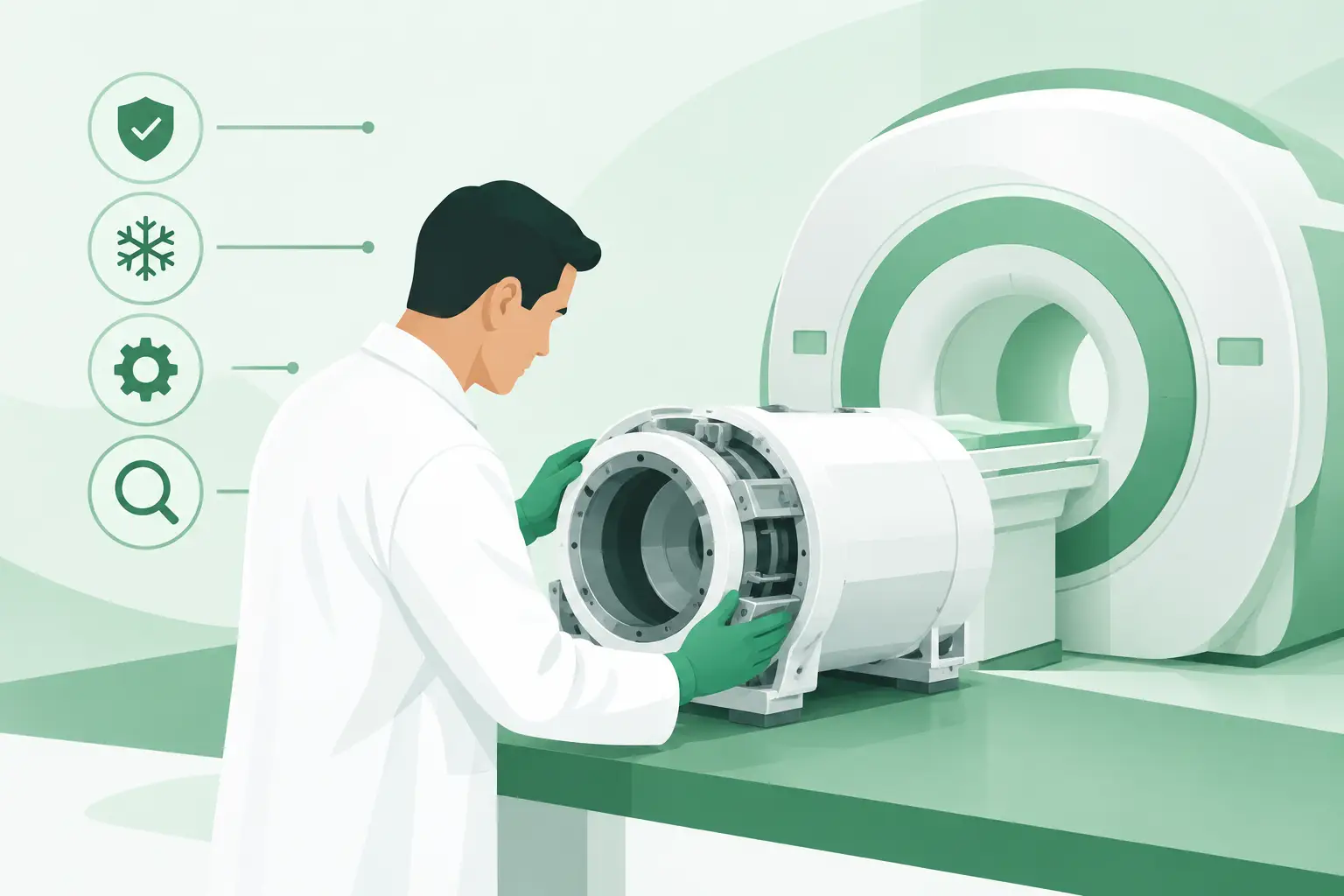
Cold-head work should be performed by qualified MRI service personnel following the applicable system procedures. This is not a general mechanical repair. The refrigeration circuit, electrical isolation, compressor operation, water cooling, and cryostat condition must all be considered before the scanner is returned to service.
Installation planning should account for more than the component itself. Confirm that required seals, hardware, and associated service materials are available before the existing cold head is removed. Review compressor service status, line condition, cooling-water quality or flow, and any known refrigeration alarms. If the root cause was not isolated before replacement, the incoming cold head may be exposed to the same damaging condition.
After installation, monitor operating values and helium behavior over time rather than judging success only by an initial restart. A scanner may return to operation while still showing abnormal helium consumption or a developing cooling issue. Trending the relevant performance data gives the service team evidence that the repair corrected the underlying problem.
Sourcing When OEM Support Is Limited
Cold heads for older MRI platforms can be difficult to obtain quickly, particularly when the OEM has shifted support priorities or when a specific revision is discontinued. Searching by generic description often produces incomplete results because catalog naming varies across manufacturers and service channels.
Part-number-level sourcing is more effective. It allows a supplier to check available inventory, equivalent or superseded configurations where appropriate, and global sources that may hold stock not visible through standard distribution. It also reduces the risk of receiving a component intended for another magnet configuration.
Meditegic supports MRI service organizations, clinical engineering teams, and equipment refurbishers with exact-match sourcing for difficult diagnostic imaging parts, including cryogenic cooling components. For urgent cases, providing complete identification details at the first contact helps shorten quotation and verification time.
Build a Better Cold Head Contingency Plan
For sites operating MRI systems with aging refrigeration components, waiting for a failure alarm is costly. A simple record of installed cold-head and compressor part numbers, serial numbers, service dates, and known revisions can save critical hours during an outage. It also gives procurement staff enough information to start sourcing while the technical team confirms the diagnosis.
Service organizations supporting multiple sites should identify magnets where cold-head availability is restricted, where helium trends are worsening, or where compressor maintenance is overdue. These systems deserve earlier planning because their replacement options may be narrower than current-generation platforms.
The most useful next step is not ordering the first cold head that appears available. Capture the exact installed part number, verify the cryogenic system diagnosis, and source against the actual magnet configuration. That discipline protects both the replacement component and the scanner uptime it is intended to restore.