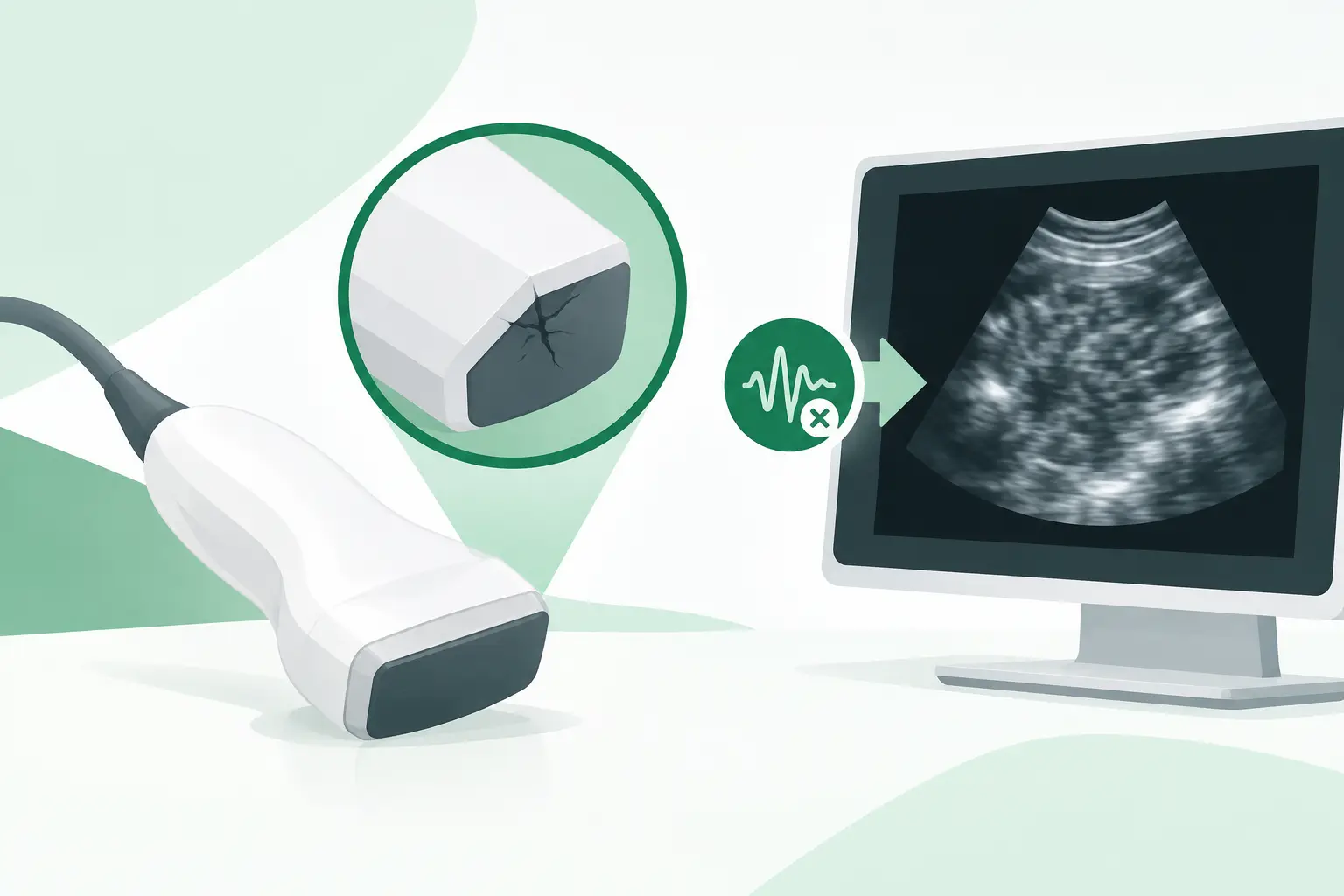
A failed MRI RF coil can take a high-value system out of its normal schedule even when the magnet, gradients, and console are fully operational. A proper refurbished MRI coil review is therefore not a general inspection of cosmetic condition or a comparison of asking prices. It is a technical purchasing process focused on one question: will this exact coil operate correctly on this exact scanner, for the intended clinical application, without creating another service event?
For biomedical engineering teams, independent service organizations, and imaging equipment refurbishers, the answer depends on compatibility, signal performance, connector integrity, patient-contact condition, and the supplier's ability to document what was tested. Refurbished coils can be a practical route for replacing discontinued or difficult-to-source assemblies, but only when the part is evaluated at the OEM part-number level.
What a Refurbished MRI Coil Review Should Confirm
An MRI coil is not interchangeable simply because it looks similar or is associated with the same OEM. Coil architecture, channel count, connector configuration, software recognition, patient table interface, and scanner generation can all affect whether a coil is usable. A head coil from one Siemens platform, for example, may not be supported by another Siemens system. The same principle applies across GE Healthcare, Philips, Canon/Toshiba, and other MRI environments.
Start with the complete OEM part number, including suffixes and revision identifiers. These details may distinguish a coil with a different cable assembly, patient interface, or electronic configuration. If the system documentation identifies an approved substitute or supersession, verify that relationship before purchase rather than assuming a newer revision will work.
The review should also establish the coil's intended use. A flexible surface coil, dedicated knee coil, breast coil, torso array, head and neck coil, or extremity coil may serve very different examinations and positioning requirements. The correct replacement is the one that restores the facility's required workflow, not merely one that allows the scanner to detect a connected accessory.
Compatibility extends beyond the scanner model
The scanner model is a starting point, not final proof. Confirm the magnet configuration, software level where relevant, coil port arrangement, table or dock interface, and whether the coil requires a specific adapter or interface module. Some failures attributed to a replacement coil are actually caused by a damaged extension cable, table connector, or coil port.
For a legacy MRI installation, this level of verification becomes more significant. OEM support may be limited, and parts databases can contain broad or incomplete descriptions. A supplier that cross-references by part number and understands MRI assemblies can reduce the risk of receiving a coil that is close, but operationally wrong.
Evaluate Condition Where It Matters
External appearance has value, but it should not lead the review. A clean housing does not prove reliable RF performance, while minor cosmetic marks do not necessarily affect image quality. The condition review should concentrate on components that influence patient safety, usability, and signal transmission.
Inspect the housing for cracks, loose panels, missing fasteners, damaged latches, worn straps, broken immobilization components, and sharp edges. Particular attention is needed around handles, hinges, cable strain reliefs, docking points, and areas exposed to repeated cleaning. These are common stress locations on coils used heavily in daily outpatient imaging.
The cable and connector deserve equal attention. Look for cuts, flattening, exposed shielding, kinks near strain-relief points, bent or recessed pins, damaged locking mechanisms, and signs of fluid intrusion. Intermittent coil faults often originate in cables or connector assemblies rather than in the coil housing itself. A coil that initially passes detection but drops out when repositioned is not a dependable replacement.
Patient-contact surfaces should be intact and cleanable. Foam deterioration, torn covers, compromised padding, or damaged positioning accessories can affect patient comfort and may make a technically functional coil unsuitable for routine use. Refurbishment quality should address functional and patient-facing condition, not just surface cleaning.
Ask What Was Actually Tested
The term refurbished is not a uniform technical standard. One supplier may use it to describe a coil that has been inspected and functionally tested. Another may use it for an assembly that has been cleaned, repaired, and tested after component-level work. The only useful approach is to ask for the specific scope of evaluation.
A credible review should clarify whether the coil was tested on a compatible MRI system or with appropriate test equipment, whether all channels were assessed, and whether basic signal performance was checked. The testing process should be appropriate to the coil type and available equipment, but it should go beyond confirming that the scanner recognizes the coil.
Useful questions include whether the coil completed system identification, whether channel-related errors were observed, whether cables and connectors were electrically evaluated, and whether the assembly was tested through normal positioning or flexing where applicable. For array coils, channel consistency is especially relevant. A coil can remain partially functional while producing reduced signal-to-noise ratio, localized shading, or channel dropout that becomes evident only in clinical imaging.
Do not assume that a coil with no visible damage has passed meaningful RF evaluation. Likewise, do not reject a refurbished coil solely because it is not presented as cosmetically perfect. The operational standard is documented function on the intended platform, combined with a clear account of any remaining cosmetic condition.
Review Documentation Before the Coil Ships
For urgent replacements, documentation can prevent days of avoidable back-and-forth after delivery. At minimum, the purchase record should identify the OEM, coil description, exact part number, stated condition, and warranty or return terms. If serial-number tracking is available, record it with the receiving inspection paperwork.
Photos are useful when they show the actual unit, connector face, cable condition, and accessories included. Stock images cannot confirm whether the supplied coil has the required interface, positioning pads, cable, or adapter. If accessories are essential to operation, list them explicitly on the quote or order confirmation.
Receiving inspection should be planned before the part arrives. The service team should know which system will test the coil, who will perform the functional check, and what error logs or image-quality indicators will be reviewed. This is particularly helpful when downtime is critical and the original failed coil is still available for comparison.
Warranty terms should match the service reality
Warranty language matters most when a coil failure is intermittent or appears only under normal use. Review the coverage period, return process, whether diagnostic findings are required, and who is responsible for shipping if the unit is found defective. A short response window may be acceptable for a low-risk backup coil, but it can be a poor fit for a primary clinical coil supporting scheduled examinations.
The right decision depends on the role of the part. A replacement needed to restore an essential service line deserves more extensive verification and a supplier prepared to resolve exceptions quickly. A spare coil for a less frequently used protocol may justify a different balance of lead time, price, and documentation.
Common Reasons Refurbished Coil Purchases Fail
Most preventable issues trace back to incomplete matching or unclear condition claims. The recurring problems are ordering from a broad model description rather than the full part number, overlooking connector or table-interface differences, assuming a detected coil is a fully functional coil, and failing to confirm what is included.
Another issue is treating every MRI coil as a standalone accessory. It is part of a system that includes scanner software, coil ports, table hardware, cables, and clinical workflow. When troubleshooting a suspected coil failure, isolate those related components where possible. This protects against replacing a good coil while the actual fault remains in an interface or system-side connection.
For difficult MRI replacements, a specialized imaging-parts source can add value by locating exact-match used or refurbished inventory across multiple supplier channels, including assemblies that are no longer routinely available through standard distribution. Meditegic supports this kind of part-number-level sourcing for MRI RF coils and other diagnostic imaging components when system uptime depends on finding the correct assembly quickly.
Make the Review Part of Uptime Planning
A refurbished coil should be assessed as an uptime decision, not a bargain decision. The purchase is successful when the coil is correctly identified, arrives with the required components, passes defined functional checks, and returns the MRI schedule to normal operation with minimal repeat work.
When a coil is hard to replace, keep its full part number, compatible system details, known failure symptoms, and any required accessories in the service record. That small amount of preparation turns the next urgent search from a broad inquiry into a precise sourcing request - and gives the service team a far better chance of restoring imaging capacity on the first replacement attempt.