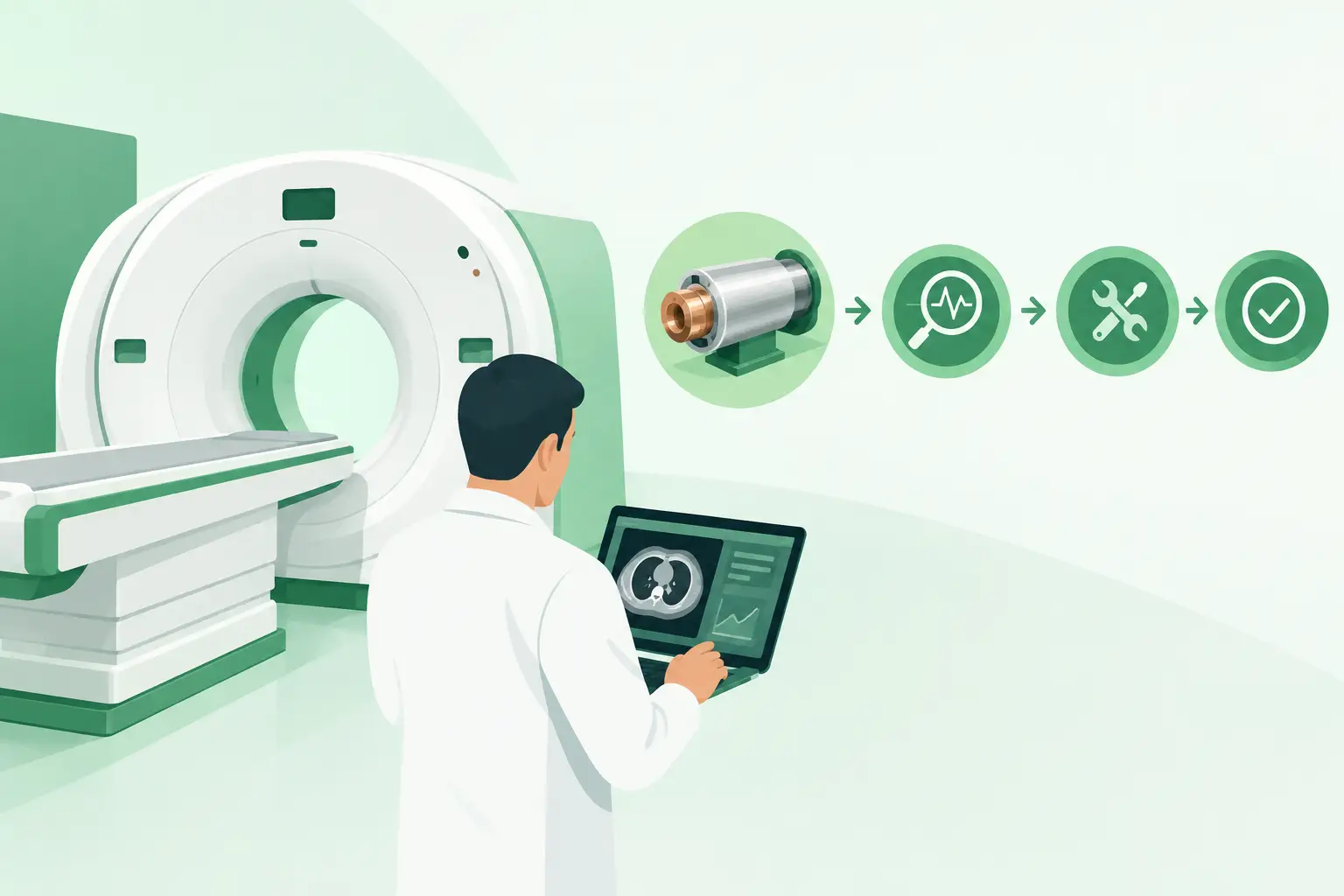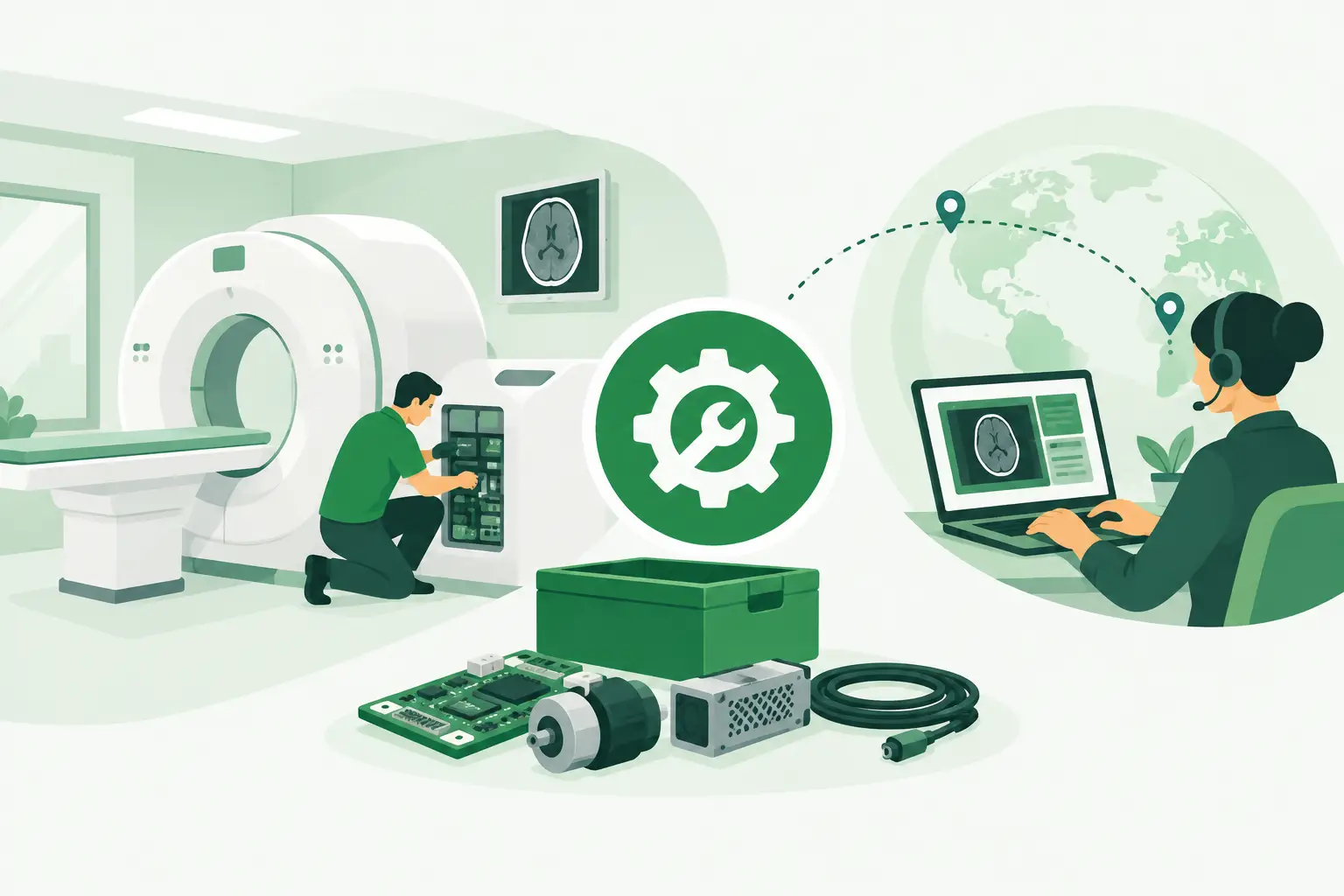
A failed detector, ultrasound probe, power supply, or control board can stop patient imaging immediately. For facilities far from major service centers, remote clinic imaging repairs are not simply a technical task. They are an uptime problem involving diagnosis, exact part identification, logistics, and verification before the system returns to service.
A replacement part that is merely similar is not a repair strategy. Imaging equipment depends on precise electrical, mechanical, software, and calibration compatibility. The correct response begins with a disciplined assessment of the fault and ends only when the repaired modality produces clinically acceptable images.
Why Remote Clinic Imaging Repairs Require a Different Process
Remote sites often have fewer local imaging specialists, limited access to OEM field support, and longer freight lanes. A routine failure can therefore create days or weeks of downtime if the service team starts searching after the system is already disabled. This is especially difficult with legacy equipment, where the original component may be discontinued or no longer stocked through standard distribution.
The operational impact depends on the modality. A portable X-ray system with a failed high-voltage component can limit point-of-care examinations. An ultrasound unit may remain operational with one probe out of service, but only if another compatible probe supports the required exams. For CT, MRI, mammography, fluoroscopy, and nuclear medicine systems, a single failed subsystem can take the entire modality offline.
Distance also changes the cost calculation. Sending a technician back to a site because the wrong revision of a PCB arrived can cost more than the part itself. For remote clinics, procurement accuracy is often the most effective way to control repair expense.
Start With Fault Isolation, Not a Part Search
A clear diagnosis prevents wasted freight and repeat downtime. Before requesting a component, the technician or biomedical team should collect the system details that distinguish one compatible part from another: OEM, model, serial number, installed option set, software version where relevant, and the exact OEM part number from the failed component.
Error codes, event logs, photographs of labels and connectors, and a description of the failure sequence are equally useful. A system that fails at boot presents a different sourcing question from one that boots normally but produces artifacts, loses communication with a detector, or trips a power fault under load.
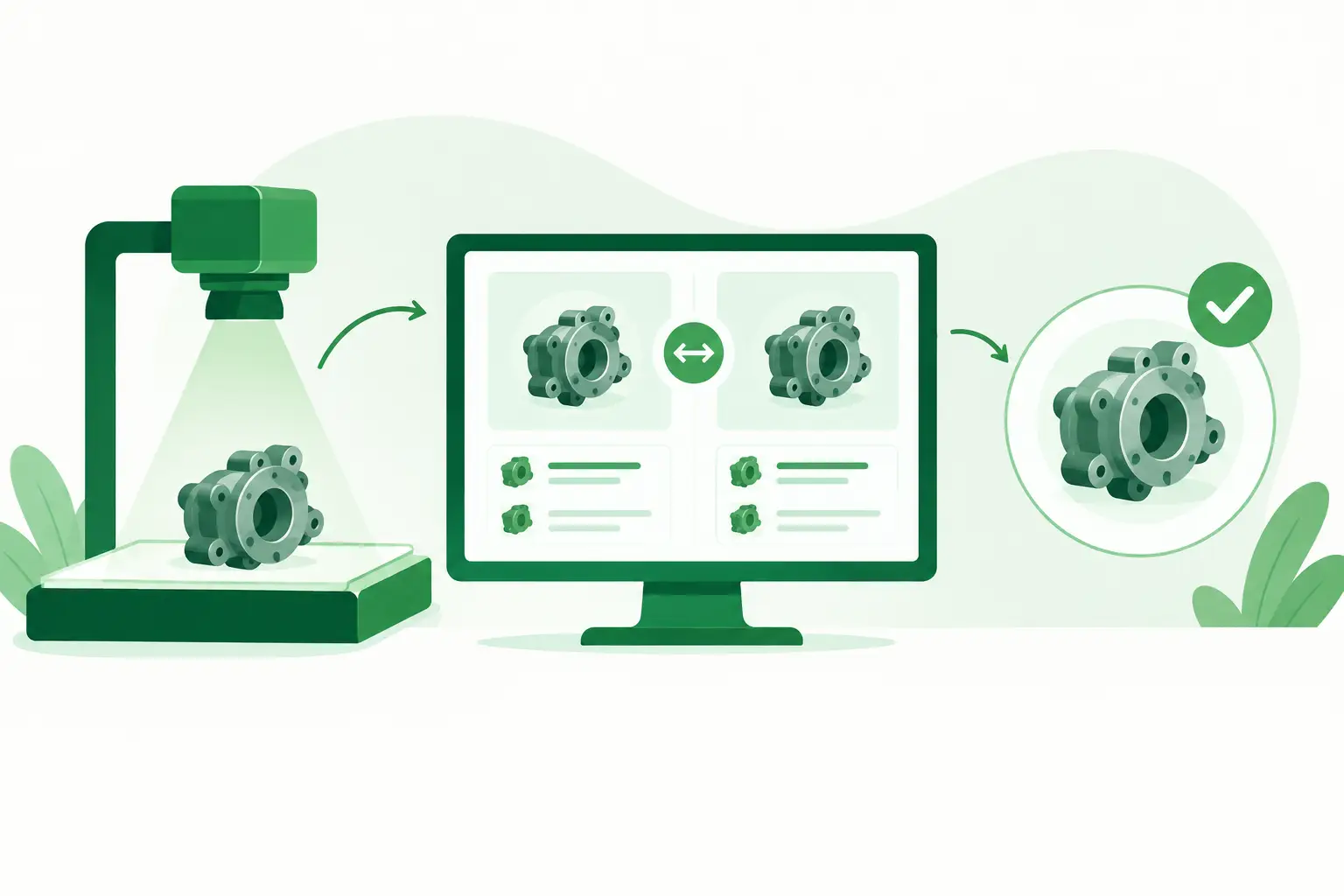
Part numbers matter because imaging platforms frequently use visually similar components across different revisions. A power supply with the same form factor may have different voltage outputs, firmware, connector pinouts, or safety interlocks. The same applies to X-ray tube housings, flat-panel detectors, image intensifiers, MRI RF coils, and ultrasound transducers.
When diagnosis remains uncertain, do not treat every suspected part as an interchangeable candidate. Work from the service documentation, measured values, known-good substitutions when available, and the equipment’s fault history. For a repeat failure, investigate the upstream cause before installing a replacement. A failed cooling component, unstable line power, damaged cable, or software communication issue can destroy or disable the newly installed part.
The minimum information for an accurate quote
A productive sourcing request identifies the modality and OEM, the complete system model, the part number and revision from the failed component, the fault symptoms, and the delivery location. Serial number and photographs can resolve ambiguity when labels are incomplete or when a component has multiple cross-references.
This level of detail helps a specialist source an exact-match replacement rather than offering a broad category match. It also allows the supplier to confirm whether a used, refurbished, or select new spare is appropriate for the specific repair.
Match the Part Condition to the Clinical Risk
Used and refurbished imaging parts can be practical options for maintaining established equipment, particularly when OEM support has narrowed. They are not identical categories, however. A used component may be removed from a functioning system and sold in as-is condition, while a refurbished component has been evaluated, repaired as needed, and tested according to the provider’s process.
The right choice depends on the part, the equipment’s role, the available testing capability, and the consequence of another failure. A low-risk mechanical cover or table component calls for a different decision than a detector, high-voltage tank, MRI coil, or ultrasound probe used for routine diagnostic work.
Ask practical questions before ordering: Has the component been tested? What functional verification is available? Is the revision confirmed? Are accessories, cables, or mounting hardware included? What warranty terms apply? For components that require calibration, alignment, software configuration, or leakage and electrical safety testing, confirm who will perform those steps after installation.
An inexpensive part that cannot be validated at the site may not be the lowest-cost option. The better decision is the part condition and supply path that restores dependable clinical operation with the least total downtime.
Plan Logistics Before the System Is Down
Freight is part of the repair plan, not an administrative afterthought. Remote destinations may involve limited carrier service, longer customs clearance, constrained delivery windows, or special handling requirements. Fragile and high-value items such as transducers, detectors, image intensifiers, X-ray tubes, and sensitive electronic assemblies require packaging that protects them from shock, moisture, and electrostatic damage.
A clinic should identify its delivery constraints in advance. Confirm the receiving address, contact person, phone number, available delivery hours, import documentation requirements, and whether the site can accept a large crate. If the shipment will travel through a regional hub, establish who is responsible for final-mile transfer and inspection.
For urgent repairs, provide the source with the latest acceptable delivery date rather than only asking whether a part is available. Availability without a workable shipping route does not restore uptime. It is also wise to keep the old component until the replacement is installed and verified, particularly when it may be repairable or useful for core identification.
Build a Small, Evidence-Based Spare Parts Strategy
Not every remote clinic needs a large parts inventory. Carrying expensive spares without a failure history can tie up capital and create storage risks. But a site with a critical modality and long replenishment lead times should not rely entirely on emergency sourcing.
Use service history to identify parts worth holding locally or regionally. Recurrent failures, single points of failure, components with long lead times, and parts required for high-volume exams deserve priority. Common candidates vary by system but may include approved cables, fuses, cooling components, batteries, selected power assemblies, workstation drives, and frequently damaged ultrasound probes.
More specialized spares usually make better sense through a qualified sourcing partner. A CT detector module, MRI gradient component, mammography detector, or legacy control board can be costly and revision-sensitive. Holding such parts without the ability to test, install, and validate them may create more exposure than protection.
This is where a current asset record becomes valuable. Maintain the OEM, model, serial number, installed software version, key subsystem part numbers, service manuals, prior fault codes, and a record of repairs. A technician should not need to reconstruct a system’s configuration during an outage.
Remote Clinic Imaging Repairs Depend on Installation Verification
The repair is not complete when the replacement component arrives. Installation may require firmware loading, configuration settings, mechanical alignment, detector calibration, tube warm-up, image-quality checks, or electrical safety tests. Follow the applicable OEM procedures and use qualified personnel for work involving high voltage, radiation-producing equipment, MRI safety, or regulated clinical performance.
Document the incoming part number, revision, condition, installation date, technician findings, and final test results. Capture baseline images or quality-control results where appropriate. This documentation gives the clinic a reference if performance changes later, and it improves future troubleshooting.
For ultrasound, inspect the probe face, strain relief, connector, and image uniformity after installation. For X-ray and fluoroscopy, verify exposure behavior, image quality, collimation, and any required calibration. For CT, MRI, nuclear medicine, and mammography, validation is more system-specific and may need formal acceptance testing before clinical use.
Use Specialized Sourcing When Standard Channels Stop
Standard distributors are effective for commonly available components. They are less useful when a clinic needs a discontinued board, a specific detector revision, a legacy coil, or an exact cross-referenced part for a multi-vendor fleet. In those cases, the search must be driven by OEM part number, system compatibility, and functional requirements.
Meditegic supports this type of procurement across CT and PET/CT, MRI, nuclear medicine and SPECT, C-arm and fluoroscopy, X-ray, ultrasound, mammography, CR/DR, and DEXA. Its focus is locating precise used, refurbished, and select new replacement parts through a global imaging-parts network, including parts for GE Healthcare, Siemens Healthineers, Philips, Canon/Toshiba, Hologic, Fujifilm, Hitachi, and other current and legacy platforms.
The most useful repair request is specific, technically complete, and tied to the clinic’s actual recovery deadline. That gives the sourcing team a basis to confirm part-number compatibility, evaluate available condition options, and plan shipment realistically.
The practical goal is simple: make the next equipment failure a controlled service event rather than an extended interruption to patient imaging. A documented asset record, disciplined fault isolation, and an exact-match parts path give remote clinics the best chance of restoring service quickly and with confidence.