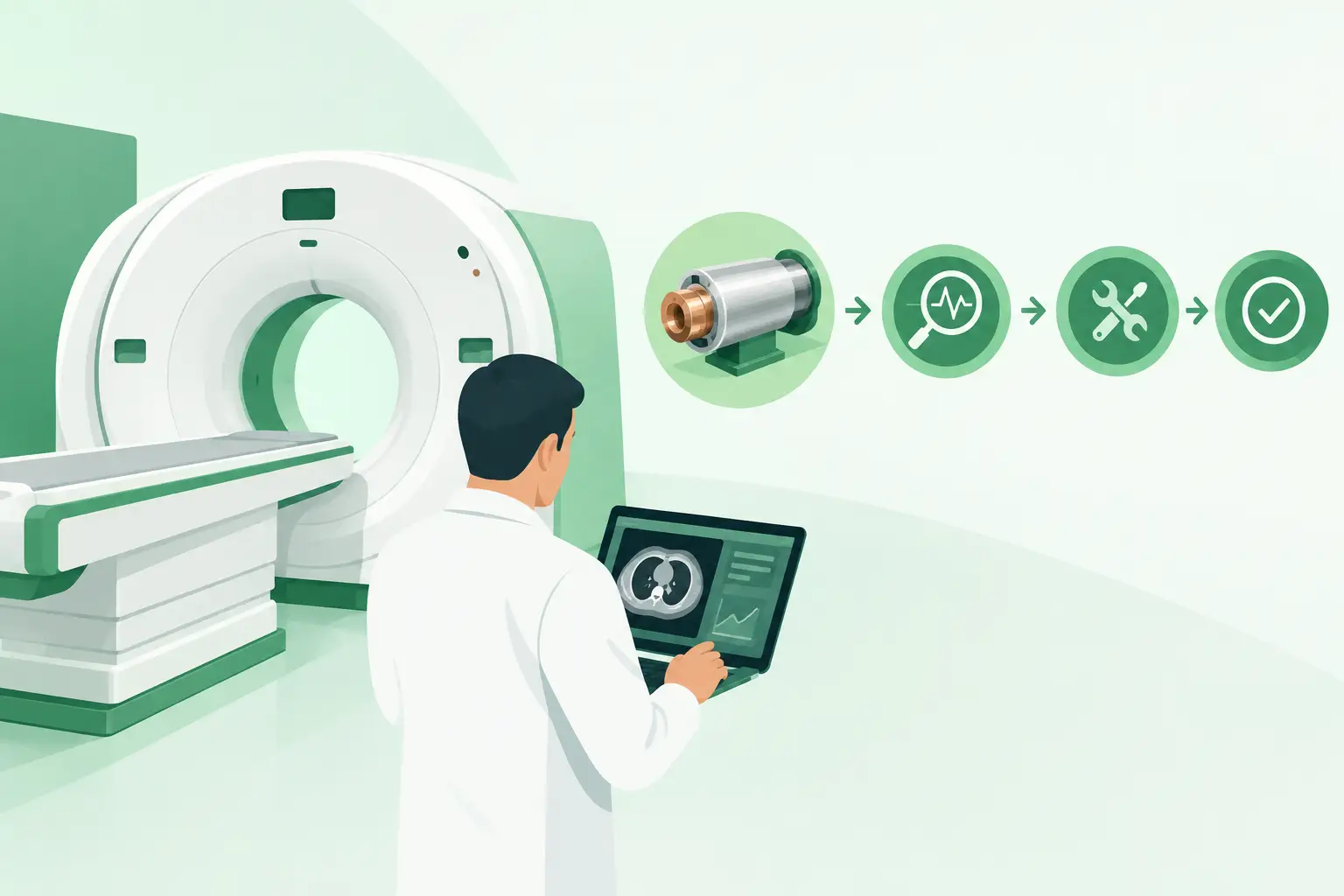
A failed detector power supply in a remote X-ray room is not a routine purchasing event. It can stop referrals, delay diagnosis, force patients to travel, and leave a clinic without a revenue-producing service. Effective remote clinic parts recovery is the process of identifying, locating, verifying, and delivering the exact imaging replacement part needed to return equipment to service with the fewest avoidable delays.
For clinical engineering teams, independent service organizations, and owner-operators, the challenge is rarely finding a part category. It is finding the correct revision, configuration, and condition for a specific system when OEM support is limited, freight routes are complex, and the installed equipment may be legacy technology.
Why remote imaging failures take longer to resolve
Distance compounds every ordinary service issue. A clinic may have limited local technical coverage, no nearby imaging-parts distributor, and only one unit serving a broad catchment area. When a CT scanner, ultrasound platform, C-arm, mammography unit, or portable X-ray system goes down, there may be no practical backup system nearby.
The part itself can also be difficult to source. Imaging equipment contains components that are specific to a manufacturer, modality, system generation, and sometimes software or hardware revision. A GE detector board, Siemens high-voltage component, Philips workstation assembly, Canon/Toshiba X-ray tube housing, or Hologic mammography detector cannot be selected by a broad description alone. The OEM part number, serial-range compatibility, and physical configuration matter.
A remote location introduces additional variables: export documentation, carrier coverage, customs clearance, packaging requirements, transit risk, and the availability of a qualified technician when the shipment arrives. Recovering uptime requires coordinating these issues together, not treating them as separate tasks.
Start recovery with part-number-level identification
The fastest sourcing request is not necessarily the shortest one. “Need an ultrasound probe” or “CT board failed” gives a supplier a starting point, but it does not establish what can safely be supplied. A precise request reduces back-and-forth and helps prevent a costly wrong-part shipment.
Begin with the imaging system manufacturer, model, and serial number. Then provide the failed component's OEM part number from its label, invoice history, service documentation, or parts catalog. Clear photos of the label, connectors, mounting points, and any error messages are especially useful when numbers are worn, incomplete, or cross-referenced differently across revisions.
For electronics, include the board number and revision level, not only the assembly description. For ultrasound, identify the probe model, connector style, and compatible console. For X-ray and fluoroscopy systems, confirm whether the need is for the tube, tube housing, detector, image intensifier, collimator, generator component, or a specific high-voltage assembly. For MRI, verify the RF coil type, system platform, and connector details before assuming interchangeability.
This level of detail is particularly important with discontinued systems. A component from the same product family may look identical while using a different firmware generation, connector pinout, mounting pattern, or calibration requirement.
Confirm the failure before ordering
Parts recovery should not replace diagnosis. A system fault code may indicate a failed power supply, for example, while the root cause is a damaged cable, cooling issue, interlock fault, or control-board communication problem. Ordering the most likely component without reasonable troubleshooting can add cost and extend downtime.
A practical approach is to document the fault condition, recent repairs, environmental events, and measurements already performed. If the system has intermittent symptoms, note when they occur: during warm-up, exposure, gantry motion, table movement, image acquisition, or a particular workflow. This information helps a qualified technician distinguish between a likely failed assembly and a related subsystem fault.
Match sourcing strategy to the clinical risk
Not every failure needs the same response. A spare console keyboard, cosmetic cover, or noncritical table accessory may tolerate a longer sourcing window. A failed X-ray tube, flat-panel detector, MRI coil, CT cooling component, or generator power supply usually requires an expedited process because it can make the system unavailable.
The right sourcing strategy depends on three factors: how completely the failure stops clinical operation, how rare the part is, and whether an alternate part can be safely configured. For high-impact failures, begin the search immediately with the exact part number and equipment details, while the technician continues verification. Waiting for every uncertainty to be resolved can be reasonable for common items, but it is often counterproductive when a legacy imaging component has limited availability.
Used, refurbished, and select new replacement parts each have a place. A tested refurbished control board may be appropriate when a new OEM assembly is unavailable or no longer supported. A used detector or probe may be viable when condition, compatibility, and handling history have been properly reviewed. The trade-off is not simply price. It is the balance between lead time, documented condition, warranty terms, installation requirements, and the operational risk of another failure.
Remote clinic parts recovery depends on verification
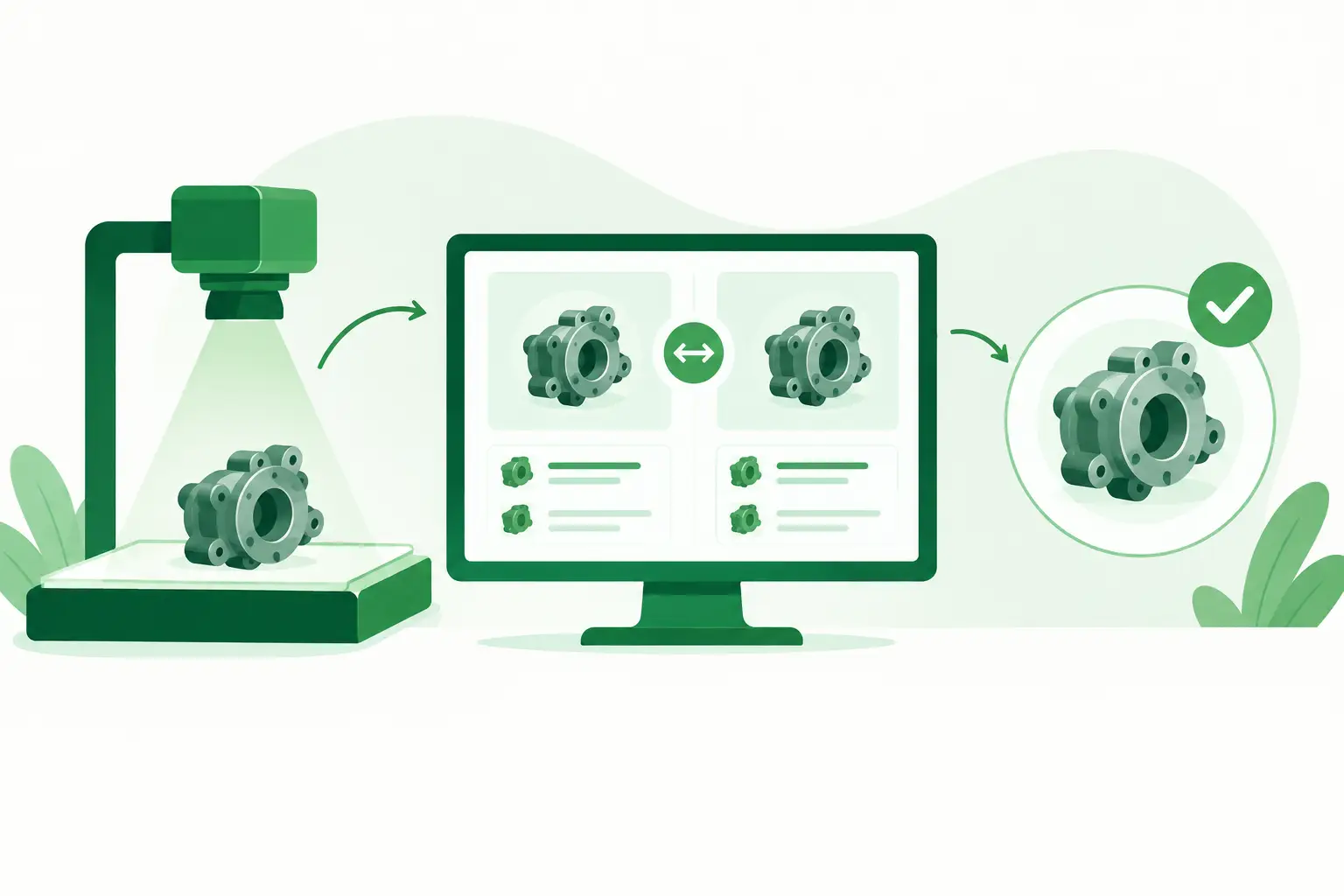
A supplier should verify more than whether an item is physically in stock. The part must be cross-referenced against the requested OEM number and assessed for compatibility with the installed modality. This is where deep imaging specialization matters.
A generic electronics supplier may recognize a power supply by its voltage rating. An imaging-parts specialist can determine whether it belongs to a particular CT gantry, fluoroscopy generator, nuclear medicine workstation, or DR system configuration. That distinction protects the buyer from receiving an assembly that cannot be installed, calibrated, or accepted by the system.
Before release, confirm the part number, revision, quantity, condition, and any included accessories or cables. Ask whether a core return is expected for the replacement category, whether the component has been tested, and whether special installation or calibration will be required. Certain parts, including detectors, X-ray tubes, RF coils, and high-voltage assemblies, may require careful packaging and handling from shipment through installation.
For remote destinations, packaging is part of technical risk control. Sensitive boards need electrostatic protection. Probes and transducers require protection against impact and connector damage. Heavy components such as tube housings, gantry assemblies, and power modules need crating or secure industrial packaging that can tolerate multiple carrier handoffs.
Build a recovery process before the next failure
The best time to collect equipment records is before a critical component fails. Keep a current asset list that includes modality, manufacturer, model, serial number, installed software version where relevant, and major replaceable assemblies. Record part numbers for failure-prone or long-lead components when documentation is available.
For a remote clinic, it is also useful to identify which equipment has no local backup. That may be the only ultrasound system serving an outreach location, a single radiography room, or a mammography unit with limited access to nearby alternatives. These systems deserve clearer escalation paths and earlier technical review when performance begins to degrade.
A small on-site stock of carefully selected items can help, but only when it is based on actual service history and storage capability. Keeping random boards or probes “just in case” often creates dead inventory and compatibility confusion. More useful is a documented sourcing plan: equipment identification records, technician contacts, shipping instructions, import requirements, and a specialist supplier that can search across multiple OEM environments.
Meditegic supports this process by sourcing exact-match diagnostic imaging components across CT, MRI, PET/CT, nuclear medicine, X-ray, fluoroscopy, ultrasound, mammography, CR/DR, and DEXA platforms. Its global supplier network is built for situations where a local channel does not have the required part and the system cannot remain down.
Coordinate shipping with installation readiness
Express shipment is only valuable when the receiving site is ready. Confirm the delivery address, receiving hours, contact person, phone number, and whether the clinic can accept a large crate or requires delivery coordination. For island locations and areas with limited carrier service, confirm the final-mile route before dispatch rather than after a shipment is already moving.
At the same time, schedule the technician, prepare necessary tools, and ensure that any required system documentation is available. If a calibration, safety check, or software configuration is required after replacement, build that work into the recovery timeline. A part delivered quickly but left uninstalled for three days does not restore clinical capacity.
Equipment downtime at a remote clinic is a clinical and operational problem, not merely a purchasing problem. Accurate identification, disciplined verification, and realistic shipping coordination turn an urgent search into a controlled recovery effort. When the next imaging component fails, the most valuable first action is simple: capture the exact part number and system details before the trail goes cold.