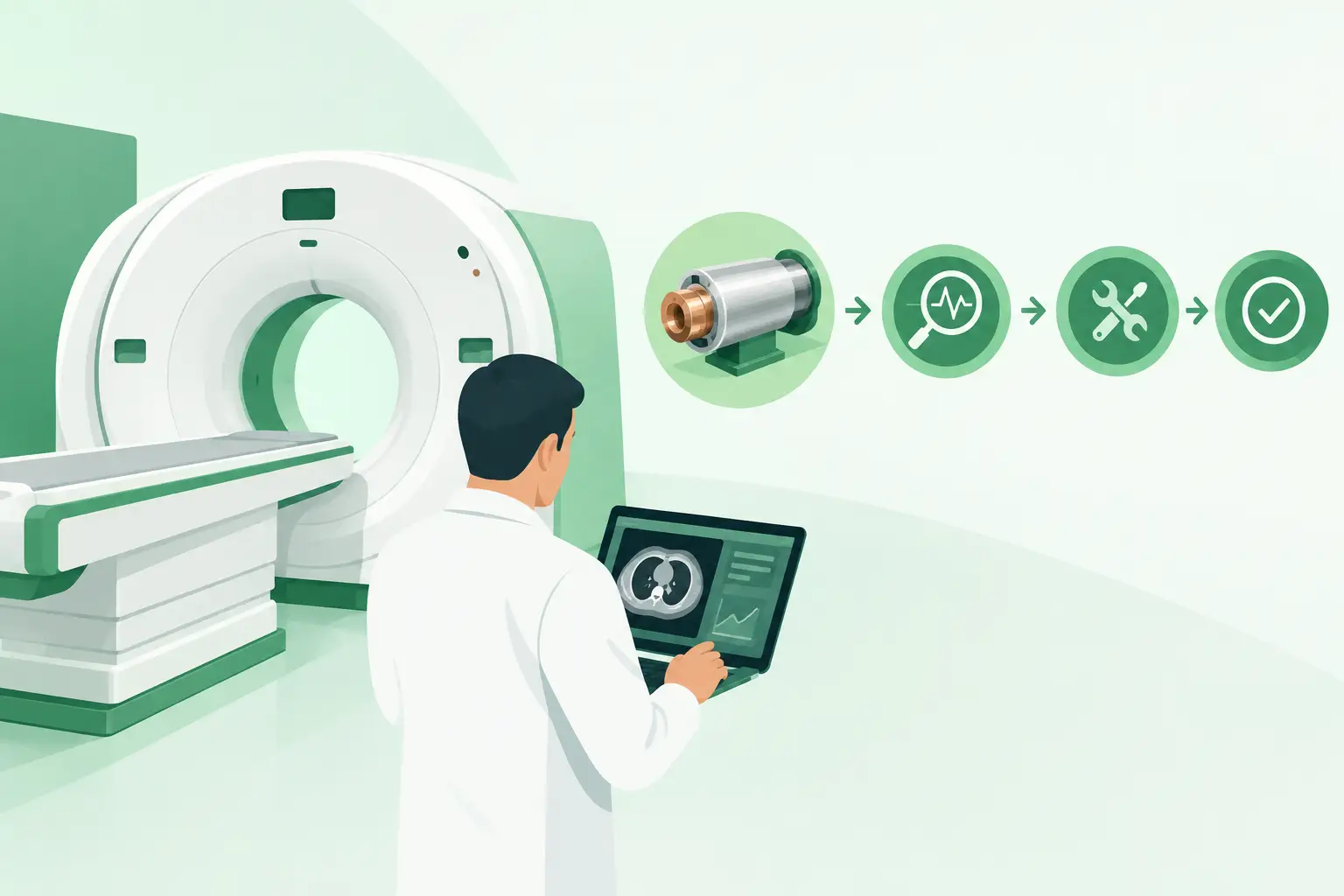
A failed probe rarely arrives at a convenient time. In most imaging environments, it shows up as image artifact, intermittent dropout, a damaged lens, or a connector issue that immediately puts schedules, patient flow, and service commitments under pressure. That is why evaluating ultrasound probe repair options needs to be a technical and operational decision, not just a pricing exercise.
For hospital biomed teams, independent service organizations, and purchasing departments, the right path depends on what actually failed, how critical the system is, and whether the probe in question is current production, aging, or already difficult to replace. Repair can be the fastest and most economical route in many cases, but not every probe is a good repair candidate, and not every repair level delivers the same outcome.
How ultrasound probe repair options usually break down
Most probe failures fall into a few familiar categories. Cosmetic wear on the housing is one thing. A torn acoustic lens, delamination, cable jacket damage, broken strain relief, bent pins, fluid ingress, and array element failure are very different problems with very different repair implications.
At a high level, ultrasound probe repair options typically include minor refurbishment, component-level repair, major rebuild, exchange, or full replacement. The challenge is that these categories can look similar on a quote sheet while representing very different levels of intervention.
A minor refurbishment may address external wear, strain relief issues, or superficial cable damage. That can be appropriate when image quality and element performance are still within spec. Component-level repair goes deeper and may involve connector replacement, cable work, lens repair, or housing restoration. Major rebuilds can include array-related work, more extensive internal repair, and replacement of multiple wear components.
Then there is exchange. In some cases, sending in a failed unit and receiving a functionally tested replacement probe is more practical than waiting on the original unit to be repaired. Full replacement is often the last resort, but for severe internal damage or repeated failure history, it may be the only option that makes financial sense.
Matching the repair path to the actual failure
The most expensive mistake is choosing a repair category before confirming the fault. A cable break near the strain relief may produce intermittent dropout that looks serious to the user, yet the repair may be relatively straightforward. By contrast, element dropout or fluid ingress can lead to deeper internal damage that turns a low-cost repair assumption into a high-cost rebuild or a non-repairable determination.
This is why evaluation matters. A proper assessment should consider image quality, continuity, connector condition, housing integrity, acoustic surface damage, and electrical performance. If the failure is limited and the probe model is valuable or hard to replace, repair is often justified. If the probe has multiple defects across the cable, lens, and array, the economics shift quickly.
For older systems, there is another layer. Even when a probe is technically repairable, the organization needs to ask whether that repair extends useful life enough to justify the spend. On a legacy platform with limited remaining support, a repaired probe may still be the best answer because a new OEM unit is unavailable or cost-prohibitive. But the threshold for acceptable risk should be clear before approving the work.
When minor repair is enough
Minor repair tends to make sense when performance degradation is linked to external damage rather than array failure. Typical examples include cable jacket cuts, worn strain relief, cracked housings, and connector wear. These repairs can often restore function at a lower cost and with shorter turnaround than major internal work.
That said, cosmetic-looking damage should never be treated casually. A small breach in the outer material can become a fluid ingress problem, and once fluid reaches internal components, repair complexity rises fast. Early intervention usually preserves more options.
When major repair or rebuild is justified
Major repair becomes relevant when the probe is high value, hard to source, or central to system uptime. A specialty transducer used for a specific exam mix may justify a larger repair spend because the alternative is canceled studies, rental dependency, or extended downtime.
The key question is not whether the repair is cheap. It is whether the repair is cost-effective relative to replacement lead time, replacement availability, and the operational impact of being without the probe. In busy departments, that calculation often supports repair even when the invoice is not small.
Cost, turnaround, and risk rarely move in the same direction
Buyers looking at ultrasound probe repair options usually balance three things: price, speed, and confidence in the outcome. The problem is that the lowest-cost option may not include the testing depth or warranty terms needed for a mission-critical clinical environment. The fastest option may rely on exchange stock that is limited by model and availability. The most comprehensive repair may have the longest lead time.
This is where context matters. If the probe is a backup unit, a longer turnaround for an original-unit repair may be acceptable. If the unit supports a daily high-volume exam room, a faster exchange or immediate replacement path may be worth the added cost.
Warranty coverage should also be read carefully. A short warranty on a heavily rebuilt probe does not necessarily mean poor quality, but it does indicate how the provider is allocating risk. For procurement and service teams, that risk allocation is part of the total cost.
The sourcing question matters as much as the repair question
Not every repairable probe should be repaired, and not every non-repairable probe should force a new OEM purchase. In practice, teams often need parallel paths: evaluate for repair while also checking refurbished, tested replacement inventory or exchange availability.
This is especially important for discontinued probes, older OEM families, and specialty transducers that are not readily stocked through standard channels. A supplier with broad aftermarket reach can shorten decision time because the team does not have to wait for one path to fail before starting the next. When downtime is already affecting schedules, parallel sourcing is usually the smarter move.
For organizations managing mixed fleets, this broader procurement view is often what keeps systems operational. A repair vendor may confirm that a probe is beyond economical repair. If a sourcing partner can then locate a tested replacement quickly, the failure becomes a manageable disruption instead of an extended outage.
What buyers should confirm before approving a repair
The practical questions are straightforward. What exactly failed? What level of repair is being proposed? What testing will be performed before return? What is the expected turnaround? What is covered under warranty, and what is excluded?
It also helps to confirm whether the quote is based on a bench evaluation or an estimate tied to common symptoms. That distinction matters. Symptom-based estimates are useful for budgeting, but final repair scope may change once the unit is opened and tested.
For larger organizations, documentation matters too. Service records, model compatibility, and traceable repair reporting support future maintenance decisions and simplify internal approval. The more probes an organization manages, the more valuable that consistency becomes.
Choosing between repair, exchange, and replacement
A good rule is to start with the clinical and service impact, then work backward to cost. If the probe is essential, scarce, or tied to a high-revenue service line, faster restoration usually outweighs small pricing differences. If the probe has recurring failures or extensive internal damage, replacement or exchange may be more defensible than another repair cycle.
For many healthcare providers and service firms, the best answer is not a fixed policy but a decision framework. Repair when the fault is isolated and the economics are favorable. Exchange when speed matters more than preserving the original unit. Replace when damage is extensive, reliability is uncertain, or long-term value is poor.
That is also where a specialized parts sourcing partner can add real value. Companies such as Meditegic support this process by helping buyers assess repair-versus-replacement decisions against actual aftermarket availability, including hard-to-find and legacy imaging components.
Ultrasound probe failures are rarely convenient, but they do not have to turn into prolonged downtime. The teams that handle them best are usually the ones that evaluate the fault quickly, keep multiple recovery paths open, and make the decision that protects uptime rather than chasing the lowest number on the first quote.