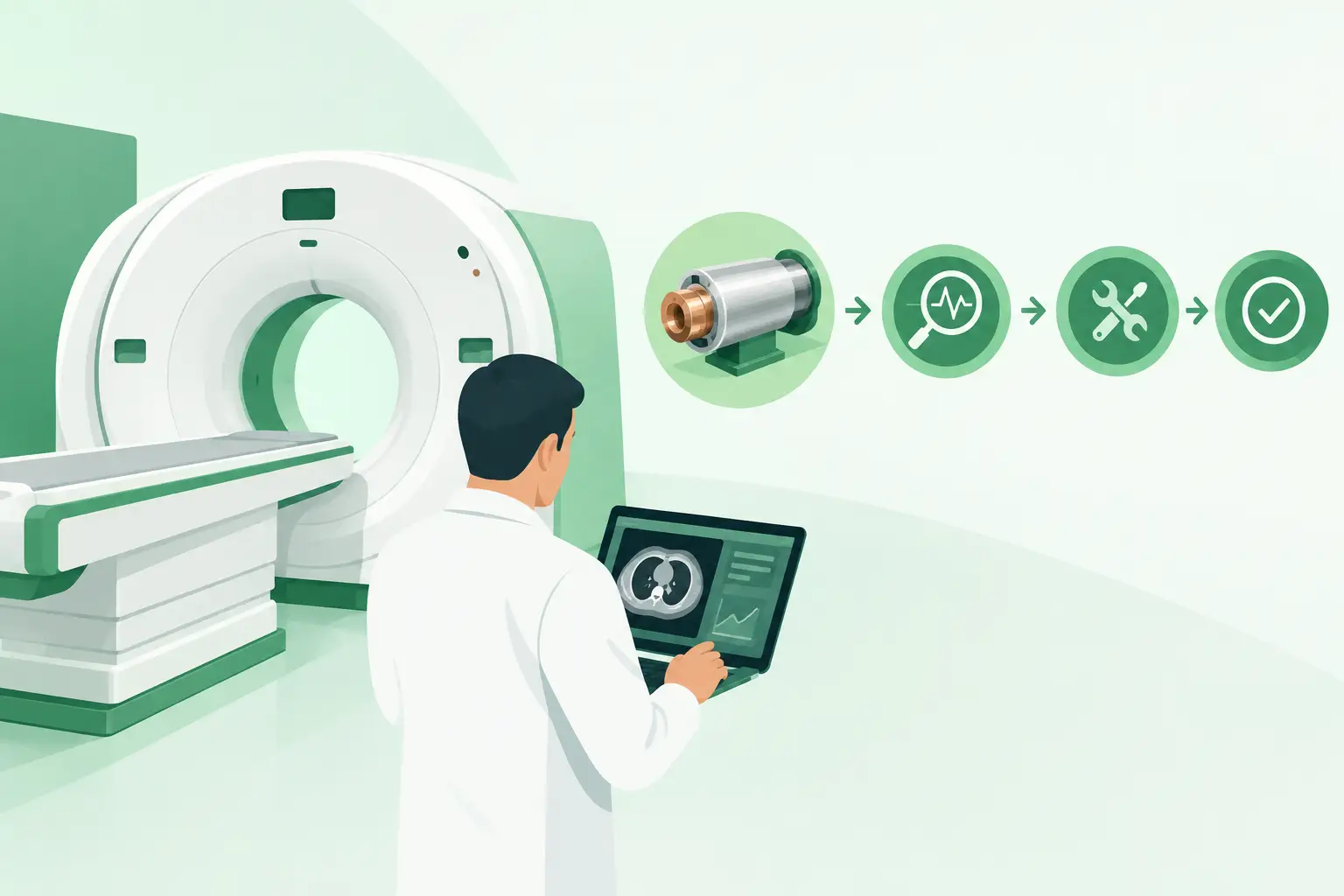
A failed detector can take a productive imaging room out of service immediately, while the clinical schedule and service call costs continue. The question of used versus rebuilt detectors is therefore not simply about purchase price. It is a sourcing decision that affects image performance, installation risk, repair lead time, and the usable life remaining in a high-value imaging asset.
For biomedical departments, ISOs, and imaging service providers, the correct choice depends on the detector type, failure mode, system age, availability of the exact OEM part number, and the level of verification required before installation. A used detector can be the most practical path to restoring an older system quickly. A rebuilt detector can be appropriate when a known, repairable defect has been corrected and supporting documentation is available. Neither category is automatically superior.
Used Versus Rebuilt Detectors: Define the Condition First
The terms used, refurbished, repaired, and rebuilt are often applied inconsistently in the imaging aftermarket. Buyers should ask what work was actually performed rather than rely on the label alone.
A used detector is generally an original component removed from a system. It may have been taken from operational equipment, surplus inventory, or a decommissioned unit. Its value comes from OEM design compatibility and immediate availability, particularly for discontinued platforms. However, its previous operating history, total exposure, storage conditions, and testing level can vary significantly.
A rebuilt detector has undergone corrective work intended to restore a failed or degraded assembly to usable condition. Depending on the modality and detector design, rebuilding may involve replacement of electronic boards, sensor elements, scintillator-related components, connectors, cooling elements, or other serviceable subassemblies. The scope matters. A detector repaired for a specific fault is not necessarily equivalent to a unit rebuilt comprehensively.
For either option, a purchase description should identify the OEM part number, revision where applicable, the condition category, the test performed, and any exclusions. A generic description such as “compatible detector” leaves too much room for an expensive mismatch.
Compatibility Is More Than the Part Number
Exact part-number matching is the starting point, not the entire compatibility review. Imaging systems can have detector revisions, software dependencies, calibration requirements, interface differences, and mechanical variations within the same product family. This is especially relevant to flat-panel X-ray detectors, mammography detectors, CT detector modules, and nuclear medicine detector assemblies.
A digital radiography panel may appear identical externally but use a different connector configuration, firmware version, or acquisition interface. A CT detector module can be tied to a specific generation of DAS electronics or gantry configuration. In nuclear medicine, detector performance may depend on the relationship between the detector assembly, photomultiplier components, collimation setup, and calibration procedure.
Before approving either a used or rebuilt detector, provide the supplier with the system make, model, serial number when available, and the original OEM detector part number. If the removed part has a revision label, record that as well. This information allows the supplier to confirm whether the offered component is a direct replacement, a documented supersession, or a candidate that needs further technical review.
When a Used Detector Is the Better Operational Choice
Used detectors are often the logical option when speed and exact-match availability are the primary requirements. This is common on legacy systems where OEM support has narrowed, a formal factory repair route is unavailable, or the component is no longer regularly manufactured.
A used original detector may also be preferable when the service team needs a complete assembly rather than a repaired unit with a narrower scope of work. For example, a complete used flat panel with known functional testing can reduce the uncertainty associated with repairing an aging panel that has multiple underlying issues. The same principle can apply to detector assemblies in older C-arm, fluoroscopy, CT, or nuclear medicine equipment.
The trade-off is remaining service life. A used detector has an operating history that may be incomplete, and it may carry normal age-related risk even if it passes functional testing at the time of sale. This does not make it a poor choice. It means the buyer should evaluate it according to the criticality of the room, the availability of backup equipment, and the cost of a repeat failure.
Used is often well suited when the system itself is mature, the replacement is needed urgently, and the buyer has the technical capability to perform required installation checks and calibration.
When a Rebuilt Detector May Be Worth the Added Scrutiny
A rebuilt detector can make sense when the defect is known, the repair process addresses that defect directly, and the supplier can explain how the unit was evaluated after service. This may be especially valuable for components with repairable electronics or assemblies where a complete used replacement is difficult to locate.
The key question is not whether a detector is called rebuilt. The key question is whether the repair scope fits the failure risk. If a unit had a failed board that was replaced and the detector then passed applicable functional checks, that may be a practical solution. If the assembly has broad aging, intermittent artifacts, water damage, or uncertain previous repair history, a narrowly repaired component may not offer the reliability profile the application requires.
Rebuilt units may also involve longer lead times than available used inventory, particularly when the work requires diagnosis, donor parts, specialized test equipment, or post-repair calibration. For an imaging room already down, a technically attractive rebuild is not always the best answer if an exact used replacement can ship sooner.
Ask How the Detector Was Tested
Testing is where a sourcing decision becomes more defensible. The appropriate test depends on the modality, detector architecture, and the resources available to the seller. A credible condition discussion should state what was tested rather than make broad claims about performance.
For flat-panel detectors, useful information can include power-up verification, communication testing, image acquisition checks, artifact review, and pixel or line assessment where relevant. For CT detector components, the available verification may relate to electronics functionality, channel response, physical inspection, and compatibility with the associated subsystem. Nuclear medicine detector evaluations can involve detector response, uniformity-related checks, energy response, or other modality-specific assessments.
A bench test is valuable, but it is not the same as full system validation after installation. The buyer should plan for the system-level work that may follow replacement, including calibration, quality control procedures, software configuration, and clinical acceptance checks required by the facility. A detector can be electrically functional yet still require alignment or calibration before it is ready for routine use.
Evaluate Downtime Risk, Not Just Unit Cost
The lower-priced option is not always the lower-cost option. If a detector failure has already stopped scheduled imaging, the cost calculation should include time to quote, availability, shipping route, installation labor, calibration, potential return handling, and the consequence of a second outage.
For a clinic with one active digital X-ray room, the priority may be obtaining a confirmed used OEM panel rapidly. For an ISO supporting multiple sites, a rebuilt detector with clear post-repair documentation may fit a planned maintenance or stock strategy. For a high-utilization CT or mammography unit, the decision may require a more conservative review of test evidence, warranty terms, and technical support during installation.
Warranty length is useful, but it should not be the only measure of risk. Review what the warranty covers, how a failure is documented, whether replacement stock is available, and who bears shipping or removal costs. A short but clear warranty from a technically responsive source can be more useful than broad wording that does not address the practical return process.
A Practical Qualification Process for Detector Purchases
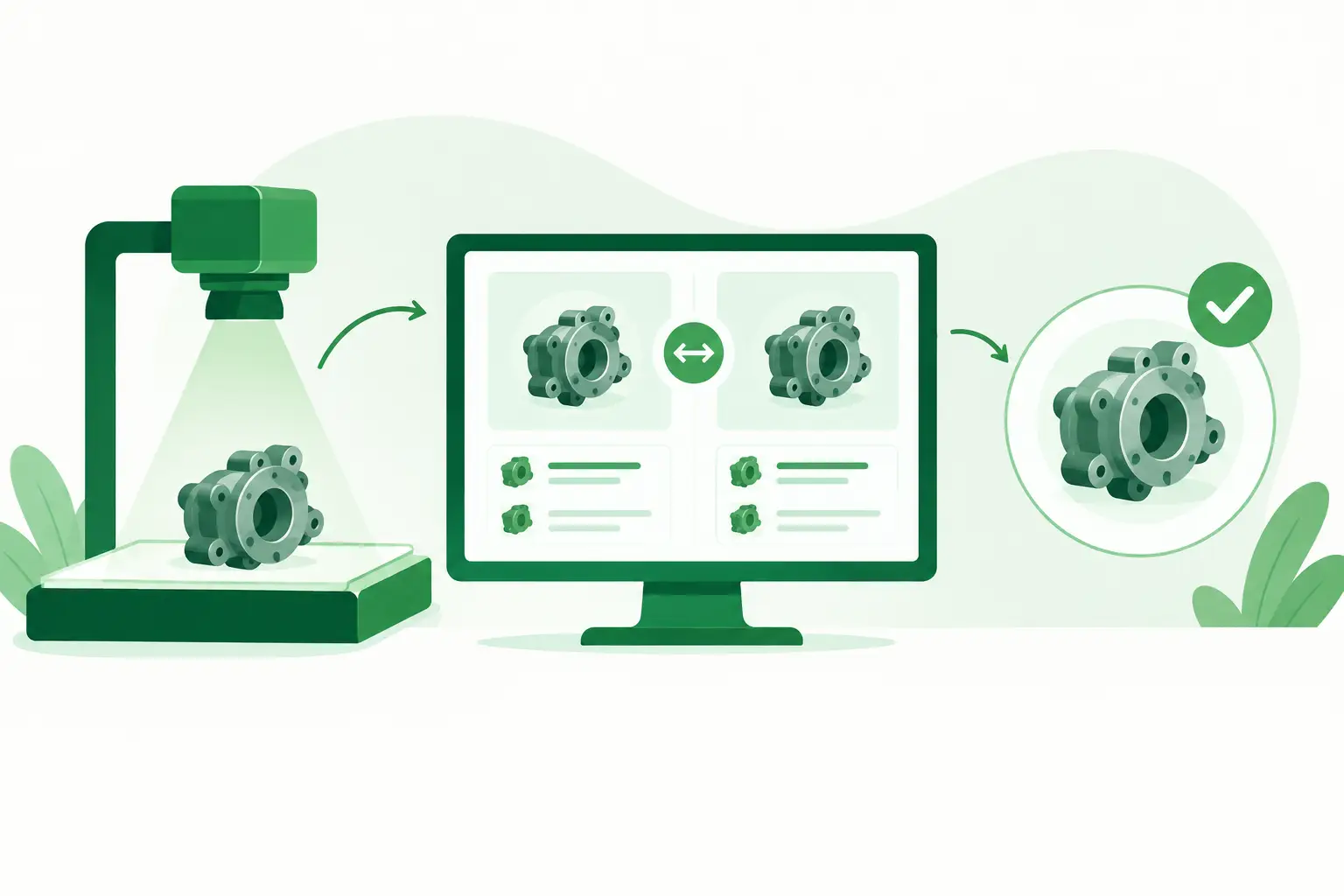
A disciplined request for quote prevents many avoidable errors. Start with the original part number and system details, then describe the fault observed. Artifacts, no-image conditions, communication errors, intermittent failures, and physical damage can point to very different replacement needs.
Before placing the order, confirm four items: the exact offered part number and revision, the unit’s condition category and repair history if rebuilt, the testing completed, and the warranty or return terms. Also establish whether calibration tools, software access, or field-engineer support will be required once the detector arrives.
Photos of identification labels, connector areas, and the removed assembly can help resolve uncertainty quickly. For difficult legacy parts, a specialist supplier with cross-referenced part-number records and access to global imaging-parts channels can often identify alternatives or locate the precise assembly faster than a general electronics distributor.
Meditegic supports this process by sourcing exact-match imaging components across major OEM environments, including GE Healthcare, Siemens Healthineers, Philips, Canon/Toshiba, Hologic, Fujifilm, and other current and legacy platforms.
Choose the Option That Fits the Failure Scenario
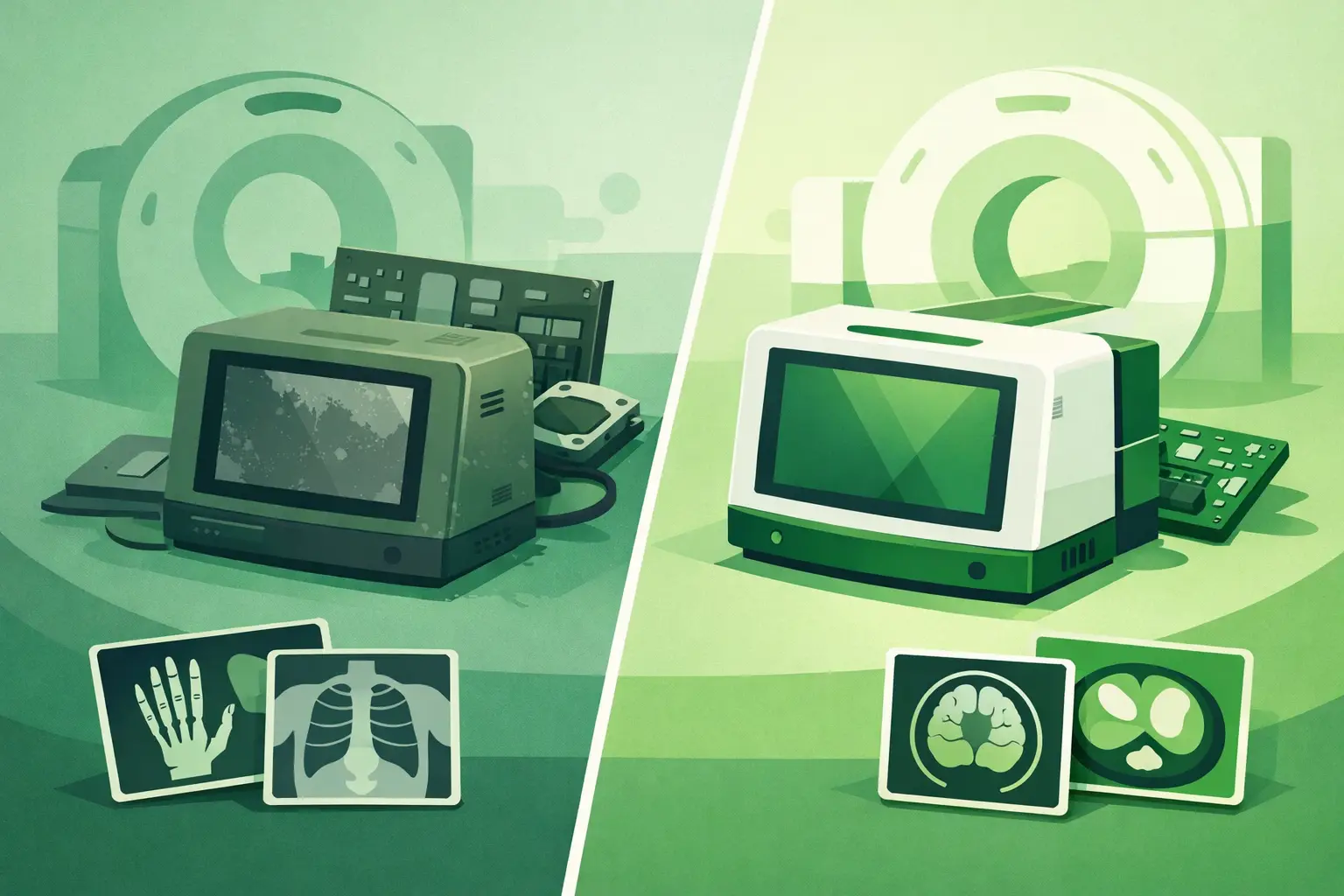
Used versus rebuilt detectors is not a contest between a bargain option and a premium option. It is a technical decision shaped by the installed system, the known failure, the available evidence, and the cost of keeping the room offline.
When an exact used OEM detector is available, tested appropriately, and can restore a legacy system quickly, it may be the most operationally sound choice. When a rebuilt unit has a clearly defined repair scope, meaningful verification, and a suitable lead time, it can be equally appropriate. The best procurement outcome is the one that gives the service team a compatible part, a clear condition record, and confidence to return the imaging system to service without creating the next downtime event.