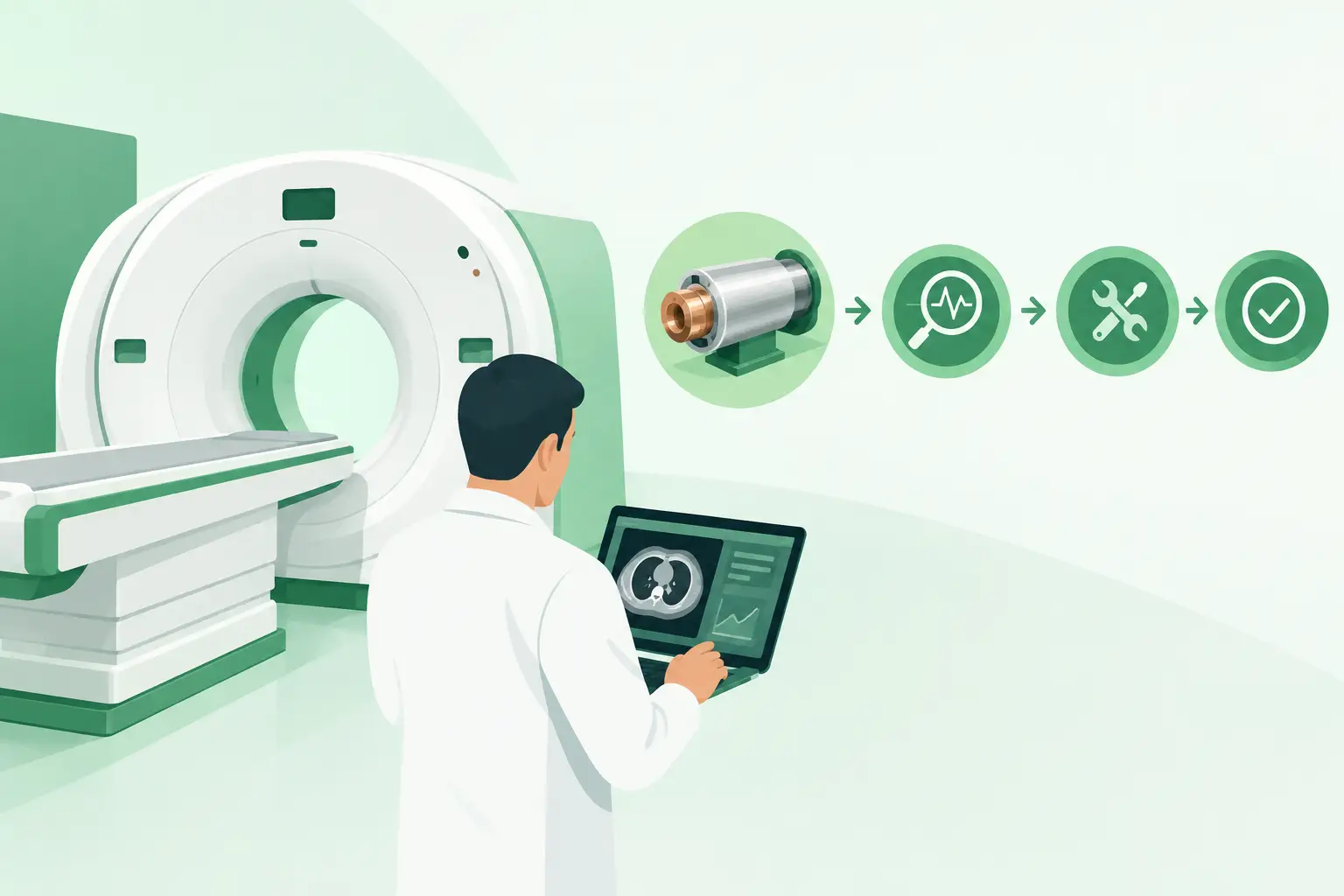
An X-ray room can go offline over one missing detail - a mismatched tube housing, an incomplete core return requirement, or a lead time that looked acceptable until patient volume backed up. That is why an xray tube procurement checklist matters. For hospital buyers, biomeds, and independent service teams, the goal is not simply to buy a tube. It is to restore imaging capacity with the right part, the right documentation, and the least operational risk.
Why an xray tube procurement checklist prevents expensive mistakes
X-ray tubes are high-value components with a narrow margin for error. A quote that looks competitive on unit price can become the most expensive option if the tube arrives without the required accessories, lacks traceability, or does not match the generator and system configuration already in the field.
Procurement teams also have to balance competing priorities. Clinical operations want uptime. Finance wants cost control. Service teams want an exact-match replacement that will not create installation delays or repeat failures. A practical checklist aligns those priorities before the purchase order is issued.
Start with exact equipment identification
The first procurement step is confirming the full equipment profile, not just the modality or OEM name. Tube sourcing often fails when buyers rely on a model family instead of the complete system identification. Variants within the same platform may use different tube assemblies, housings, connectors, or cooling requirements.
At a minimum, confirm the OEM, system model, serial number, current tube part number, and any alternate part numbers found on service records or prior invoices. If the existing label is damaged or unreadable, pull data from the service manual, installation records, or the site's asset management system. Good sourcing starts with part-number accuracy.
It also helps to document the reason for replacement. A planned changeout for end-of-life is different from a sudden failure after arcing, overheating, or image quality degradation. The failure mode can affect whether a new or refurbished option makes sense and whether related components should be reviewed at the same time.
Confirm compatibility beyond the tube itself
A tube can match on paper and still create problems in the field. That is why compatibility should be reviewed as a system issue, not a single-part issue.
Check the housing assembly, high-voltage cable interfaces, rotor and stator requirements, focal spot specifications, heat storage capacity, and anode characteristics. Confirm whether the replacement is a direct OEM tube, an approved equivalent, or a compatible refurbished unit. Each option may be valid, but the level of review should match the level of substitution.
For older systems, compatibility can be less straightforward. Legacy equipment may have had field modifications, prior retrofit kits, or undocumented substitutions over time. In those cases, service history is as important as the original equipment manual. Buyers who skip this step often save time at the quoting stage and lose it during installation.
Define condition requirements early
One of the most common delays in imaging parts procurement happens when stakeholders are not aligned on condition. Some sites require new only. Others will accept tested refurbished inventory when lead time, budget, or system age makes that the more practical option.
The right choice depends on clinical demand, remaining life of the system, capital planning, and risk tolerance. A high-throughput site with a critical room may prioritize a new tube with full documentation and a known warranty structure. A lower-volume facility or service organization supporting aging equipment may reasonably choose refurbished inventory if it is properly tested and supported.
This is where procurement should ask direct questions. Is the tube new, refurbished, or repair-exchange? Was it tested, and under what process? Is there traceability to serial number and performance verification? If the part is refurbished, what components were replaced or inspected? Clear answers reduce disputes later.
Review lead time the way operations experiences it
Quoted lead time is only useful if everyone defines it the same way. Some suppliers quote time to ship. Others quote time to readiness pending test completion, packaging, or export handling. For a department trying to restore patient capacity, those differences matter.
Ask for realistic availability status. Is the part physically in stock, allocated, or still being sourced? If it is an exchange transaction, does shipment depend on core approval? If the supplier expects delays related to documentation, testing, or freight scheduling, that should be visible before the order is placed.
For urgent replacements, confirm cut-off times, shipping method, packaging standards, and whether technical verification is completed before dispatch. Fast quoting helps, but fast fulfillment is what protects uptime.
Evaluate total cost, not purchase price alone
An xray tube procurement checklist should always include total landed cost. Tube purchases often involve freight, special crating, insurance, taxes, and core charges. Depending on the supplier and tube type, return logistics can materially change the real cost of the transaction.
Core terms deserve careful attention. What is the core value? How many days does the buyer have to return it? What condition makes the core acceptable or non-creditable? If the failed tube has catastrophic damage, does that affect reimbursement? These details can turn a seemingly low quote into a much higher final spend.
Downtime cost also belongs in the evaluation. If one source is cheaper but adds several days of delay, the financial difference may be minor compared with lost scans, patient rescheduling, and service labor inefficiency. For many imaging teams, the best value is the option that shortens downtime with acceptable risk.
Verify documentation and quality controls
Medical imaging buyers should expect documentation that supports technical confidence and purchasing accountability. That usually includes a formal quote with exact part identification, condition, warranty terms, and availability status. For many organizations, it should also include test information, serial number traceability where applicable, and packing details for sensitive components.
Quality review is especially important when sourcing hard-to-find or discontinued parts. Buyers should understand whether the supplier specializes in imaging components or treats the item as general surplus inventory. A specialized sourcing partner is more likely to recognize interchange issues, OEM naming inconsistencies, and system-level fit concerns before shipment.
If your organization has vendor qualification requirements, confirm them early. Waiting until the final approval stage to review compliance documents can add avoidable delay.
Clarify warranty, returns, and field support
Warranty language should be specific enough to be useful. Buyers should know the warranty period, what events are covered, what voids coverage, and whether installation requirements apply. Some suppliers require documented installation by qualified personnel. Others may limit remedies to replacement, repair, or credit.
Returns are equally important. A tube that is damaged in transit, found incompatible on arrival, or disputed during installation should have a clear process for resolution. Ask who authorizes returns, what evidence is required, and how quickly replacement inventory can be made available if the first shipment cannot be used.
For urgent imaging environments, responsive communication matters almost as much as inventory access. A supplier who can answer technical and order-status questions quickly reduces uncertainty across purchasing, service, and clinical teams.
Build the internal handoff before issuing the PO
Even accurate sourcing can stall if the internal handoff is weak. Before the order is placed, align procurement, biomed or field service, receiving, and accounts payable on what is being purchased and how it will move through the facility.
That means confirming delivery location, dock requirements, installation timing, and who will inspect the shipment on arrival. It also means documenting the agreed quote terms so finance does not hold payment over core charges, freight variances, or missing references. Good procurement is not finished when the order is sent. It is finished when the tube is installed, accepted, and the room is back online.
A practical xray tube procurement checklist
Use this checklist before approving a purchase:
- Confirm OEM, system model, serial number, current tube part number, and alternates
- Verify compatibility with housing, generator, cables, cooling, and focal spot requirements
- Define whether new, refurbished, or exchange inventory is acceptable
- Review testing, traceability, and documentation provided with the tube
- Confirm in-stock status, lead time definition, and shipping method
- Check warranty terms, return conditions, and installation requirements
- Review core charge, return window, and non-credit conditions
- Calculate total landed cost, not just quoted unit price
- Align internal teams on delivery, installation, receiving, and payment handling
For buyers managing multiple OEM environments or older systems, this checklist is less about process for its own sake and more about reducing repeat work. The right procurement workflow shortens downtime, limits surprises, and improves the odds that the first shipment is the last one you need.
When replacement imaging parts are difficult to source, speed matters, but accuracy matters more. A disciplined buying process gives both a fair chance.