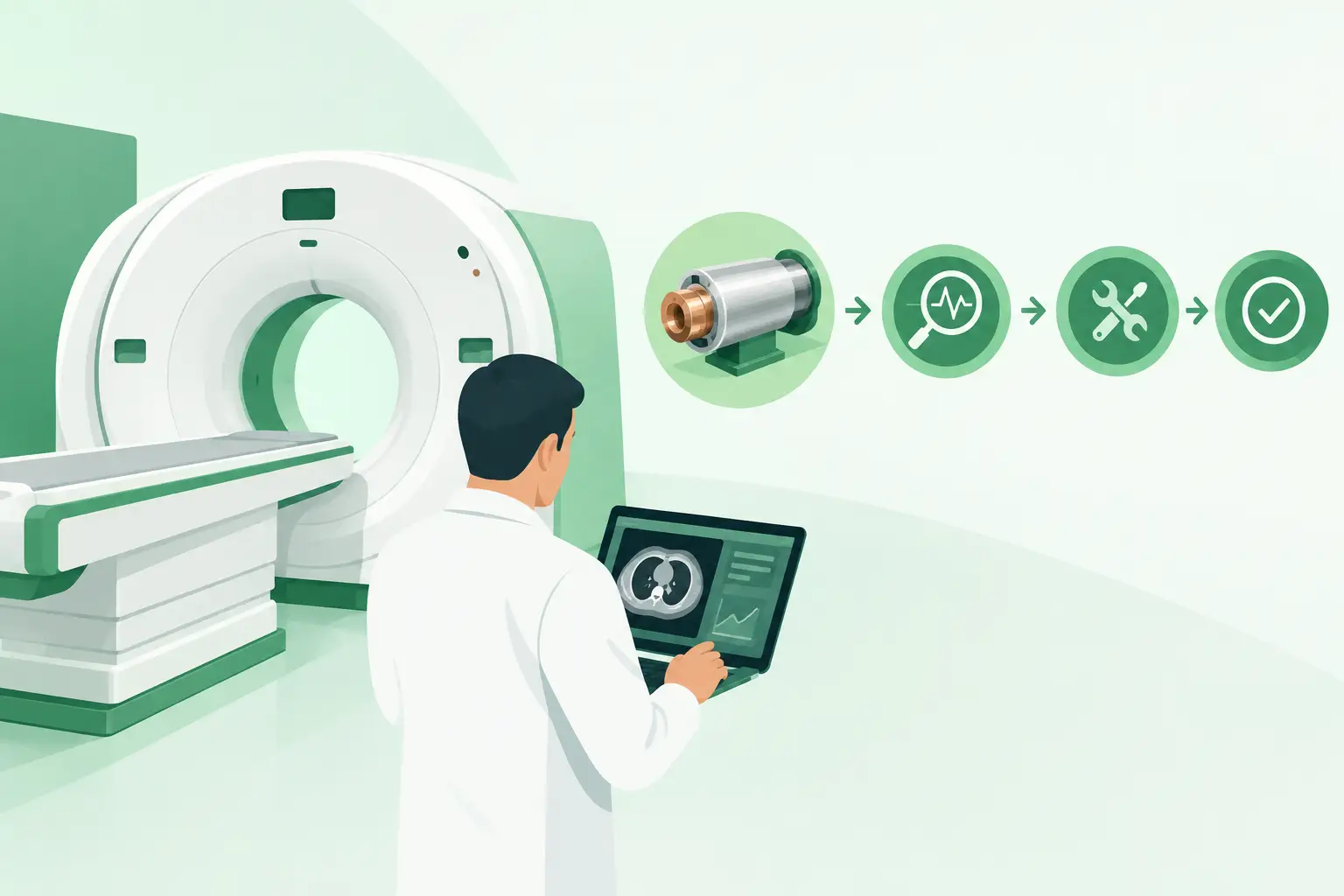
A CT table stops moving, an ultrasound probe fails its test, or a fluoroscopy system reports a high-voltage fault. In those moments, independent supplier vs manufacturer sourcing is not an abstract procurement decision. It determines whether the service team can identify, verify, and obtain the exact replacement part before a scheduled imaging day is lost.
For diagnostic imaging equipment, the right channel depends on the part, the system's age, the required revision, and the urgency of the repair. Manufacturer-direct sourcing can be appropriate for supported equipment and current production components. An independent imaging-parts supplier can be the more practical route when the required item is discontinued, used in a legacy platform, needed as an exchange, or unavailable through standard manufacturer channels.
Independent Supplier vs Manufacturer Sourcing for Imaging Parts
The manufacturer route provides a direct path to the original equipment source. For a current-generation system with active support, it may offer the clearest access to the current approved part number, formal service documentation, and manufacturer-specific commercial terms. This can be especially relevant when a component revision has changed and the repair requires confirmation of compatibility with a specific software, hardware, or system configuration.
The limitation is that manufacturer availability follows the supported life of the product line. A part may be listed as obsolete, have a long lead time, or be offered only through a broader service arrangement. That does not mean the imaging system has reached the end of its useful life. Many CT, MRI, X-ray, mammography, nuclear medicine, and ultrasound platforms remain clinically and commercially valuable long after particular assemblies are no longer easy to order from the original source.
Independent sourcing operates differently. A specialized supplier searches across available inventory, repair channels, surplus holdings, equipment deinstallations, and qualified global supplier relationships to locate an exact-match component. The value is not simply finding a lower price. It is access to parts that may no longer sit in a manufacturer distribution channel, including legacy PCBs, MRI RF coils, detector assemblies, image intensifiers, power supplies, collimators, tube housings, table components, and specific ultrasound transducers.
For uptime-driven buyers, the central question is not which channel is universally better. It is which channel can deliver a technically verified, serviceable part for the affected system within the required repair window.
Availability Is Often the Deciding Factor
Manufacturer sourcing is generally strongest when a part is still actively produced and readily allocated. It may also be the preferred route when the repair requires a newly issued revision that is only available through the manufacturer.
Independent suppliers are often strongest where availability is fragmented. A hard-to-find Siemens board, Philips detector component, GE Healthcare gantry part, Canon/Toshiba power module, Hologic mammography assembly, or Fujifilm X-ray component may exist in usable inventory even when it is no longer routinely stocked. The independent channel can also locate parts across regions, which matters when local support options are limited or a clinic cannot wait for a standard replenishment cycle.
This advantage is particularly significant for legacy imaging assets. A discontinued part number does not always have a direct substitute. Even a minor suffix change can affect connectors, firmware, mounting, calibration requirements, or communication with the rest of the system. The practical benefit of a specialist supplier is the ability to search for the precise OEM part number and revision rather than proposing a generic category match.
Exact Match Matters More Than Product Description
A request for an “MRI coil,” “flat panel,” or “X-ray generator board” is usually not enough to source accurately. Imaging components can look similar while being incompatible at the system level. A productive sourcing request should include the OEM and model, full part number and revision or dash number, serial number when relevant, the failed component's condition, and any interchangeability information already confirmed by the service team.
Fault details also help. A console board may be requested because of a communication error, but the actual issue could be a power supply, cable, or upstream control module. A specialized supplier cannot diagnose every field condition remotely, but accurate fault information helps prevent ordering a part that is technically correct on paper but unnecessary for the repair.
Lead Time Is More Than Shipping Time
A common mistake is to compare quoted delivery dates without separating sourcing time from transit time. A manufacturer may have a clear shipping estimate once an order is accepted, but the underlying availability can still be constrained by production schedules or allocation. An independent supplier may need time to confirm location, condition, and part-number accuracy, yet may locate an in-stock legacy part faster than the manufacturer route can respond.
For an imaging service organization, the useful measure is time to a usable replacement part. That includes identification, availability confirmation, technical verification, quote approval, any exchange or core-return requirements, packing, export documentation when applicable, and delivery to the repair location.
Urgent requirements benefit from a direct, complete request. Sending only a broad equipment description creates unnecessary back-and-forth. Sending the exact part number, system model, needed quantity, target delivery date, and whether used, refurbished, or select new surplus condition is acceptable gives the supplier a workable path to quote quickly.
Condition and Verification Should Be Explicit
The independent market includes parts in different conditions: used, refurbished, repaired, tested, and new surplus. These labels are not interchangeable, and buyers should ask what they mean for the specific item.
A used gantry component removed from a working system may be appropriate for a time-sensitive repair, but its history and functional status should be clear. A refurbished power supply or repaired board may involve component-level work and testing. A new surplus item may be unused but from an earlier production run, which makes storage history and revision control relevant. The appropriate choice depends on the component's function, the service team's validation process, and the clinical importance of the equipment being returned to operation.
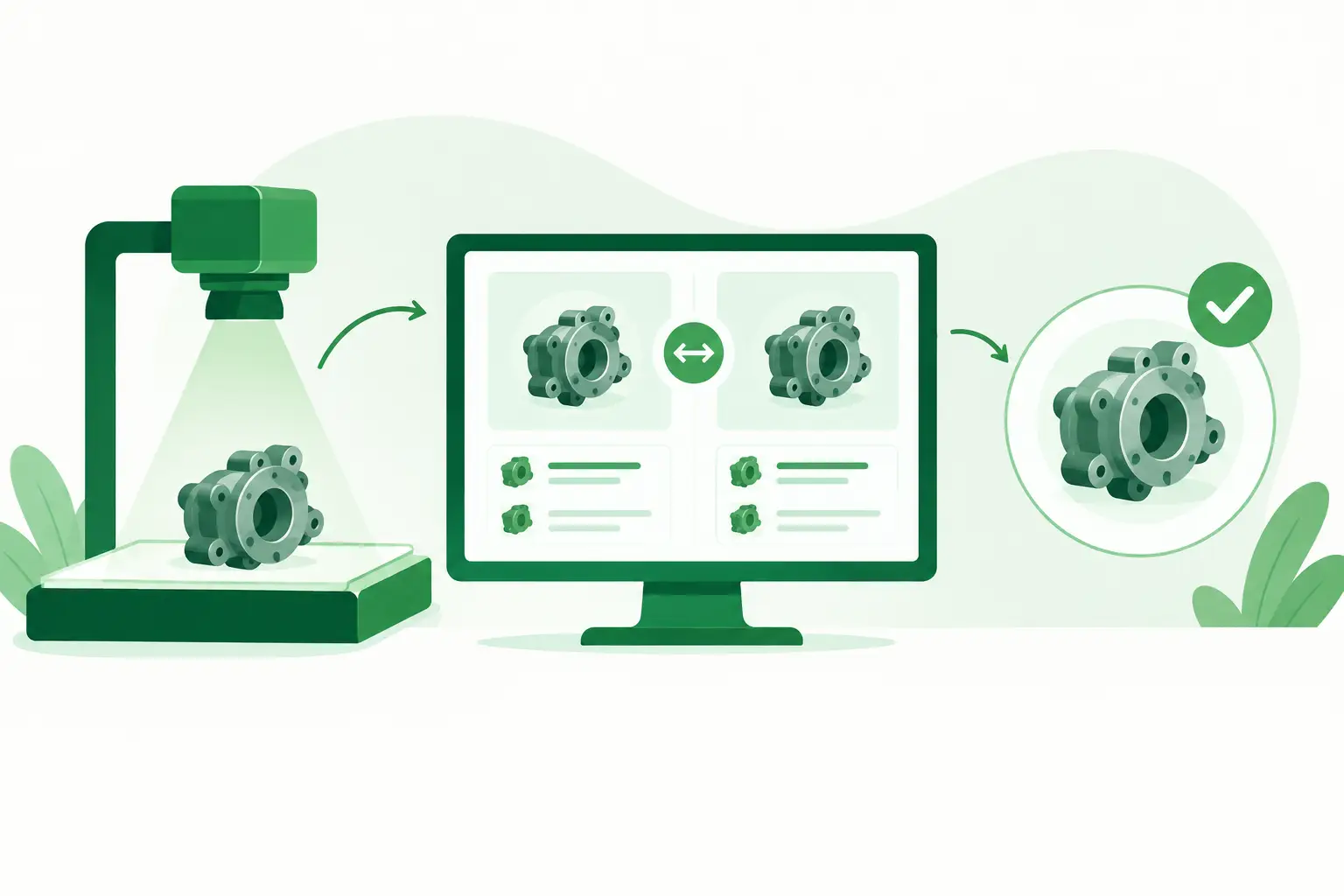
Manufacturer-direct parts are often assumed to remove all verification work. In practice, the receiving team still needs to verify the label, revision, shipping condition, and compatibility with the installed system. Independent sourcing requires the same discipline, with added attention to part-number cross-reference, condition description, test information when available, warranty terms, and return or exchange conditions.
For critical imaging components, no procurement channel replaces installation and post-installation testing by qualified technical personnel. The part must be validated within the system according to the equipment manufacturer's service procedures and the facility's technical controls.
The Commercial Trade-Off Is Total Downtime Cost
Unit price matters, but it is rarely the full cost of a sourcing decision. A lower-priced component that is incorrectly identified, poorly documented, or delayed can create repeat labor, additional freight, rescheduled patients, and extended equipment downtime. Conversely, a higher-priced part that is immediately available and accurately verified may be the lower-cost operational choice.
Manufacturer sourcing can be appropriate when contractual support, current production status, or a specific revision requirement outweighs other considerations. Independent sourcing can be appropriate when a service team needs access to a discontinued assembly, a hard-to-find part number, or a multi-brand source that can search beyond a single OEM channel.
There is also value in maintaining both options. Organizations that rely entirely on one channel can be exposed when a component becomes obsolete or a supply interruption occurs. A documented independent source gives biomedical departments and ISOs a second route for high-value systems without forcing them to abandon manufacturer support where it remains effective.
How to Choose the Right Route for a Specific Repair
Start with the system's support status and the exact component requirement. If the manufacturer confirms ready availability of the required revision and the repair timeline is acceptable, direct sourcing may be straightforward. If the part is discontinued, backordered, unavailable locally, or tied to a legacy platform, expand the search to a specialized independent supplier immediately.
Then assess the supplier's technical process. The right partner should work from the OEM part number, not only the equipment family. It should be able to distinguish a GE Healthcare CT component from a similar assembly used on another configuration, identify applicable revision details, explain the offered condition, and clarify exchange, warranty, and return terms before shipment.
Meditegic supports this type of search across diagnostic imaging modalities and major OEM environments, with part-number-level sourcing for difficult-to-find spares. That approach is designed for the practical reality of imaging maintenance: the required part is often specific, urgent, and not available through a standard catalog path.
When an imaging system is down, the best sourcing decision is the one that gives the service team confidence in the exact part, its condition, and its arrival timeline. Start with the full part number and system details, then choose the channel that restores dependable operation with the fewest unknowns.