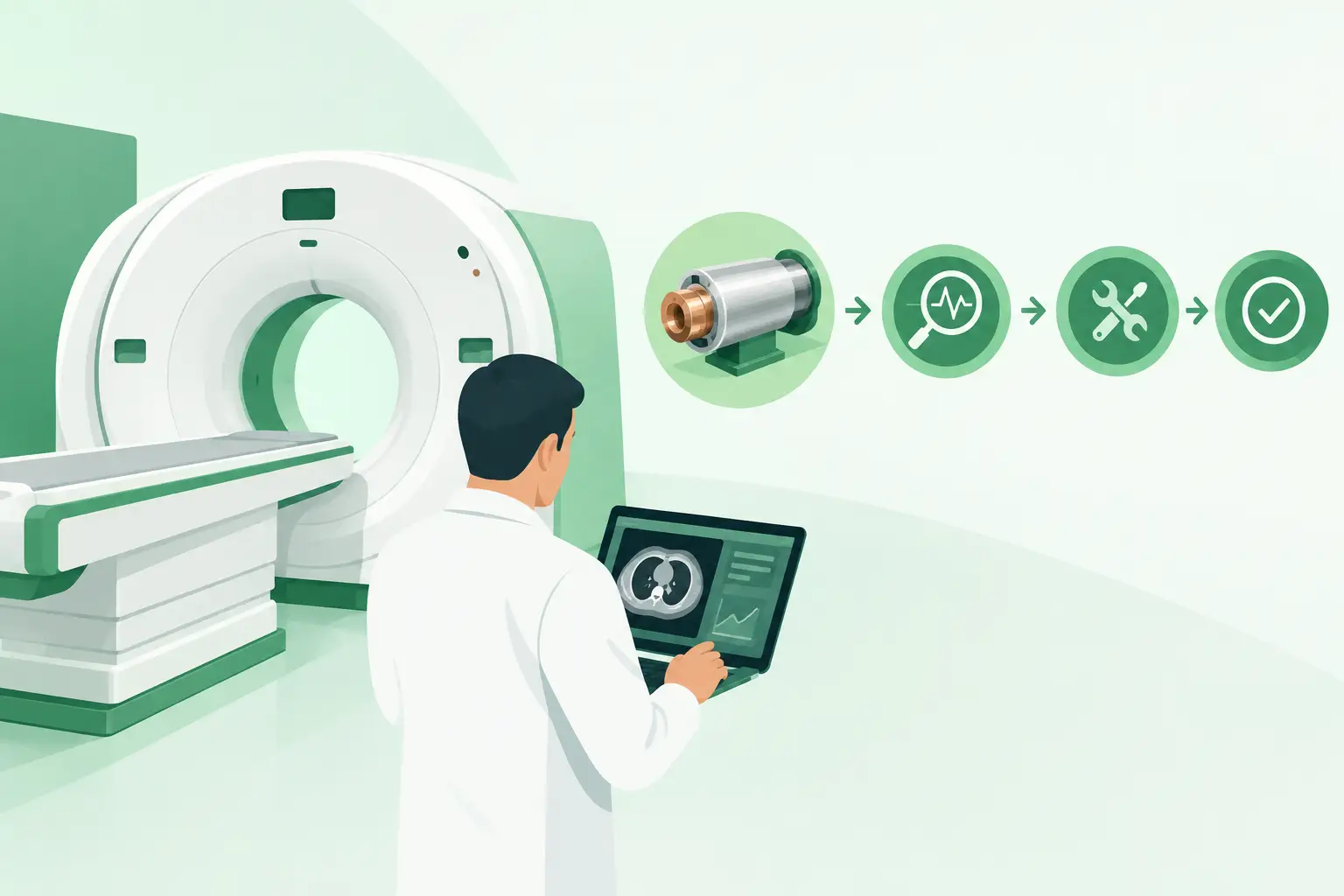
A failed board, detector component, table assembly, or cooling part can take a Siemens imaging system out of service long before the underlying repair becomes technically difficult. The decisive issue is usually sourcing the correct component quickly. Siemens imaging replacement parts must be matched at the part-number level, verified against the installed configuration, and evaluated for condition before they are introduced into a high-value imaging asset.
For clinical engineering teams, ISOs, refurbishers, and owner-operated imaging clinics, an exact match is more valuable than a broad catalog result. A similar-looking part may carry a different revision, connector arrangement, firmware dependency, or system compatibility restriction. That distinction can mean the difference between a controlled repair and additional downtime.
Why Siemens Part Identification Requires More Than a Model Name
Siemens Healthineers equipment spans generations of CT, MRI, PET/CT, nuclear medicine, C-arm, fluoroscopy, radiography, mammography, ultrasound, and bone densitometry platforms. Within a single product family, configurations can vary by software level, regional version, detector generation, table option, power architecture, or installed accessory package.
A system model is useful starting information, but it is not a complete sourcing specification. When requesting Siemens imaging replacement parts, the OEM part number from the failed component should lead the inquiry whenever possible. A clear label photo, serial number, and description of the system and fault condition give a sourcing specialist the information needed to cross-reference accurately.
This is especially relevant for assemblies that have been revised during the equipment lifecycle. A replacement controller board may physically fit its location but require a specific hardware revision. An MRI RF coil may be associated with a particular connector type or patient table arrangement. A CT cooling component may differ according to gantry generation or tube configuration. The more precise the identification, the less time is lost on unsuitable alternatives.
Common Siemens Imaging Replacement Parts by Modality
The parts most frequently needed are often the ones exposed to heat, motion, high voltage, repeated handling, or long operating hours. Their availability depends on the platform age and the supply chain for that specific assembly.
CT and PET/CT components
CT and PET/CT repairs commonly involve detector-related components, power supplies, high-voltage assemblies, gantry electronics, cooling equipment, table components, control boards, and workstation hardware. In these systems, compatibility checks should consider the exact scanner family, installed option set, and the relationship between replacement components and existing electronics.
Some parts are service-critical but difficult to identify from a general system manual. A board-level number, label image, or original packing reference can prevent a mismatch when several related assemblies exist.
MRI components
MRI parts sourcing may include RF coils, coil interfaces, gradient-related components, power supplies, patient table parts, cooling assemblies, electronics, console components, and control boards. MRI repairs require particular care because a component's physical condition is only one part of the decision. Connector integrity, cable condition, revision level, and compatibility with the installed system matter just as much.
For coils and related assemblies, buyers should provide the coil name, Siemens part number, connector photos, and any available system identifiers. If the failure concerns image quality rather than a confirmed component fault, documenting the observed artifact or error message can help isolate whether the requested part is likely to address the issue.
X-ray, fluoroscopy, and C-arm components
For general X-ray, mobile X-ray, fluoroscopy, and C-arm equipment, required spares can include image intensifiers, flat-panel detectors, collimators, generators, power supplies, tube housings, control panels, PCBs, cables, and mechanical table or stand components. These systems often remain in clinical service for years, which makes discontinued or end-of-life assemblies a practical sourcing challenge.
An image receptor or collimator must be confirmed beyond its broad equipment category. Mounting geometry, cable routing, detector interface, and software compatibility can all affect whether an assembly is usable in the target unit.
Ultrasound, mammography, and nuclear medicine components
Ultrasound repairs frequently center on transducers, probes, keyboards, monitor assemblies, power modules, boards, and console components. Probe selection should be driven by the exact probe model and part number, not only by the ultrasound platform name. Similar probes may differ in frequency range, connector design, clinical application, or compatibility.
Mammography and nuclear medicine systems may require detectors, collimators, acquisition electronics, power modules, motion components, workstation hardware, and specialized mechanical assemblies. These are areas where legacy platform knowledge and access to specialized suppliers can materially shorten the sourcing process.
What to Verify Before Ordering a Replacement Part
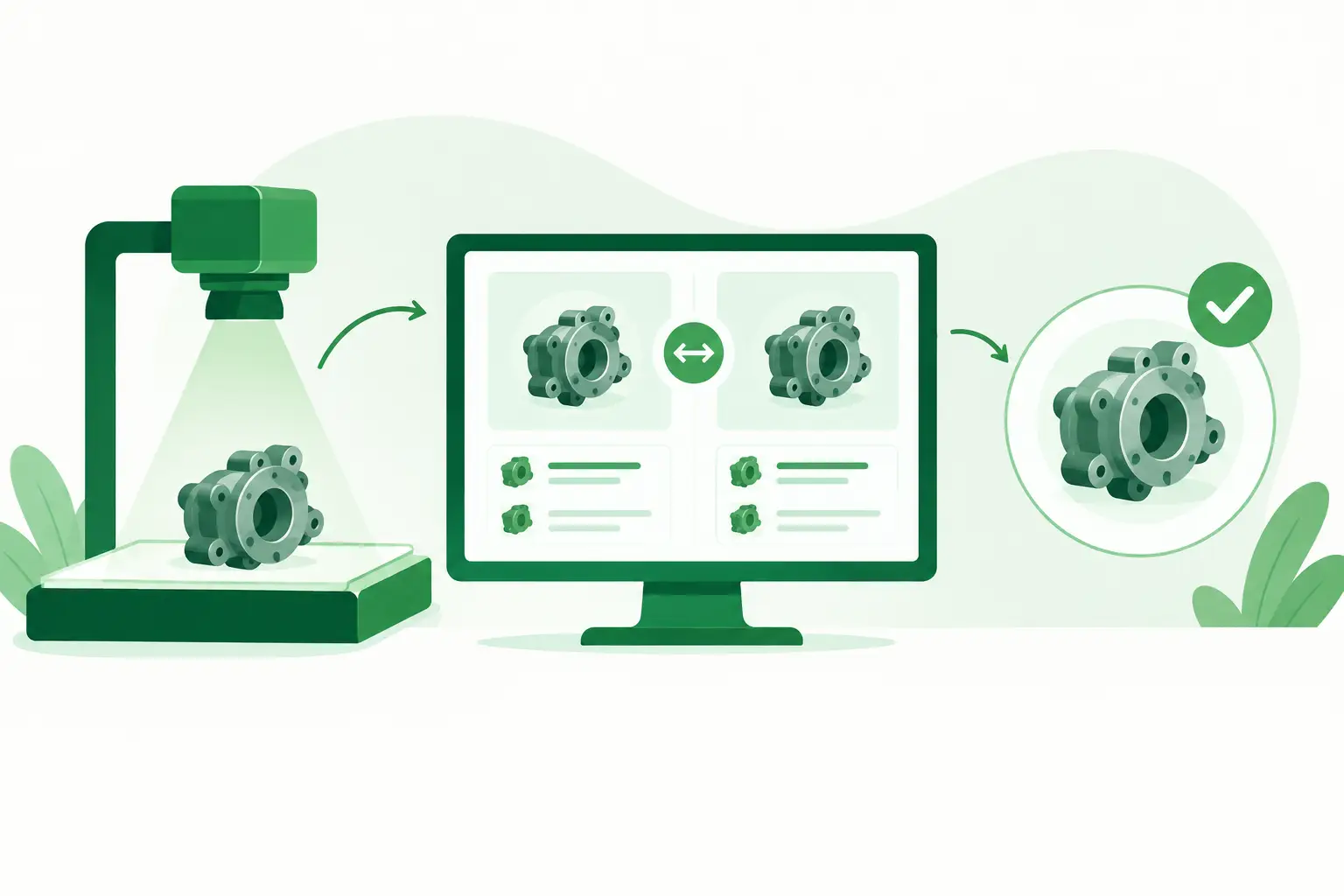
The right procurement process balances speed with enough technical validation to avoid a second failure event. Start with the part number, then verify whether a superseding number, revision, or compatible substitute exists. If a supplier proposes an alternative, ask what evidence supports the cross-reference.
Condition should be defined clearly. Used parts can be appropriate for many imaging repairs when they are accurately identified and assessed, particularly for legacy equipment where OEM availability is limited. Refurbished parts may be preferable when a component has known wear points or when inspection, repair, and functional testing add value. Select new spare parts can also be relevant for specific assemblies, but the requirement should be driven by the repair, not a generic preference.
Documentation matters as well. Request available information on the part's condition, testing status, included accessories, cosmetic or functional exceptions, and warranty terms. For a board or electronic assembly, ask whether it was removed from a working system, inspected, or tested. For a probe, detector, coil, or mechanical part, confirm the condition of cables, connectors, housings, latches, and interfaces.
Lead time should be discussed in operational terms. A quoted part that cannot ship for weeks may not solve an active downtime event. Conversely, an urgently available part is not useful if its compatibility has not been confirmed. The best sourcing path is the one that gives the service team a realistic delivery commitment and an exact-match component.
Information That Speeds Up a Siemens Parts Quote
A concise, technically complete request reduces back-and-forth. Include the Siemens system model, serial number if available, OEM part number, revision or version number, and clear photos of labels and connectors. Add a short description of the failure, error code, or repair objective. If the original component has been removed, photos of both sides and of the installation location can be useful for confirming an assembly.
For urgent repairs, state the required delivery date and destination at the beginning of the request. International freight, customs documentation, and packaging requirements can affect the final timeline, especially for sensitive electronics, large mechanical assemblies, or components requiring protective handling.
Meditegic supports this process by sourcing at the part-number level across Siemens and other major imaging OEM environments. That approach is designed for cases where a standard distributor cannot locate a discontinued board, a specific detector assembly, an RF coil, or another exact replacement needed to return equipment to service.
When a Substitute May Be Acceptable
A substitute can be reasonable when it is a documented OEM supersession or a verified compatible revision. It may also be appropriate when the repair team has confirmed interchangeability through service documentation and system configuration records. In those cases, a replacement can solve an availability problem without compromising the repair plan.
A substitute is not appropriate simply because it comes from the same imaging platform family. Avoid relying on visual similarity, broad model descriptions, or assumptions based on connector shape. Imaging systems are tightly integrated, and the cost of an incorrect part includes lost technician time, delayed patient scheduling, return freight, and continued equipment downtime.
For legacy Siemens systems, the strongest option is often a supplier that can search beyond current OEM channels while still maintaining disciplined part-number verification. That is how hard-to-find parts become manageable procurement tasks rather than open-ended searches.
When a Siemens system is down, send the component label, system details, and fault information together. A precise request gives the sourcing process the best chance of producing a part that arrives ready for the repair at hand.