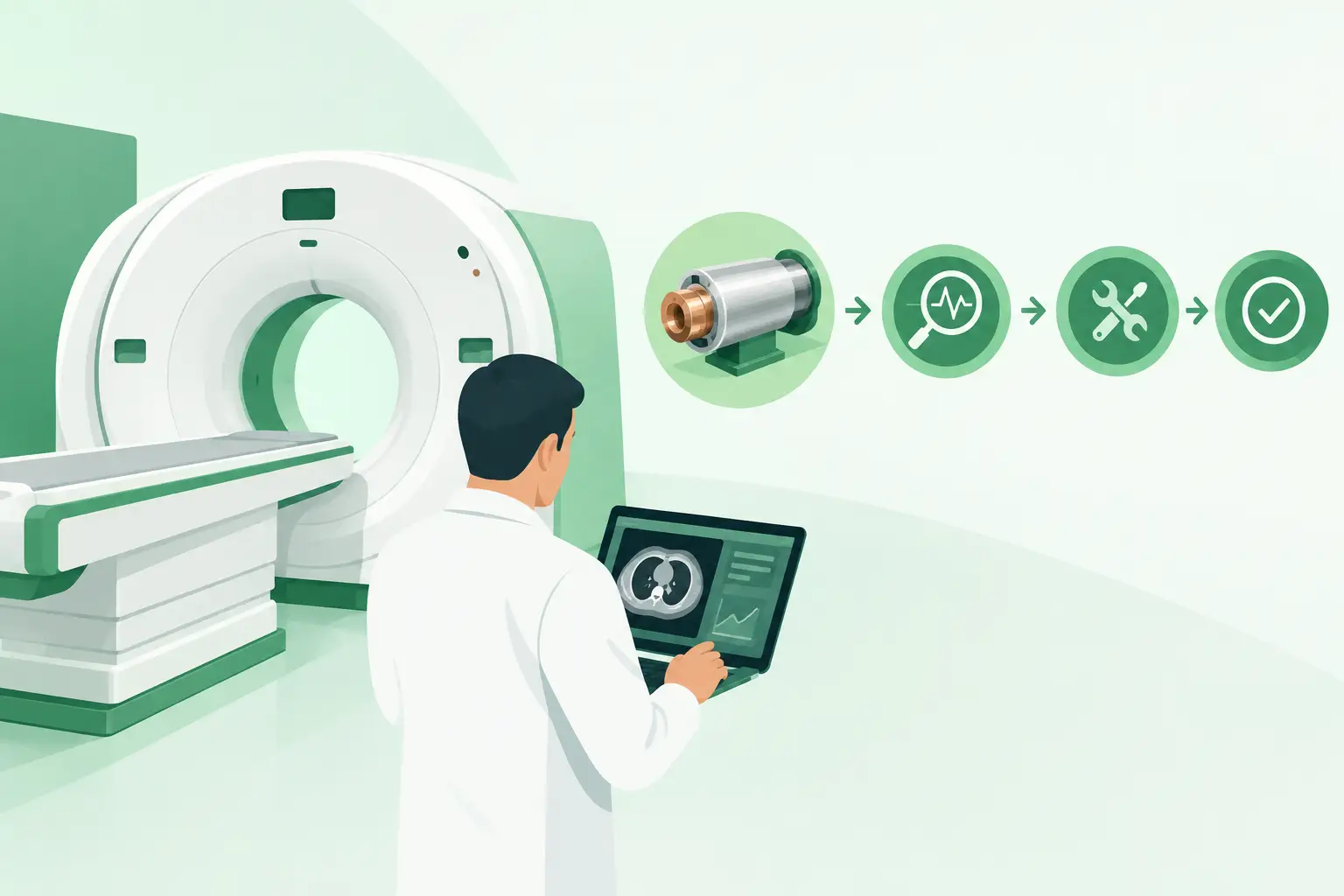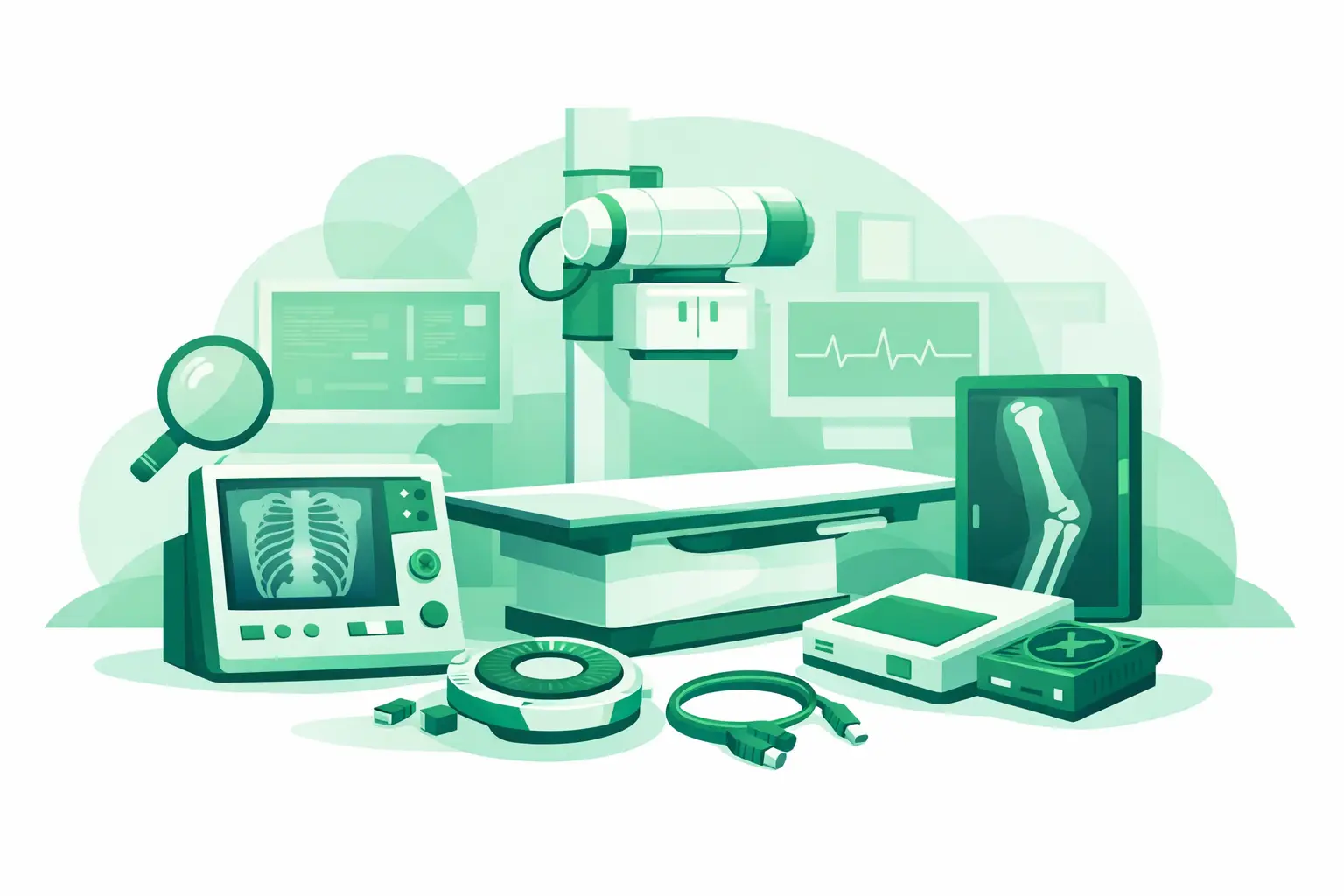
A down X-ray room rarely creates a simple purchasing task. A detector fault, high-voltage issue, collimator failure, or workstation board problem can stop patient throughput while the service team works through incomplete records, legacy revisions, and conflicting part references. The right x-ray machine parts decision begins before a quote is requested: confirm exactly what failed, what system configuration is installed, and what replacement will integrate without creating a second service event.
For biomedical departments, independent service organizations, and imaging equipment refurbishers, the objective is not simply finding a component with a familiar name. It is obtaining an exact-match replacement that restores safe, reliable operation with the least possible interruption.
Why Exact Identification Matters for X-Ray Machine Parts
General and portable X-ray systems contain components that can look interchangeable while differing materially by OEM, model family, generator configuration, software revision, mechanical mounting, or regional variant. A flat-panel detector may share dimensions with another panel but use a different interface, calibration file, or acquisition workstation configuration. A collimator can appear identical while having a different connector, lamp assembly, filtration arrangement, or mounting pattern.
Part-number-level identification reduces these risks. The OEM part number is usually the most useful starting point, but it should be reviewed alongside the system model, serial number, and the failed component's labels. In legacy equipment, a superseded part number may be valid only for a particular revision or require an associated cable, bracket, firmware level, or control-board update.
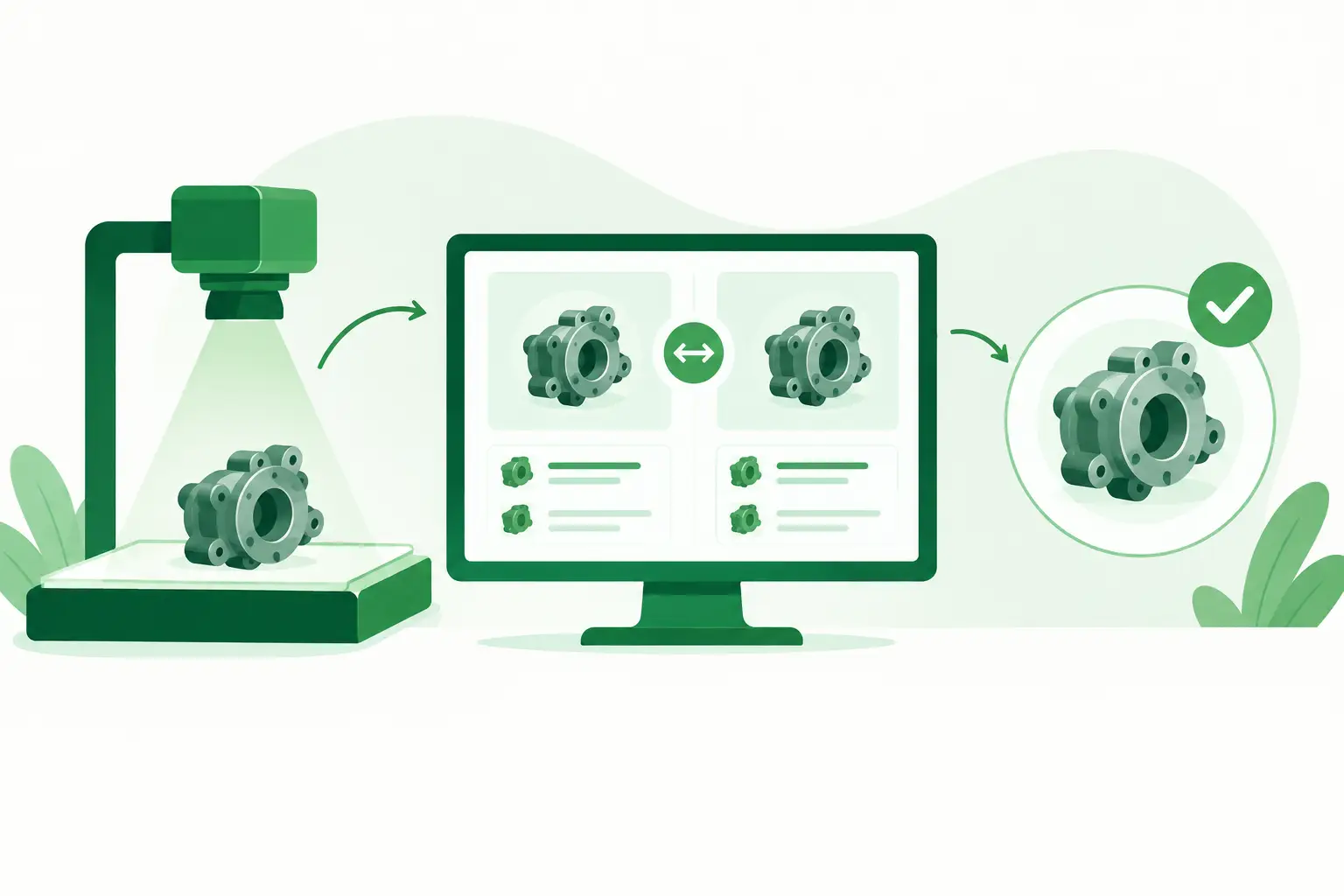
A useful request does more than state "need X-ray tube" or "need detector." It identifies the manufacturer, system model, OEM part number, serial number when relevant, symptoms, photographs of labels and connectors, and whether the old part is available for comparison or exchange. This information lets a specialist distinguish between a true replacement and a similar-looking item that will not solve the fault.
The Components Most Likely to Affect Uptime
The failed item is not always the part that first receives attention. A tube exposure fault, for example, may originate in the X-ray tube, tube housing, high-voltage tank, generator power supply, cable assembly, filament circuit, control board, or a safety interlock. Effective troubleshooting should narrow the fault before sourcing begins, especially where high-value components are involved.
X-Ray Tubes and Tube Housings
The tube assembly is central to image production and one of the most consequential replacement decisions in a radiographic system. Compatibility depends on focal spot specifications, anode heat capacity, rotor characteristics, filament requirements, housing design, cooling configuration, high-voltage cable connections, and generator compatibility. A tube or housing issue also warrants inspection of related high-voltage components and cooling systems. Replacing the tube without resolving an underlying generator or thermal problem can shorten the life of the replacement.
Detectors, Flat Panels, and Image Intensifiers
Digital radiography detectors and flat panels require careful matching. Beyond the panel part number, confirm detector size, scintillator type, wireless or tethered configuration, connector type, battery system where applicable, calibration requirements, and compatibility with the acquisition software. Portable DR panels add mechanical wear, drop damage, and charging-related failure modes to the evaluation.
Older fluoroscopy and mobile C-arm applications may rely on image intensifiers rather than flat-panel technology. Here, compatibility includes input-field size, output coupling, optical interfaces, power connections, and the system's image-processing chain. A replacement that fits mechanically is not necessarily compatible electronically or optically.
Generators, High-Voltage Components, and Power Supplies
High-voltage tanks, generator modules, power supplies, PCBs, and control boards are often difficult to source because revisions may be tied to a specific system generation. Board-level components should be identified from the label on the board itself, not only from an equipment manual or a generic assembly description. Manufacturers may use multiple board revisions within a single product line.
When a board is suspected, document fault codes, indicator lights, measured voltages where safe and appropriate, and the behavior observed during startup or exposure preparation. This supports better diagnosis and helps prevent unnecessary replacement of a hard-to-find module.
Collimators, Tables, and Mechanical Assemblies
Mechanical parts can create downtime just as effectively as electronic failures. Collimators, table bucky components, tube stand assemblies, locks, cables, bearings, and position sensors must match the installed system's geometry and electrical interfaces. Wear items may have multiple OEM revisions, particularly on older radiographic rooms that have been serviced over many years.
Before ordering, confirm whether the required item is the complete assembly or a serviceable subcomponent. A failed collimator lamp, shutter motor, cable, or limit switch may not require a full collimator replacement. Conversely, repeated adjustment problems or damaged mounting points may make an assembly-level replacement more practical.
What to Verify Before Requesting a Quote
A precise sourcing request shortens the time between failure confirmation and shipment. It also gives the supplier the information needed to locate inventory across OEM environments and validate alternatives when the original part is discontinued.
At a minimum, provide the OEM manufacturer, modality and system model, complete OEM part number, any revision suffix, and clear photos of labels, connectors, and the failed item. Include the system serial number when the component may be configuration-dependent. For software-sensitive electronics and detectors, record the workstation or generator version and any error codes.
Condition requirements should be equally clear. Used and refurbished parts can be appropriate for many imaging service situations, provided the condition, testing scope, warranty terms, and return process align with the repair plan. The correct choice depends on the part type, its role in system performance, the available service capability, and the facility's tolerance for downtime. A low-cost component that cannot be verified or supported can become expensive if it delays restoration.
It also helps to state the urgency plainly. A system that is completely out of service requires a different sourcing approach than a component being acquired for planned maintenance or an upcoming refurbishment. If an exchange core is available, identify that early, including its exact part number and condition. This can affect availability, pricing, and logistics.
Sourcing Legacy and Discontinued Components
Legacy X-ray equipment remains clinically valuable when it is maintained with correct parts and knowledgeable service support. The challenge is that OEM channels may no longer stock certain assemblies, while aftermarket listings can be outdated, mislabeled, or limited to a different revision.
This is where a specialist supplier adds practical value. Meditegic sources used, refurbished, and select new imaging spares through a global network, with part-number-level cross-referencing across major OEM platforms including GE Healthcare, Siemens Healthineers, Philips, Canon/Toshiba, Fujifilm, Shimadzu, Carestream, and other current and legacy brands.
For rare items, the sourcing process should include more than locating a listing. The supplier should validate the part number, condition, revision, connector arrangement, and any known compatibility constraints before it is released. Ask whether the component has been tested, what testing was performed, and whether the supplier has identified an OEM supersession or cross-reference. If the part is not immediately available, a capable sourcing partner can search beyond its local stock rather than treating the first unavailable response as the end of the process.
International logistics may also matter for service teams operating outside major equipment-support markets. Packaging requirements, customs documentation, transit time, and return handling deserve attention for fragile components such as detectors, image intensifiers, and high-value electronic assemblies. Fast shipment is useful only when the component arrives protected, correctly documented, and ready for verification.
Installation Is Part of the Procurement Decision
Securing the part is not the same as completing the repair. Before the replacement arrives, confirm who will install it, what lifting equipment or calibration tools are required, whether software setup is needed, and what safety checks must be completed before clinical use. High-voltage and radiation-producing components require qualified personnel and manufacturer-appropriate service procedures.
For detectors and image-chain components, plan for calibration, image-quality verification, and integration with the acquisition workstation. For tubes, generators, and collimators, the return-to-service process may include alignment, exposure checks, safety interlock testing, and image evaluation. Documenting the original fault and post-installation results also improves future troubleshooting when the same system develops a related issue.
The most effective X-ray parts procurement is therefore a technical handoff, not a catalog transaction. When the diagnosis, part number, revision, condition requirement, and installation plan are all clear, the replacement part becomes a controlled step toward restoring the room - and keeping patient imaging schedules moving.