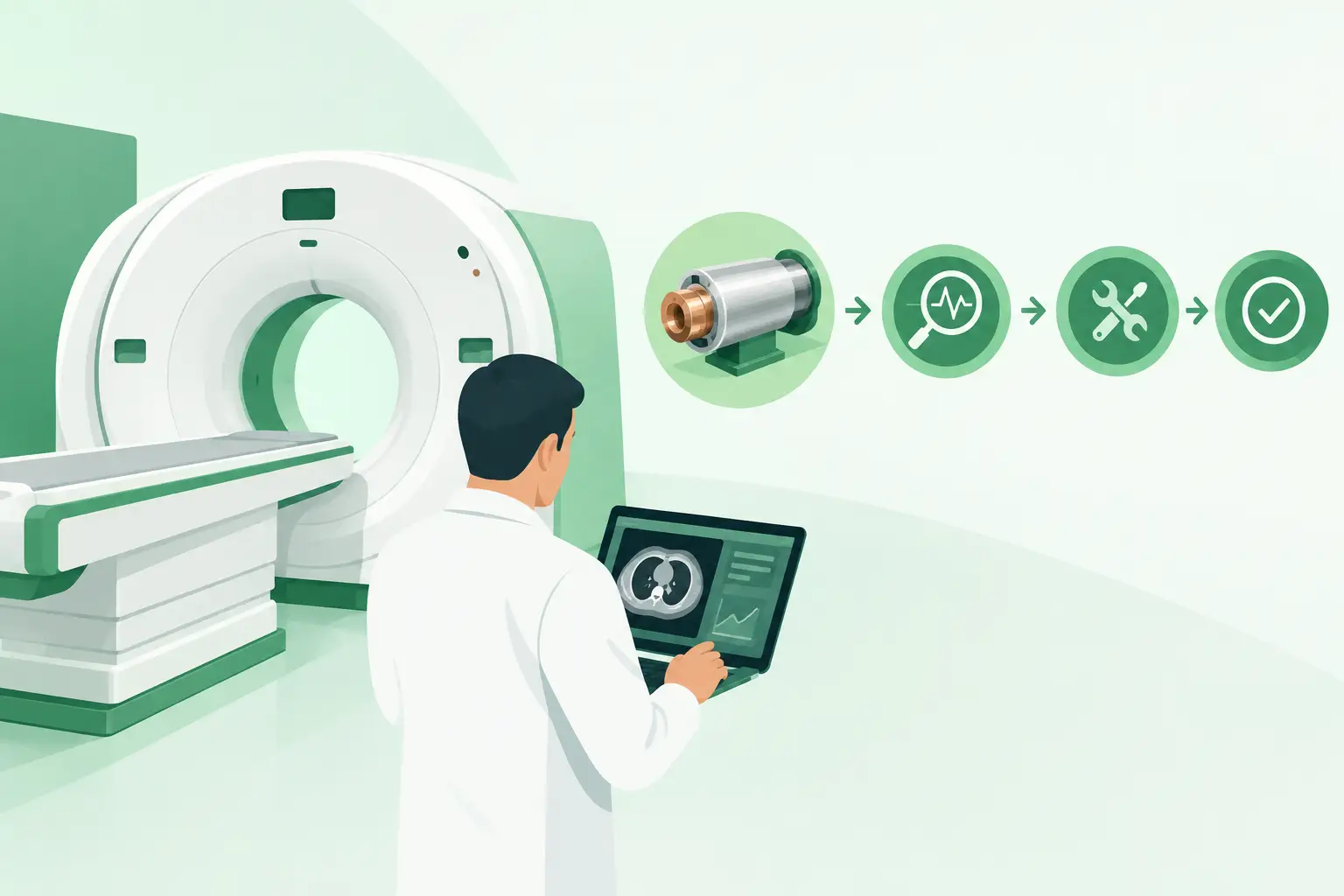
A failed component in an angiography suite is rarely a minor inconvenience. When a detector will not initialize, a table will not position, or the generator faults during startup, the issue can stop scheduled procedures and put immediate pressure on clinical engineering and service teams. Securing the right angiography machine parts is therefore not simply a purchasing task. It is a compatibility, condition, and turnaround decision that directly affects equipment uptime.
Angiography systems combine high-output X-ray generation, advanced image acquisition, patient positioning, cooling, motion control, and software-driven system control. A replacement part must match the installed configuration, not merely the imaging system family. OEM part numbers, revision levels, subsystem interfaces, and serial-number applicability all matter.
What Counts as an Angiography Machine Part?
Angiography equipment may be a fixed interventional system, a cardiovascular imaging platform, or a mobile C-arm used in vascular procedures. While architectures vary by OEM and generation, the systems depend on several interrelated assemblies. A fault reported as a “system down” event can originate in a single board, cable, sensor, fan, power module, or mechanical component.
The X-ray chain is often the first area considered. Depending on the system, this can include the X-ray tube assembly, tube housing, high-voltage tank, high-voltage cables, generator modules, collimator assemblies, and cooling components. These parts operate under demanding electrical and thermal conditions. A compatible replacement has to satisfy the system’s mechanical fitment and electrical requirements, while also matching the OEM’s applicable part number and revision.
The image acquisition chain is equally critical. Common requirements include flat-panel detectors, detector control electronics, image intensifiers on legacy systems, digital acquisition boards, interface modules, and fiber or high-speed data cables. Detector-related faults require careful diagnosis because a communication issue, power-supply fault, or control board failure can present similarly to a failed detector.
Motion and patient-support assemblies introduce another set of high-value parts. Table controls, tabletop components, table drive modules, position encoders, brakes, bearings, gantry assemblies, locks, and footswitches all affect system availability. For interventional imaging, a table that cannot move to the required position can be just as operationally disruptive as an X-ray fault.
Finally, the system’s electronics and operator infrastructure include PCBs, power supplies, console computers, monitors, control panels, keyboard modules, network interfaces, and workstation components. Legacy platforms are especially vulnerable when a specific board or computer component is no longer supported through conventional OEM channels.
Why Exact Part Numbers Matter in Angiography Systems
An angiography platform may have multiple configurations under one product name. The same-looking generator board can carry different firmware, connector layouts, or voltage specifications. A detector interface module may be compatible with one detector generation but not another. Ordering by system model alone creates avoidable risk.
For technical buyers, the best starting point is the OEM part number from the removed component, service documentation, or system parts list. When available, capture the component description, revision number, serial number, system model, and fault condition. Photos of labels and connectors can help resolve discrepancies, particularly for older or superseded components.
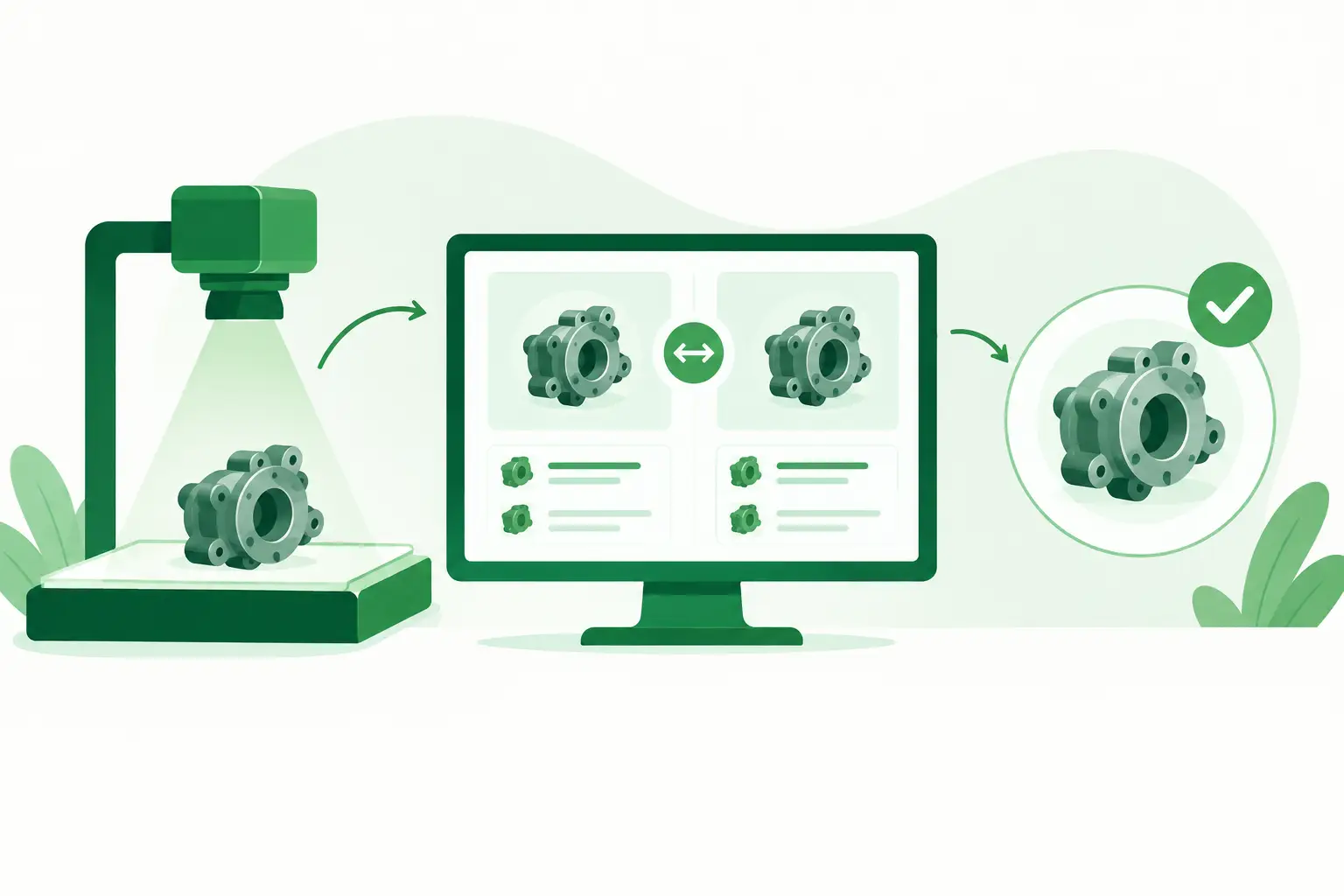
Cross-referencing is useful, but it should not replace verification. OEMs may supersede a part number, group several revisions under one assembly, or require an associated cable, calibration file, or software configuration. A part can be physically identical yet unsuitable for a particular installation. This is where a specialist imaging-parts supplier adds value: confirming the requested component at the part-number level before shipment.
There is also a practical distinction between replacing a known failed part and troubleshooting a suspected failure. If the diagnosis remains uncertain, a buyer should share error codes, service findings, and recent system behavior with the service provider or technical team. Replacing an expensive detector or generator module without isolating the root cause can extend downtime rather than reduce it.
The Parts Most Likely to Affect System Availability
Not every component has the same procurement profile. Small, commonly used items may be readily available, while large imaging assemblies and legacy control electronics can require specialized sourcing. The highest-impact requirements generally fall into four categories:
- X-ray generation components, including tube assemblies, high-voltage tanks, generator boards, power modules, collimators, and cooling hardware.
- Image chain components, such as flat-panel detectors, image intensifiers, detector power supplies, acquisition boards, and digital imaging interfaces.
- Motion and table components, including drive motors, brakes, encoders, tabletop parts, position sensors, and control modules.
- System control electronics, including PCBs, console computers, monitor assemblies, communication boards, and proprietary cables.
The trade-off is clear. A lower-cost substitute with incomplete compatibility information may appear attractive, but the savings can disappear if it causes installation delays, repeat troubleshooting, or another service interruption. For critical imaging assets, documented identification and realistic condition reporting are often more valuable than a generic description and a quick price.
Used, Refurbished, and New-Old-Stock: Choosing the Right Condition
The appropriate condition depends on the part type, urgency, system age, and maintenance strategy. Used parts can be an effective option for discontinued electronics, mechanical assemblies, and components removed from compatible systems. Their value depends on traceability, inspection, and whether their condition aligns with the application.
Refurbished parts may be preferable when the component can be meaningfully tested, repaired, or restored before sale. This is especially relevant for certain boards, power supplies, controls, and mechanical assemblies. However, “refurbished” should have a specific meaning. Buyers should understand what was evaluated or repaired, whether functional testing was performed, and whether any core exchange is involved.
Select new-old-stock components can be valuable when an exact, unused legacy part is needed. Availability is typically limited, and storage history matters for age-sensitive electronics or items with seals, capacitors, or other materials that may degrade over time. The right choice is not always the newest-looking part. It is the part with the strongest fit for the system and the repair plan.
For all conditions, installation, calibration, safety checks, and return-to-service procedures should be handled by qualified personnel following the applicable OEM documentation and facility requirements. A correctly sourced part still needs a correct installation.
A Faster Sourcing Process for Difficult Parts
When an angiography system is down, fragmented inquiries to general electronics vendors can consume the time needed for the actual repair. A more efficient request gives a specialist supplier enough information to identify viable inventory quickly.
Start with the exact OEM part number and any revision suffix. Add the system manufacturer and model, a clear description of the part, the reason for replacement, and the desired condition if it is known. If the removed component is available, include label photos and connector images. For assemblies such as detectors, generators, tables, and console modules, the system serial number may be necessary to validate applicability.
This information lets the supplier check both direct stock and broader sourcing channels. It also reduces the chance of receiving an alternate that is technically related but not installation-ready. For rare GE Healthcare, Siemens Healthineers, Philips, Canon/Toshiba, or Shimadzu angiography components, global inventory access can be particularly important when local channels have been exhausted.
Meditegic supports this process by sourcing imaging spare parts across OEMs and modalities at the part-number level, including hard-to-find components for active and legacy platforms. The objective is not to offer a broad catalog of generic supplies. It is to locate the exact component needed to return a high-value imaging asset to service.
Questions to Settle Before You Approve a Part
A quote should help the buyer make a technical decision, not just compare a line-item price. Confirm whether the part number and revision match the removed component or documented substitute. Ask about condition, available testing information, warranty terms, lead time, shipping readiness, and return procedures. If a core return applies, clarify the required condition and deadline before arranging the replacement.
For electronic modules, also determine whether the installation requires software loading, calibration, configuration, or pairing with another component. Some parts are operational immediately after installation; others require service tools or OEM-specific procedures. Treating those steps as an afterthought can create unexpected downtime.
For large or delicate assemblies such as detectors, X-ray components, and table hardware, packaging and transit handling deserve attention. Specialized imaging parts can be damaged by poor crating, inadequate shock protection, or improper environmental controls. A fast dispatch is only useful if the part arrives in condition to be installed.
The most productive sourcing request is specific, evidence-based, and tied to the repair plan. When the part number, revision, system configuration, and required turnaround are clear, a difficult angiography repair becomes far more manageable - and the path back to scheduled procedures gets shorter.