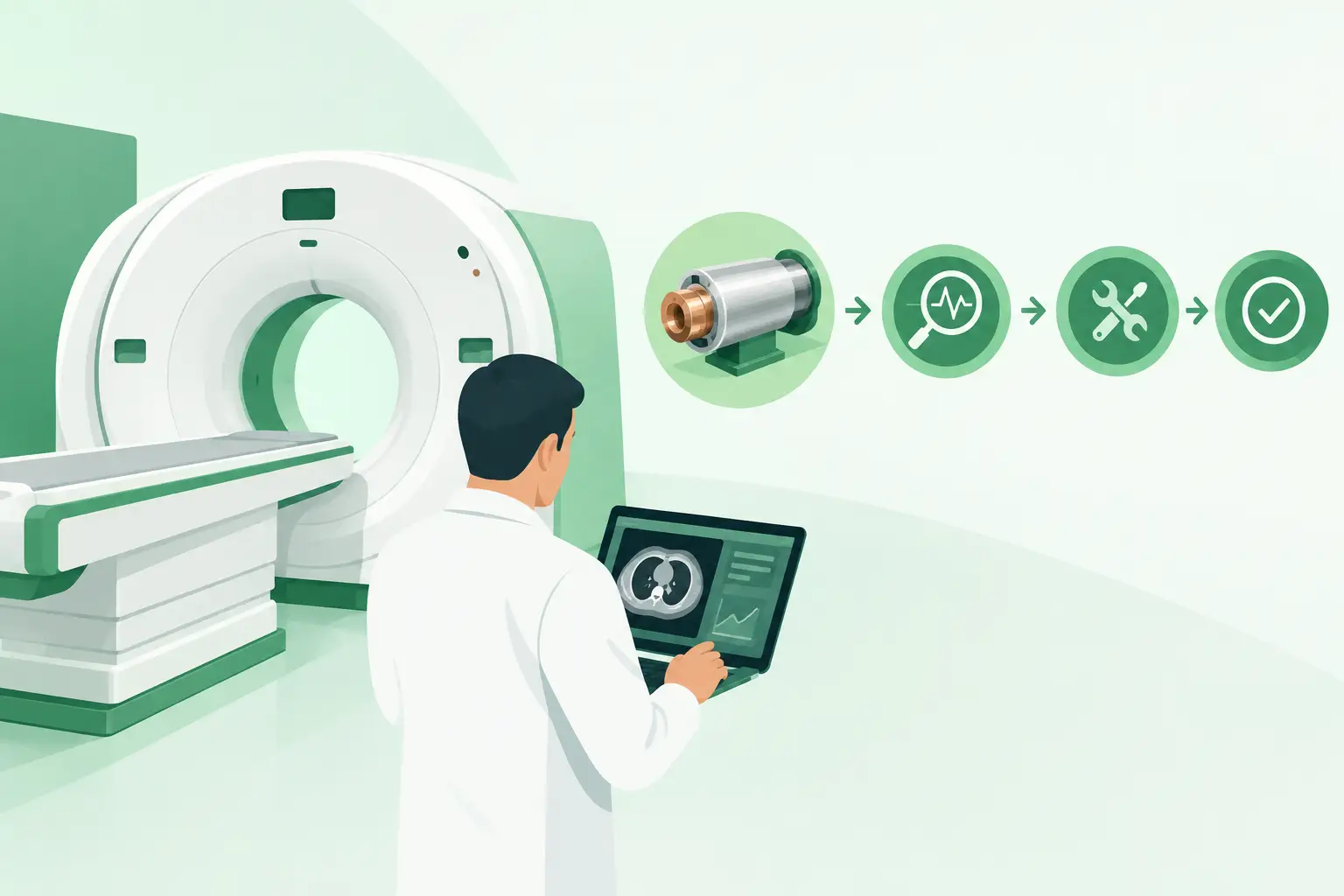
A failed detector board, RF coil, high-voltage tank, or ultrasound probe creates a procurement decision that cannot wait for a routine purchasing cycle. The choice between an independent supplier versus OEM imaging parts affects more than the purchase price: it determines whether the replacement is available, correctly identified, supportable, and delivered in time to return a CT, MRI, X-ray, or ultrasound system to service.
For clinical engineering teams, ISOs, and imaging-service providers, the right source depends on the part, the system’s age, the fault condition, and the level of documentation or manufacturer support required. Neither channel is universally better. The practical objective is to secure an exact-match component that restores reliable operation without creating a new compatibility issue.
Independent Supplier Versus OEM Imaging Parts: The Core Difference
An OEM channel is the manufacturer’s direct parts and service ecosystem. It is generally the most straightforward route for current-production systems and components that require factory-controlled revisions, proprietary calibration, software authorization, or formal manufacturer warranty coverage. OEM sourcing may also provide access to current technical bulletins and a defined escalation path when a replacement does not resolve the fault.
An independent imaging-parts supplier operates in the healthcare imaging aftermarket. Its role is different: locating, identifying, and supplying replacement components across multiple manufacturers, modalities, and system generations. This channel is especially relevant when an OEM part is discontinued, has an extended lead time, is tied to an end-of-life platform, or is unavailable through normal distribution.
The distinction is not simply new versus used. Independent suppliers may source used, refurbished, and select new spare parts, while OEM channels may provide new or manufacturer-remanufactured components. The more important questions are part-number accuracy, revision compatibility, condition, test status, return terms, and whether installation requires OEM-only procedures.
When OEM Sourcing Is the Better Fit
OEM sourcing is often the lower-risk option when the component is tightly integrated with system software, calibration procedures, or regulated service workflows. A current-generation DR detector, for example, may require a specific firmware level, calibration file, or manufacturer-controlled commissioning process. The same can apply to certain CT detector assemblies, MRI gradient components, and advanced workstation hardware.
The OEM route is also appropriate when the facility requires manufacturer warranty terms, documented factory service support, or a component revision that must match a current service contract. In these situations, the higher acquisition cost may be justified by reduced integration risk and clearer accountability after installation.
However, OEM availability is not guaranteed simply because the system carries the manufacturer’s name. Legacy equipment reaches end-of-support status. Older image intensifiers, boards, tube housings, console components, table assemblies, and specialty probes may no longer be stocked or may only be available with a lead time that does not match the operational urgency. That is where an alternative supply channel becomes essential.
Where Independent Suppliers Add Operational Value
An independent supplier can be the most effective option when the part is difficult to locate rather than technically impossible to replace. This is common across installed base equipment from GE Healthcare, Siemens Healthineers, Philips, Canon/Toshiba, Hologic, Fujifilm, Hitachi, Shimadzu, Carestream, Samsung/Medison, Mindray, Esaote, and other current and legacy brands.
The primary advantage is multi-source access. Rather than checking a single manufacturer inventory position, a specialized supplier can search a wider network for the exact OEM part number, compatible revision, or approved cross-reference. For an ISO supporting multiple modalities and brands, that can reduce the time spent contacting separate channels for a CT power supply, a C-arm collimator, an MRI RF coil, and an ultrasound transducer.
Independent sourcing is particularly valuable for components with limited remaining market supply. A discontinued PCB, obsolete workstation assembly, gantry motion component, cooling module, or mammography detector interface board may still exist in the aftermarket even when it is no longer available from the original manufacturer. In these cases, the question is not whether the OEM path is preferable in theory. It is whether a serviceable replacement can be located before downtime affects patient scheduling and service commitments.
Meditegic focuses on this exact-match requirement, using OEM part-number-level sourcing across diagnostic imaging modalities. That approach matters because a generic description such as “Siemens MRI board” or “GE ultrasound probe” is rarely enough to protect compatibility. A single platform may use multiple revisions, connector types, software configurations, or mechanical variants.
Price Matters, but Total Downtime Cost Matters More
An independent supplier may offer a lower component cost than an OEM channel, especially for used or refurbished spare parts. That can be meaningful for a private imaging clinic, an equipment refurbisher, or an ISO managing a broad installed base. But lowest price should not be the first filter for a high-value imaging asset.
A lower-priced part is not a savings if it is the wrong revision, has undocumented condition, arrives without a workable return path, or cannot be installed successfully. Conversely, an OEM-priced component with a long lead time may become expensive when a CT room, fluoroscopy suite, or mobile X-ray unit remains unavailable for weeks.
Evaluate the complete cost of the event: lost scan capacity, rescheduling workload, field-service time, shipping urgency, and the risk of repeat replacement. For many buyers, an independently sourced, verified exact-match component available now is operationally preferable to a theoretically ideal component that is not available when needed.
How to Qualify an Independent Imaging-Parts Supplier
The aftermarket is not uniform. A general surplus reseller may list a part number without understanding the modality, revision history, or installation context. A specialized imaging-parts supplier should be able to discuss the component in the language of the equipment: OEM part number, system model, modality, board revision, serial range where relevant, and known interchangeability limitations.
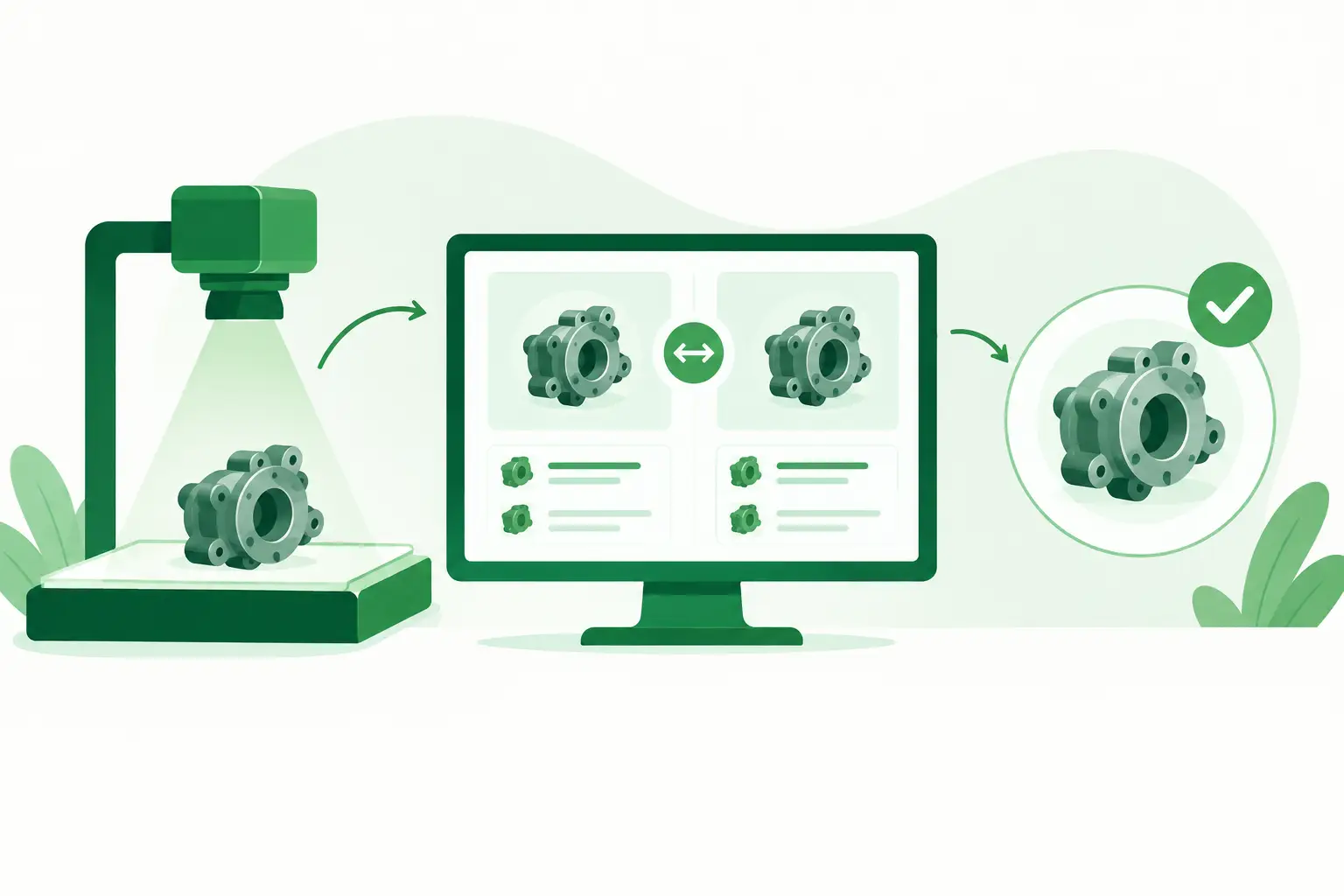
Before placing an order, provide the failed part’s full label information, system model, error codes, photographs of connectors or labels, and the service context. Ask whether the offered part is used, refurbished, or new; whether it has been tested; whether it is physically in stock or being located; and what return or warranty terms apply. If the component has an exchange-core requirement, clarify that before shipment.
For high-risk components, verify whether the replacement needs calibration, software loading, configuration, or specialized installation. A part can be electrically functional and still require system-level setup. This is especially relevant for detectors, MRI components, imaging chains, control boards, and workstation assemblies.
A Practical Decision Framework
Choose the OEM channel when factory authorization, current revision control, formal manufacturer support, or proprietary commissioning is central to a successful repair. Choose an independent specialist when availability, legacy-system support, multi-brand sourcing, or fast identification of a discontinued part is the limiting factor.
There are also hybrid cases. A service team may source a hard-to-find mechanical assembly or power component independently while using OEM support for calibration, software, or final commissioning. That is not a compromise in quality. It is a procurement strategy built around the real technical boundaries of the repair.
The most reliable buyers avoid treating parts procurement as a catalog exercise. They document the exact failed component, confirm interchangeability before ordering, and select the source that can meet the technical and timing requirements of that specific repair.
When an imaging system is down, the useful question is not whether independent or OEM sourcing is better in general. It is which source can provide the correct, supportable part fast enough to restore safe, dependable clinical operation.