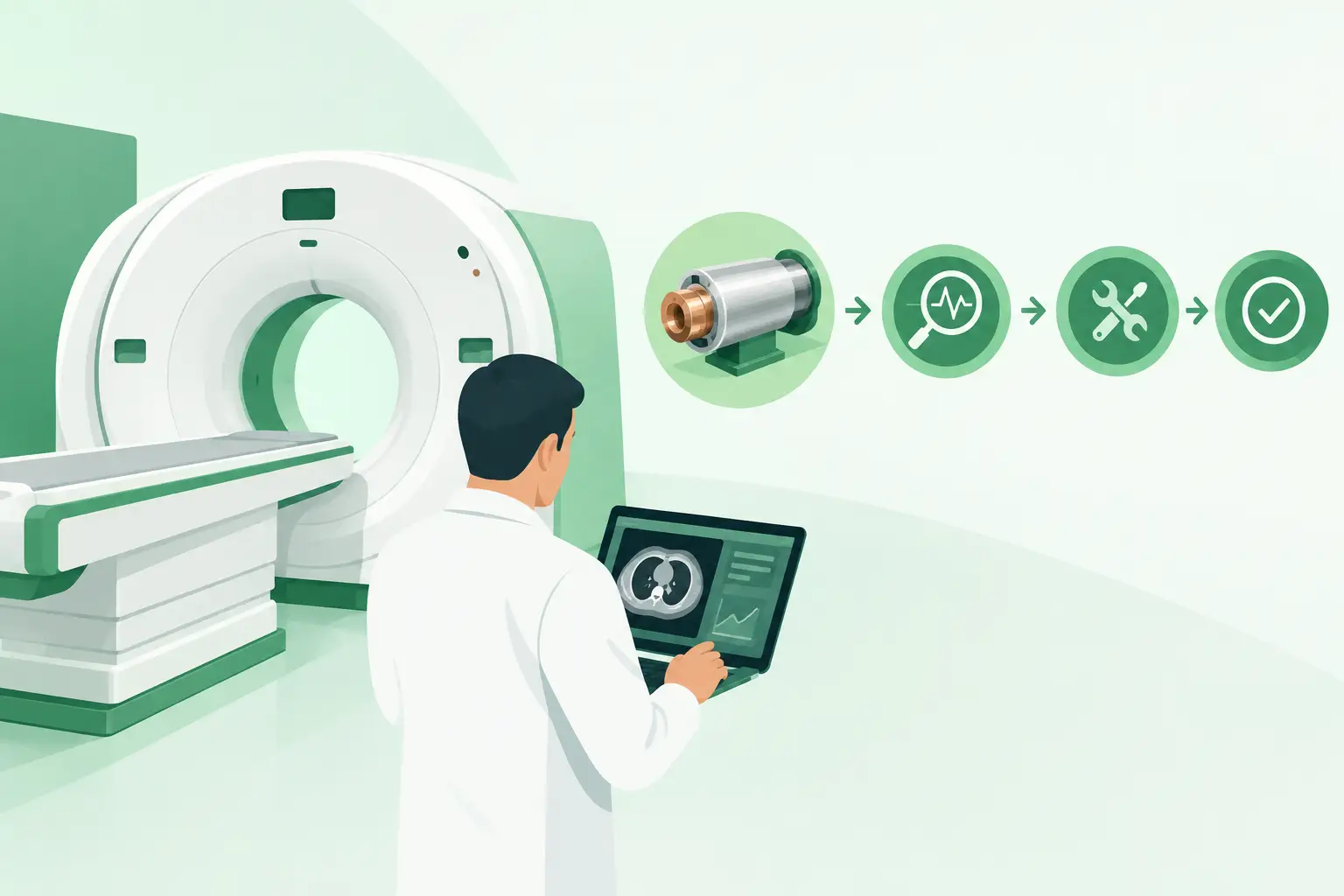
A C-arm that will not power up, move into position, produce an image, or complete a fluoroscopy study creates an immediate service problem. The right C-arm parts decision is rarely about finding a component with a familiar name. It is about confirming the exact OEM part number, revision, system configuration, and functional role before a replacement is shipped.
For biomedical teams, ISOs, and imaging service providers, that distinction protects more than a repair budget. It helps prevent repeat downtime, incorrect returns, installation delays, and a C-arm remaining unavailable when clinical schedules depend on it.
Why C-Arm Part Identification Is So Specific
C-arm systems combine X-ray generation, image acquisition, motion control, safety interlocks, and software-controlled electronics in a compact mobile platform. A fault may appear in one area while originating in another. For example, an image issue may relate to an image intensifier, flat-panel detector, camera assembly, acquisition board, cable, power supply, or workstation configuration. A movement fault may involve a motor, brake, encoder, control board, harness, or mechanical assembly.
This is why a general description such as “C-arm control board” or “fluoro monitor” is usually not enough to source a dependable replacement. Multiple versions can exist across the same product family, and an apparent match can differ by connector type, firmware compatibility, voltage specification, software revision, mounting pattern, or regional configuration.
The most reliable starting point is the original OEM part number from the failed component. If that number is missing or unreadable, the system model, serial number, labels, photographs, connector details, and fault information become essential for narrowing the match.
System Model Alone Is Not Always Enough
A manufacturer may use different assemblies in the same C-arm model over its production life. Earlier systems may have discontinued boards or older image-chain components that do not interchange with later versions. Refurbished systems can add another variable because prior service work may have introduced an alternate assembly or upgraded subsystem.
A supplier should therefore assess the part in the context of the installed system, not just the equipment family. That process is particularly relevant for legacy GE Healthcare, Siemens Healthineers, Philips, Canon/Toshiba, Shimadzu, and Hologic imaging platforms, where part availability and revision history can vary significantly by generation.
The C-Arm Parts Most Likely to Affect Uptime
Some C-arm components are more likely than others to become urgent sourcing requirements because they can disable imaging, safety functions, or system movement. The X-ray chain includes tube housings, collimators, high-voltage tanks, high-voltage cables, generators, and related power components. Image-chain requirements may include image intensifiers, flat-panel detectors, cameras, acquisition electronics, monitor assemblies, and workstation components.
The mechanical and control side is equally consequential. C-arm movement depends on motors, brakes, bearings, encoders, counterbalance assemblies, control handles, and associated electronics. A failed PCB, inverter, power supply, relay assembly, or communication cable may prevent startup even when the visible mechanical hardware is intact.
Failure symptoms help prioritize the search, but they should not replace diagnosis. An intermittent image dropout, for instance, may be caused by a cable or board connection rather than the detector itself. Replacing the most expensive assembly first can be an avoidable mistake when a service test can isolate the actual failed item.
Verify Compatibility Before Ordering C-Arm Parts
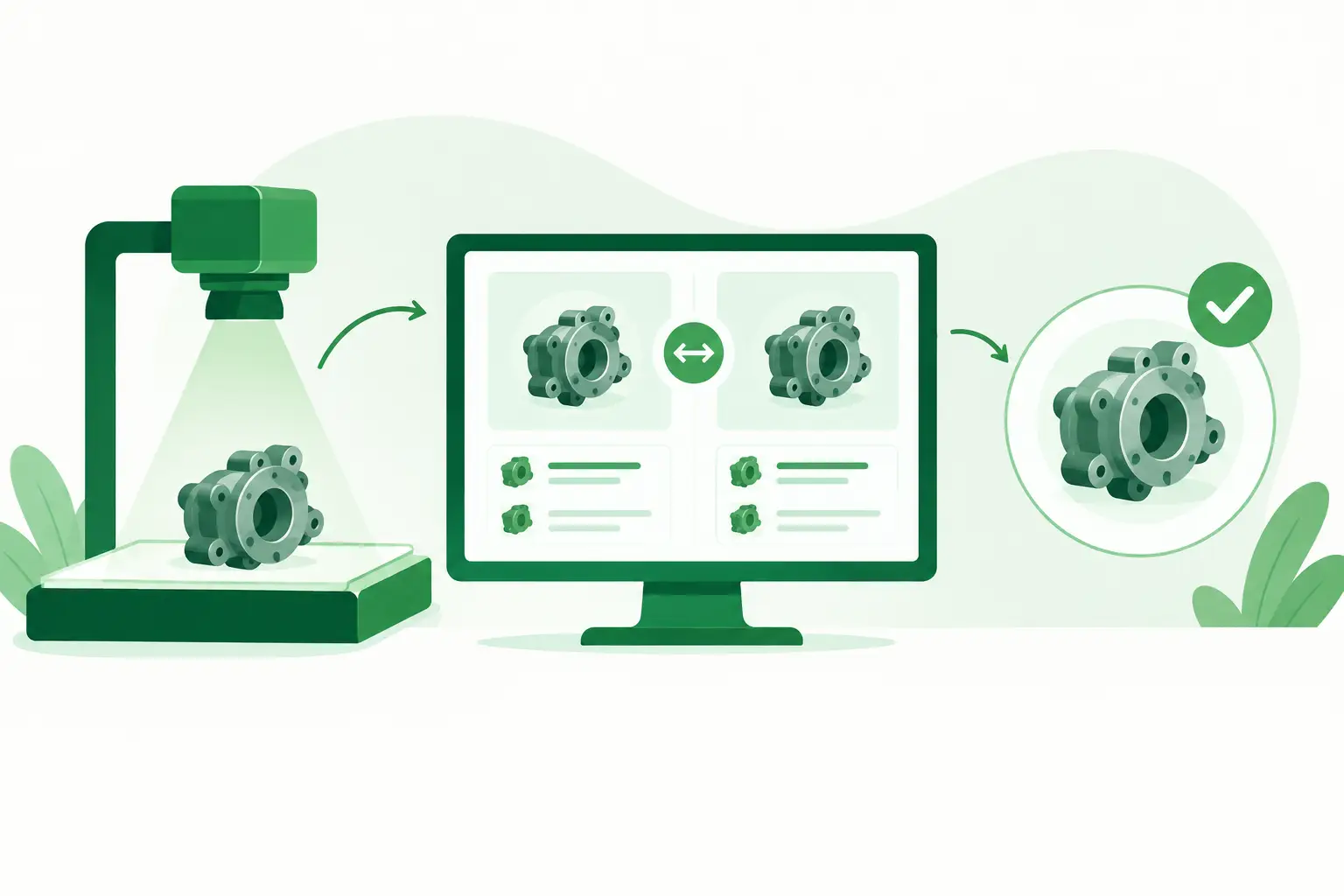
Part-number-level verification is the practical control point in imaging spare-parts procurement. Before ordering, confirm the OEM part number and any suffixes, revisions, or serial-range notes on the label. Compare photographs of connectors, mounting points, cooling interfaces, and board layouts when possible. For electronic assemblies, verify whether the replacement is expected to require calibration, configuration, software loading, or transfer of components from the original unit.
Compatibility is not always a simple yes-or-no question. A later revision may supersede an older part, but only under defined conditions. It may require a matching cable, a companion board, a software update, or a change to system settings. Conversely, an earlier revision may physically fit but lack the function required by the installed configuration.
Used and refurbished C-arm spares can be an appropriate solution for many high-value imaging systems, particularly when OEM support has narrowed or an assembly is no longer produced. The trade-off is that condition, test history, repair scope, and revision status need to be evaluated carefully. A replacement should be selected for technical suitability and availability, not simply because it is the first item located.
Information That Makes a Quote Faster and More Accurate
A clear request reduces the time spent clarifying basic details. Provide the C-arm manufacturer, complete model name, system serial number, and exact part number from the failed item. Include the symptom or error code, photographs of the part label and connectors, and whether the need is an outright replacement, repair alternative, or backup spare.
If the part is already removed, note its physical condition and whether it has been tested. If it remains installed, include the service findings that led to the diagnosis. These details help distinguish between visually similar components and allow a sourcing specialist to evaluate available alternatives with fewer assumptions.
For urgent repairs, it also helps to state the required delivery timing and destination at the beginning. International imaging-part shipments can involve packing requirements, export documentation, customs processing, and local delivery constraints. Early confirmation allows the supplier and service team to choose the most practical path without losing a day to avoidable back-and-forth.
Repair, Replacement, or a Matched Assembly?
The correct solution depends on the failed component and the system's remaining service life. A board-level repair may be practical when the fault is known, the assembly is repairable, and turnaround supports the equipment schedule. Replacement is often the better route when the original board has extensive damage, the defect is intermittent, or a tested exact-match unit is available sooner.
For some image-chain and mechanical components, the better choice may be a matched assembly rather than a subcomponent. Replacing only one element can introduce alignment, calibration, or communication issues. This is common where components work as a controlled set, such as certain detector assemblies, camera configurations, motion-control groups, or workstation hardware.
There is no universal rule that refurbished is always better than repair, or that replacement is always safer than a component-level fix. The decision should account for diagnostic confidence, installation labor, calibration needs, urgency, and the risk of another failure interrupting service shortly afterward.
Plan for Legacy C-Arm Support Before Failure Occurs
Legacy C-arms often remain clinically useful long after their most common replacement parts become difficult to locate. Waiting until a critical failure occurs can turn a manageable repair into a prolonged sourcing exercise. Service organizations that support these systems benefit from recording high-risk part numbers, known revisions, prior failures, and compatible accessory assemblies while the system is operational.
This does not require stocking every possible spare. It means identifying the components that would create the longest outage if they failed and understanding which ones have limited market availability. Control boards, image-chain assemblies, specialized cables, older power components, and motion-control parts are frequent candidates for this review.
Meditegic supports this process by sourcing exact-match imaging spares through a global network and cross-referencing parts at the OEM part-number level. That approach is especially useful when a required component is discontinued, no longer held by standard distribution channels, or needed quickly for a specific installed configuration.
Treat the Part Number as a Service-Critical Detail
The fastest C-arm repair is not always the one that begins with the first available component. It is the one that begins with a verified diagnosis and an exact-match requirement. Clear technical information gives the sourcing process a defined target, protects installation time, and improves the odds that the first replacement sent is the one that restores the system to service.
When a C-arm is down, the useful question is not simply whether a part can be found. It is whether the correct part, in the correct revision and condition, can be confirmed quickly enough to return the imaging system to dependable operation.