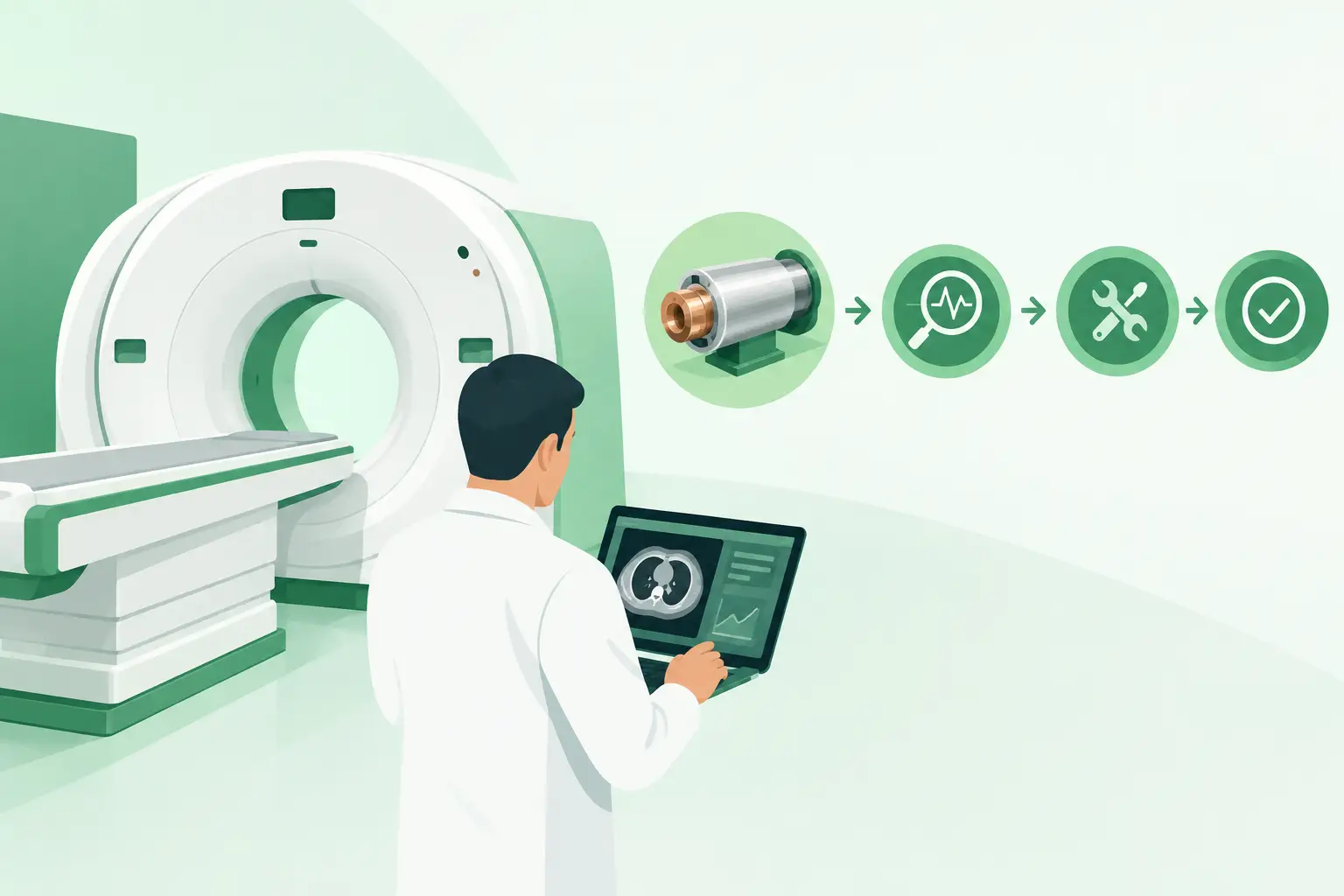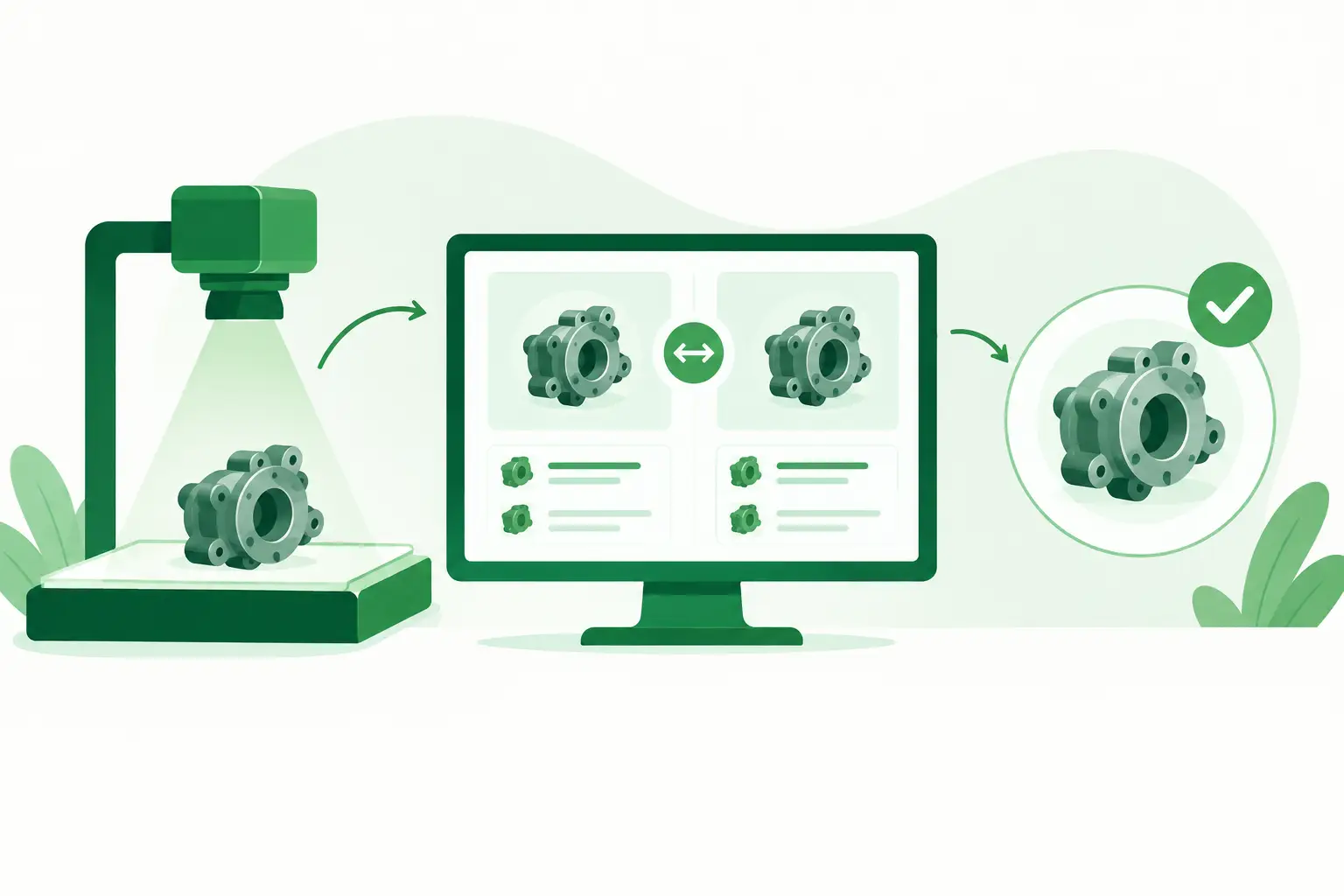
A detector module can be a relatively compact assembly, but the purchasing decision is rarely small. In PET/CT, SPECT, CT, and certain digital X-ray architectures, a single incorrect module can extend downtime through repeat troubleshooting, failed calibration, or an avoidable return. This guide to buying used detector modules is designed for biomedical teams, ISOs, and imaging service professionals who need an exact replacement that can be installed and accepted with confidence.
The used market is often the practical route when an OEM part is discontinued, lead times are uncertain, or a legacy system requires a component that no longer appears in standard distribution channels. The value is not simply lower acquisition cost. It is the ability to restore a high-value imaging asset without introducing a compatibility or reliability problem that costs more than the part itself.
Start With the Exact System Configuration
A detector module is not a generic imaging spare. Part numbers that appear similar may differ by revision, crystal configuration, photomultiplier or silicon photomultiplier design, connector layout, firmware dependency, shielding, mounting hardware, or calibration requirements. A module pulled from one system generation may be physically close to the required part yet unsuitable for the installed gantry or detector block.
Start with the OEM part number from the failed component label whenever possible. Record every suffix, dash number, revision code, and barcode identifier. Then pair that information with the imaging system model, system serial number, software level, and the location of the module within the assembly. For PET/CT and nuclear medicine equipment, identifying the detector head, block position, or ring position can prevent a mismatch when modules are not interchangeable across all locations.
Photos of the original label, connectors, and mechanical interfaces are useful evidence, especially when the printed number is worn or when a field replacement may have altered the original configuration. A supplier should be able to cross-reference the request at the part-number level rather than rely only on a system model description such as “Siemens PET detector” or “GE CT module.”
Used, Tested, and Refurbished Are Different Conditions
“Used” describes provenance, not necessarily functional condition. A used module may be removed from an operating system, harvested from equipment with an unrelated fault, or held as surplus inventory. That does not make it unsuitable, but it means the buyer needs a precise statement of what was verified before shipment.
“Tested” should identify the test performed. Was the module powered? Were communication signals checked? Was it evaluated in a compatible system? Was detector response measured, or was the inspection limited to visual condition and connector integrity? For a detector component, a vague statement that the part is “working” does not provide enough information for a downtime-sensitive repair.
“Refurbished” also requires definition. In some cases, it means a module was cleaned, inspected, repaired, and functionally tested. In others, it may mean only cosmetic preparation. Ask what work was completed, whether any internal components were replaced, and whether repair records or test findings are available. A professionally repaired module can be a sound choice, but it must be evaluated against the system’s operational requirements and the warranty offered.
Verify the Technical Details Before You Issue a Purchase Order
The most effective buying process turns the technical unknowns into documented questions before the module is shipped. Confirm the exact part number and revision, the donor system model, the stated condition, and the available functional test evidence. Also establish whether the module is supplied with required brackets, shielding, cables, heat sinks, or other attached hardware. Images can be valuable here because accessory omissions are common in field replacements.
For detector modules used in PET/CT and SPECT, ask whether the supplier can confirm detector type and relevant performance indicators. Depending on the architecture, that may include crystal condition, photomultiplier tube status, signal stability, energy response, or communication with associated electronics. A standalone bench test may be helpful, but it is not identical to system-level performance. Acceptance may still depend on calibration, tuning, and quality control after installation.
For CT detector-related assemblies, verify the detector configuration, data acquisition interface, cooling or thermal interface requirements, and associated control-board revision where applicable. Detector assemblies can have dependencies outside the module itself. A part that passes basic electrical checks may still fail integration if the installed system has a different configuration or software expectation.
Do not assume a later revision is automatically an upgrade. Later revisions can require matching electronics, different firmware, or a service procedure that is not available for the installed system. Conversely, an earlier revision may be accepted only under specific configuration rules. When compatibility is uncertain, the right response is to pause and validate the match, not to ship the closest available module.
Ask for Documentation That Supports Installation and Acceptance
Documentation does not need to be extensive to be useful. What matters is that it supports traceability and gives the service team a defensible basis for installation. At minimum, retain the supplier quotation, stated condition, part-number confirmation, serial number if available, photos, test statement, and warranty terms.
For a module with a known prior repair, request a description of the repair scope and the test performed after repair. For a used component removed from a donor system, ask whether the donor system was operational at removal and whether the part was protected from electrostatic discharge, moisture, and physical damage during storage.
This information matters after delivery as well. If the part does not integrate as expected, clear records speed up troubleshooting between the field engineer, supplier, and any repair partner. They also help distinguish a module fault from a harness, power, cooling, data acquisition, calibration, or software issue elsewhere in the imaging chain.
Evaluate Warranty and Return Terms in Operational Terms
A warranty is only useful if its scope matches the way the module will be evaluated. Before buying, determine when the warranty begins, how long it runs, what constitutes a valid failure, and whether installation by a qualified service professional is required. Clarify whether the supplier will provide a replacement, repair, credit, or another remedy if the module is defective on arrival or fails during the coverage period.
Return timing is especially relevant for detector modules because installation may require coordination with a customer schedule, gantry access, calibration tools, or a visiting engineer. A short inspection window can be impractical if the part cannot be installed immediately. Buyers should align the return process with their actual commissioning timeline rather than treat it as a standard commodity-parts transaction.
There is also a trade-off between immediate availability and verification depth. An urgent module may be available quickly but have limited test documentation. A more thoroughly evaluated unit may require additional preparation time. The right choice depends on the clinical impact of downtime, the availability of a backup system, the service team’s diagnostic confidence, and the cost of another failed installation attempt.
Protect the Module During Shipping and Receiving
Detector assemblies and associated electronics are sensitive to impact, electrostatic discharge, temperature, and moisture. Ask how the item will be packed and whether it will be shipped in appropriate anti-static protection, custom foam, or an original-style transport container when needed. Large or delicate assemblies may need special handling instructions and careful inspection at delivery.
On receipt, inspect the package before disposal and photograph any visible damage. Compare labels, connectors, mounting points, and included accessories against the quotation and the original part. If possible, perform a controlled incoming inspection before the module enters the installation workflow. This is the moment to identify a shipping discrepancy, not after the system has been opened and the service window is closing.
A practical receiving record should capture the delivered part number, serial number, visible condition, packaging condition, date received, and installer assignment. For organizations managing multiple sites or service calls, this simple traceability step prevents avoidable confusion between similar detector components.
Plan for System-Level Validation
Installing the replacement is only one stage of recovery. The final decision point is whether the imaging system meets the required operational and image-quality checks after calibration. Follow the OEM-approved service procedure and the quality-control process appropriate to the modality. Depending on the system, this may involve detector tuning, gain adjustment, energy calibration, normalization, uniformity testing, image quality review, or error-log verification.
If a used module does not pass system-level validation, avoid immediately assigning blame to the replacement part. Review connectors, power supplies, cooling, harnesses, adjacent electronics, software configuration, and the calibration sequence. A disciplined fault-isolation process protects both the service team and supplier relationship while reducing repeated downtime.
Build a Sourcing Request That Gets a Faster, Better Answer
The quality of the request directly affects sourcing accuracy. A concise technical request should include the OEM and system model, exact part number and revision, serial number when available, photographs, failed-part symptoms, required quantity, and the installation deadline. State whether a tested unit, repaired unit, or any verified compatible condition is acceptable.
For hard-to-find imaging parts, a specialized supplier network can locate inventory across multiple OEM environments and legacy platforms. Meditegic supports this type of part-number-level sourcing for diagnostic imaging service teams that need a specific detector module rather than a broad catalog substitute.
A used detector module is a reasonable procurement choice when the match is exact, the condition is understood, and the acceptance path is planned before it arrives. Treat the purchase as an engineering decision tied to system performance, not as a quick swap based on appearance. That approach gives your team the best chance of turning a difficult spare-parts search into a controlled return to service.